

NJDETE Publishes a Practical Guide to Shredder Blade Replacement
Release time: 2026-09-21
NANJING, China — September 21, 2026 — NJDETE has published a practical shredder blade replacement guide to help recycling plants, maintenance teams and equipment owners prepare more accurate replacement-cutter inquiries. The new resource explains which dimensions, material details, tooth profiles, operating records and machine information should be supplied before a blade is manufactured or a matched cutter set is approved.
Replacement decisions matter because plastic and other waste streams are both large and varied. According to the OECD’s Global Plastics Outlook, global plastics production reached 460 million tonnes in 2019, while plastic waste reached 353 million tonnes. Only 9% of that plastic waste was ultimately recycled; 50% went to landfill, 19% was incinerated and 22% was mismanaged or leaked into the environment. These global figures do not predict the wear rate of a particular cutter. They do, however, show why recycling equipment must be maintained around the actual feedstock and operating conditions rather than a generic “one blade fits all” assumption. See the OECD source.
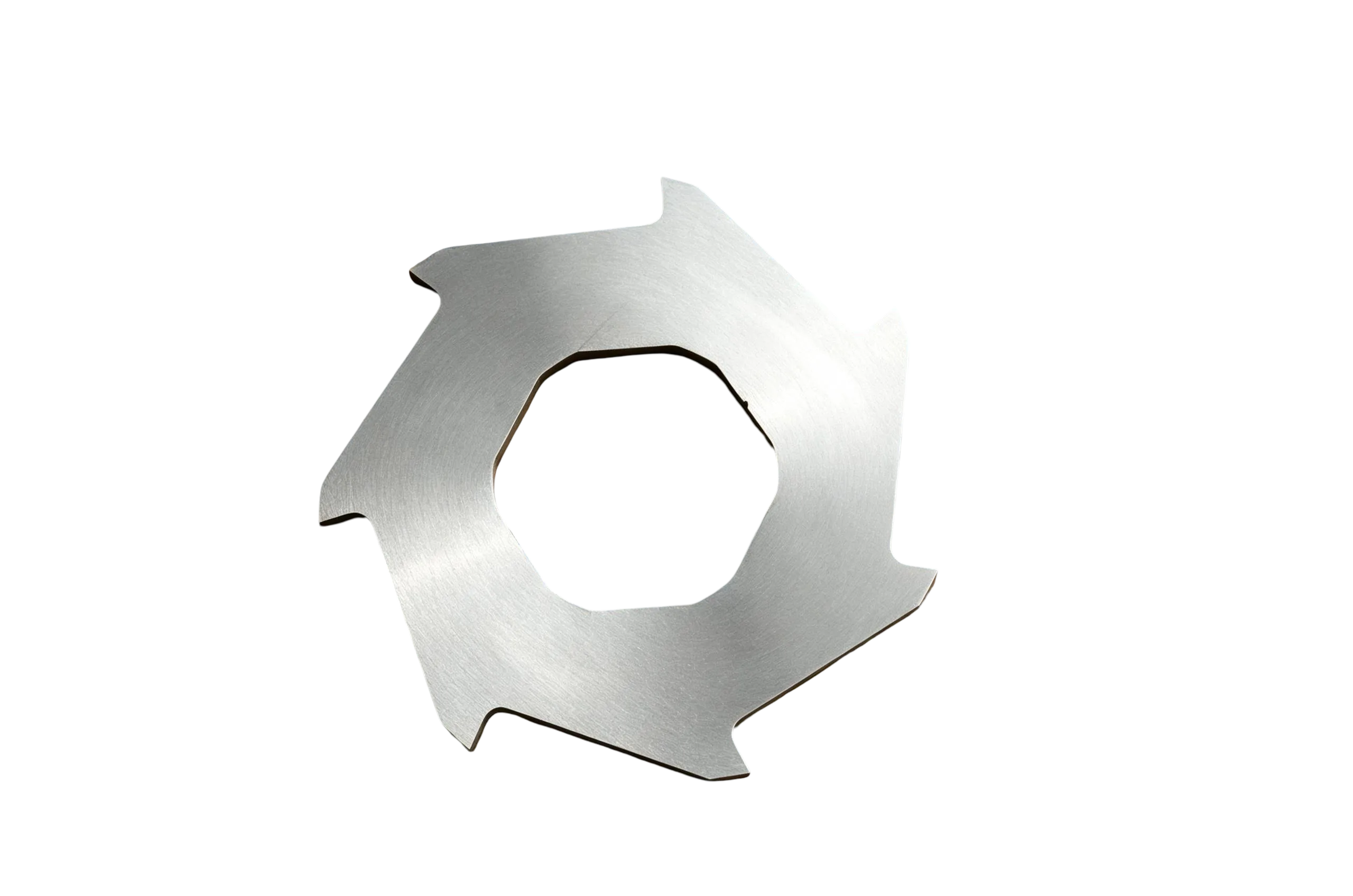
Intermeshing double-shaft shredder cutters. Outer diameter, thickness, bore, tooth form and spacer relationship must be treated as one system.
Why NJDETE Created a Shredder Blade Replacement Guide
A replacement request often begins with only a machine name, an outside diameter or a photograph. That may be enough to start a conversation, but it is not enough to release a production drawing. Two cutters with the same outside diameter can differ in bore geometry, keyway or spline, thickness, tooth count, hook direction, side clearance, material and heat treatment.
An incomplete specification can create several risks:
- the cutter does not fit the shaft or spacer stack;
- the tooth orientation is wrong for the paired shaft;
- accumulated thickness error changes the chamber assembly;
- excessive hardness increases sensitivity to impact;
- insufficient wear resistance shortens the maintenance interval;
- a new cutter interferes with an existing counter element or side plate;
- mixed old and new parts produce uneven engagement.
NJDETE’s guide is intended to turn an informal inquiry into a traceable engineering review. It also helps buyers retain the technical data required for the next replacement cycle.
The Minimum Data Needed for Replacement Shredder Cutters
1. Machine and assembly information
Provide the manufacturer, model, serial number if available, number of shafts, number of cutters per shaft and a photo of the complete cutting chamber. If the machine has been modified, state what changed. The original machine name alone should not be treated as proof that the installed cutter set remains standard.
2. Outer diameter and thickness
Measure the outside diameter across defined points and record the nominal cutter thickness. A severely worn cutter may no longer reveal the original diameter or hook profile, so compare several pieces and use the machine drawing when available.
3. Bore, keyway, spline or other shaft interface
The internal profile determines whether the cutter can transmit torque and assemble correctly. Record the bore dimensions, keyway width and depth, spline count and orientation, corner radii, chamfers and any relief features. A clear photograph is useful, but a dimensioned drawing is more reliable.
4. Tooth count, hook profile and rotation direction
Record the number of teeth, tooth height, hook angle, tip geometry and handedness. Mark the installed rotation direction and identify the left- and right-shaft positions. Do not assume that visually similar cutters are interchangeable.
5. Spacer and stack relationship
Supply spacer thickness, side-clearance requirements and the complete stack arrangement. The cutter set must work as an assembly; individual dimensions can accumulate across a long shaft.
6. Material and heat-treatment requirements
If the original material and hardness are known, provide the specification and supporting record. If they are unknown, disclose that fact and provide the feed material, contamination, failure mode and desired maintenance objective. A supplier should not invent an exact grade from a photograph.
NJDETE’s current double-shaft shredder blade page lists 9CrSi and H13 as standard material options, with other materials and dimensions available by request. The final choice should be written into the approved drawing or technical agreement.
A Measurement Checklist Buyers Can Reuse
| Item | What to record | Why it matters |
|---|---|---|
| Machine identification | Manufacturer, model, serial number, modification history | Establishes assembly context |
| Cutter OD | Nominal and measured worn diameter | Helps reconstruct original geometry |
| Thickness | Cutter and spacer thicknesses | Controls stack length and side clearance |
| Internal profile | Bore, keyway, spline, radii and chamfers | Determines fit and torque transfer |
| Tooth geometry | Count, height, hook, tip and orientation | Controls engagement and pulling action |
| Shaft position | Left/right shaft and rotation direction | Prevents handed-part errors |
| Material | Original grade if verified; proposed grade if agreed | Balances wear and toughness |
| Hardness | Only a documented requirement or measured result | Avoids unsupported assumptions |
| Feedstock | Composition, dimensions and contamination | Links the cutter to actual duty |
| Failure history | Wear, chips, cracks, rubbing or deformation | Supports root-cause review |
| Quantity | Individual part, partial set or matched full set | Affects tolerance and assembly planning |
If a drawing is unavailable, NJDETE may review an unworn sample, a used sample and detailed measurements. The condition of the sample should be documented. A worn part is evidence of the installed interface, but it may not preserve the original cutting geometry.
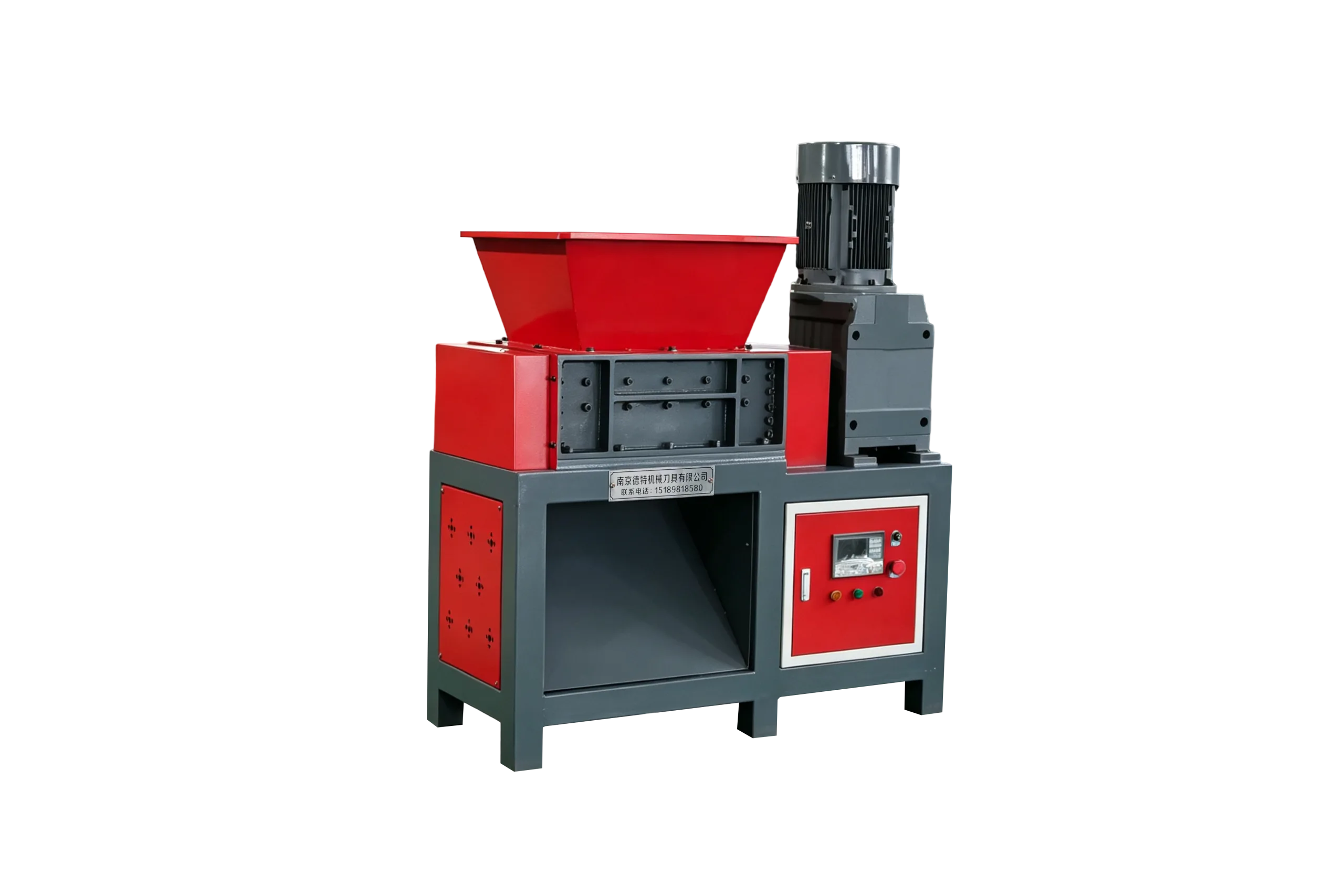
Replacement cutters must be specified for the complete shaft, spacer and cutting-chamber assembly—not as isolated discs.
Wear Patterns Are Clues, Not Automatic Diagnoses
Visible damage can help an engineer ask better questions, but it does not prove a single root cause. The table below is a troubleshooting guide, not a substitute for inspection.
| Observed condition | Possible factors to investigate | Evidence to collect |
|---|---|---|
| Rounded cutting edges | Abrasive feedstock, normal wear, unsuitable grade, long service interval | Operating hours, material samples, edge photos |
| Localized chipping | Hard foreign objects, impact, high hardness, tooth geometry, insufficient support | Contaminant record, fracture photos, hardness report |
| Cracks | Severe overload, heat-treatment issue, stress concentration, incorrect fit | Crack location, batch records, assembly measurements |
| Uneven wear across the shaft | Non-uniform feeding, alignment, spacer error, mixed cutter condition | Shaft map, clearance measurements, feed pattern |
| Side rubbing or heat marks | Incorrect stack length, inadequate clearance, distortion or bearing movement | Spacer dimensions, side clearance, bearing inspection |
| Frequent reversing or jamming | Oversized feed, wrapping material, worn hooks, unsuitable tooth form | Event log, feed dimensions, trial video |
A useful review combines the visible condition with machine history. Buyers should provide operating hours, material changes, reversal frequency, unusual vibration, recent bearing or shaft work and any difference between the two cutter shafts.
Regrind, Partial Replacement or Full Matched Set?
Regrinding may be considered when the cutter has sufficient remaining material, no disqualifying cracks, acceptable internal fit and a geometry that can be restored without compromising the assembly. The allowable regrind limit must be determined from the drawing, cutter design and machine requirements; this article does not assign a universal limit.
Partial replacement can be appropriate when damage is localized and the new parts can be matched to the remaining set. However, mixing new cutters with heavily worn cutters can change engagement and load distribution. Record the measured diameter and thickness of the retained components before approving a partial set.
A full matched set may be the clearer option when wear is extensive, the original specification is uncertain, the shaft stack has been repeatedly modified or consistent geometry is essential to the process. The choice should consider total downtime, disassembly labor, remaining component condition and future spare-parts planning—not only the unit price of one cutter.
For the machine-selection context behind cutter loading, review NJDETE’s companion update, NJDETE Expands Double-Shaft Shredder Selection Resources with a Material-First Testing Workflow, and the main double-shaft shredder machine guide.
Double-Shaft Shredder Blades and Granulator Knives Are Different Systems
Double-shaft shredder cutters normally work as intermeshing discs on two low-speed shafts. Plastic granulator knives usually use rotor knives and stationary bed knives for a finer cutting stage. Both are industrial wear parts, but their geometry, mounting, working speed and clearance logic differ.
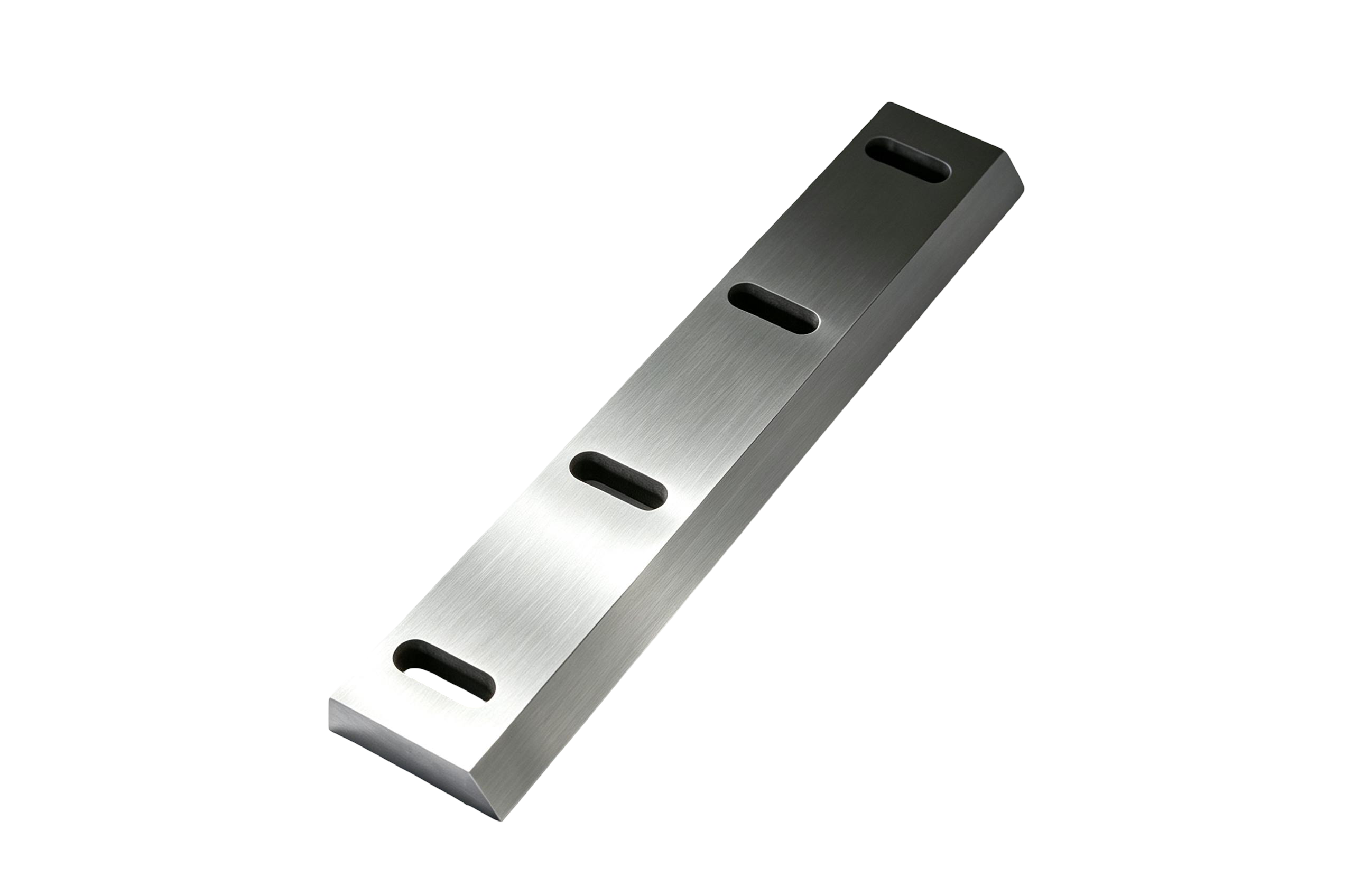
Plastic crusher and granulator knives belong to a different cutting system. Do not use granulator-knife specifications to order double-shaft shredder cutters.
For downstream size reduction, see NJDETE’s plastic crusher blade page. Keeping these product families separate improves both technical accuracy and search intent: a buyer looking for a twin-shaft replacement cutter should not land on a granulator-knife specification by mistake.
Inspection and Acceptance Before Installation
The purchase agreement should define what will be inspected and which record will be supplied. Depending on the order, this may include drawing approval, key dimensions, material identification, hardness requirements, heat-treatment record, quantity, marking, rust protection and packing.
Before installation:
- compare part markings with the approved drawing and packing list;
- inspect cutting edges and internal profiles for transit damage;
- verify critical dimensions with suitable calibrated instruments;
- confirm left/right orientation and the planned shaft stack;
- inspect shafts, spacers, bearings and side plates before fitting new parts;
- follow the machine-specific tightening, alignment and clearance procedure;
- rotate or test the assembly only under the approved safe procedure;
- begin with a controlled no-load and material test before normal production.
ISO 12100:2010 describes general principles for machinery risk assessment and risk reduction across the machine life cycle. It is a useful framework for identifying hazards during maintenance, installation and testing, but it does not replace the machine manual, local legal requirements, isolation procedures or a competent safety review. Reference: ISO 12100 official overview. This reference is not a certification claim for NJDETE products.
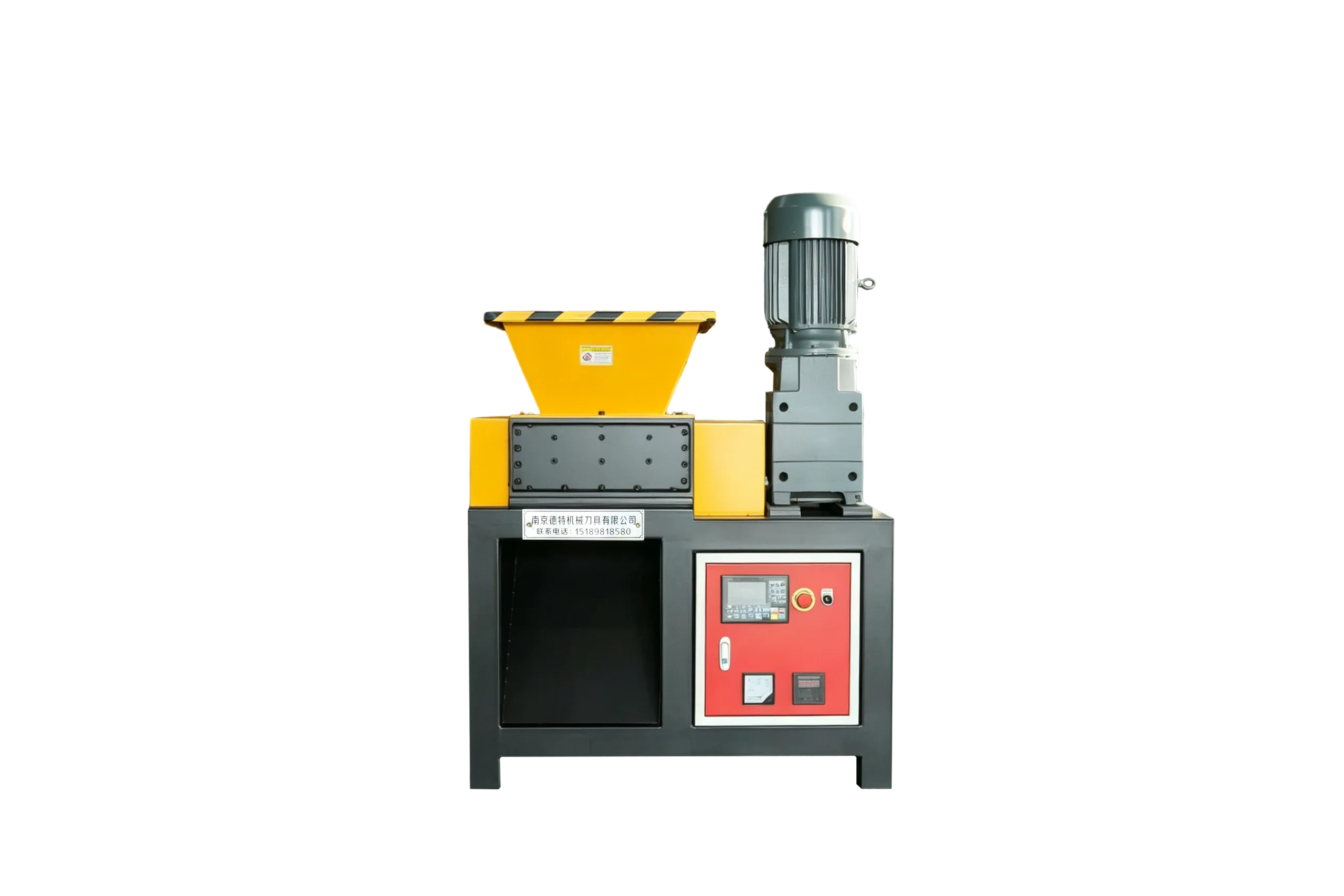
Keep the approved cutter drawing, spacer map and maintenance record with the machine so future replacement inquiries begin with traceable data.
A Better RFQ for Shredder Blade Replacement
To request a technical review, send one package containing:
- machine manufacturer, model and available serial information;
- complete chamber, shaft and installed-cutter photos;
- a dimensioned drawing or representative sample;
- cutter OD, thickness, bore and internal-profile measurements;
- tooth count, profile, rotation direction and shaft position;
- spacer dimensions and complete stack arrangement;
- processed material, maximum dimensions and contamination;
- wear or failure history, operating hours and maintenance record;
- required quantity, delivery destination and inspection documents.
NJDETE will use the information to identify missing dimensions and prepare the next technical step. A production drawing, material requirement and acceptance scope should be approved before manufacturing begins.
Buyers can review NJDETE’s Products Center or contact NJDETE with the drawing, photos and operating information. The goal of the new shredder blade replacement guide is simple: make each replacement decision easier to verify, reproduce and maintain over the life of the machine.