

Plastic Crusher Machines: How They Work and What to Check Before Buying
Release time: 2026-10-20
Plastic Crusher Machines: How They Work and What to Check Before Buying
A knife-type plastic crusher reduces suitable plastic scrap into smaller pieces by cutting it inside a chamber. For a useful purchase, the machine must do more than fit the largest part through its hopper: it must feed that part consistently and deliver regrind that the next process can accept.
In this guide, “plastic crusher” means the knife-type size-reduction equipment often called a plastic granulator. Check that meaning with the supplier. A pulverizer intended to make powder and an extrusion system intended to make pellets are different purchases.
The buying decision comes down to four practical questions: what enters the machine, how it reaches the cutters, what leaves the machine, and how the equipment will be cleaned and maintained.
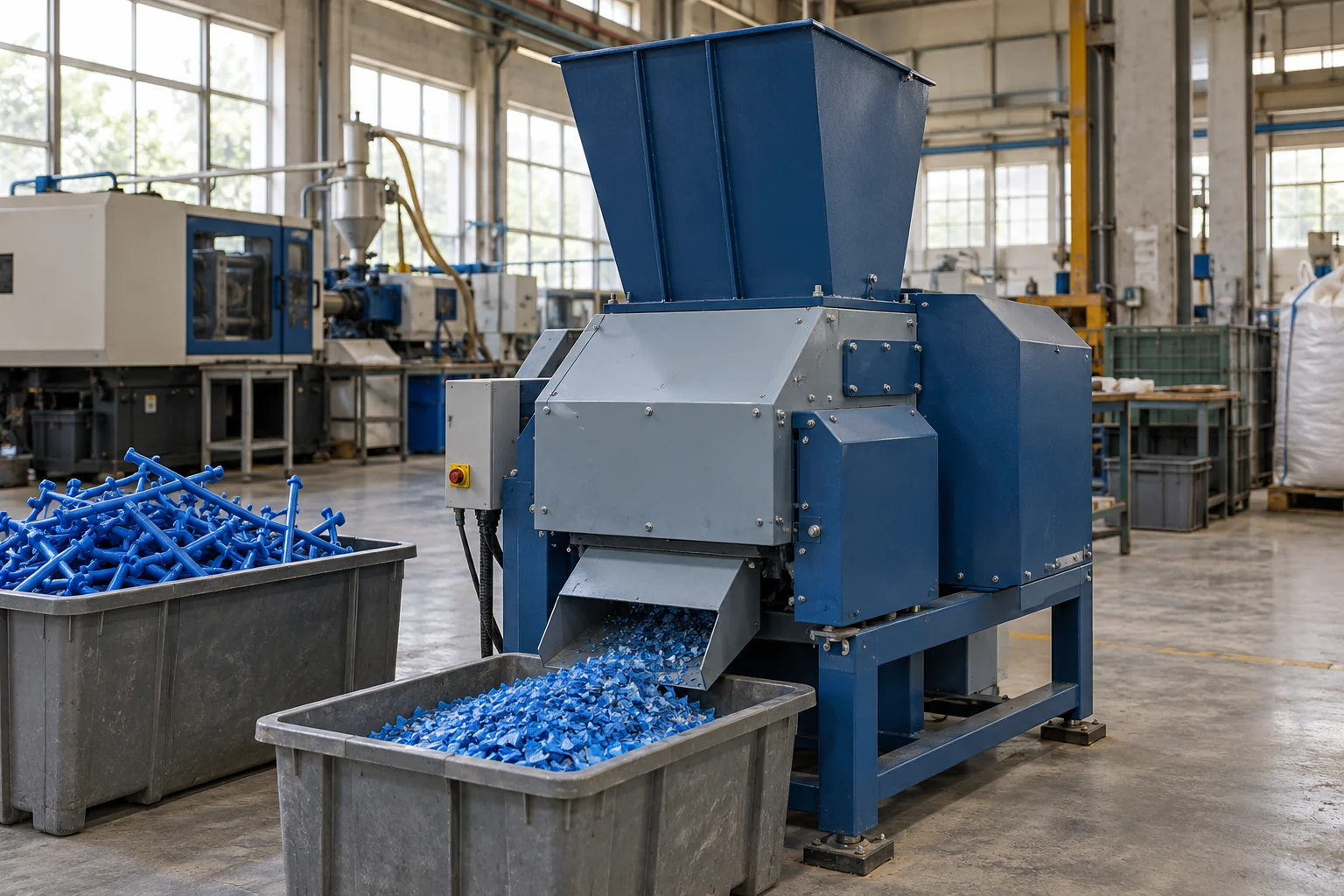
Illustrative factory scene; machine appearance and material shown are not a tested NJDETE configuration.
How does a plastic crusher machine work?
In a common screened knife granulator, feed enters a cutting chamber through a hopper. Rotor knives pass stationary knives, reducing the feed. Material that can pass the sizing screen leaves the chamber for collection or conveying; retained pieces remain available for further cutting. Conair’s 18 Series manual describes this general arrangement. Source: Conair user guide, function description.
The hopper, chamber, cutting assembly, screen and discharge arrangement need to work together. A quotation that lists only motor power leaves most of those choices undefined.
Not every granulator uses the same sizing principle. Screenless low-speed machines also exist for specific beside-the-press applications; Conair’s S Series is one published example. Ask which design is being proposed instead of assuming every machine must have a replaceable perforated screen. Source: Conair S Series.
Match the machine to the form of the scrap
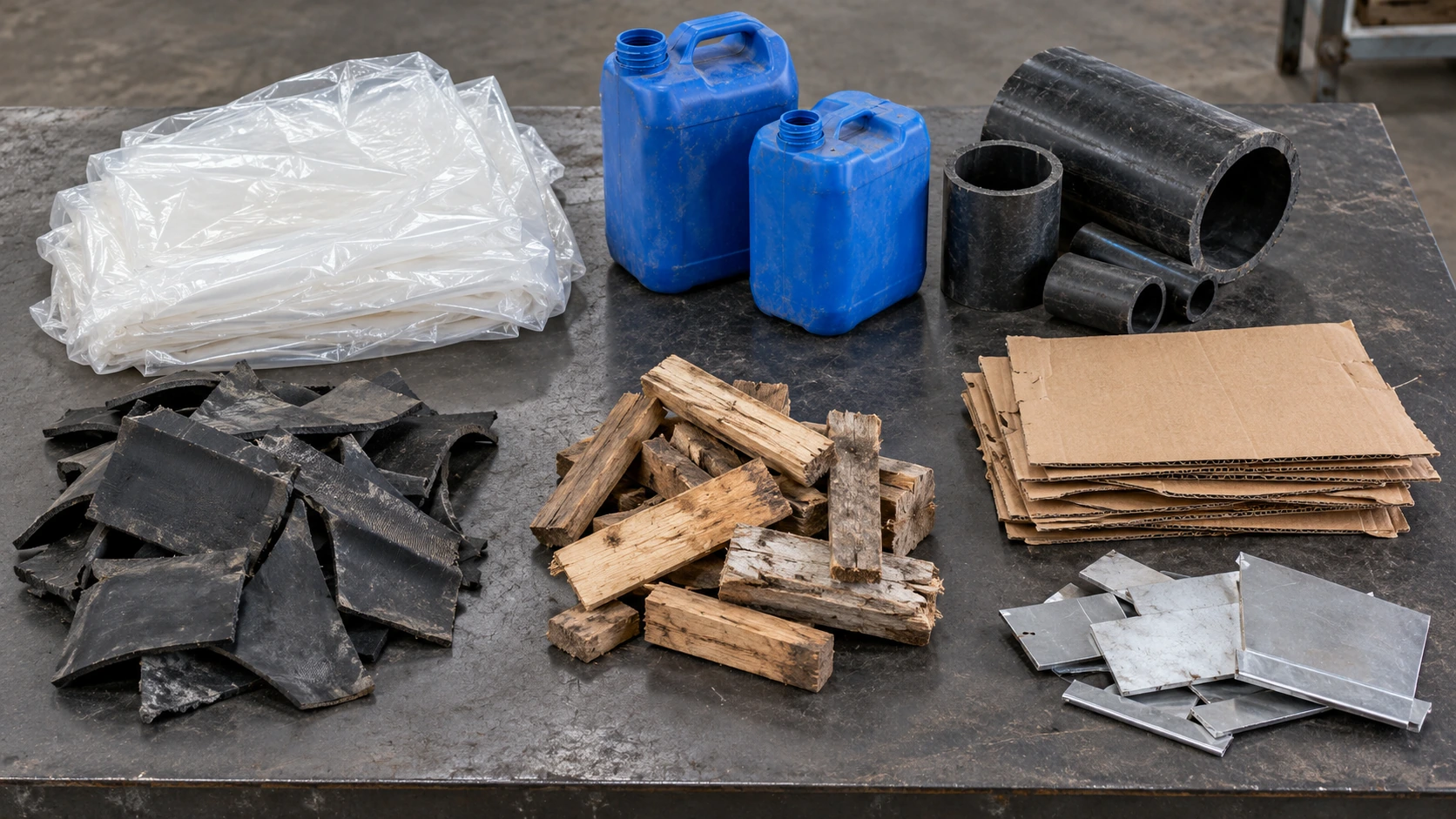
“HDPE” or “PP” is useful material information, but it does not describe the complete feeding problem. A hollow container and a solid startup lump can be made from the same polymer and still need different equipment assessment.
| Incoming material | Question to resolve | Evidence to request |
|---|---|---|
| Clean runners and small molding rejects | Can the material enter consistently without excessive handling? | Representative feed trial and the proposed loading arrangement |
| Bottles, canisters and other hollow parts | Does the chamber accept the part shape as well as its outside dimensions? | Trial with whole representative parts in the quoted configuration |
| Thick parts or production lumps | Is direct granulation suitable, or should the material be prepared first? | Assessment of maximum thickness, batch variation and feeding load |
| Long pipes and profiles | What is the intended loading method and required preparation? | Feed-length limits and an agreed preparation method |
| Film and web scrap | How will loose or continuous material be presented to the cutters? | Application-specific feeding proposal and representative test material |
| Collected or mixed scrap | Which unwanted items must be removed before cutting? | Defined feed specification and the separation responsibilities |
Manufacturer ranges reflect these differences. ZERMA, for example, separates beside-the-press, bulky-part, heavy-duty and pipe/profile granulators, and describes granulation both directly and after shredding. This supports an application-led selection; it does not establish that any particular material will run on any proposed model. Source: ZERMA granulator range.
For a bottle-specific enquiry, use the plastic bottle shredder selection guide to describe the incoming containers and the role of any upstream size reduction.
When should a shredder come before the crusher?
Investigate pre-shredding when the actual feed is too bulky, thick or difficult to present consistently to the proposed granulator. It is one possible way to prepare material for a following stage, not a compulsory addition to every installation.
Ask the supplier to explain the problem that the first stage solves. Will it reduce the maximum piece dimensions, regularize feeding, or address another stated constraint? Then specify what the granulator must accept from it.
Adding a shredder also adds equipment, controls, maintenance and a transfer point. Compare a tested direct route with a tested staged route where both are credible options. For the wider distinction, read plastic shredder versus crusher versus granulator. For the upstream machine discussion, use the plastic waste shredder selection guide.
What determines the output size?
On a screened granulator, the screen is part of the sizing arrangement, but a screen-hole description is not a complete regrind specification. Define the output you will accept: the relevant particle-size range, limits on long pieces and fines, and any downstream feeding requirement.
Agree how that output will be assessed. A photograph can show appearance, while a retained sample and an agreed screening or measurement method provide a basis for acceptance. Do not replace that discussion with a promise that every particle will have the same dimension as a screen opening.
Ask the supplier to quote and test the intended screen. Changing the screen changes the tested configuration, so a demonstration using another screen should be identified as such. If the machine is screenless, ask how its cutting system controls output and how the result will be verified.
Why motor power is not a capacity specification
Motor power is one machine detail. The useful production rate still needs a material, feed method, configuration and measurement point.
A capacity enquiry should therefore say more than “500 kg/h plastic.” Include the polymer and feed form, maximum part size and thickness, contamination, required regrind, proposed feeding method and productive operating time. Have the supplier state any preparation needed before the material reaches the hopper.
For comparison, distinguish these quantities:
- Incoming mass: material weighed into the agreed process boundary.
- Collected output: everything recovered at the specified discharge point.
- Accepted output: collected material meeting the written output requirement.
Do not count material being passed through the equipment for a second time as additional finished production. Keep the weighing method and the timing basis in the trial record.
Run a trial that leaves a usable record
Agree on the conditions before the demonstration starts. A useful trial can be documented on a single sheet:
| Trial record | What to write down |
|---|---|
| Feed identity | Polymer, source, part form, contamination and representative photographs |
| Tested machine | Model and the quoted configuration, including cutting and sizing arrangement |
| Loading | Manual, conveyor, robot or other approved method; any feed preparation |
| Measurement period | Start, finish, running time and the stated treatment of interruptions |
| Material balance | Weighed feed, accepted output, rejects and material remaining in the system |
| Output assessment | Retained sample and the agreed checks for size, fines and contamination |
| Interruptions | Reason, duration and any configuration or operating change |
| Energy measurement, if required | Metering boundary and measured energy over the same defined period |
Illustrative arithmetic only: if a recorded run yields 420 kg of accepted output over 45 minutes of running, the running-time rate is 560 kg/h. If that same 420 kg was produced during a 60-minute elapsed test window, including interruptions, the elapsed-window rate is 420 kg/h. Report both definitions instead of selecting the more attractive number without explanation.
Choose the test duration to suit the purchase and the feed variability. A brief video is useful for observing a recorded event, but it cannot establish performance over an unrecorded shift or on a different material batch.
Check access before comparing maintenance claims
Ask for the installed layout with maintenance positions shown. The space occupied during production may be smaller than the space needed to open the hopper, remove a screen or handle a knife set.
Review the cleaning procedure for material or color changes. Confirm what can be inspected, how retained material is removed, and which tasks require trained maintenance personnel. Ask for the machine’s isolation, standstill verification and rotor-restraint procedure before assessing internal access. Guards and interlocks should remain part of the quoted design.
Rapid’s 500 Series product description shows one manufacturer’s approach to access, knife changes and rotor locking. These are useful features to ask about; the exact procedure must come from the manual for the machine being purchased. Source: Rapid 500 Series.
For a new machine, request the spare-parts list and identify the cutting tools and sizing parts before shipment. For an existing machine with poor cutting performance, use the plastic granulator cutting problems guide to organize an inspection rather than assuming a new blade alone will solve it.
Specify replacement knives while the machine details are available
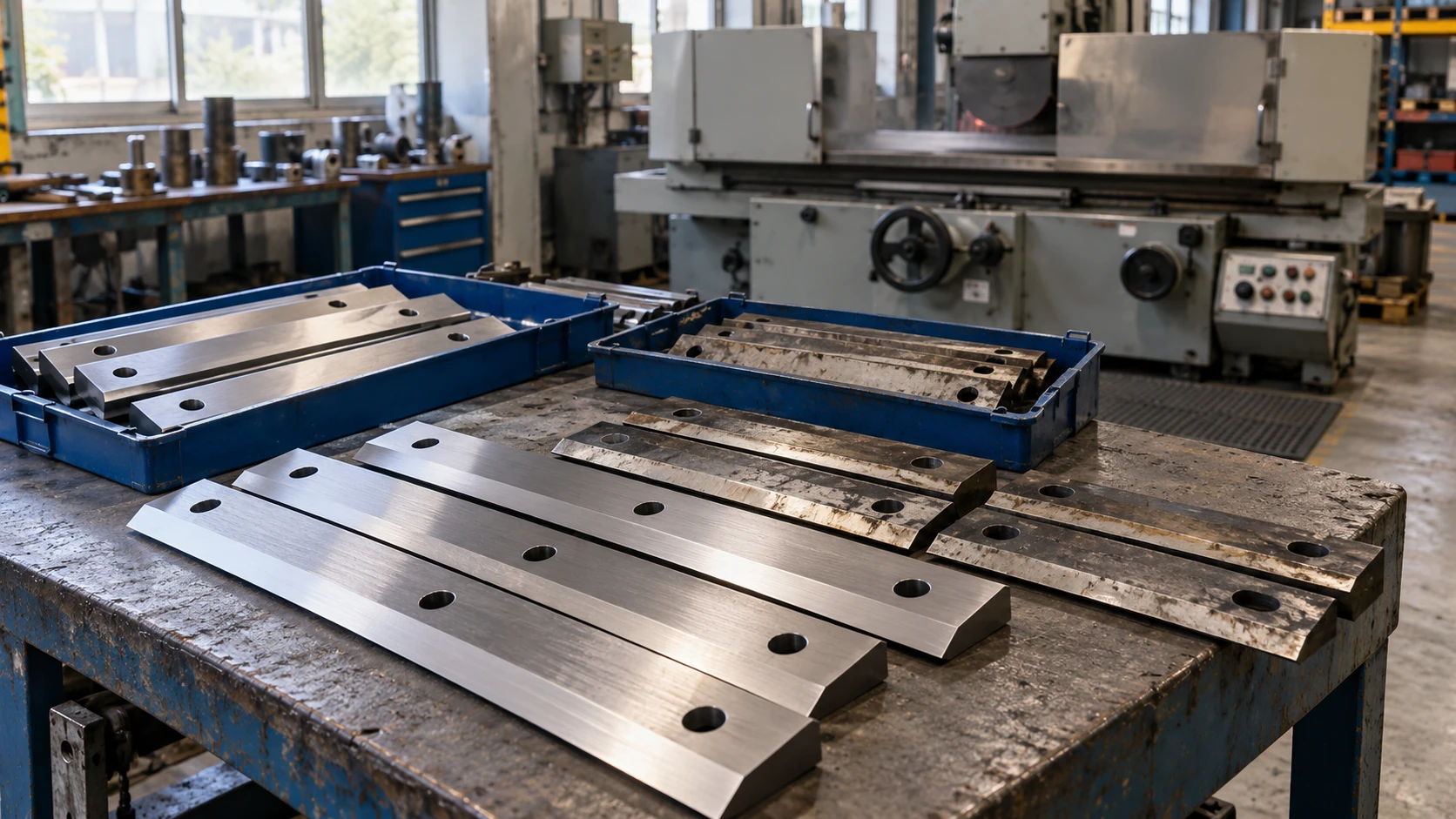
Record the rotor and stationary knife quantities, drawing references, mounting features and the agreed material specification. Ask how the set is identified and what the manufacturer requires after sharpening or replacement.
Keep the machine manual with those records. Use its setting and fastening requirements; a generic clearance or torque copied from another model is not an installation specification.
For an NJDETE replacement knife enquiry, provide the machine identity, approved drawing or identifiable sample, complete set quantities and the plastic being processed. The plastic crusher blades and granulator knives page is the relevant product entry. The granulator blade sharpening guide covers questions to resolve before returning a used set to service.
Frequently Asked Questions
Is a plastic crusher the same as a plastic granulator?
The terms overlap in supplier usage. Confirm the working principle and required output. This guide concerns knife-type size reduction; equipment for making powder or melt-produced pellets needs a different specification.
Can a crusher process whole bottles or containers?
Some designs are intended for bulky hollow parts. Have the proposed machine assessed with representative whole parts, including the largest item and its actual wall thickness. A hopper opening measurement alone is insufficient.
Will a smaller screen automatically give better output?
“Better” must refer to the next process’s requirement. Specify usable output and test the proposed screen under the agreed conditions. Unnecessarily fine output may add processing work without improving the receiving operation.
Can the same machine handle rigid scrap and film?
That requires an application-specific assessment of the cutting and feeding arrangement. Do not transfer a rigid-part test result to loose film without supporting evidence.
What should accompany a request for quotation?
Send representative feed details, maximum dimensions and thickness, daily quantity, productive hours and the accepted-output requirement. Include the proposed loading method, power supply, discharge arrangement and available layout. Ask the supplier to state the tested or assumed conditions behind any quoted production rate.