

Granulator Blade Sharpening: When to Regrind, Replace and Check Clearance
Release time: 2026-10-19
Granulator blade sharpening is suitable when the knife can be restored to its approved geometry and remaining dimensions without retaining unacceptable damage. Replace or hold a knife for specialist assessment when its condition, mounting features or remaining size cannot meet those requirements. After sharpening, verify the installed cutting arrangement and blade clearance using the machine manufacturer’s instructions.
A sharp edge alone is not a complete return-to-service decision. Rotor knives and bed knives work together, and the service process must preserve the geometry that lets them cut correctly in the installed machine.
This guide concerns rectangular cutting knives in plastic granulators and crushers. For circular disc cutters in a double-shaft shredder, use the separate shredder blade wear and replacement guide.
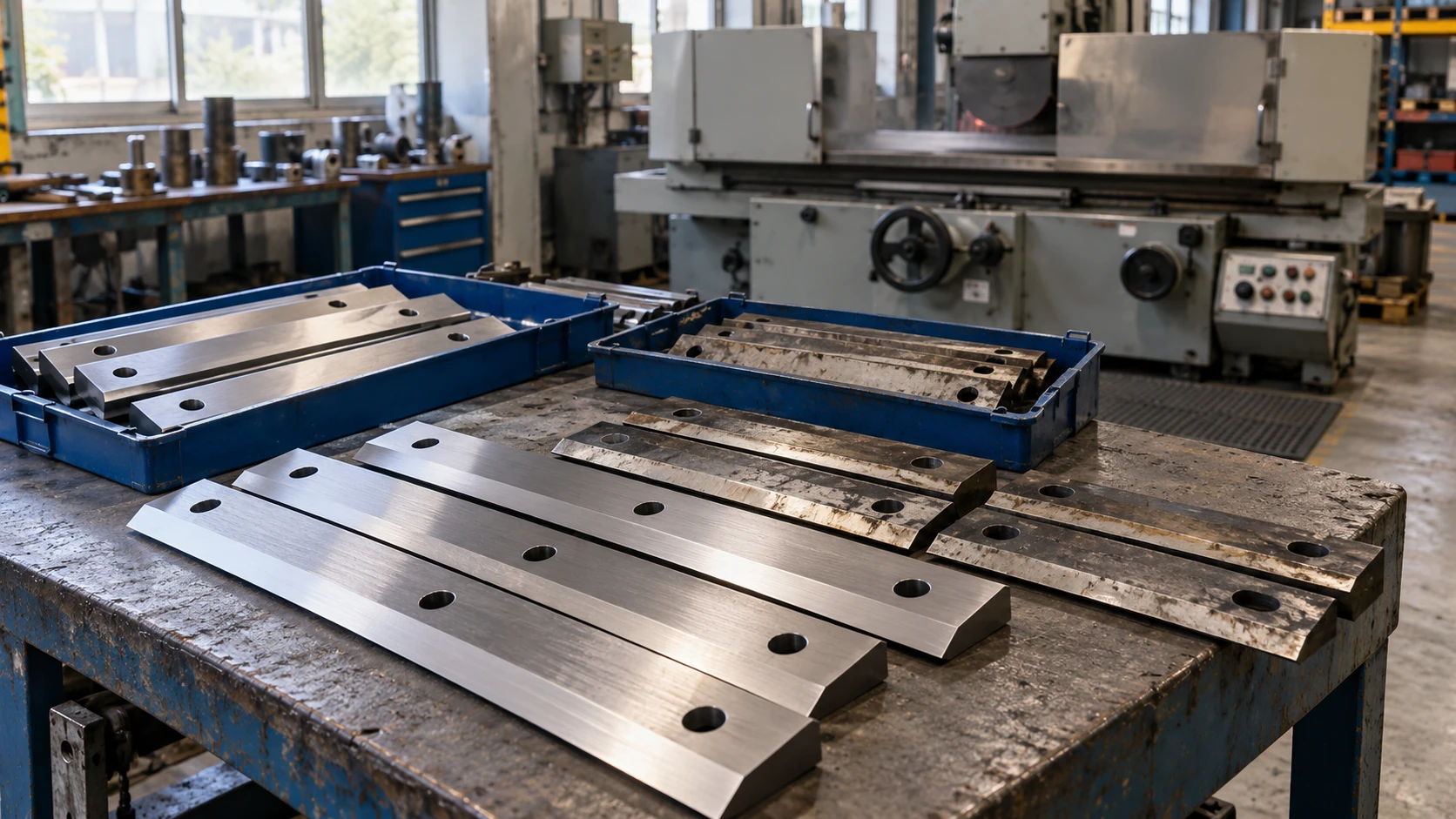
Illustrative knife-service planning scene. The image does not establish a grinding specification or an accepted inspection result.
What Changes When Granulator Knives Wear?
Look for a recorded change under comparable operating conditions: accepted throughput, fines, cut quality, processing time or load. Then inspect the cutting system through the approved service process. A symptom can justify an inspection without proving that sharpening is the entire solution.
Conair’s granulator-maintenance guidance connects knife condition, knife alignment and screen condition with regrind quality. The purchasing implication is to evaluate the cutting system rather than buying a sharpening service solely from a photograph of a dull edge.
| Observation | Question to investigate | Useful information to record |
|---|---|---|
| More fines or a rougher cut | Did knife condition, clearance, screen condition or material change? | Comparable feed and output samples, maintenance history |
| Lower accepted throughput | Is time being lost in cutting, feeding or discharge? | Accepted mass, elapsed time and interruptions |
| Local damage on a knife | Was there an inclusion, contact event or mounting issue? | Knife position, damage photographs and event history |
| Poor results soon after sharpening | Were geometry and installed settings verified? | Service report and installation record |
| Uneven wear across a set | Are the mounting and cutting arrangement correct? | Position-labelled inspections against the approved requirements |
The existing plastic granulator cutting-problems guide covers broader diagnosis. Here, the next decision is whether a particular knife set is a suitable regrinding candidate.
Regrind, Replace or Hold: Make the Decision Before Grinding
Obtain the applicable drawing and machine service requirements. Establish the knife’s current condition and the dimensions expected after any proposed material removal.
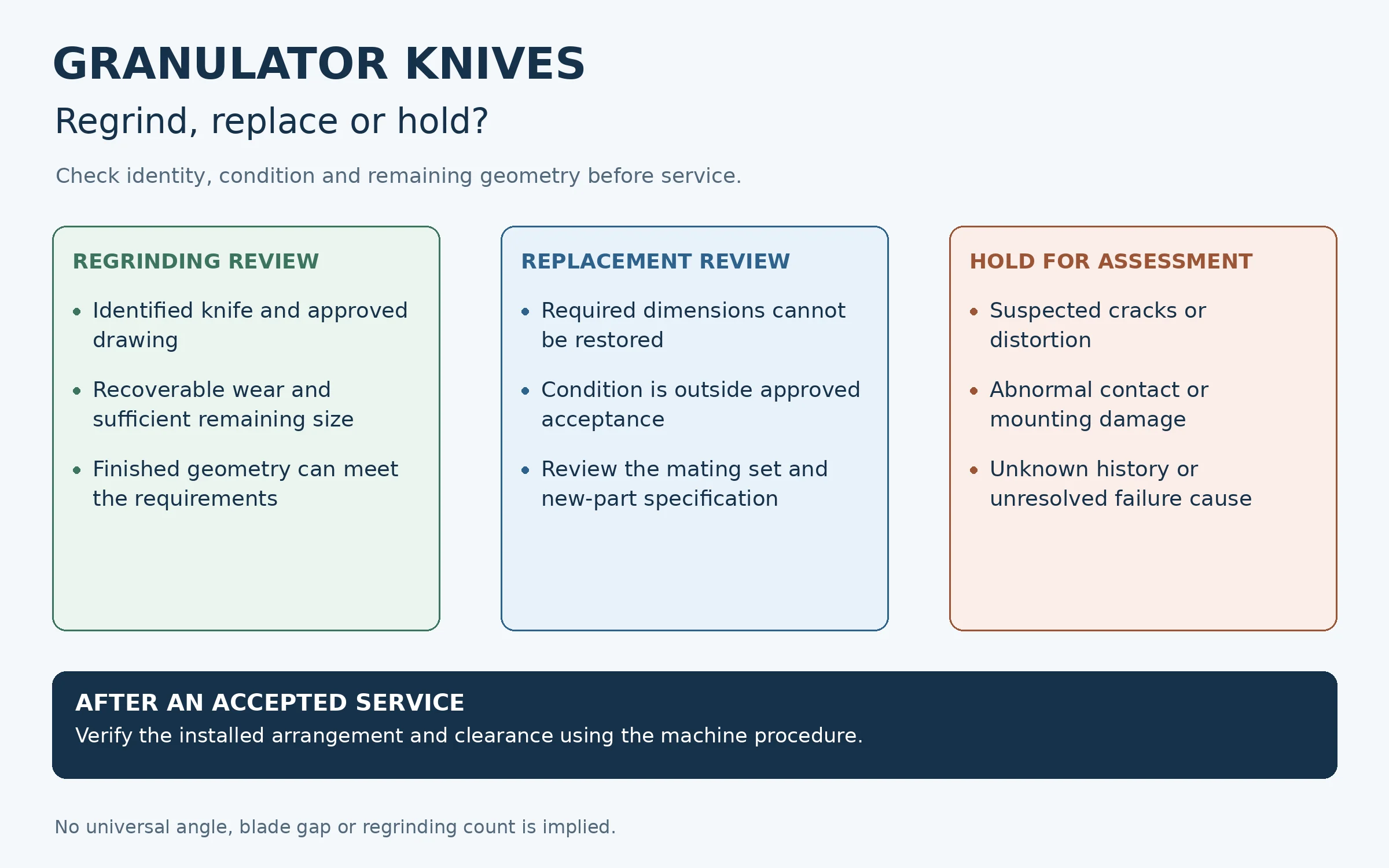
A decision aid for service planning. The approved drawing and qualified inspection determine the actual disposition.
| Decision | When to consider it | What must be resolved |
|---|---|---|
| Regrinding review | Wear appears recoverable and the identified knife has sufficient remaining geometry | Approved profile, damage removal, finished dimensions and inspection |
| Replacement review | Required finished dimensions or acceptable condition cannot be achieved | New-part specification, mating set and installed configuration |
| Hold for assessment | Suspected cracking, distortion, abnormal contact, unknown history or damaged mounting features | Cause, inspection method and an authorized disposition |
Do not send a suspect knife straight through a routine sharpening cycle and assume that a clean-looking edge clears the problem. Photograph the as-received condition and preserve knife identity so that the assessment can be connected to the operating history.
A shallow nick may be recoverable in one knife and unacceptable in another. The deciding information is how much material must be removed and whether the finished knife still satisfies the approved requirements. There is no universal number of sharpening cycles for all granulator knives.
Define the Granulator Knife Sharpening Specification
A useful service request defines the required result and the available adjustment range. The grinding provider then confirms the process and inspection needed to achieve it.
| Requirement | What to state before work starts |
|---|---|
| Knife identity | Drawing revision, part reference, machine and position or set identification |
| Current condition | Wear, damage, previous service and relevant inspection observations |
| Edge geometry | Approved bevel, cutting direction and other profile requirements |
| Remaining dimensions | Applicable minimums and the finished dimensions that must be achieved |
| Mounting features | Condition and requirements for holes, slots, locating faces and seating surfaces |
| Set relationship | Which rotor or bed knives must be serviced and checked together |
| Inspection and release | Features to report, acceptance basis and responsibility for approval |
Grinding angle, coolant, wheel selection and material removal are process decisions tied to the knife and equipment. Do not copy a generic angle or remove a fixed amount from every knife. The Conair TF-series manual includes model-specific sharpening requirements; it illustrates why instructions belong to a particular design, not why its values should be applied to a different machine.
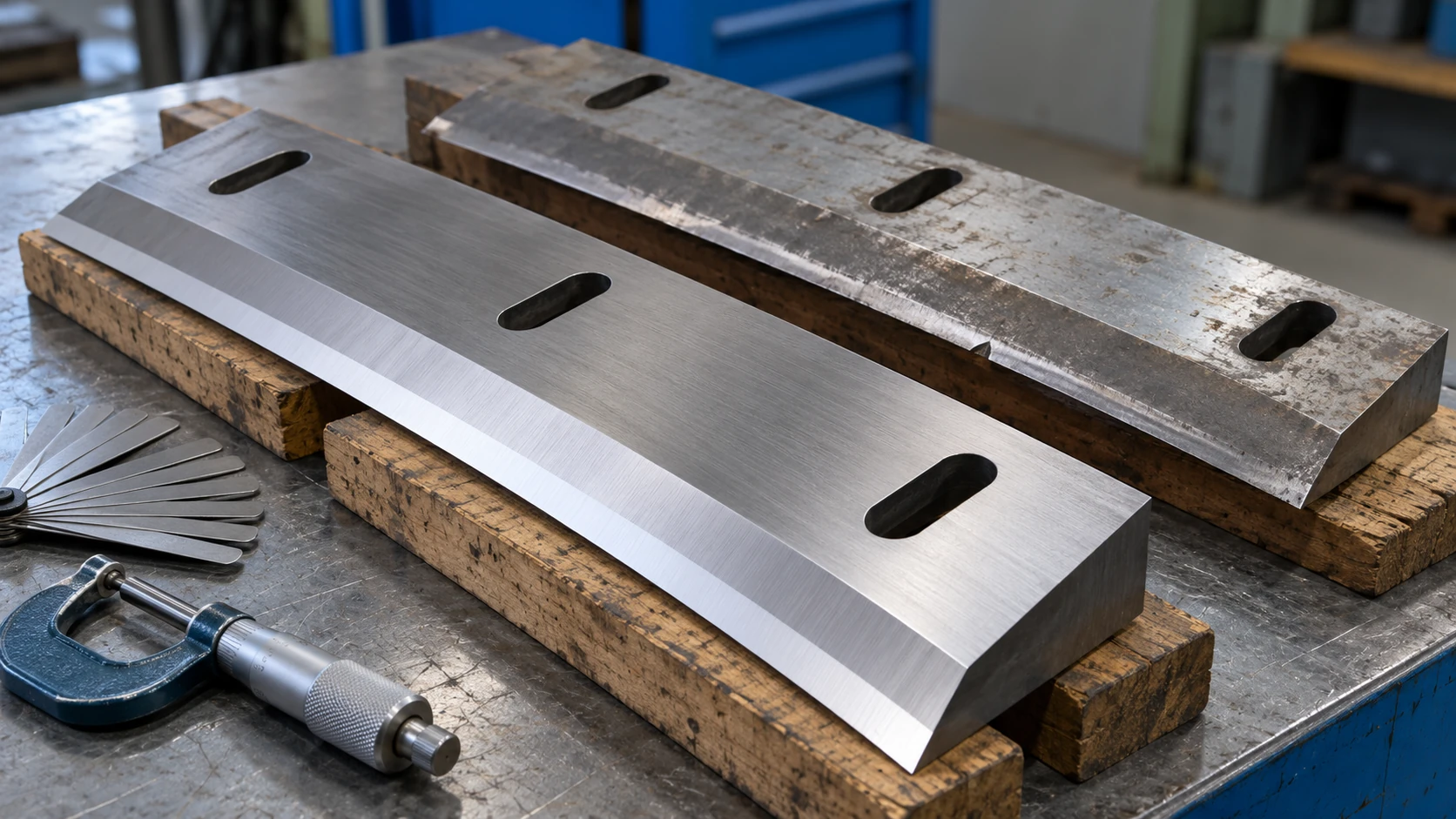
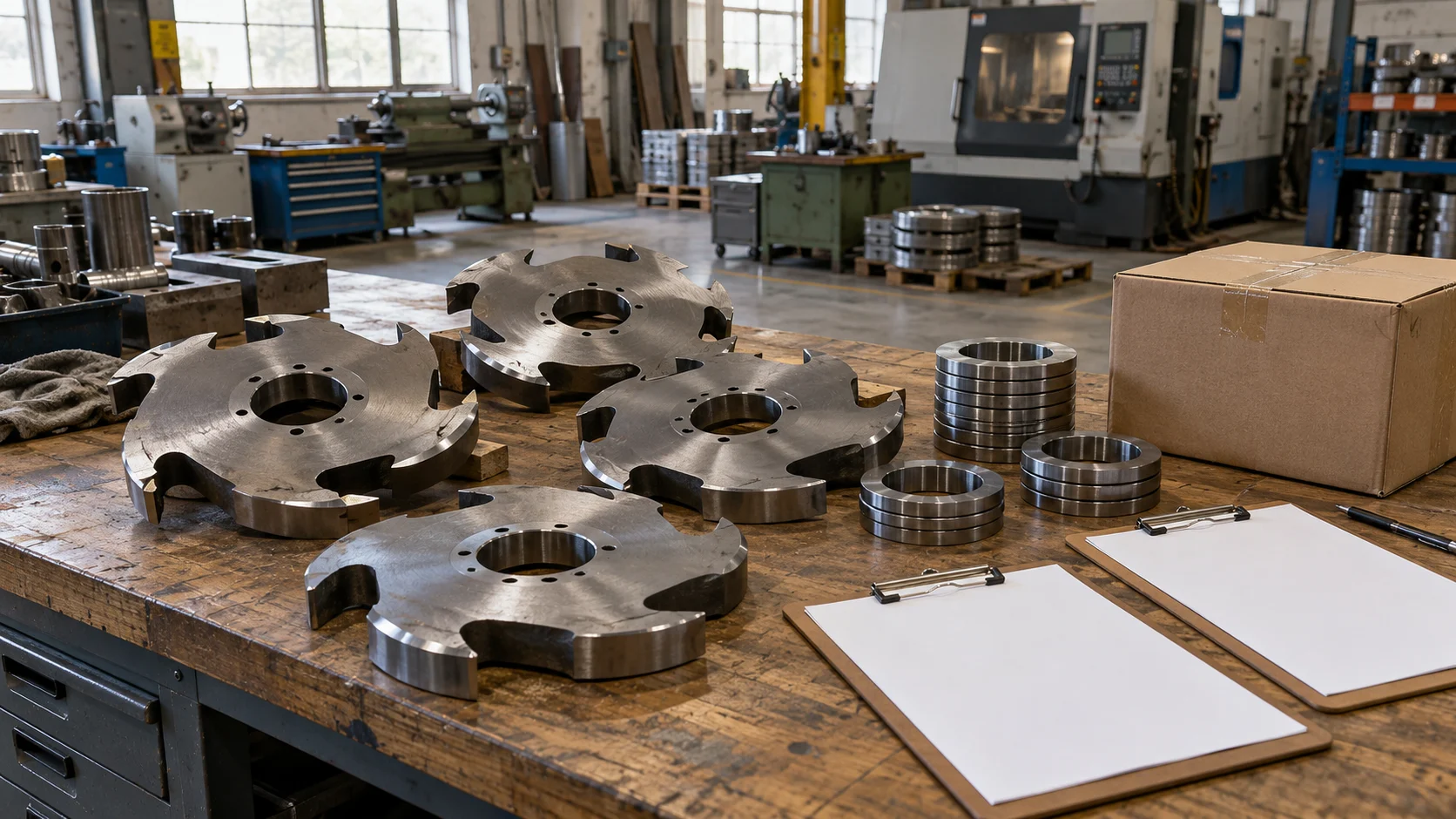
Illustrative tools and knife-condition scene. No measurement or remaining-life result is asserted.
Why Check the Mating Knife Set?
Know which knives form the relevant cutting arrangement. Rotor and bed knife lengths, mounting positions and adjustment provisions can differ. If you are unsure which part is which, use the rotor knives versus bed knives guide before preparing the service schedule.
Do not define matched servicing as “make every part the same size.” Define the relationships and individual limits required by the design. Nor should a new knife automatically be mixed into an otherwise worn set without checking the resulting arrangement.
For some equipment, the manufacturer provides dedicated grinding or setting fixtures. Rapid’s 500-series documentation describes such fixtures for that series. Confirm what your own machine requires and whether the service provider has suitable equipment.
Granulator Blade Clearance After Sharpening
Use the clearance specified for the installed machine, knife arrangement and approved material duty. Regrinding changes knife dimensions, so the ability to establish the required setting must be part of the acceptance decision.
Cumberland’s granulator-selection guidance directs owners to the manufacturer for clearance recommendations appropriate to the material. This article does not prescribe a universal millimetre gap, fastening torque or adjustment sequence.
Use the following record with the manufacturer’s procedure. It is a documentation checklist for qualified personnel, not a substitute for installation instructions.
| Record item | Required entry |
|---|---|
| Equipment and knife set | Machine identity, knife references and applicable revisions |
| Source requirement | Manual or approved instruction, including revision |
| Approved clearance | Specified value or range, units and conditions |
| Measurement locations | Required positions and knife combinations |
| Actual readings | Recorded values at the specified positions |
| Related acceptance checks | Required mounting, fastener, adjustment and screen checks |
| Disposition | Accepted, held or corrected, with responsible release |
One reading at one convenient point is not automatically evidence for the complete cutting arrangement. Use the locations and checks required by the equipment procedure, and investigate an inconsistent result rather than averaging it into an apparently acceptable value.
Knife access, adjustment and any prescribed rotation checks require the correct isolation and stored-energy controls. OSHA’s hazardous-energy overview explains the servicing hazard. Follow your site’s authorized procedure and applicable rules; a stopped rotor or an interlock is not, by itself, a complete energy-control process.
Compare Regrinding and Replacement on the Same Cost Basis
Ask for a service assessment before assuming that the lower shop price is the lower operating cost. Include the costs within an agreed comparison boundary and avoid counting a loss twice.
The following is a hypothetical calculation. It is not a NJDETE price, grinding-service offer or blade-life claim.
| Assumed cost and result | Regrinding option | New-knife option |
|---|---|---|
| Service or purchase cost | $240 | $700 |
| Freight and attributable plant labour / downtime | $160 | $100 |
| Total included cost | $400 | $800 |
| Accepted material over the assumed useful interval | 80 tonnes | 200 tonnes |
| Calculated knife-related cost per accepted tonne | $5.00 | $4.00 |
Under these assumptions, the new-knife option costs more initially but less per accepted tonne. Different measured useful intervals can reverse the outcome. Obtain comparable feed, output-quality and maintenance records before deciding that either option is inherently more economical.
For a new-part enquiry, compare the approved geometry and material requirements before comparing unit prices. The custom granulator knife RFQ guide lists the information needed for a replacement quotation.
Plan a Service Rotation Without Mixing Up Knife Sets
If a plant uses a spare set while another is being assessed or reground, record which set is installed, which is available and which is still awaiting release. The number of sets needed depends on confirmed service time, transport, inspection and the planned change schedule.
Keep each set identifiable through packing and handling. Protect the cutting edges and mounting surfaces, and retain the service report with the set history. A returned box of sharpened knives should not automatically become ready-to-use stock before receiving checks are complete.
After authorized installation and release, compare output quality and accepted throughput with the baseline under recorded conditions. If the original symptom remains, return to the wider process diagnosis rather than repeatedly grinding the knives.
Review NJDETE Replacement-Knife Information
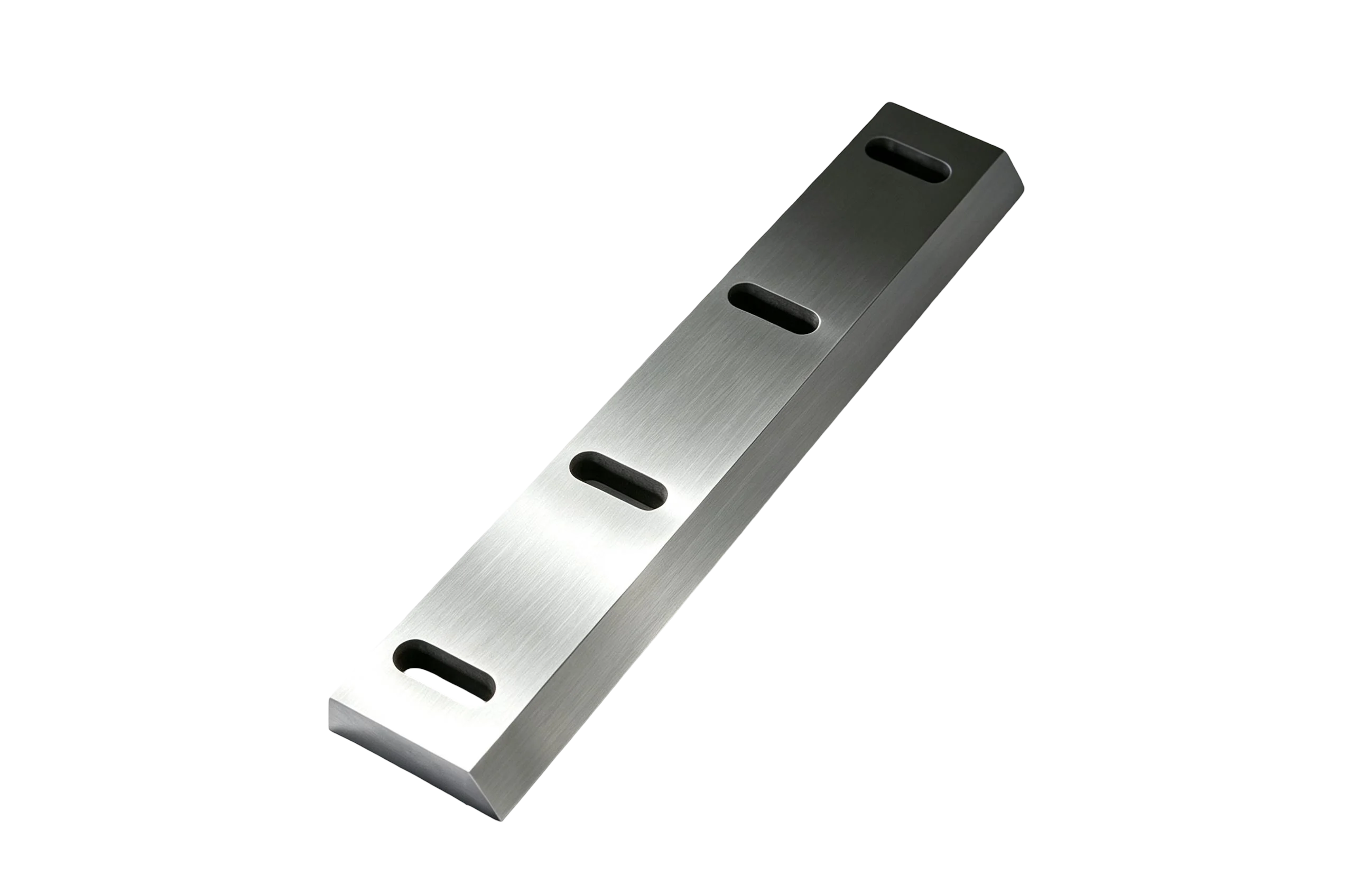
Published NJDETE product photograph. A replacement order still requires the approved dimensions, mounting features and material requirements.
NJDETE’s plastic crusher blade and granulator knife page is the product starting point for a replacement enquiry. Send the knife drawing or sample information, machine identity, current condition and required quantities. Confirm whether the request is for new knives, a technical assessment or a service route; this article does not establish local collection or regrinding-service availability.
Company Video Context
The following video belongs to the Nanjing Dete Shredder channel. It provides general company equipment context, rather than instructions for grinding or setting granulator knives.
Watch the original NJDETE video.
Frequently Asked Questions
How often should granulator blades be sharpened?
Use the machine requirements and your recorded operating condition. Material abrasiveness, contamination, throughput and knife condition affect the decision. A fixed weekly or monthly rule without a duty record is not a reliable specification for every plant.
How many times can a granulator knife be reground?
There is no universal count. Assess remaining dimensions, recoverable geometry and condition after the proposed material removal. Keep the service history, but do not use the number of previous services as the only acceptance criterion.
What is the correct granulator blade gap?
Obtain the requirement for your machine and knife arrangement from its manufacturer or approved technical documentation. Record the specified conditions, measurement locations and actual results after servicing. Do not transfer a gap from a different model.
Can sharpening fix chipped granulator knives?
It depends on the damage and remaining geometry. Identify why the chip occurred and have the knife assessed before approving grinding. Suspected cracks, damaged mounting features or abnormal contact need an authorized disposition.
Should rotor knives and bed knives be sharpened together?
Review the complete mating arrangement. The design determines which parts should be serviced as a group, their individual limits and how they are set. Identical finished dimensions are not a universal requirement across rotor and bed knives.
Does a sharp knife guarantee good regrind?
No. Installed geometry, clearance, screen condition, feed and material contamination also matter. If output remains unsuitable after an accepted service, use the process record to investigate the remaining causes.
Prepare a Knife Assessment or Replacement Enquiry
Send the machine identity, drawings, current knife dimensions, wear photographs and service history. Identify the available clearance instructions and the result you need. Contact NJDETE about replacement granulator knives and confirm the appropriate supply scope.