

Plastic Bottle Shredder Selection: PET, HDPE and Feeding
Release time: 2026-10-15
A plastic bottle shredder should be selected around the bottles you receive and the material your next process can accept. Identify the polymer, bottle size, delivery form and remaining contents before comparing machine power. Then establish whether the task is volume reduction, preparation for washing, or production of a defined regrind fraction.
Hollow bottles create a particular challenge: a large hopper can look full while holding little plastic by weight. Loose bottles, flattened bottles and material released from bales can also behave differently during feeding. A demonstration with prepared pieces may leave those handling questions unresolved.
Start with the actual bottle stream, confirm sustained feeding, and assess the output against its intended use. A machine that breaks bottles into pieces has completed a cutting task; the rest of the recycling route still needs to be defined.
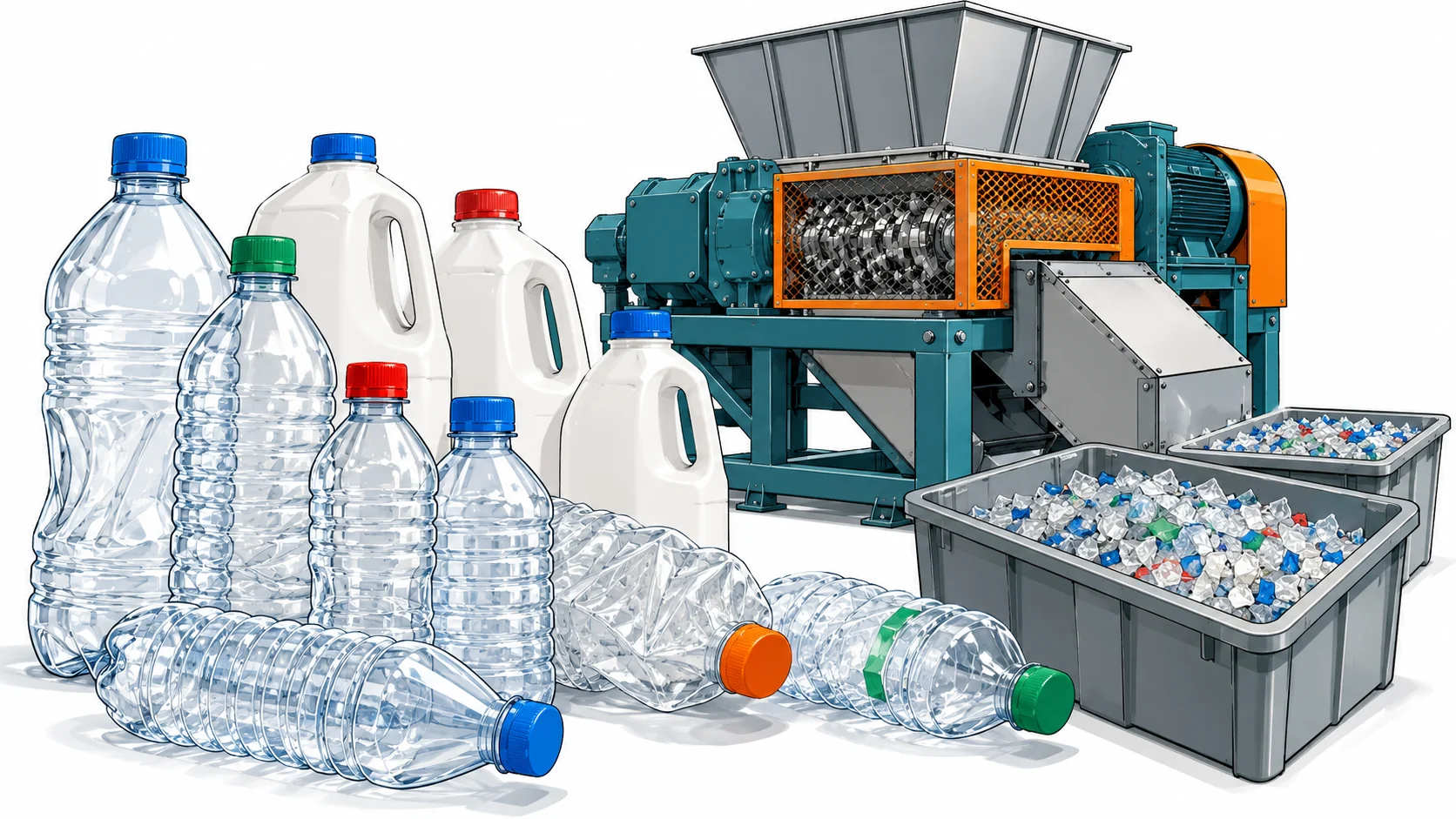
Concept illustrations show material and equipment arrangements for discussion. They do not represent a tested NJDETE installation.
What Bottle Waste Are You Processing?
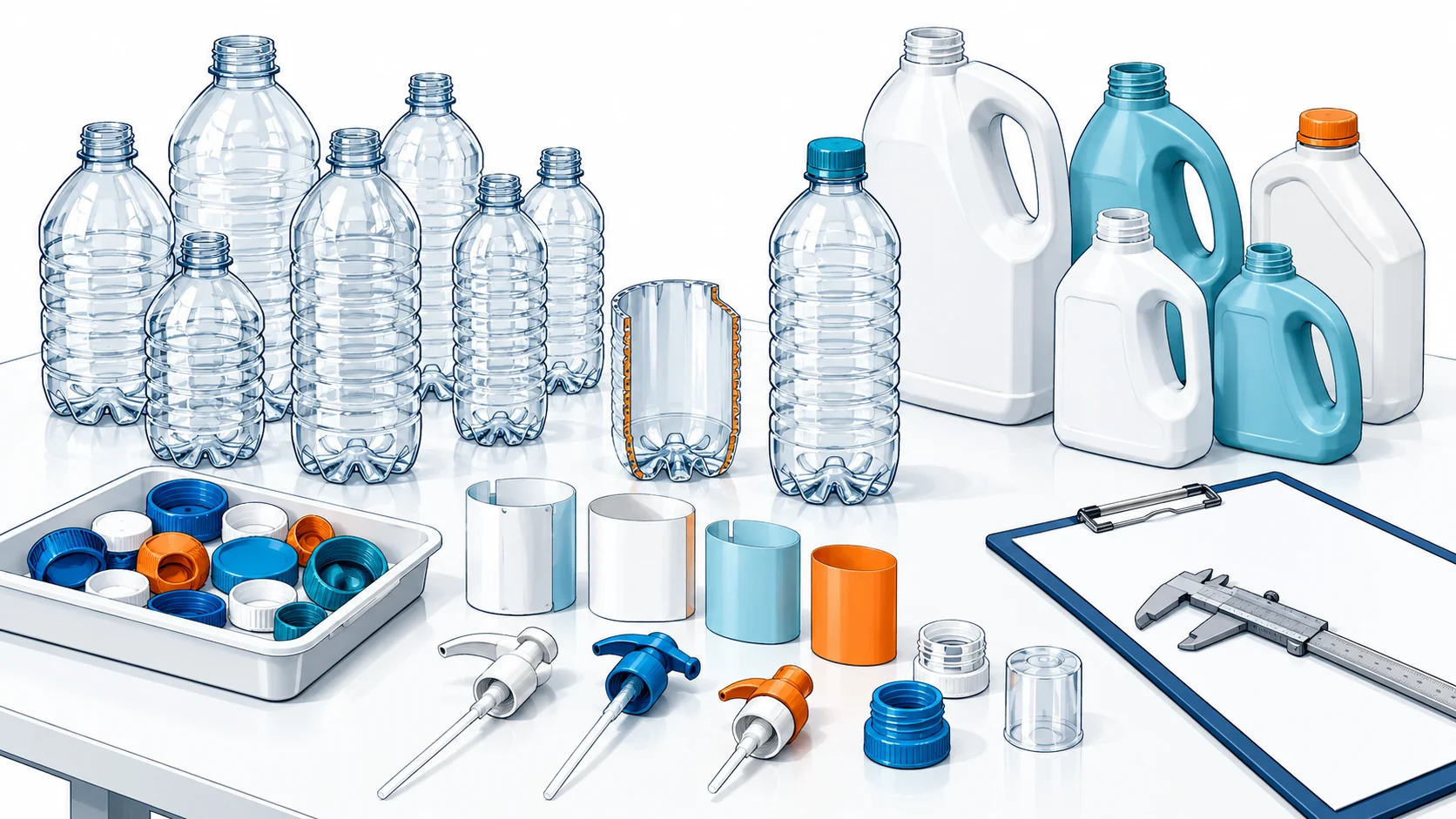
Keep PET bottles, HDPE bottles and other identified polymers separate in the material description. Record whether the stream is a clean production reject or recovered packaging. Similar-looking containers can have different materials, closures and previous uses, so appearance alone is insufficient.
| Material detail | What to record | Question it resolves |
|---|---|---|
| Bottle body | Confirmed polymer, color, size and typical weight | What material is the line intended to recover? |
| Difficult sections | Necks, handles, thick bases and irregular rejects | Which routine items need separate evaluation? |
| Delivery form | Whole, flattened, loose, bundled or baled | What preparation and feeding arrangement are needed? |
| Attached components | Caps, rings, sleeves, labels, pumps and inserts | What else will enter the cutting and separation stages? |
| Material condition | Residues, moisture and known contamination | What preparation or handling requirements apply? |
| Daily workload | Mass, occupied volume and variation between loads | Can the complete workflow meet the required daily result? |
PET and HDPE Need Distinct Material Records
Record clear and colored PET separately where the receiving operation requires it. For HDPE bottles, identify the actual bottle types and any pumps, handles or other components that accompany them. Do not assume a bottle body identifies the material of its cap or label.
Processing different polymers in separate batches may be an option for a suitable configuration. Confirm cleaning and changeover requirements when cross-contamination matters. Cutting both materials successfully does not establish that their combined output is acceptable.
Caps, Labels and Residues Belong in the Assessment
Ask the receiving process which components may remain attached at this stage and which must be removed beforehand. Mechanical cutting does not itself separate the bottle body from its closure or label.
PET recycling guidance from the European PET Bottle Platform considers the body, cap and label as separate design elements. Its testing resources also address separation behavior. This is why component identity matters alongside the bottle polymer. See the EPBP bottle design guidelines for the broader recycling context.
Identify previous contents before processing recovered containers. Material with uncertain or incompatible residues needs an agreed handling route before a shredding assessment proceeds.
Will Loose or Flattened Bottles Feed Consistently?
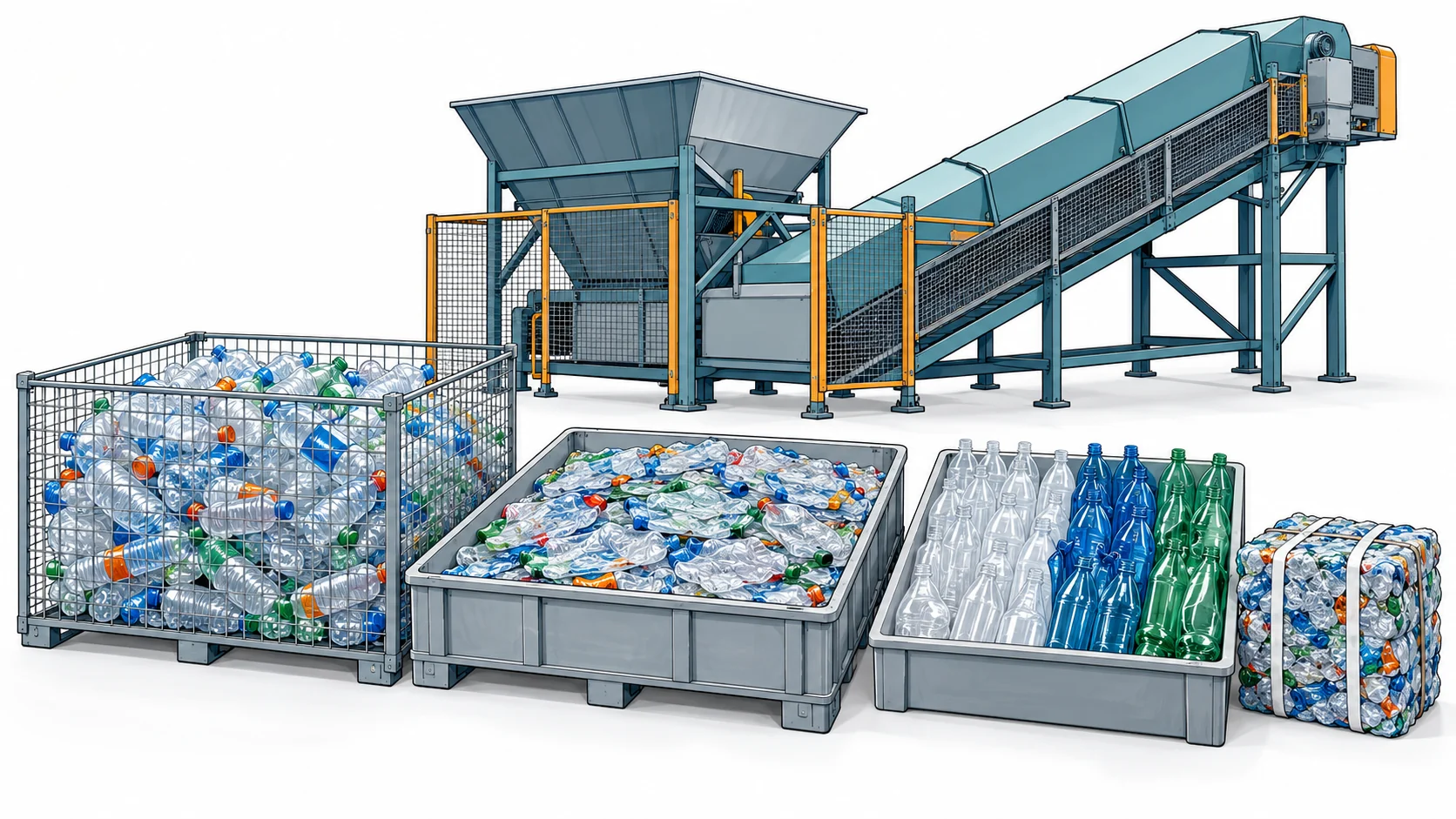
A plastic bottle shredding machine must be evaluated with the physical form it will receive. Loose lightweight bottles may not engage like flattened or denser material. Feeding performance depends on the proposed equipment and loading arrangement, rather than the hopper opening alone.
During an evaluation, observe whether material continues to reach the cutting system or repeatedly waits above it. Record pauses, the need to prepare another load, and any permitted feed-assistance equipment. Keep the guarding and approved loading method in use throughout.
Whole Bottles Versus Prepared Feed
If your objective is to process whole bottles, the evaluation should include whole bottles across the normal size range. If flattening or another preparation step is proposed, establish how it will be performed and include its working time.
Treat material arriving in bales as a separate handling condition. Confirm the method for opening, separating and presenting it to the system, including removal of bale ties or other excluded items. A result using loose bottles does not establish whole-bale acceptance.
Record Mass and Volume Together
For a defined bin or container, record the net mass and the occupied volume of representative bottles. Use the same filling method when comparing loads. This helps distinguish a cutting limitation from a task that is dominated by moving and presenting bulky, lightweight material.
Also identify where the next load will wait, how it reaches the hopper and how discharged pieces will be collected. A workable arrangement needs continuity on both sides of the cutting chamber.
Do You Need Shredding, Granulation or Compaction?
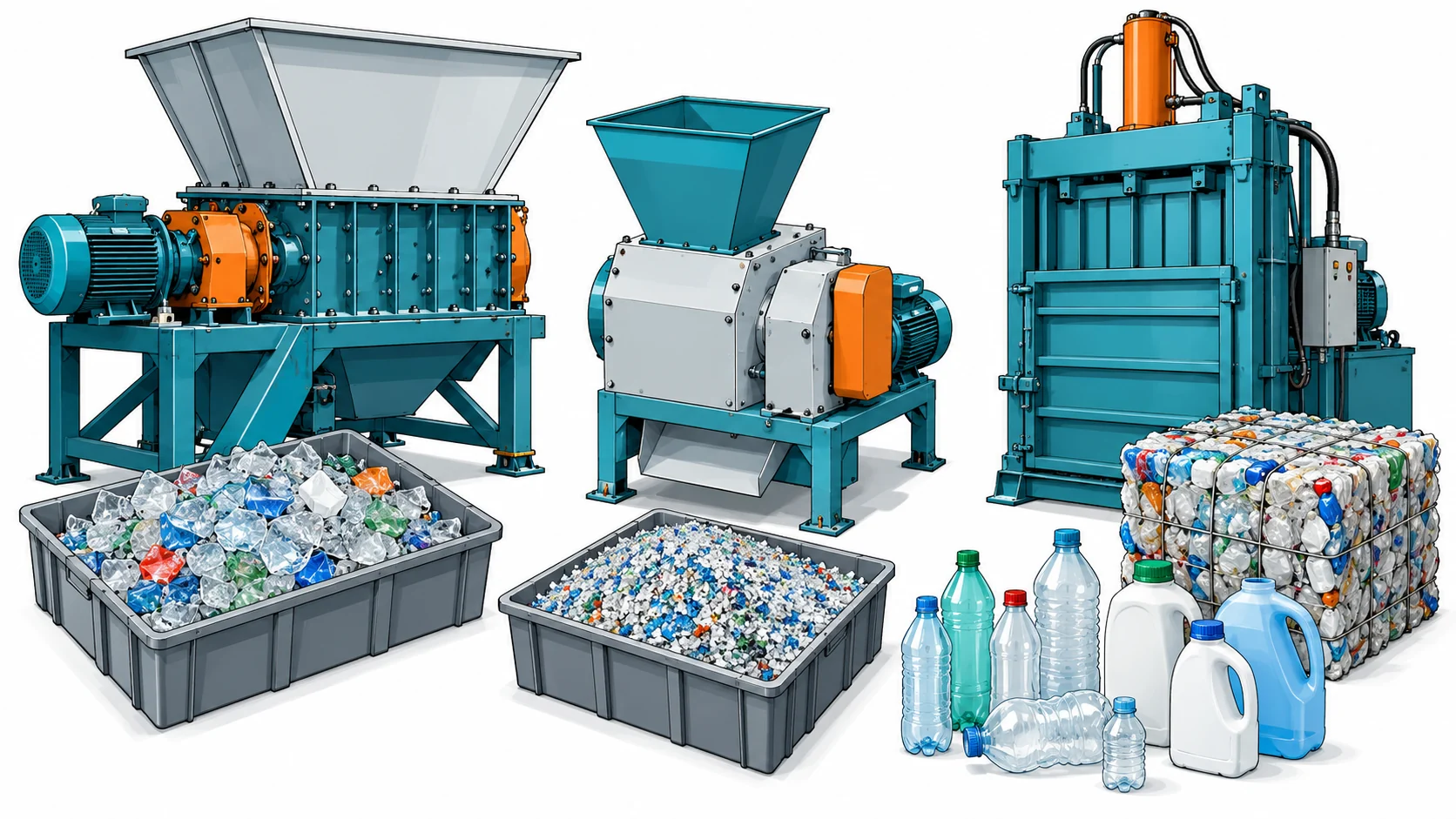
Choose the operation that produces the required next-stage material. Bottle size reduction and bottle compaction solve different tasks. Granulation adds another cutting approach that may be useful when a more controlled regrind fraction is required.
| Intended result | Route to assess | What needs confirmation |
|---|---|---|
| Reduce whole bottles into manageable pieces | A suitable primary shredding arrangement | Sustained feeding, remaining preparation and output form |
| Produce a specified regrind fraction | Suitable granulation, with pre-shredding where required | Accepted input, output distribution and handling between stages |
| Reduce storage or transport volume while retaining compacted containers | A suitable compaction arrangement | Acceptance by the receiving operation and further preparation |
| Supply a bottle washing or separation line | Size reduction matched to that line | Permitted piece dimensions, contamination and feed rate |
Do not add a pre-shredder automatically if an appropriate granulator can accept your bottle stream directly. Equally, do not assume every granulator accepts the original whole items. Compare the actual feed and cutting arrangements with representative material.
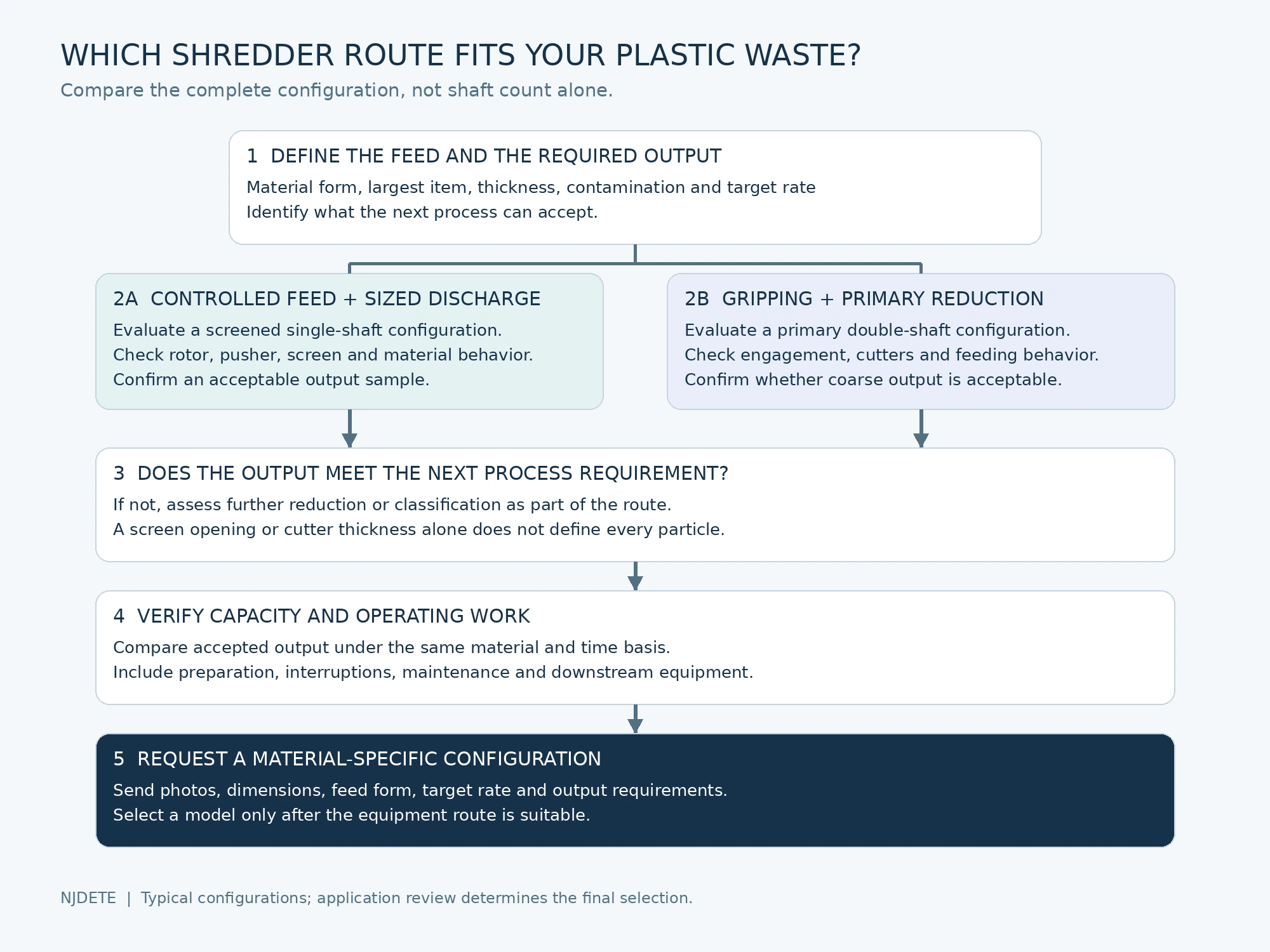
For the broader equipment comparison, use the single-shaft and double-shaft plastic shredder guide. Shaft count is one configuration detail; it does not settle bottle handling or final output requirements.
When evaluating a plastic bottle shredder machine, document the loading system, cutting arrangement, any screen, discharge equipment and subsequent processing. A model name or motor rating does not describe that complete route.
What Must Happen After Bottles Are Shredded?
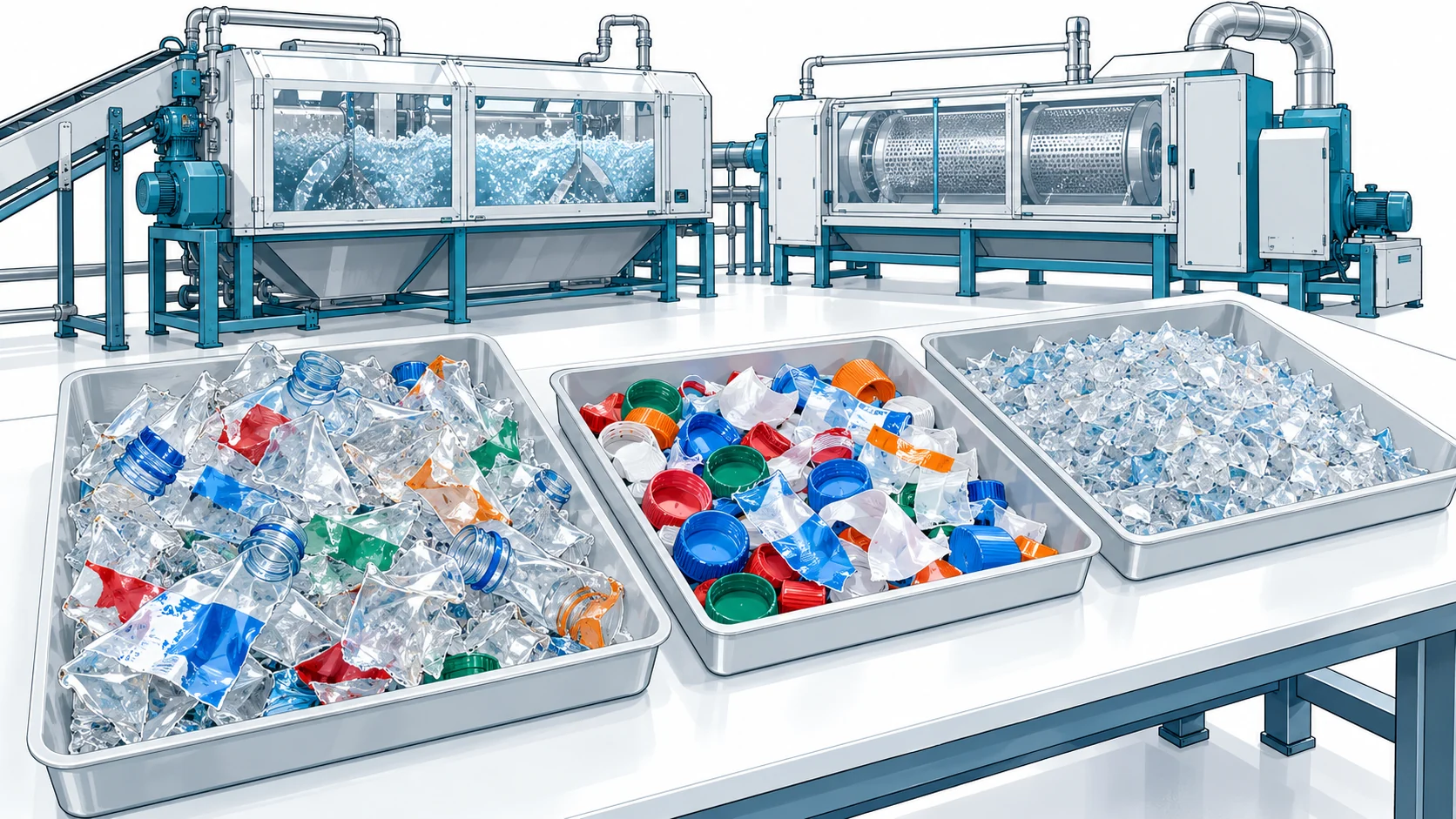
Agree what the next operation can receive before selecting around a cutter thickness or screen opening. Record acceptable piece dimensions and form, together with limits for fines, labels, other polymers, moisture and remaining contamination where relevant.
Smaller Pieces Are Not Automatically Clean Flakes
Primary size reduction can leave bottle fragments mixed with closures, label pieces and residues. A recycling route may require further cutting, washing, separation and drying. Their sequence and settings depend on the input and final material specification.
Ask where each requirement will be achieved. If labels must be separated, identify the process responsible. If dry material is required, identify the drying stage and the method used to assess it. Do not judge the complete output from a small photograph of selected clean pieces.
Keep a representative sample that includes the difficult fraction. Examine oversize pieces, thin strips, fines and attached material using an agreed acceptance method. A cutter dimension or screen opening alone does not describe every dimension of an irregular particle.
Food-Contact Reuse Is a Separate Requirement
Shredding a PET bottle does not establish that the resulting material is suitable for new food packaging. Source control, contamination removal, the recycling process and intended conditions of use require their own evaluation. The FDA overview of recycled plastics in food packaging explains these considerations for the United States.
For equipment selection, define the immediate output specification and the scope of the subsequent line. Avoid describing a standalone cutting result as a complete bottle-to-bottle recycling result.
How Much Bottle-Shredding Capacity Do You Need?
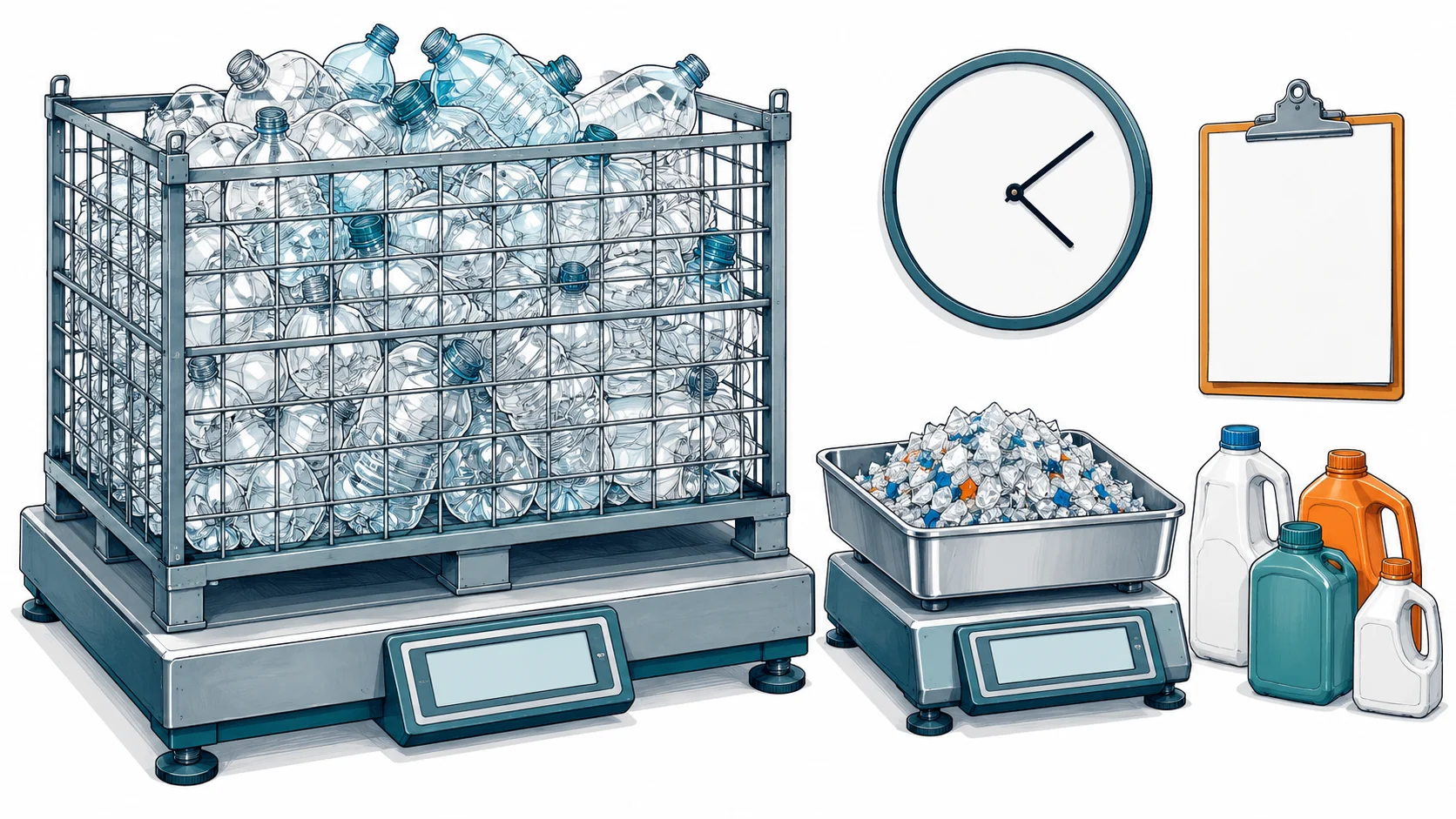
Define capacity using accepted output over a stated period. For a bottle operation, record the polymer stream, bottle form and preparation conditions alongside the measured mass. These details determine whether two results are comparable.
Bottle counts can help plan collection, but they do not replace weight measurements. Different bottle sizes and weights mean that the same number of bottles may represent a different quantity of plastic. Remaining liquid or moisture can also affect the weighing basis.
Keep the Time Boundary Visible
The required accepted-output rate is the daily accepted mass divided by the working time available for the activities included in the assessment. Record whether that period includes sorting, preparation, loading, cutting, discharge and any additional pass.
If a separate team prepares material in parallel, describe that staffing arrangement. If one person performs the tasks sequentially, preserve that sequence in the calculation. Compare proposals using the same activities and time boundary.
The industrial shredder capacity guide explains the general calculation. For bottles, add the loading and bulk-volume observations so a brief cutting measurement is not mistaken for a sustainable daily result.
Distinguish Input Weight from Accepted Output
Record the agreed weighing condition, input mass, accepted output, excluded components, oversize and material retained in the system. Do not count material twice when it requires another pass.
Where a downstream washing or separation process removes components, keep the cutting-stage result separate from the final recovered-polymer result. Both may be useful, but they describe different outputs. State the measurement point whenever capacity is reported.
What Should a Bottle Material Trial Confirm?
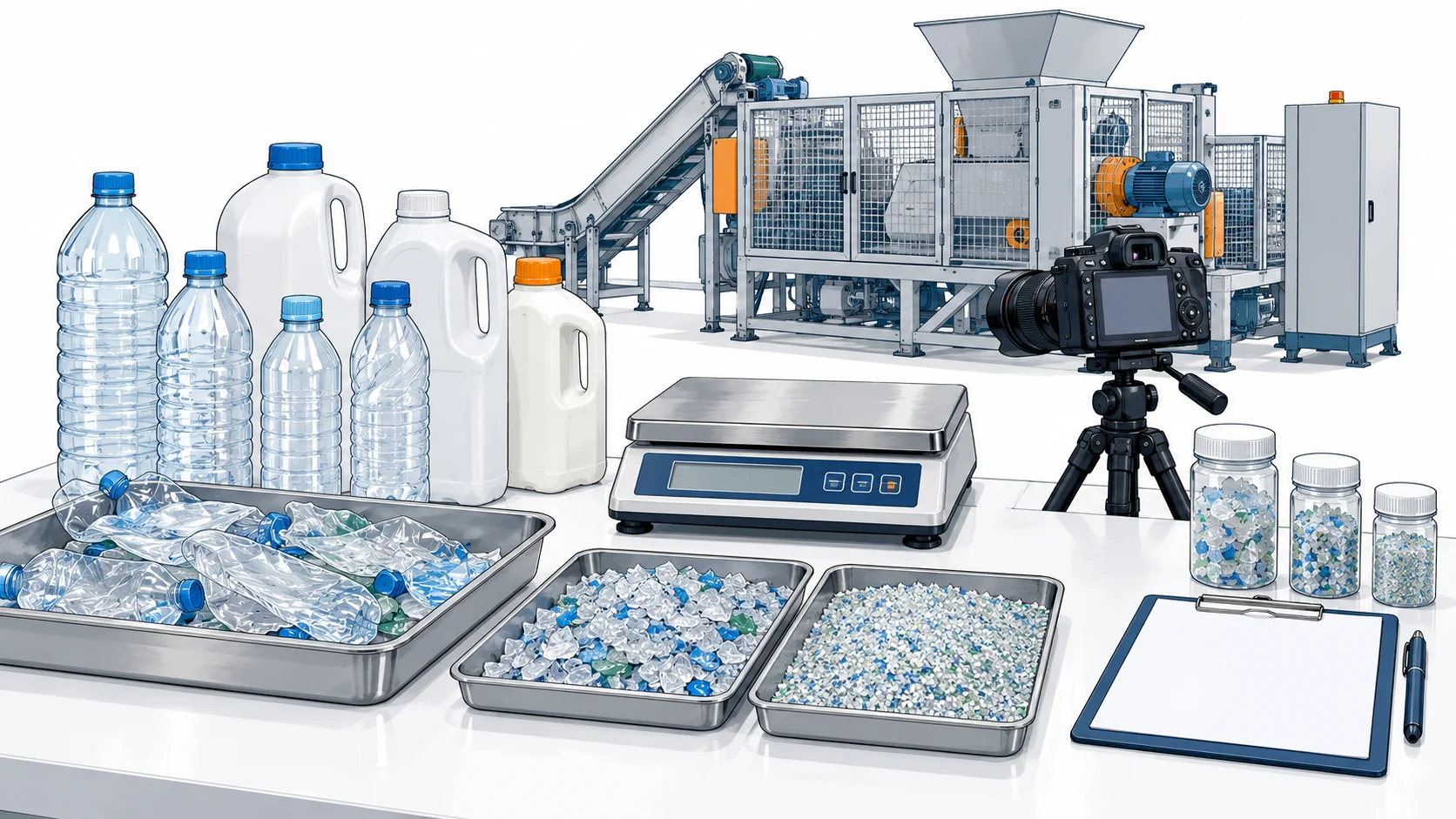
Use a batch that reflects routine bottle sizes, delivery form, attached components and material condition. Include the difficult normal items. A batch containing only easily fed clean rejects cannot resolve questions about recovered bottles with labels or heavier neck sections.
Agree the record and acceptance requirements before processing begins.
| Trial record | What it should establish |
|---|---|
| Configuration | Which feed system, cutting arrangement, screen and auxiliaries were used |
| Input identity | Polymer, bottle sizes, delivery form and attached components |
| Preparation | What was removed or changed before feeding, with time recorded |
| Feeding observation | How material reached the cutters and what interrupted progress |
| Weighing basis | The material condition and measurement point for each mass |
| Output sample | Representative pieces, fines, oversize and attached material |
| Elapsed time | Which activities and interruptions were included |
| Remaining work | What further preparation or processing the receiving operation requires |
Retain photographs of the original feed, the prepared feed and the resulting material. Keep weighing records and footage of a normal feeding sequence associated with the configuration evaluated. A result should remain traceable when settings or parts change.
Only trained, authorized personnel should conduct the trial under the equipment instructions and site procedures. Use the approved loading method, guards and interlocks. Before blockage clearing, inspection or service inside the equipment, authorized personnel must isolate hazardous energy, control stored energy and verify isolation under the applicable procedure. An emergency stop alone does not establish isolation.
Use the trial to identify the limiting task. If the proposed improvement requires additional flattening or sorting, assess that extra work alongside the cutting result. Confirm the whole operating arrangement before accepting a revised capacity statement.
Frequently Asked Questions
Can One Plastic Bottle Shredder Process PET and HDPE?
A suitable configuration may be evaluated for each material. Confirm the bottle sizes, closures, delivery form and output requirements separately. Successful cutting of both polymers does not make their mixed output suitable for a receiving process that requires separated material streams.
Should Caps and Labels Be Removed Before Shredding?
Follow the requirements of the cutting equipment and the subsequent recycling process. Identify the component materials and any excluded attachments. Some routes handle component separation later; others require preparation first. Do not assume shredding itself removes or sorts them.
Is a PET Bottle Shredder Enough to Produce Clean Recycled Material?
It completes a size-reduction task. Cleanliness, polymer separation, moisture and final reuse suitability depend on the rest of the process and its controls. Define the required output and the additional stages before assessing a standalone machine.
Can Whole Plastic Bottles Go Directly into a Granulator?
Potentially, where the particular granulator and feeding system are suitable for the bottle stream. Confirm accepted dimensions, delivery form and sustained feeding with representative material. Pre-shredding should address a demonstrated handling or processing need.
Why Can a Full Hopper Give a Low Mass Throughput?
Hollow bottles can occupy substantial space relative to their weight. Feeding continuity may also limit progress. Record net mass per defined container, observe material engagement and use the same time boundary before attributing the result to motor power or knife condition.
Does Cutter Thickness Determine the Final Bottle-Flake Size?
No single cutter dimension establishes every dimension of the discharged material. Assess the complete cutting and sizing arrangement, then check a representative output sample against the next process’s acceptance limits.
Prepare Your Bottle Processing Brief
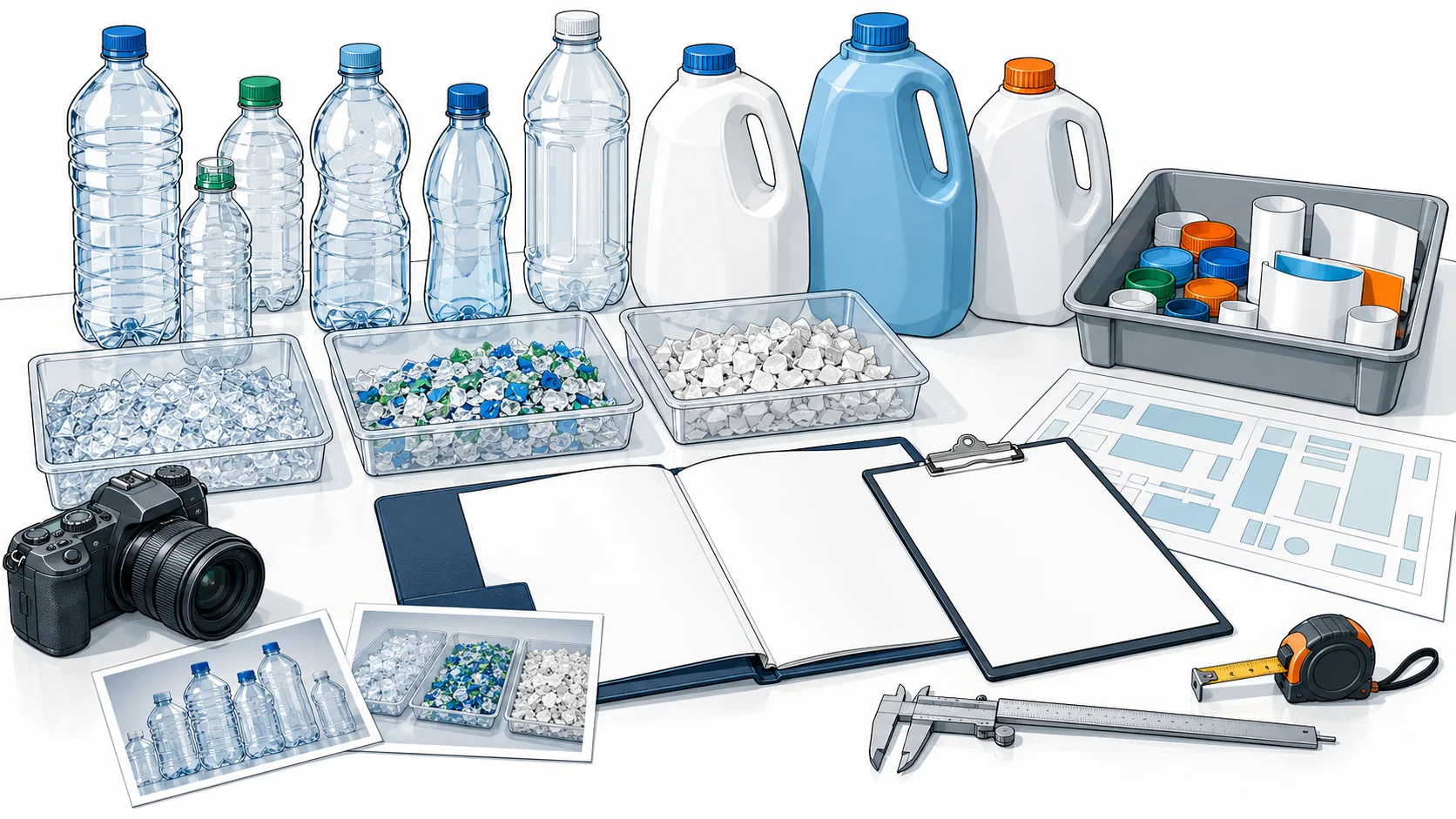
Before discussing a plastic bottle shredder configuration with NJDETE, prepare photographs of the normal bottle stream, confirmed polymers, largest routine items, delivery form, daily mass and occupied volume. Include caps, labels, other attachments and known residues.
Add the available working window, existing preparation equipment and the next operation’s material requirements. State which preparation tasks are acceptable and which you need the proposed arrangement to address.
Use the plastic waste shredder selection guide to place this bottle assessment within the wider equipment decision. The result to confirm is practical: which bottles can enter, how they will be fed, what leaves the cutting stage, and what work remains before that material is usable.