

Small Plastic Shredder: How to Choose for Your Workshop
Release time: 2026-10-15
Before you buy a small plastic shredder, check whether it can accept your largest normal item and clear the day’s waste within your available operating time. It should also produce material your next process can use. A compact machine that needs constant pre-cutting or leaves unsuitable pieces may add work instead of removing it.
For a workshop, in-house recycling area or pilot project, the useful comparison starts with feed size, accepted output and installation requirements. This guide explains how to make that comparison using NJDETE’s published Mini, 150 and 250 configurations.
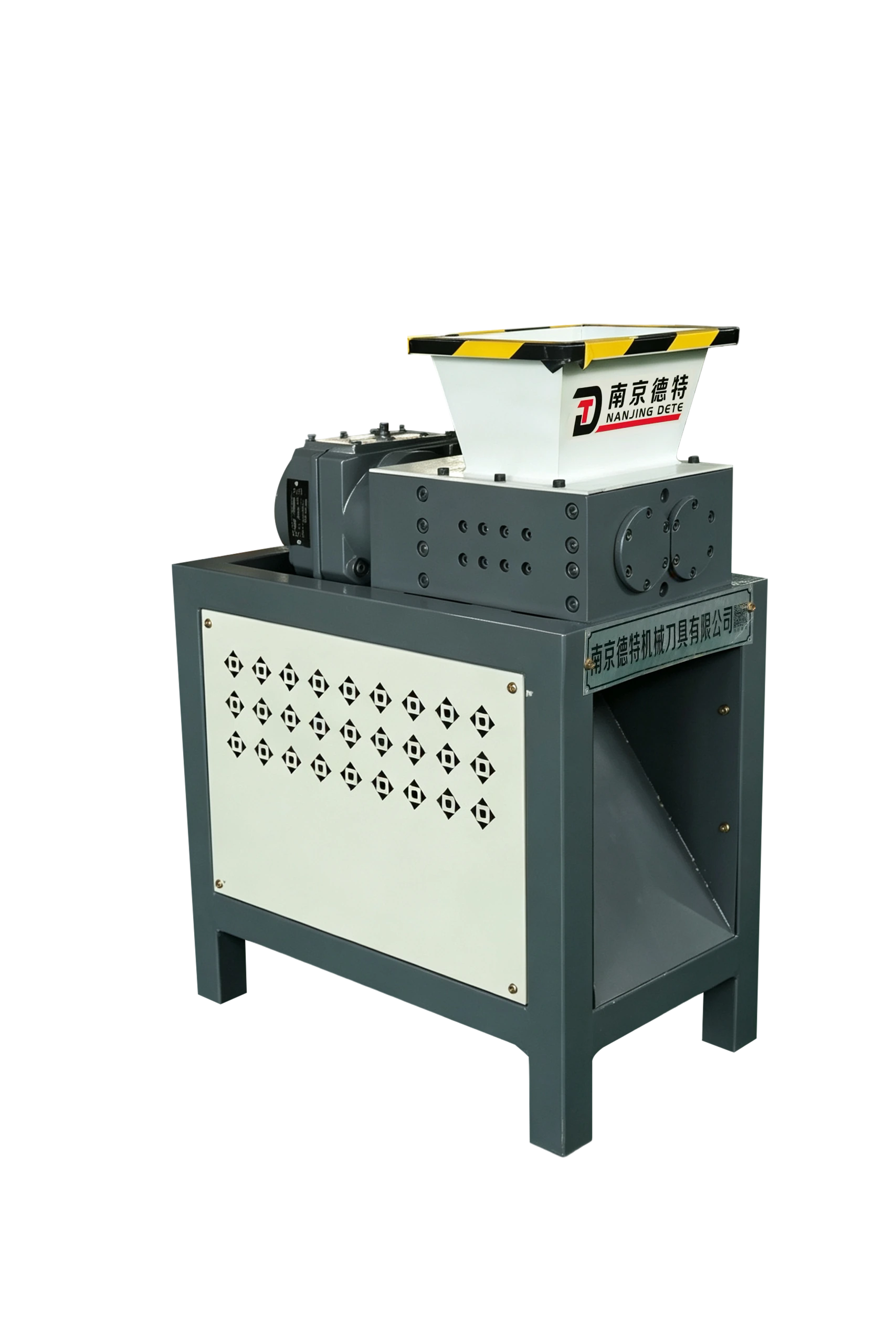
NJDETE Mini model. Its compact external dimensions are useful for layout planning; feed acceptance and output require a separate application assessment.
What Should a Small Plastic Shredder Do for Your Workshop?
Choose it to solve a defined handling or processing problem. Your goal might be to reduce bulky rejects before another machine, prepare small batches for evaluation, or keep factory scrap from accumulating beside production.
Start by describing the current job: who handles the waste, how often it arrives, and where it goes next. If suitable scrap already fits your existing granulator, first check that direct route. Adding a shredder makes more sense when the present feed is too bulky, awkward or inconsistent for the receiving process.
“Small” covers different equipment. A hand-operated unit, a desktop recycling machine and a compact industrial plastic shredder can serve very different workloads. Compare the supplied feeding arrangement, cutting system, collection method and operating requirements before comparing prices.
Your first purchasing question should be: which part of our daily work will this machine remove, and what new work will it introduce?
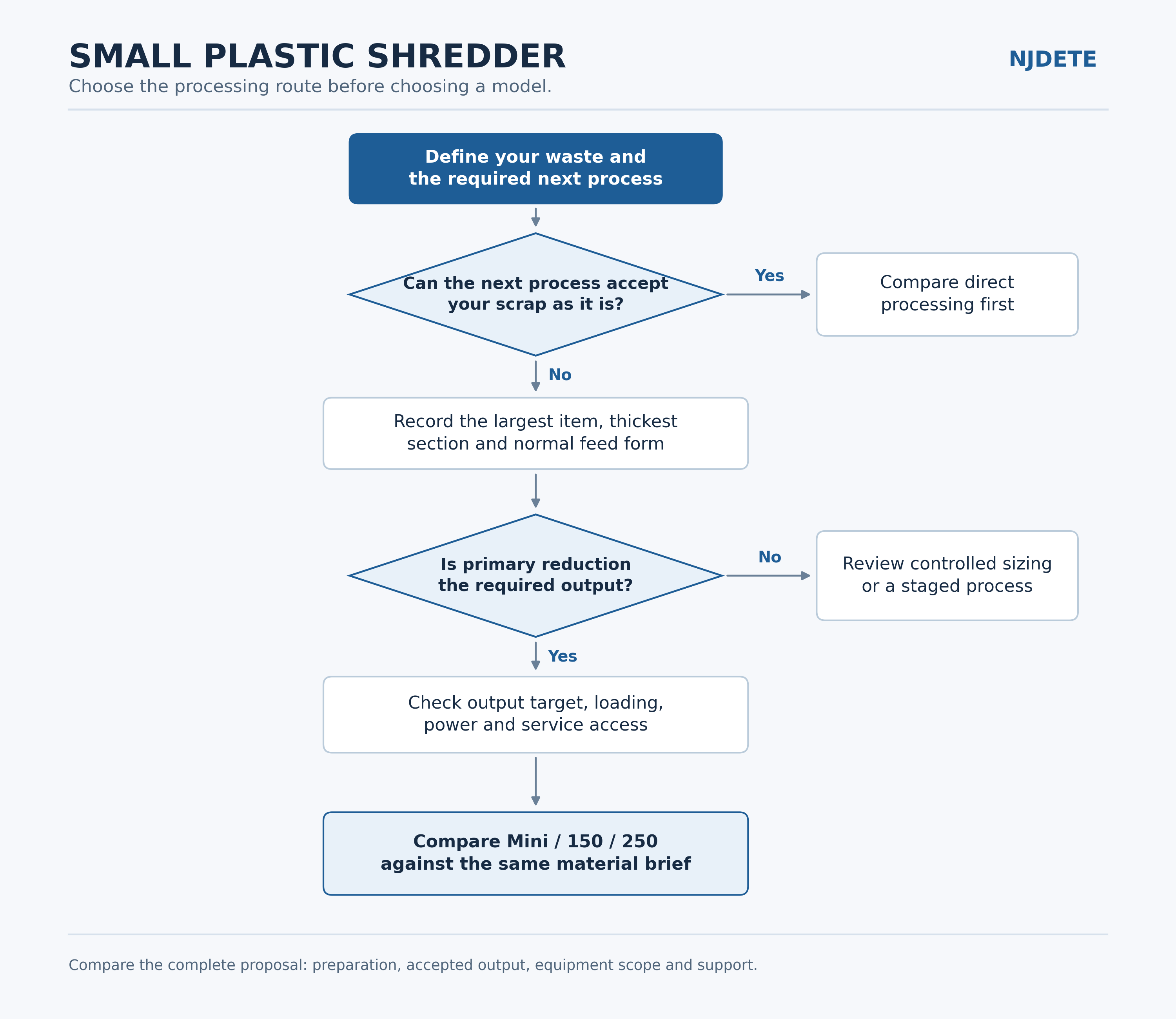
Follow the required process route before selecting a machine configuration.
How Much Capacity Does Your Small Plastic Shredder Need?
Work backwards from the waste you need to clear and the time you can actually allocate. A low daily quantity can still require a demanding hourly rate if an operator is available only briefly.
Use this planning calculation:
Required accepted output per hour = daily quantity to process ÷ available processing hours.
For a hypothetical workshop producing 80 kg of sorted plastic scrap daily, suppose the operator has three hours available. If sorting, setup and end-of-job cleaning use one hour, two hours remain for loading, shredding and collection:
80 kg ÷ 2 hours = 40 kg/h required accepted output.
This is an illustrative purchasing target, not a capacity claim for any NJDETE model. It tells you what to ask a supplier to demonstrate using your material and working method.
Keep the timing boundary consistent. A demonstration timed only while cutters are engaged cannot be compared directly with a target that includes loading, bin changes and normal interruptions. Record material requiring another pass separately from output accepted by the next process.
For the wider calculation and measurement checklist, use the industrial shredder capacity guide. For this purchase, your key result is whether the proposed compact system finishes the workload inside your available window.
Which Plastic Waste Will You Actually Feed?
Describe the physical form as well as the polymer. “HDPE” or “PP” does not tell a supplier whether your waste is a thin container, a reinforced housing or a dense molded lump.
| Your waste | Information to provide | Why it changes your decision |
|---|---|---|
| Bottle caps and small rigid parts | Largest part, thickness, labels and attached components | Helps assess feeding and cutting requirements |
| Hollow bottles or containers | Whole-item dimensions, necks, handles and reinforced bases | Shows whether preparation would become a routine task |
| Injection-molding runners | Thickest junction, part size and material grade | A thin branch and a thick junction present different cutting tasks |
| Rejected housings or filled plastics | Wall thickness, ribs, filler and metal inserts | Prevents an easy sample from representing a harder daily feed |
| Film, bags or long strips | Loose or bundled form, width, length and attachments | Feeding and wrapping can matter more than nominal machine size |
| Mixed production scrap | Material groups, collection method and variation | Reveals sorting, changeover and output-quality requirements |
Send a photograph of the normal collection bin alongside a close-up of the most difficult routine item. That combination communicates more than a photograph of one clean, easy-to-cut sample.
If your main stream is flexible packaging, use the plastic film shredder selection guide to define its feeding requirements. Do not assume a configuration assessed on rigid parts will handle loose film equally well.
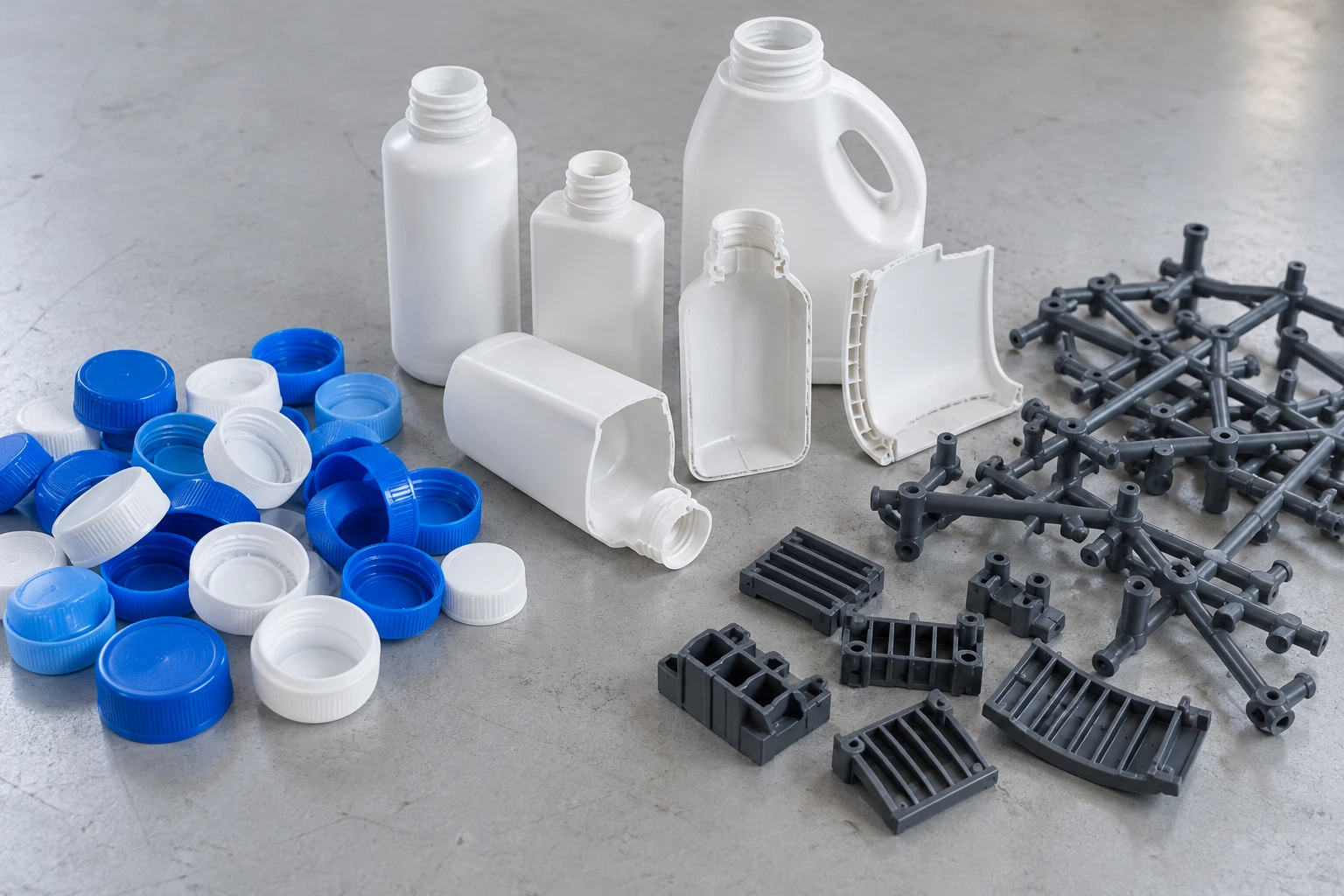
Compare item shape, wall thickness and rigid sections before choosing a cutting configuration.
Compare Feed Geometry Before Moving Up a Model Number
The chamber’s shape and the permitted feed arrangement matter more than the model label. A longer rectangular opening may suit a different item from a square one, even when both machines look compact.
The following figures come from NJDETE’s published product specifications. They describe listed configurations, not measured plastic throughput.
| Published configuration | Motor | Reducer | Listed shredder box | Question to resolve |
|---|---|---|---|---|
| NJDETE Mini | 1.5 kW × 1 | K57 | 120 × 200 mm | Can your normal items be presented without excessive preparation? |
| NJDETE 150 | 3 kW; 5.5 kW option listed | K77 | 150 × 350 mm | Does its feed geometry and proposed drive suit the actual material? |
| NJDETE 250 | 2.2 kW × 1 | K67 | 250 × 250 mm | Does the square geometry offer a better route for your items? |
The 250 listing has a lower motor rating than the standard 150 listing. That is a useful reminder: model numbers are not a capacity ladder. Compare the complete drive, cutting arrangement and feed requirement.
A chamber dimension is also not a guaranteed maximum item size. Hopper access, item shape, orientation and cutting load affect what can be accepted. Ask the supplier to state permitted feed dimensions and preparation in the proposal.
For a compact installation, the Mini’s listed overall dimensions are 650 × 380 × 880 mm. Leave additional working space for loading, collection, controls and service access. The machine’s outline is only one part of your layout.
Will the Output Be Ready for Your Next Process?
Choose an output requirement before choosing cutter thickness. Buying a small plastic shredder for recycling does not automatically mean its discharge can go straight into an extruder or molding machine.
For primary volume reduction, irregular pieces may be acceptable. A receiving granulator, washing system or other process may impose different limits on size, shape, contamination or moisture. Give those requirements to the supplier early.
The Mini listing, for example, specifies 10 mm cutter thickness. That does not establish a guaranteed 10 mm final particle size. Ask to examine the proposed configuration’s output, including long pieces and material needing another pass.
If controlled sizing is central to your project, compare suitable screened equipment or a staged process. Use the single-shaft versus double-shaft comparison to understand the equipment choices, then assess the complete arrangement against your receiving process.
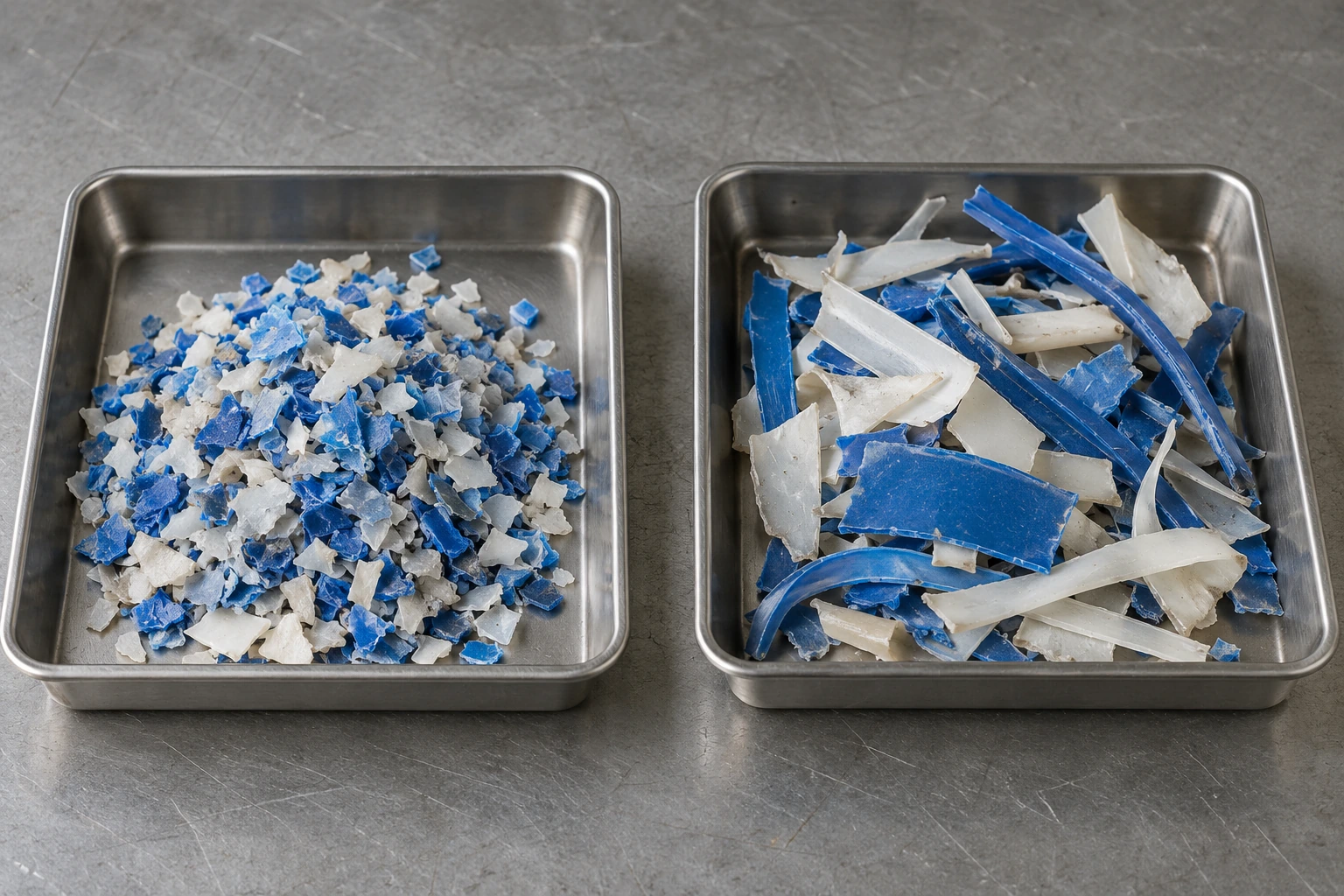
Check the fraction your next process will accept, including long pieces and material needing another pass.
Check Power, Loading and Cleaning Before You Commit
A small footprint does not establish electrical compatibility or an easy daily routine. Put site requirements into the enquiry before a machine is selected.
Specify voltage, phase and frequency. Have the electrical supply and starting requirements checked for the quoted equipment; do not infer them from its motor kW alone. The NJDETE listings offer customizable voltage, so confirm the configuration being supplied.
Walk through a normal batch: how will you lift or present material, collect discharge and change containers? Then consider access for cleaning and cutter service. In a small workshop, a difficult bin change or awkward loading height can become a larger constraint than cutting speed.
Ask for guarding, access protection and operating instructions with the quotation. OSHA’s machine-guarding overview explains the hazards associated with moving machinery and the role of safeguards. Small equipment still needs a safe loading and maintenance arrangement.
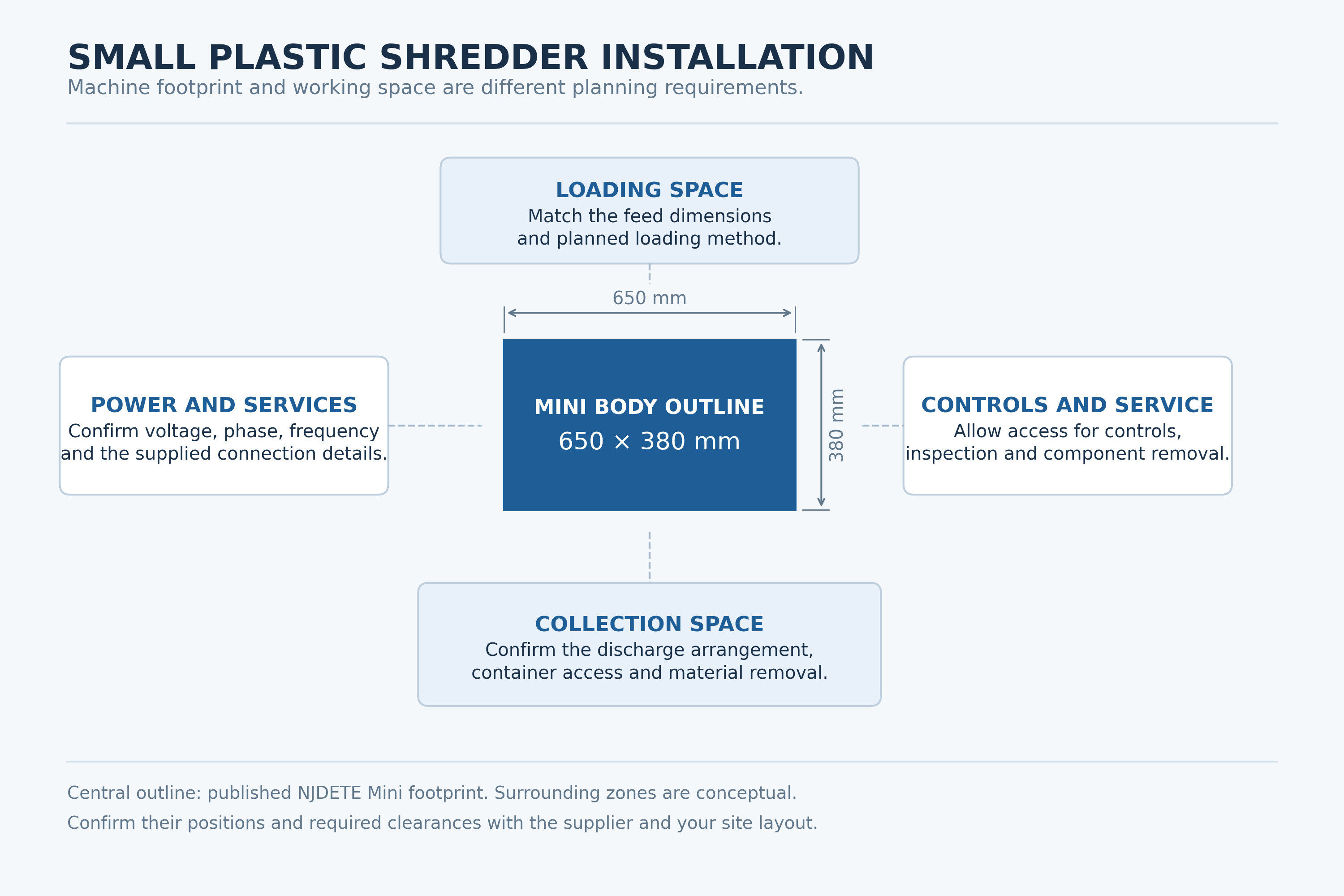
The Mini’s listed body footprint is 650 × 380 mm. Confirm loading, collection and service space separately for the supplied machine and site.
Compare the Full Cost of Clearing Your Scrap
Compare the cost of the completed job, including the work around the machine. A lower equipment price can be outweighed by extra preparation or a second processing stage.
Request a scope covering the machine, agreed electrical configuration, feeding and collection equipment, freight, installation responsibilities, training and initial spare parts. Identify exclusions rather than assuming every quotation includes the same package.
For a selected operating period, record:
Processing cost per accepted kilogram = total costs included for that period ÷ kilograms meeting the agreed output requirement.
Define what is included before comparing figures. You might first compare labor, measured electricity, consumables and maintenance, then add an agreed allocation of equipment cost. Keep sorting, reprocessing and disposal visible where they apply, and avoid counting the same loss twice.
This gives you a practical way to compare a machine that needs frequent preparation with a different configuration that processes the normal feed more directly.
What to Check During a Supplier Demonstration
Evaluate a representative batch using the configuration being quoted. A short clip showing one successful cut is useful for identification, but it cannot establish your daily processing result.
Record these items together:
- Material type, delivered form, largest routine item and input quantity.
- Machine identity, drive, cutter arrangement and preparation performed.
- Elapsed processing time and operator involvement.
- Accepted output, retained material and material needing another pass.
- Normal loading, discharge and cleaning activities included in the result.
- Photographs of input and output linked to the same assessment.
Ask to see the difficult routine items, not just the easiest parts. If extra pre-cutting or another machine is proposed, include it in your comparison before approving the order.
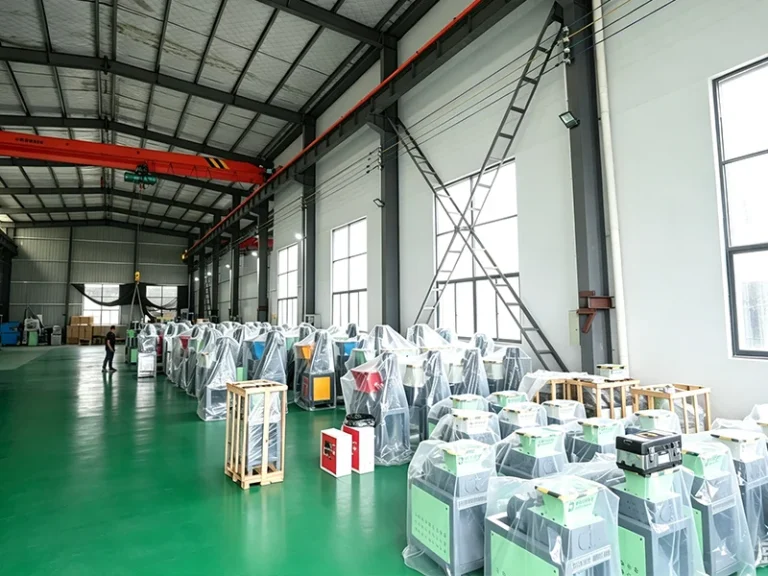
Workshop image published by NJDETE. Request machine identification, packing details and the documents that will accompany your own order.
Frequently Asked Questions
Can I run different plastics through the same machine in separate batches?
Potentially, but specify the required separation and cleaning between materials. Being able to cut two polymers does not make them suitable to mix in the recovered output. Discuss residual material, cleaning access and batch identification when planning frequent changes. Include those changeover tasks in your available operating time.
Is a used small plastic shredder a sensible purchase?
It can be, if you can establish its condition and the cost of bringing it into your process. Obtain the machine identity, operating documents, cutter specifications and maintenance history. Check the availability of compatible parts and assess the proposed feed. Include repairs and missing accessories before comparing it with a new quotation.
What should I ask for if the machine is intended for a teaching laboratory?
Describe who will operate it, how supervision will work and what samples will be processed. Ask about safe loading, access protection, noise information, cleaning and operating instructions. A machine’s small size does not establish its suitability for a teaching environment; the complete installation and operating arrangement need assessment.
What information should accompany an order for a replacement cutter set?
Keep the machine identification and approved cutter drawings with your purchase documents. Confirm the complete set arrangement, including mating parts and any permitted regrinding limits. Ordering only by outside diameter or the original machine’s sales name may leave important fitting details unresolved.
Can I buy the machine first and add collection equipment later?
Plan the collection method before ordering, even if some accessories will be purchased separately. Confirm discharge height, container access and how material will be removed. If collection restricts output or requires repeated stops, the machine may not complete your workload inside the time you allocated.
Which spare parts should be included with an overseas purchase?
Ask for a machine-specific recommendation based on the agreed application and local service arrangements. Confirm part identification, quantities, storage requirements and replacement support. Separate commissioning accessories from wear parts. Request the relevant drawings or part numbers so a later order does not depend on matching a photograph.
Which Small Plastic Shredder Should You Shortlist?
Shortlist the smallest complete arrangement that meets your feed, output and working-time requirements. This is different from choosing the smallest machine body or the highest motor rating you can afford.
Start with the Mini when compact installation and small-batch work define the project. Compare the 150 when its rectangular chamber and proposed drive may better suit your feed. Consider the 250 when its square geometry provides a different fit. Confirm each against the same material brief before making a purchasing decision.
Review NJDETE’s manufacturing information and published quality documents alongside the proposed configuration. Request the operating documents, parts information and acceptance requirements needed for your own installation.
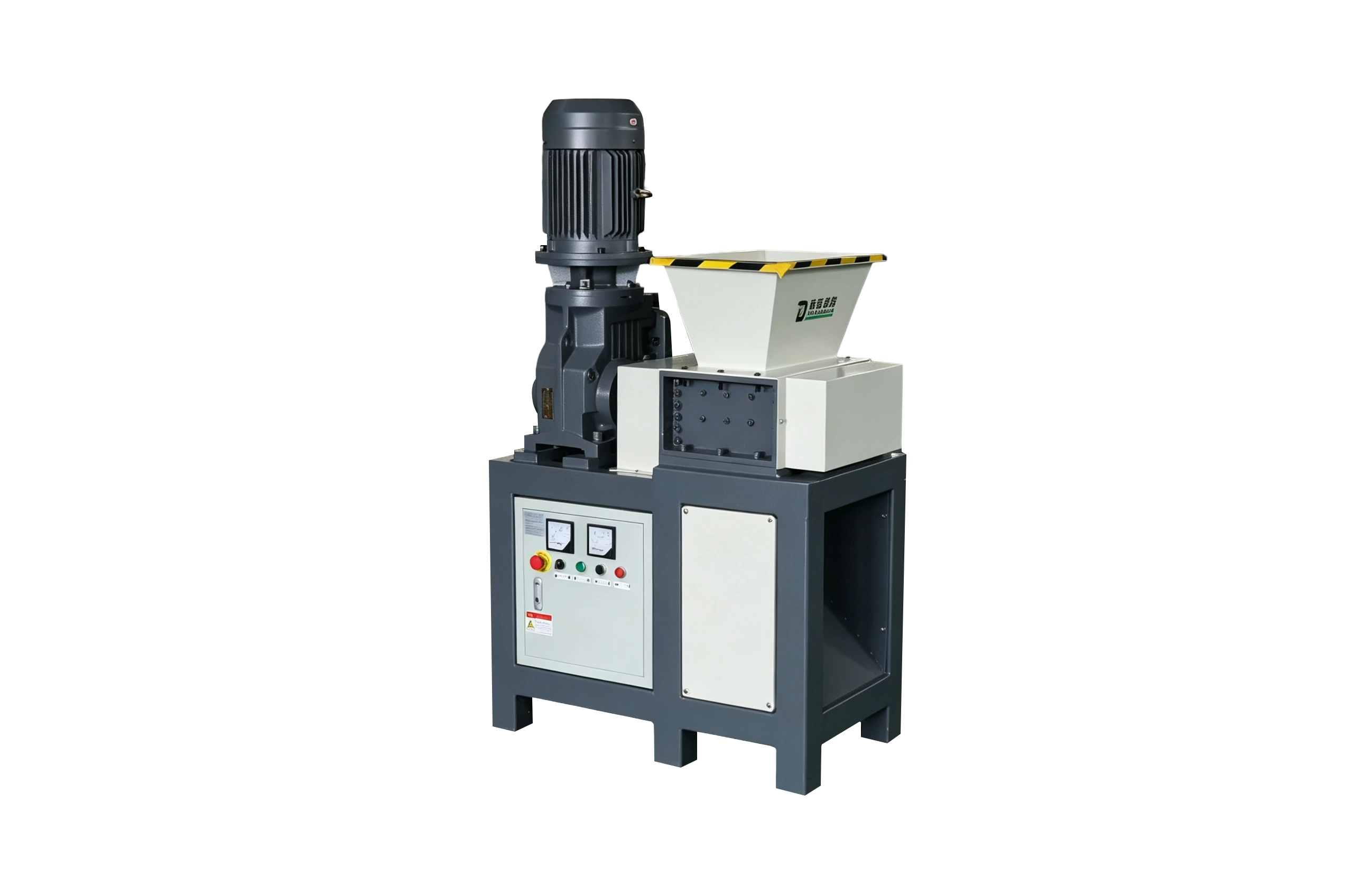
NJDETE 150 model product image. Use the agreed feed geometry, drive configuration and output requirement to compare it with the Mini and 250 listings.
Request a Configuration Review
Send photographs, your largest normal item, daily quantity, available processing hours and required output. Include your site power supply. Contact NJDETE for a configuration review that identifies preparation, equipment scope and the points to verify before ordering.