

Industrial Shredder Capacity: How Much Throughput Do You Need?
Release time: 2026-10-13
The industrial shredder capacity you need starts with a simple calculation: divide your required accepted output per day by the processing hours actually available. Then check whether the proposed machine can sustain that rate with your material, loading method and required output.
For example, a target of 2,400 kg in six productive hours requires 400 kg/h of accepted output. That figure gives you a useful requirement to discuss. It does not yet tell you the motor size, shaft arrangement or model to buy.
If waste is accumulating beside your production line, the important result is how much usable material you clear before the next shift. This guide explains how to calculate that requirement, compare capacity claims and identify the part of the process that limits your output.
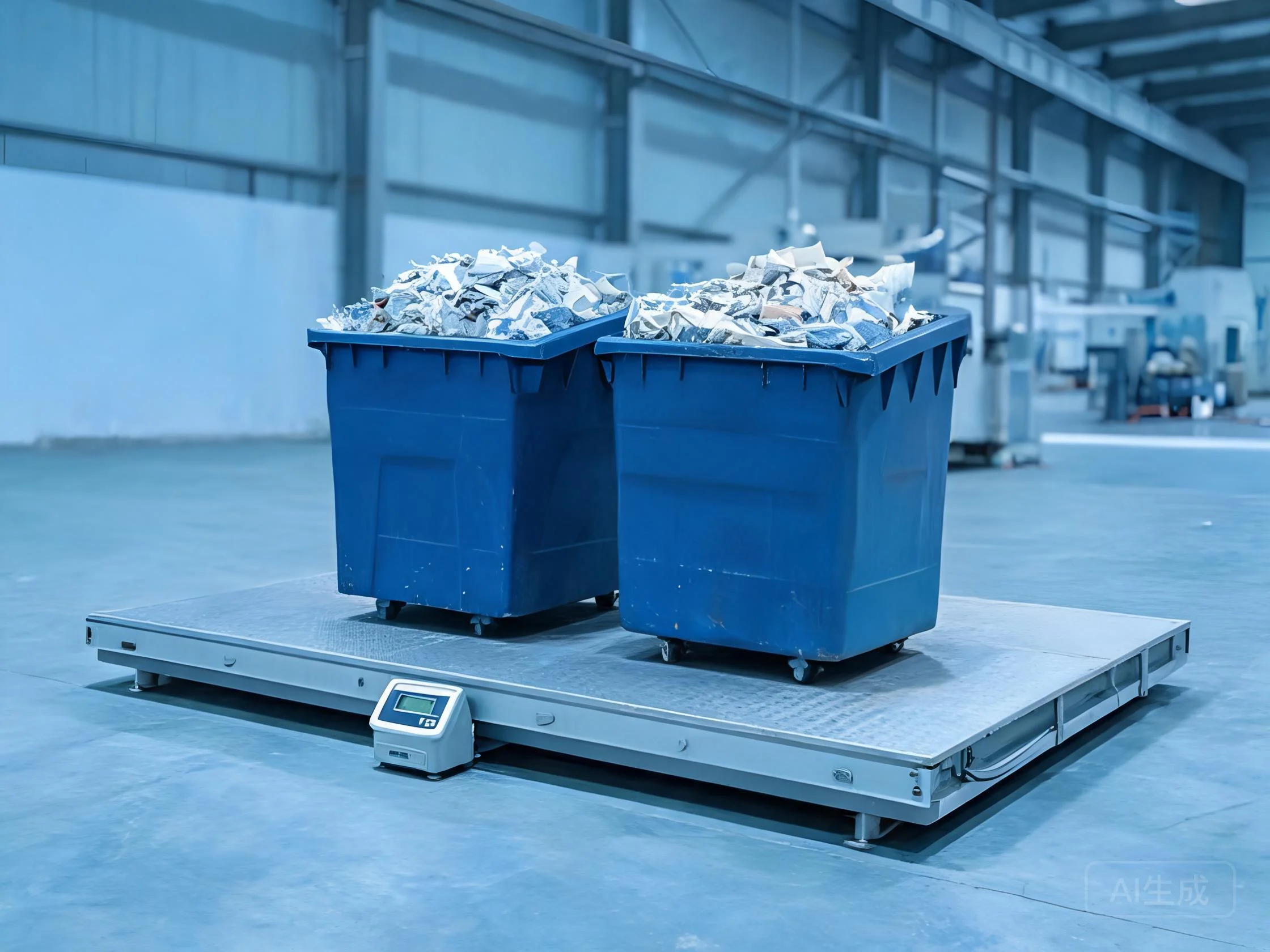
Weigh representative waste and describe its delivery form before comparing hourly capacity.
How Do You Calculate Industrial Shredder Capacity?
Use accepted mass and a clearly defined time period. Your required average rate is:
Required accepted throughput (kg/h) = required accepted output (kg/day) ÷ available processing time (h/day).
Accepted output is the material that meets the requirement of the next process. Define that requirement before measuring: it might be feed suitable for a granulator, a specified recovered fraction, or material reduced enough for the agreed handling method.
Here are hypothetical demand calculations, not machine ratings:
| Accepted output required per day | Processing time available | Required average accepted rate |
|---|---|---|
| 500 kg | 5 hours | 100 kg/h |
| 1,200 kg | 6 hours | 200 kg/h |
| 2,400 kg | 6 hours | 400 kg/h |
| 5,000 kg | 5 hours | 1,000 kg/h |
The same daily target becomes a different equipment requirement when the time window changes. Processing 2,400 kg in eight hours requires 300 kg/h; completing it in six hours requires 400 kg/h. Ask your team how much processing time the operation can really provide.
Keep tonnes and tons clearly identified
One metric tonne is 1,000 kg, so 400 kg/h equals 0.4 metric t/h. A US short ton is 2,000 lb, approximately 907.2 kg. A quotation stating “1 ton per hour” needs its mass unit identified before you compare it with a kg/h requirement.
Also distinguish a mass rate from a volume rate. A claim in m³/h cannot be converted to kg/h without the bulk density of the material in its delivered condition.
Rated Capacity, Cutting Rate and Shift Output: Which Number Matters?
A useful industrial shredder capacity figure has measurement conditions that match your operation. “500 kg/h” can describe different things depending on what was weighed and when the timer ran.
| Capacity figure | What it describes | What you should ask |
|---|---|---|
| Quoted or rated capacity | A supplier’s stated performance under particular conditions | Which material, configuration, output requirement and time boundary support it? |
| Active-feed or cutting rate | Material processed while the cutting operation is actively supplied | Which loading, interruptions and changeovers were excluded? |
| Elapsed-window accepted rate | Accepted output divided by the complete agreed observation period | Did this period include the delays that occur in your planned operation? |
| Accepted output per shift | The usable mass delivered during the working shift | Does it meet the daily task, with the required preparation and staffing? |
For purchasing, prioritize the accepted output delivered within your working window. Use a cutting-only figure to understand the machine, then include the operating conditions needed to turn that figure into a daily result.
This keeps two apparently similar offers comparable. A quick demonstration with prepared pieces and continuous loading answers a narrower question than a shift that includes sorting, feeding, discharge handling and product changeovers.
A Shredder Capacity Calculation Example
Choose one time basis and keep it throughout the calculation. The following scenario uses assumed values to explain the method; it is not a NJDETE performance test.
Suppose you need 2,400 kg of accepted output during an eight-hour shift.
Method A: Measure the whole working window
If the full eight hours include loading, ordinary interruptions and discharge handling, your required elapsed-window rate is:
2,400 ÷ 8 = 300 kg/h of accepted output.
A measured result of 300 accepted kg/h over that same window already includes those interruptions. You should not reduce it again with a second generic “efficiency” factor.
Method B: Start with active-feed time
If your schedule provides only six hours of active feeding and cutting, the required active accepted rate becomes:
2,400 ÷ 6 = 400 kg/h.
For this example, assume that 90% of the fresh input mass becomes accepted output within the agreed process boundary. The active fresh-feed requirement is then:
2,400 ÷ (6 × 0.90) = approximately 444.4 kg/h.
The six active hours represent 75% of the eight-hour shift. Checking the same assumed result:
444.4 kg/h × 8 h × 0.75 × 0.90 ≈ 2,400 kg/day.
The 75% time fraction and 90% acceptance yield are inputs to this example, not standard values for plastic recycling or double-shaft shredders. Use your own schedule and measured output when evaluating an actual proposal. If material is recirculated, agree how repeat passes are counted before using a fresh-feed rate.
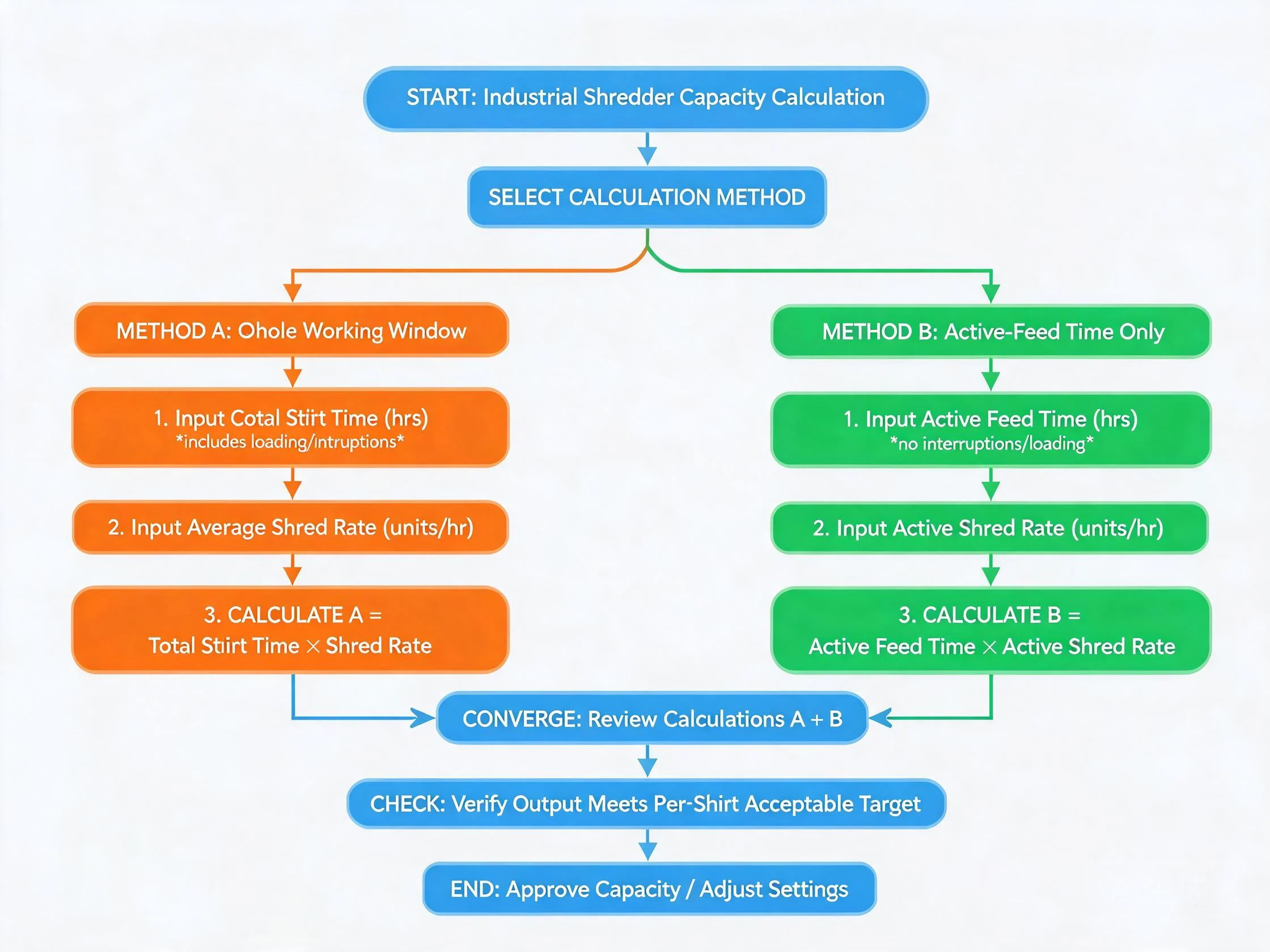
Choose a consistent time and mass basis, then check the complete process against the daily target.
Why Does Plastic Shredder Throughput Change With the Material?
The same mass can create a very different feeding and cutting task. Describe the waste’s physical form as carefully as its polymer name.
Conair’s comparison of plastics shredders and granulators treats throughput, density, feeding and required material condition as linked selection factors. For your project, that means a rate achieved on one scrap form needs its conditions retained when it is used for comparison.
| Delivered waste | What may constrain the hourly result | What to include in the review |
|---|---|---|
| Loose plastic film and strips | A large volume may occupy the hopper while engagement is intermittent | Delivered form, strip lengths, loading pattern and wrapping observations |
| Hollow bottles and containers | Item shape and attachments can change engagement and preparation | Whole-item dimensions, reinforced sections and residue condition |
| Pipe offcuts and dense molding scrap | Long pieces or thick sections may require different preparation and cutting arrangements | Maximum length, wall thickness, dense junctions and normal item weight |
| Mixed or contaminated scrap | A changing stream can alter feeding, separation and accepted output | Actual composition, hard inclusions and the receiving process’s limits |
For plastic film shredder capacity, compare the continuous supply your operation can maintain. A larger hopper alone does not establish a higher mass rate. Use the plastic film selection guide to assess the specific feeding questions.
For thick rejects, establish the permitted feed dimensions and preparation first. The injection molding scrap guide separates runners, rejected parts and dense purgings for that review. Other waste streams belong in the industrial shredder materials guide.
Converting volume into mass
If you initially track waste in bins, weigh representative loads and subtract the container’s tare mass. Bulk density is the net mass divided by the occupied volume.
In a hypothetical example, 1 m³ of a particular delivered stream weighs 40 kg. An observed flow of 5 m³/h therefore represents 200 kg/h. If another stream weighs 160 kg/m³, the same volume flow represents 800 kg/h. These are calculation inputs, not published density values for specific polymers.
The conversion tells you what a measured volume means. It does not establish that a shredder can sustain the same volume flow on both streams.
Does Motor Power Tell You Double-Shaft Shredder Capacity?
Motor power identifies part of the drive and electrical requirement; it does not provide a universal conversion into kg/h. Double-shaft shredder capacity also depends on how the supplied drive, cutters, feeding and discharge work with the specified waste.
SSI’s shredding technology explanation describes feed assistance and load-responsive controls as ways to improve material engagement. Those features belong to SSI’s designs, but the selection question is relevant across suppliers: can the proposed arrangement keep your material reaching the cutters consistently?
When you compare specifications, use each one to answer a separate question:
| Specification | What it helps you assess | Evidence needed for capacity selection |
|---|---|---|
| Motor and drive configuration | Electrical supply and the proposed drive arrangement | Output on the agreed material and operating conditions |
| Cutting chamber and hopper | Space, feed access and presentation of normal items | Whole-item feeding or the required preparation |
| Cutter and spacer arrangement | Engagement and the cutting assembly | An acceptable output sample and assembly specification |
| Controls and discharge | How loading and receiving equipment interact | Sustained operation with the proposed handling system |
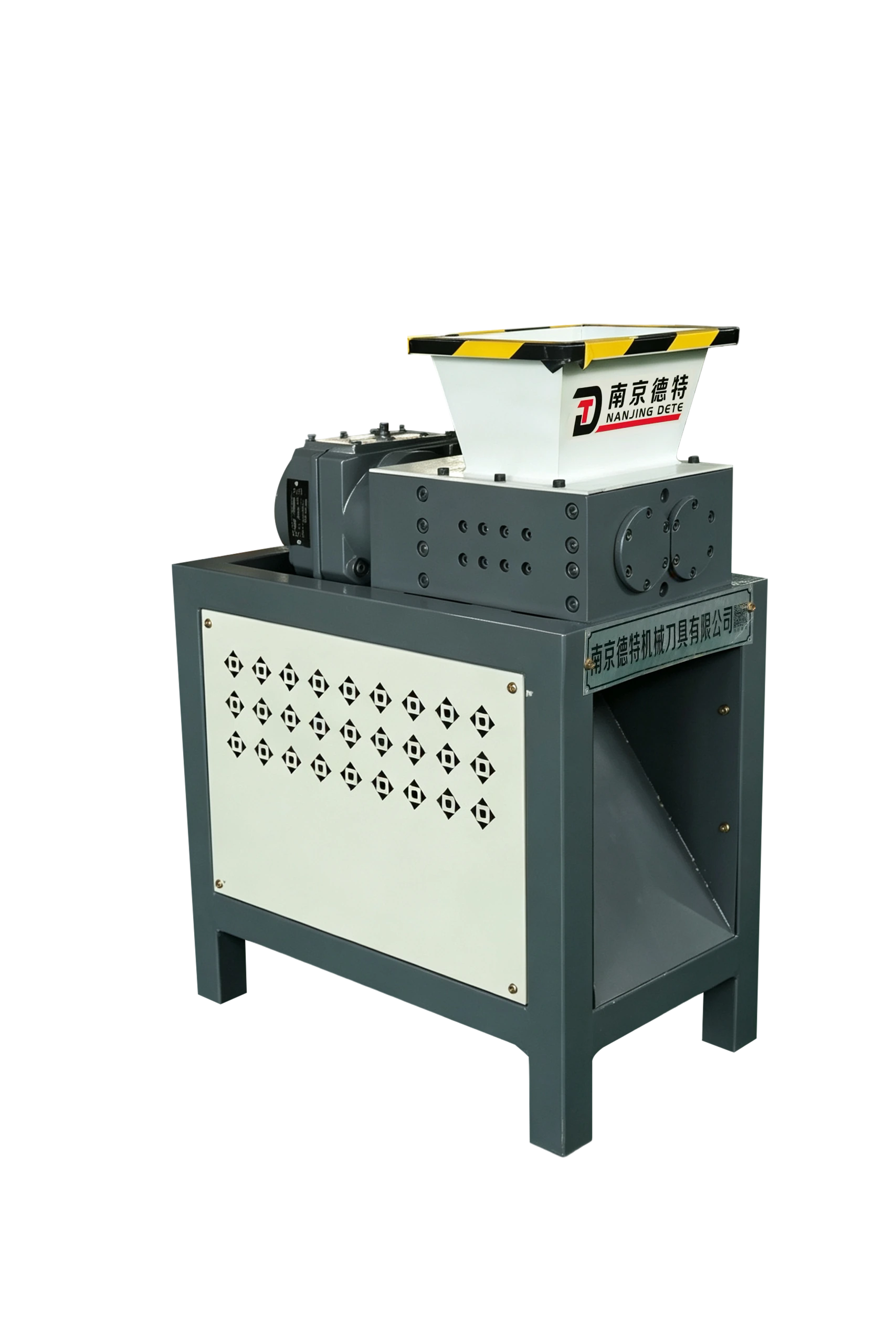
NJDETE publishes Mini, 150, 250, 300, 400 and 500 configurations. Use the model comparison and double-shaft machine overview to discuss a shortlist after you have defined the duty. The model number identifies a configuration, not the accepted kilograms it will deliver per hour.
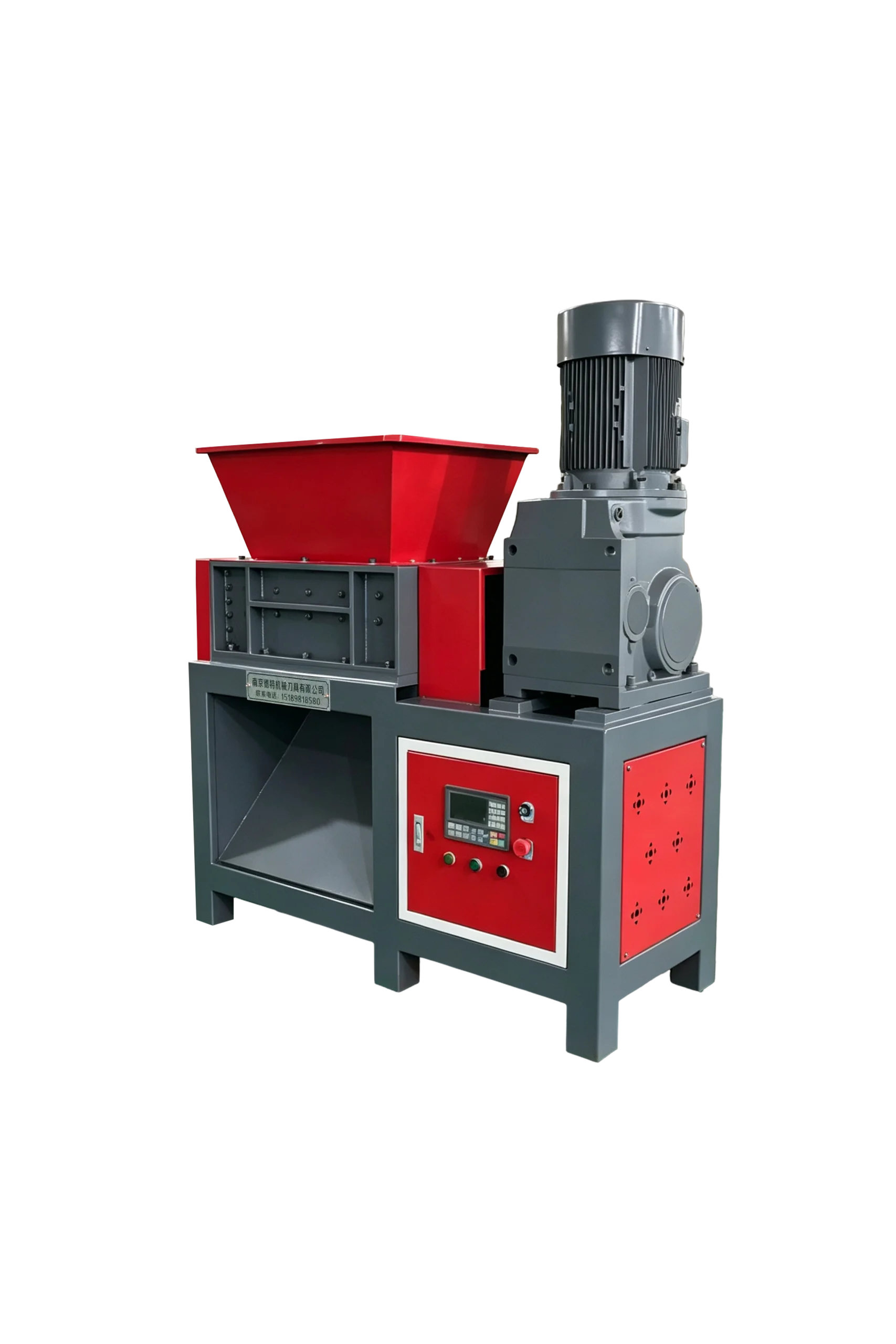
Use the approved specification to identify the drive, cutters and accessories included in your proposal.
If your decision also involves output control and shaft arrangement, the single-shaft vs double-shaft guide develops that comparison. This capacity calculation helps set the duty both options must satisfy.
Check Recycling-Line Throughput Before Increasing Shredder Size
A faster cutting stage helps only when the complete process can use its output. Check preparation, loading, conveying, separation and any downstream granulation against the same material and mass basis.
Consider a simplified steady-flow example: a shredder supplies 600 kg/h, but the next process accepts only 350 kg/h of that same stream. Without controlled scheduling, the difference is 250 kg/h of accumulating material. Extra storage can absorb a temporary mismatch; the continuing receiving limit still determines how much the line completes.
That example assumes comparable mass and no intervening removal, addition or recirculation. For a real line, record each stage’s inputs and outputs so its rate can be translated to a common basis.
Your selection conclusion should follow the limiting stage:
- Preparation limits output: compare whole-item feeding or an improved preparation arrangement before increasing the cutting drive.
- Loading is intermittent: assess supply, engagement and labor with the delivered material.
- The receiving stage is full: balance the downstream equipment and feeding controls.
- Cutting itself misses the target under suitable feed conditions: evaluate the machine and cutter configuration against the agreed task.
For an existing installation whose output has changed, retain the operating history and use the industrial shredder maintenance guide. Buying a larger machine and restoring an existing process are different project decisions.
How to Compare Two Shredder Capacity Offers
Compare industrial shredder capacity offers using accepted output under the same conditions. A lower active cutting rate can still deliver more per shift if it is sustained for longer.
This hypothetical comparison shows why the time basis matters:
| Comparison item | Offer A | Offer B |
|---|---|---|
| Reported active accepted rate | 500 kg/h | 400 kg/h |
| Active processing time in an 8-hour shift | 4 hours | 6 hours |
| Calculated accepted output per shift | 2,000 kg | 2,400 kg |
| Average accepted rate over the full shift | 250 kg/h | 300 kg/h |
Under these assumptions, Offer B completes the 2,400 kg task. The table is a purchasing calculation, not evidence about any named manufacturer’s machines.
For a meaningful throughput evaluation, agree the record before processing material:
| Record | What to capture |
|---|---|
| Representative feed | Composition, delivered form, dimensions, moisture and difficult normal items |
| Supplied arrangement | Machine, drive, cutters, loading method and included receiving equipment |
| Mass boundary | Fresh input, accepted output, retained material and material requiring another pass |
| Time boundary | Start, finish and the handling or interruptions included |
| Result | Accepted kg/h and daily-output projection using the same basis |
| Supporting evidence | Dated footage, input/output photographs, original weighing records and responsible person |
Film or mixed scrap may need a different observation period from a short rigid batch. Agree a duration that answers the purchasing question rather than extrapolating an unrepresentative clip.
Keep the capacity evidence with the machine proposal
Connect your application record to the supplier and exact configuration. NJDETE’s factory information and quality documents provide company context; the accepted-output record belongs with your particular proposal.
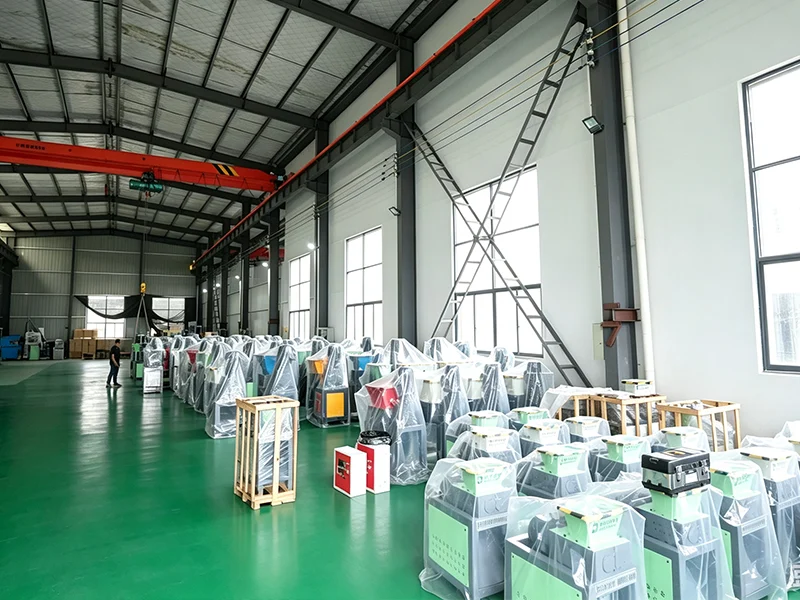
Workshop photograph published in NJDETE’s factory gallery.
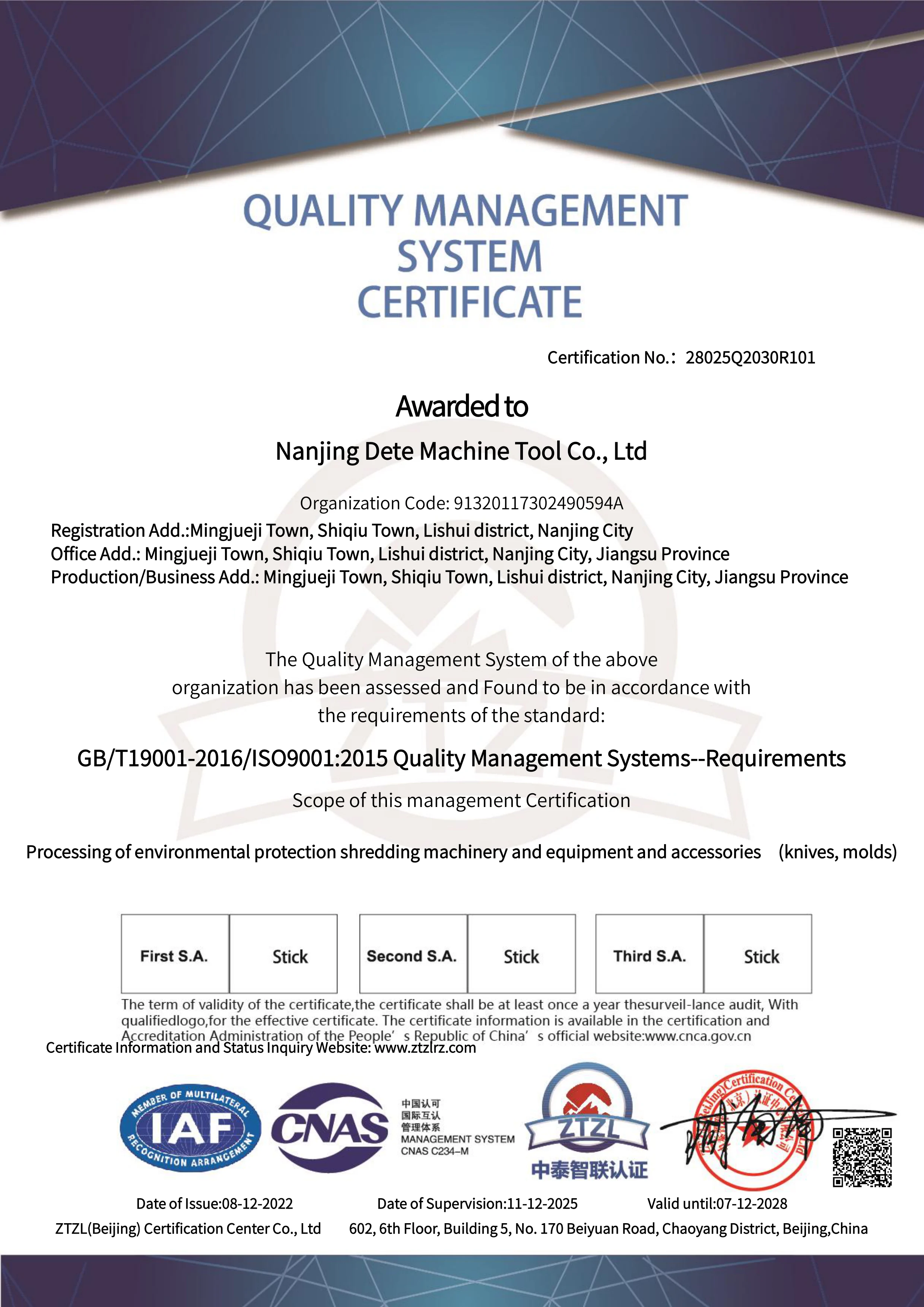
Published quality-management certificate 28025Q2030R101 identifies processing of environmental-protection shredding machinery, equipment and accessories, including knives and molds.
Frequently Asked Questions About Shredder Capacity
What if I only know the number of waste bins produced each day?
Weigh several representative bins, subtract tare and record how full each was. Repeat for different material groups and ordinary high-waste days. That gives you a mass range to use in planning. If loading and emptying bins take significant time, include that handling in the working-window assessment.
How should I size a shredder for several materials processed separately?
Budget time for each material using its own accepted rate, then add changeovers. For example, assumed duties of 800 kg at 200 kg/h and 600 kg at 300 kg/h require four plus two processing hours. A half-hour changeover brings the total to 6.5 hours. Averaging the two hourly rates without the batch quantities would hide the actual schedule.
Can two small shredders replace one larger shredder?
Compare whole-item suitability, staffing, preparation, discharge and the independent rates each machine can sustain. Two units may provide scheduling flexibility, but their combined advertised rates do not establish that either can accept your largest normal item. Assess the complete arrangement and its operating cost before treating it as equivalent to one larger machine.
How do I allow for a waste backlog as well as daily production?
Divide the backlog by the number of working days in which it must be cleared, then add that daily amount to normal production. A hypothetical 4,000 kg backlog cleared over ten working days adds 400 kg/day to the routine task. If that demand is temporary, compare extra shifts or another temporary handling route with a permanent equipment increase.
How should wet material be included in an hourly capacity figure?
Record moisture condition and agree whether the target uses incoming wet mass, dry material or an accepted recovered fraction. Added water can increase measured mass without increasing the amount of useful plastic recovered. Compare the same basis and include the receiving process’s handling requirements.
Does higher industrial shredder capacity mean lower cost per tonne?
Compare measured energy, labor, wear parts and handling over the same accepted-output boundary. For electricity alone, divide measured kWh by accepted metric tonnes. Rated motor kW is not the energy consumed during the batch. The double-shaft shredder price guide helps you compare the equipment and operating scope behind a quotation.
Request a Configuration Against Your Capacity Requirement
Start your enquiry with the job you need completed. Send NJDETE:
- Material type, delivered form, photographs and the largest normal dimensions.
- Fresh input and accepted-output requirements, with moisture and sorting losses identified where relevant.
- Daily quantity, available working window and any deadline for clearing a backlog.
- Planned loading, staffing and the next process’s input limits.
- Installation voltage, phase, frequency and available space.
Ask for a proposed configuration, required preparation and a way to verify accepted output within your working window. Send NJDETE your material and capacity brief to begin that discussion.
That leaves you with a practical selection rule: choose the arrangement that meets the agreed daily task with manageable preparation, stable feeding and compatible output. Use the quoted kg/h figure as part of that decision, with its material and time conditions attached.