

Why Do Shredder Blades Chip or Crack? Causes and What to Check
Release time: 2026-10-14
A broken cutter tooth can stop production, but ordering a harder replacement blade may leave you with the same problem next week. First establish whether the damage followed a change in feedstock, an impact, maintenance work or gradual deterioration.
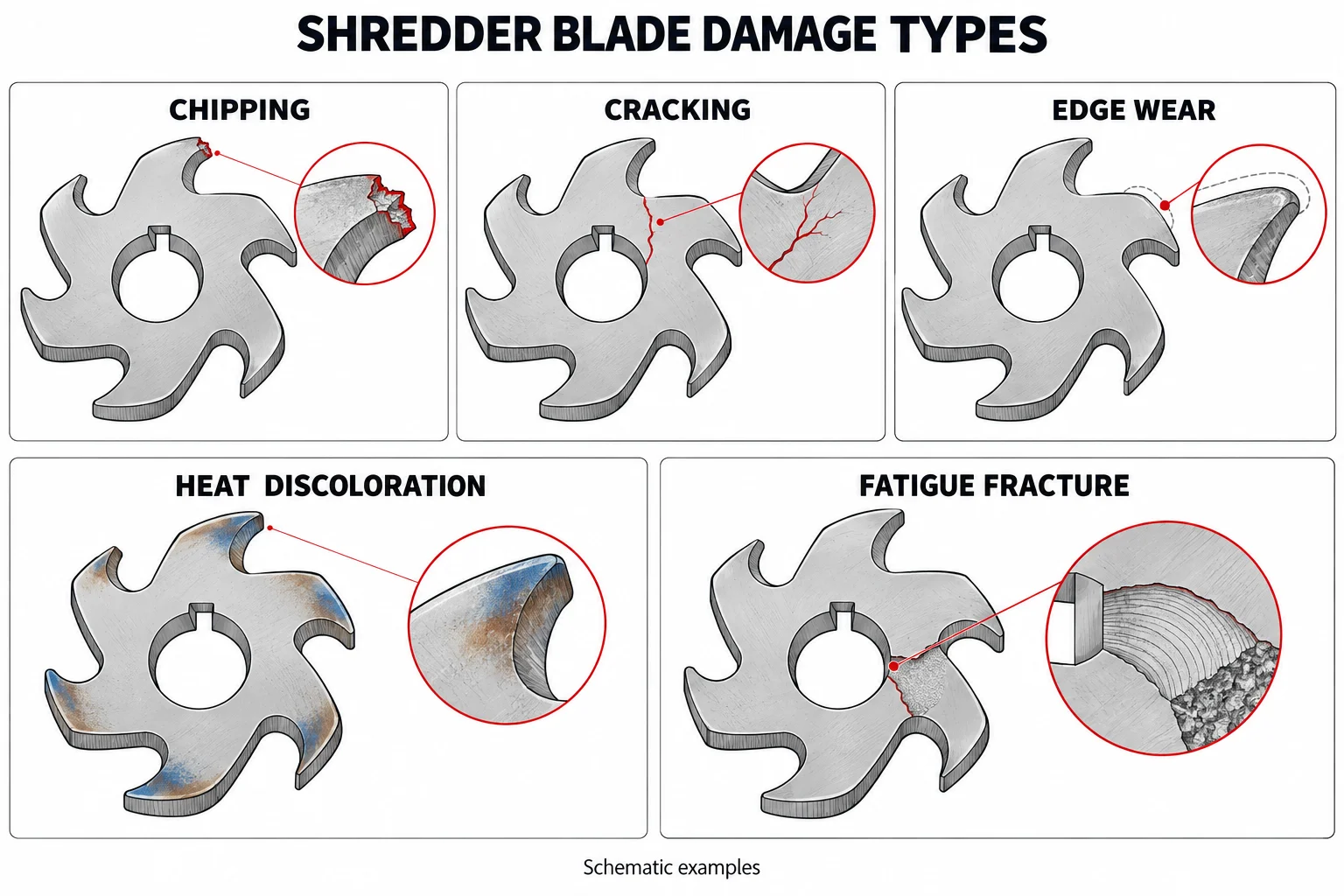
Shredder blade chipping is localized loss of material from an edge or tooth. Cracking is a fracture that may extend into the cutter body or shaft interface. Both deserve investigation before you approve replacement parts. The damage pattern tells you where to begin; it does not establish the cause by itself.
This guide focuses on cutter discs used in double-shaft shredders. Straight granulator knives and indexable single-shaft cutters have different mounting arrangements and inspection requirements. For the broader replacement process, use the shredder blade replacement guide.
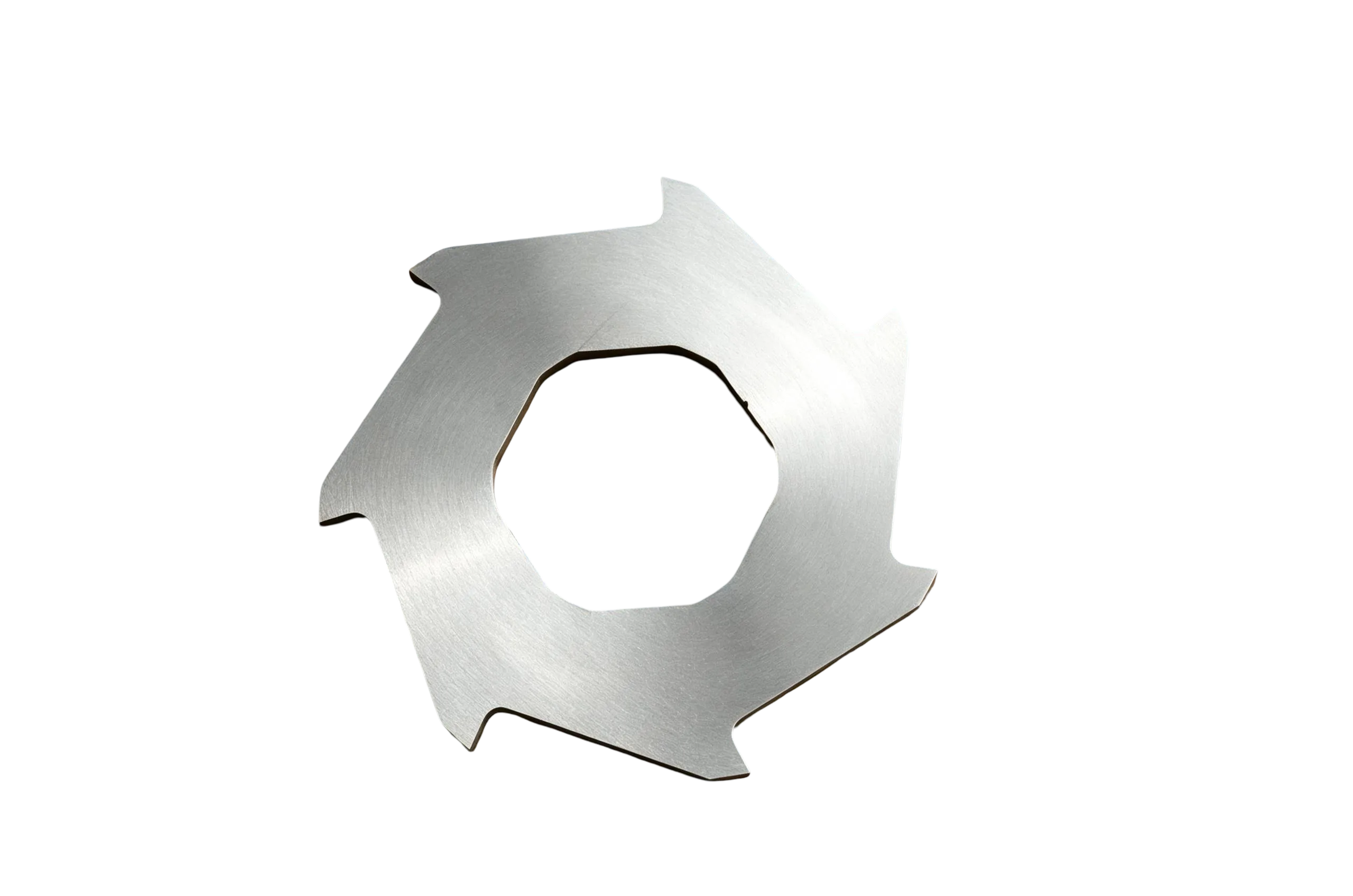
Product reference: double-shaft shredder blades. This image identifies the cutter family; it does not show a documented failure.
Is the Blade Worn, Chipped or Cracked?
Separate gradual wear from fracture before deciding what to buy. Rounded edges, missing tooth sections and visible cracks require different checks.
| What you observe | What it means for your next decision | Useful evidence |
|---|---|---|
| Gradually rounded cutting edges | Review wear, feeding and cutting performance before considering regrinding | Comparable edge photographs and operating records |
| A missing piece from one tooth | Investigate a localized event and surrounding parts | Fracture close-up, recovered fragment if safely available, affected cutter position |
| Several damaged teeth in a short period | Look for a shared cause before replacing more cutters | Damage locations, feed changes and alarm history |
| A line extending into the cutter body | Treat it as suspected cracking pending qualified inspection | Full-face and side photographs; appropriate professional examination |
| Damage around the bore or keyway | Check shaft-interface fit and mounting condition | Approved drawing, bore details and shaft inspection |
A surface mark is not automatically a crack. Conversely, a photograph cannot reliably rule out a crack. Where the distinction changes the repair decision, a qualified inspector should select an appropriate examination method.
For rounded edges without apparent fracture, the resharpen-or-replace guide addresses that decision in more detail.
Why Do Shredder Blades Chip?
Start with what changed immediately before the damage. A sudden failure after a new load or a cutter change calls for a different investigation from damage developing over months.
1. Hard Objects Entered the Feed
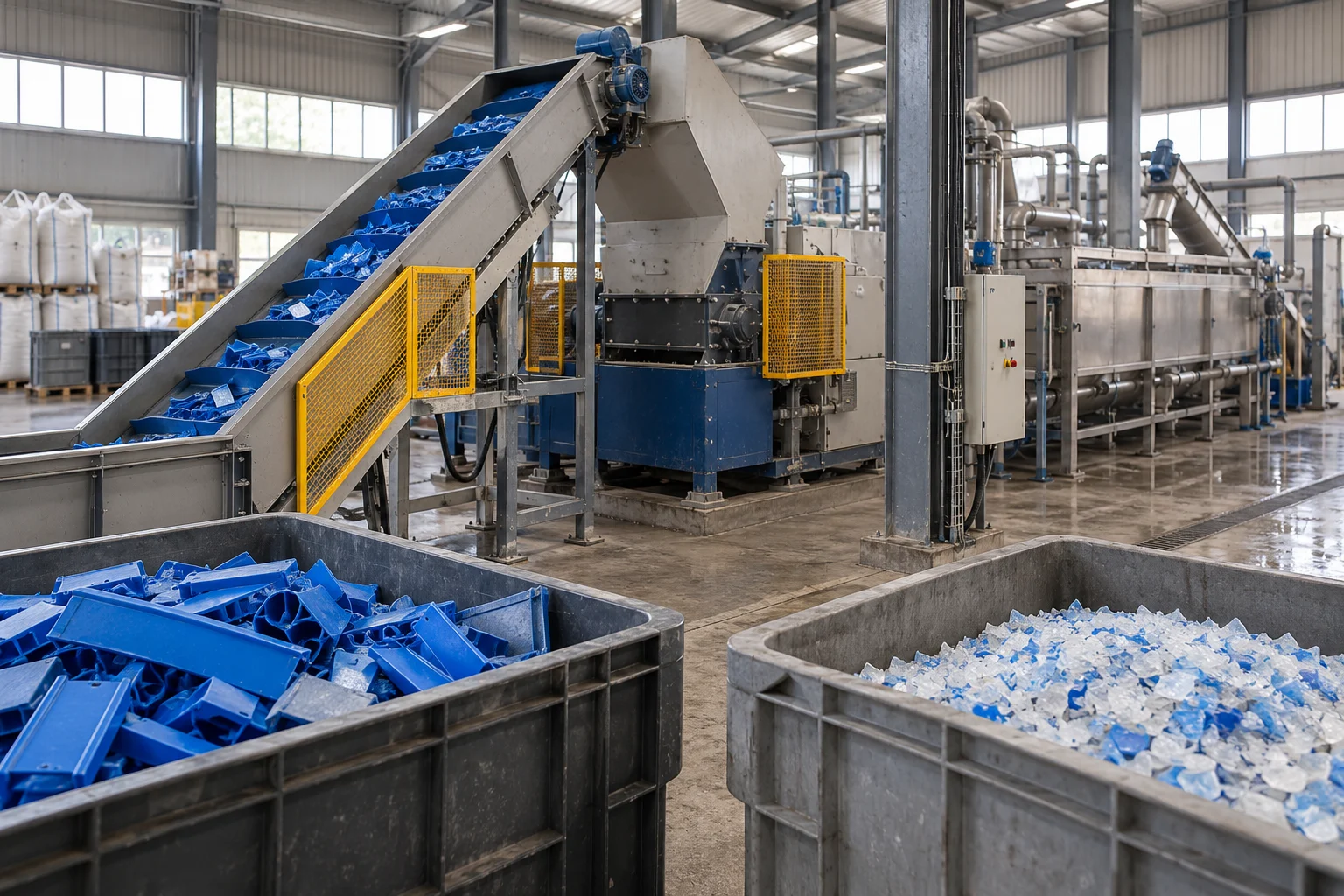
Unexpected metal, stone or other hard contamination can impose a concentrated load on a cutting edge. Keep the affected material batch identifiable and review the upstream sorting process. A feedstock described simply as “plastic waste” may contain fasteners, inserts or other components that alter the cutting duty.
Check nearby cutters and machine components rather than ordering only the visibly damaged disc. Impact damage may affect more than the first part you notice.
2. The Cutter Stack or Mounting Does Not Match the Machine
If shredder blades start breaking after replacement, compare the installed assembly with the approved specification. Verify cutter thickness, spacers, shaft interface, tooth arrangement and any required bevel orientation. Also review the installation and tightening requirements in the machine manual.
Matching the outside diameter does not establish compatibility. A replacement that fits onto the shaft can still differ in the details that determine its working position. See how to measure shredder blades for the information to record.
3. The Feed Changed Without a Configuration Review
A machine processing loose thin scrap may encounter a different load when supplied with thick sections, tightly packed bundles or mixed assemblies. Record feed form and maximum section thickness, not just polymer or material name.
Changes in feeding can also cause repeated overloads. Review the complete feeding and discharge process before attributing every reversal or stoppage to the blade material.
4. Material and Heat Treatment Need Review
Hardness is one part of cutter performance. Steel grade, heat treatment, section geometry and working load must be considered together. Asking for the highest available hardness leaves out the reason the current cutter failed.
For a supplier discussion, distinguish gradual abrasion from impact fracture. Provide the specified grade and hardness, available inspection documents and the actual damage pattern. A material recommendation should address those conditions rather than rely on a universal “best shredder blade steel” ranking.
Why Do Shredder Blades Crack?
A crack location is an inspection lead, not a complete diagnosis. Repeated loading, impact, stress concentration, mounting problems or manufacturing defects may need to be investigated, depending on the evidence.
| Crack or damage location | Checks to prioritize | Information to send |
|---|---|---|
| Tooth tip or cutting edge | Recent impact, edge condition and tooth geometry | Close-up plus a full-face photograph |
| Tooth root | Load history, geometry and nearby damage | Cutter position, feed details and drawing |
| Bore, slot or keyway | Interface dimensions, contact condition and installation | Bore drawing, shaft details and mounting record |
| Similar locations across several cutters | Shared assembly, operating or batch factors | Cutter identification and comparison photographs |
| Repeated failure at one machine position | Local alignment, feeding and component condition | Position map and inspection findings |
Do not return a suspected cracked cutter to service simply because it still rotates. Have the machine and affected components assessed through the site’s maintenance process.
Before opening the cutting chamber or handling cutters, authorized personnel must follow the machine-specific hazardous-energy procedure, including isolation and control of stored energy. OSHA’s hazardous-energy overview explains why unexpected startup and stored-energy release are dangerous during servicing.
What to Record Before Replacing a Damaged Cutter
Preserve the information that lets you distinguish a part problem from a process problem. A short record is more useful than an unsupported explanation such as “the blade is too soft.”
- Record the machine identification and the affected cutter’s shaft and position.
- Note whether the event followed a feed change, blockage, cutter replacement or other maintenance.
- Photograph the full cutter, fracture area, side profile and shaft interface after safe access is established.
- Identify the feed material, fillers, embedded components and maximum section thickness.
- Retain relevant alarms, reversals and production observations without treating them as proof of a single cause.
- Compare the replacement specification with the approved drawing, including revision and units.
- Record what was corrected before the machine returned to production.
Should You Replace One Cutter or the Complete Set?
The decision depends on the condition and compatibility of the remaining assembly. One damaged disc does not automatically require a complete set, but an individual replacement must match the working stack.
Request a review of adjacent cutters, spacers, shaft interfaces and the machine’s assembly requirements. Regrinding history matters because remaining cutters may no longer have their original dimensions. Mixing a new part with differently worn or modified components requires more than a catalogue-size match.
Before approving a quotation, confirm whether it covers one disc, one shaft or a complete machine set. Identify spacers and other components separately. This prevents two apparently similar offers from covering different quantities and scope.
The NJDETE double-shaft shredder blade page lists the drawing and sample information used to define a replacement. Treat published dimensions as a starting point; the approved drawing defines your order.
How to Compare Replacement Blade Costs
Compare the cost of restoring dependable operation, not just the price of a disc. A cheaper part offers little value if the unresolved cause damages it again.
Use your own records to compare:
Replacement-related cost = parts + inspection + installation labor + attributable downtime + attributable rejected material.
Keep the accounting period consistent and avoid counting the same loss twice. If downtime or scrap figures are unavailable, compare the confirmed costs first and record the missing items. This is a calculation framework, not a claimed NJDETE saving or blade-life result.
What to Send for a Replacement Blade Review
Send enough information to confirm fit and understand the failure before asking for a different steel. Start with:
- Machine manufacturer, model and nameplate photograph.
- Approved cutter drawing with revision, units and required quantity.
- Outer diameter, thickness, bore geometry and spacer details.
- Full-face, side and damage photographs with cutter-position labels.
- Current material specification and available heat-treatment or inspection records.
- Feedstock, contamination, failure timing and relevant operating changes.
NJDETE’s public product information describes replacement blades made to an approved drawing or sample. Review the factory information and discuss the inspection documents required for your order; general factory photographs do not replace a batch inspection record.
If you have no drawing, send preliminary measurements and photographs first, then agree how the original dimensions will be established. A worn sample should not be treated as an unworn design reference.
Frequently Asked Questions
Does chipping always mean the blade is too hard?
No. Hardness and heat treatment may be relevant, but contamination, loading, geometry and mounting can also contribute. Identify the circumstances and damage location before changing the material specification.
Why do new shredder blades break soon after installation?
Investigate both the replacement and the installation. Check dimensions, spacer arrangement, shaft fit and the manufacturer’s assembly requirements. Also establish whether the feed or an unresolved machine problem changed the load on the cutters.
Can a chipped shredder blade be resharpened?
That depends on the depth and location of the damage, remaining dimensions and permitted repair method. A chip is not permission to grind away material without checking the resulting geometry. Suspected cracking requires a separate professional assessment.
What if several cutters from one batch crack?
Keep the parts identifiable and compare their locations, installation history and operating conditions. Ask the supplier to review relevant material and inspection records. Several failures justify investigation but do not, by themselves, establish a manufacturing defect.
Can I order from a photograph alone?
A photograph can help identify the cutter family and damage pattern. It does not confirm dimensions, tolerances or shaft-interface geometry. Use an approved drawing or an agreed sample-verification process before production.
Get the Replacement Specification Right
If you need replacement double-shaft shredder blades, send NJDETE your drawing, cutter photographs and operating conditions. Include what changed before the damage. That gives the discussion a practical starting point: the correct replacement specification and the checks needed before it returns to service.