

What Materials Can an Industrial Shredder Process? Applications and Limits
Release time: 2026-10-13
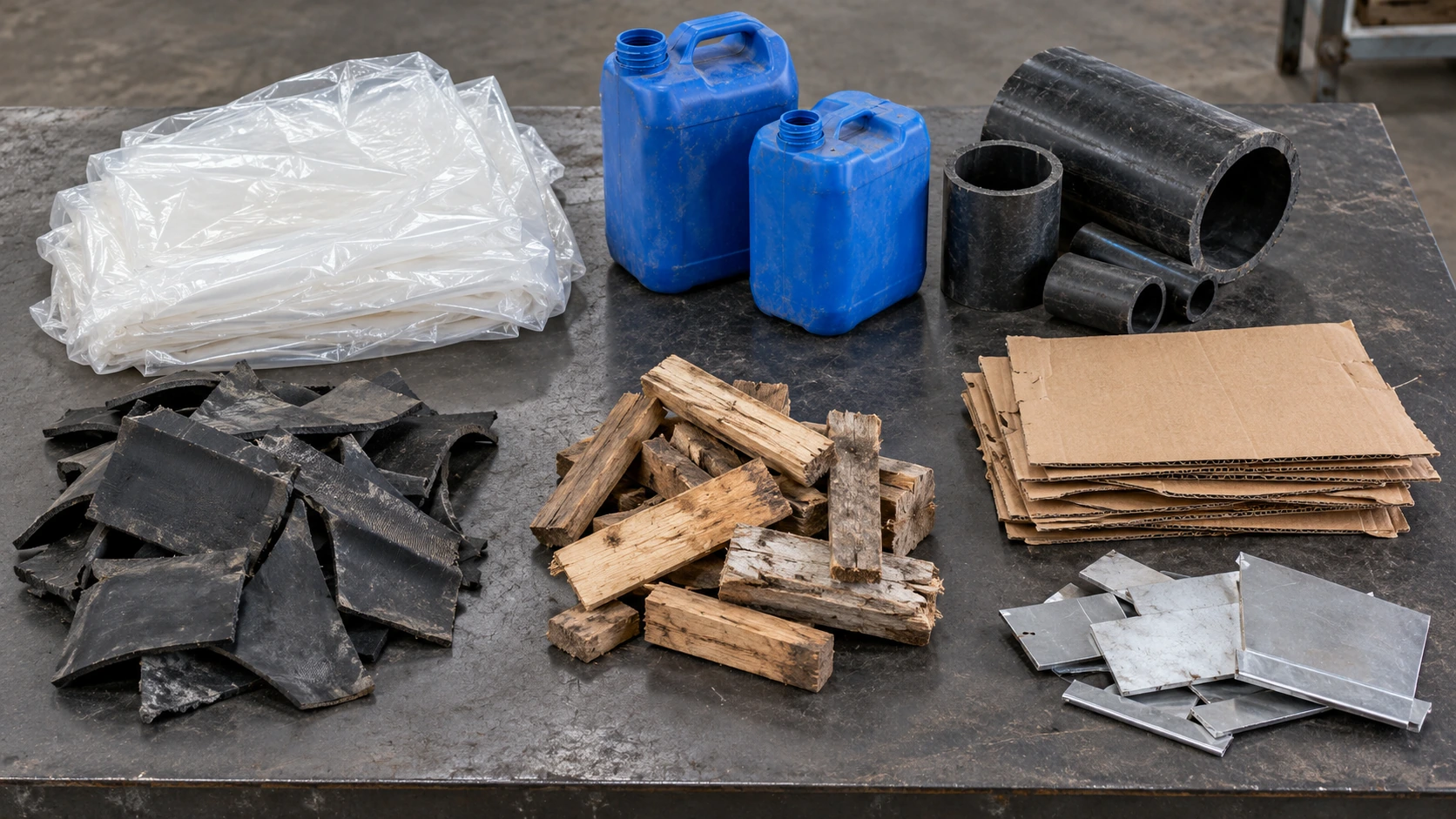
Industrial shredders can process plastics, rubber, wood, paper and cardboard, along with selected metal and electronic waste streams when the machine and surrounding process are designed for them. The material name starts the assessment; its physical form, contamination and required output determine the configuration.
If you are comparing an industrial shredder for your waste, a list of “plastic, rubber and metal” tells you very little about your actual job. A hollow container, a tightly wound film roll and a solid molding reject can all be plastic, yet create different feeding and cutting demands.
This guide focuses on the questions you should resolve for a double-shaft shredder and NJDETE’s published machine range. Start with the delivered waste and the next process, then shortlist equipment.
Industrial Shredder Materials at a Glance
Use this table to prepare an application enquiry. It identifies the conditions to review, rather than assigning every waste stream to the same machine.
| Material group | Examples to identify separately | Main selection question | Useful next-stage requirement |
|---|---|---|---|
| Rigid plastics | Bottles, drums, pipe offcuts, molded parts and purgings | Will the delivered item fit and engage without excessive preparation? | Feed suitable for washing, sorting or granulation |
| Flexible plastics | Loose film, strips, rolls and compacted bundles | Can feeding remain consistent without wrapping or bridging? | Accepted output for the receiving line |
| Rubber | Manufacturing offcuts, reinforced pieces and prepared tire sections | What reinforcement, thickness and elasticity must the assembly handle? | Feed dimensions for further rubber processing |
| Wood | Offcuts, packaging wood and permitted pallet components | What are the longest sections and hard inclusions? | Material accepted by the intended handling or recovery process |
| Paper and cardboard | Loose sheets, cartons, cores and compacted waste | Does the feed reach the cutters steadily? | Required reduction or destruction outcome |
| Selected metal-containing waste | Light sections, attached hardware and specified scrap | What are the composition, section thickness and prohibited inclusions? | Feed for the planned separation or recovery stage |
| Selected electronic waste | Identified components from a controlled dismantling route | Which components must be removed and which fractions will be recovered? | Defined separation, dust control and recovery requirements |
Machine manufacturers offer different designs for these tasks. CAMEC’s material guide likewise connects material categories with specific models and customization. An industry-wide application list does not establish the approved feed for a particular NJDETE configuration.
Can an Industrial Shredder Process Plastic Waste?
Yes, plastic waste is an important shredding application. Select around the form you collect, not only the polymer name. For a plastic recycling shredder, preparation and feeding can decide whether the proposed process meets your working-day target.
Rigid containers, bottles and pipe offcuts
For a PET bottle shredder or HDPE container shredder enquiry, show the whole item, neck, handle and reinforced base. Include attachments and the condition in which containers arrive.
For plastic pipe shredding, record length, outside dimensions and maximum wall thickness. A long, thin-walled pipe and a short, thick-walled fitting are different cutting tasks. If pre-cutting is part of the proposal, include that work in your labor, equipment and layout comparison.
Your selection decision is practical: if avoiding pre-cutting matters, assess the proposed arrangement with the normal whole item. A demonstration using prepared pieces answers a different question.
Plastic film, strips and rolls
For a plastic film shredder, prioritize sustained engagement. Loose film may occupy substantial hopper volume while little material reaches the cutters; long strips may collect around components.
Describe whether the material arrives loose, wound, baled or compacted. Include strip length, labels, moisture and any mixed waste. A film roll should not be treated as an equivalent feed to a handful of loose sheets.
Use the plastic film shredder selection guide for the feeding and wrapping assessment.
Molding rejects and filled plastics
Separate runners, rejected housings and dense purgings. Record the thickest junctions, typical item weights, metal inserts and known fillers.
Wear behavior also belongs in the material brief. Changing cutter steel does not resolve a hopper that cannot present the material, or a receiving system that cannot remove it.
The plastic waste shredder selection guide develops those configuration questions. For replacement knives in a downstream granulator, use the separate plastic crusher blade page.
Can a Double-Shaft Shredder Process Rubber and Tires?
Rubber offcuts and tire-related materials need an application-specific review. Distinguish unreinforced rubber from steel- or textile-reinforced feed before discussing a cutter arrangement.
A waste tire shredder enquiry should identify:
- Passenger-car, truck or another tire type.
- Whole tires, prepared sections or existing rubber chips.
- Outside dimensions, section thickness and normal item weight.
- Steel beads, belt wire and textile reinforcement.
- The required output and subsequent separation stages.
A rubber waste shredder that handles manufacturing trim does not thereby establish whole-tire capability. If your task is whole-tire processing, keep that requirement explicit when the configuration is assessed.
For prepared rubber sections, show cut faces and reinforcement as well as the outside surface. That information is more useful than a photograph of a clean pile that hides what the cutters will encounter.
What About Wood, Pallets, Paper and Cardboard?
These streams may require less complex separation than mixed industrial scrap, but their delivery form still matters. Review the feed opening, engagement and foreign objects together.
For a wood waste shredder, distinguish short offcuts from long boards, dense sections and assembled pallets. Identify nails, brackets, straps and other attachments. If you expect whole-pallet feeding, state the assembled pallet dimensions and whether disassembly is acceptable.
For a cardboard shredder, describe loose cartons, nested boxes or compacted bales. Low mass per hopper load can change the feeding task. A line judged only by the speed at which one box disappears may not explain the labor needed to maintain supply.
Also define the result. Volume reduction for collection, preparation for another process and confidential product destruction are different requirements. Set a measurable acceptance condition for the task you actually have.
Can an Industrial Shredder Process Metal or E-Waste?
Purpose-designed industrial systems can address these streams, but “metal” and “e-waste” are too broad for a configuration proposal. Specify components and sections, not just the industry label.
For light metal scrap shredding, identify the metal, maximum section thickness, shape and any attached non-metal material. NJDETE’s machine overview distinguishes suitable selected scrap from massive, thick solid metal blocks. Do not substitute a full mixed-metal load for the feed approved in a proposal.
For e-waste shredding, define the dismantling route and the actual components that reach the machine. Batteries and other hazardous components require their own identification and handling process. Standard mixed-waste feeding is not an approval for battery processing.
Dust collection, separation and residual-material handling belong in the complete system brief. The shredder performs size reduction; it does not automatically deliver a clean recovered fraction.
Why Can the Same Material Need a Different Configuration?
Feed presentation changes the task even when composition stays the same. This is why an industrial shredder for mixed waste needs a defined stream rather than an unrestricted material list.
| What changes | What it means for your assessment |
|---|---|
| Loose material becomes a dense bundle | Engagement and the amount captured in each cutting event can change |
| A thin item gains a thick joint or reinforced base | The most demanding section may govern the cutting review |
| Clean waste acquires hard inclusions | Damage and wear risks need reassessment |
| Dry waste arrives with moisture or residue | Feeding, handling and downstream acceptance conditions change |
| Occasional batches become continuous production | Loading, discharge and service planning must match the duty |
| Storage reduction becomes a controlled feed fraction | Additional sizing or another processing stage may be required |
SSI’s shredding technology overview explains the relationship between grabbing, material form and controlled feeding. The useful lesson for your enquiry is to describe how the waste arrives, not simply what it is called.
What Output and Capacity Should You Ask For?
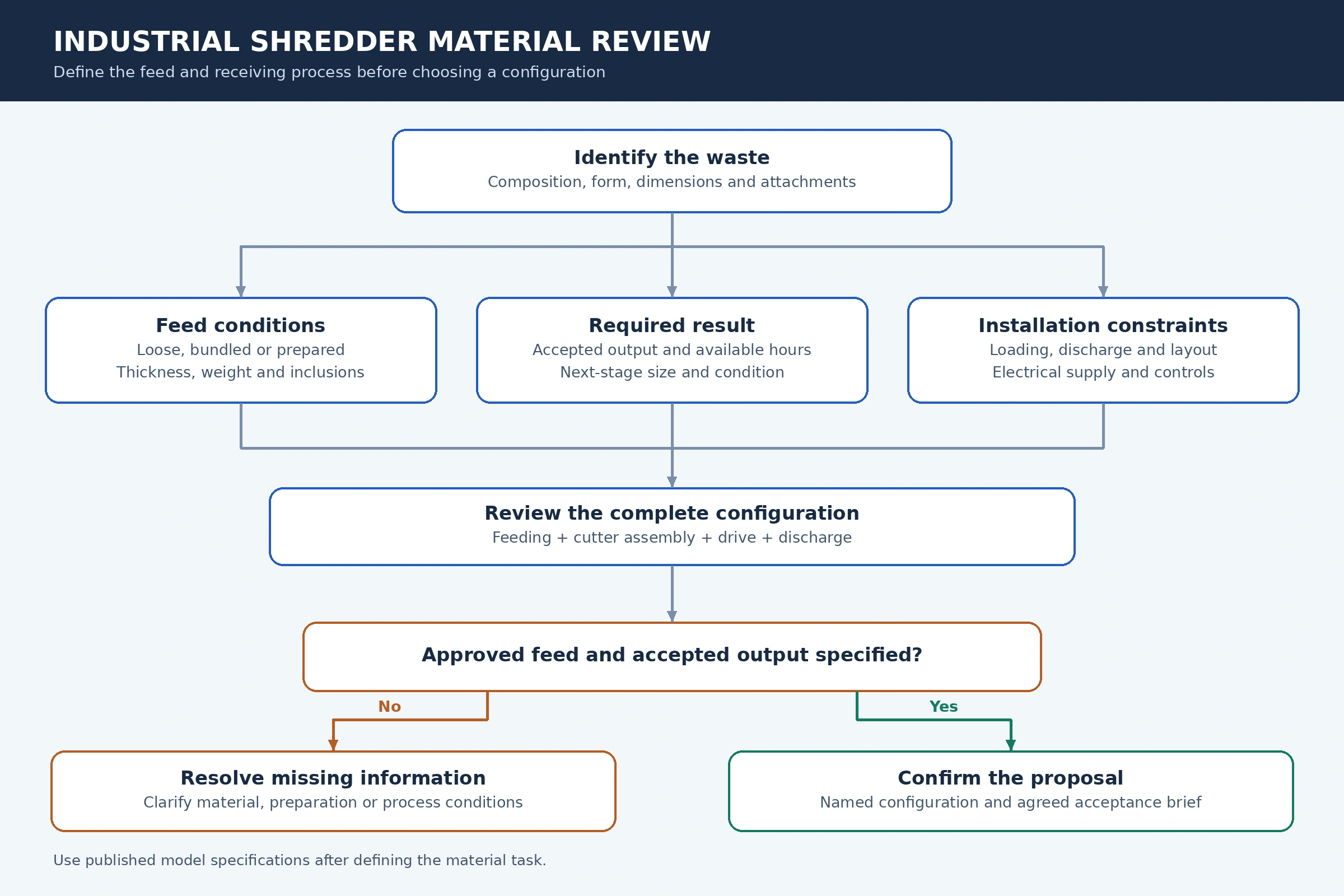
Define accepted output per working day and the form your next process can receive. A fast cutting clip is useful, but preparation, interrupted feeding and another processing pass also consume operating time.
For a primary double-shaft route, establish whether irregular pieces are acceptable. If the next machine requires a more controlled feed, compare the necessary sizing stage and handling equipment.
Keep capacity tied to the agreed feed, loading arrangement and elapsed period. A machine rated with one material or preparation method cannot be compared fairly with a different task using only the headline kg/h figure.
If your choice includes shaft arrangement, the single-shaft vs double-shaft comparison helps separate the feeding and discharge questions.
How Do NJDETE’s Published Models Help You Shortlist?
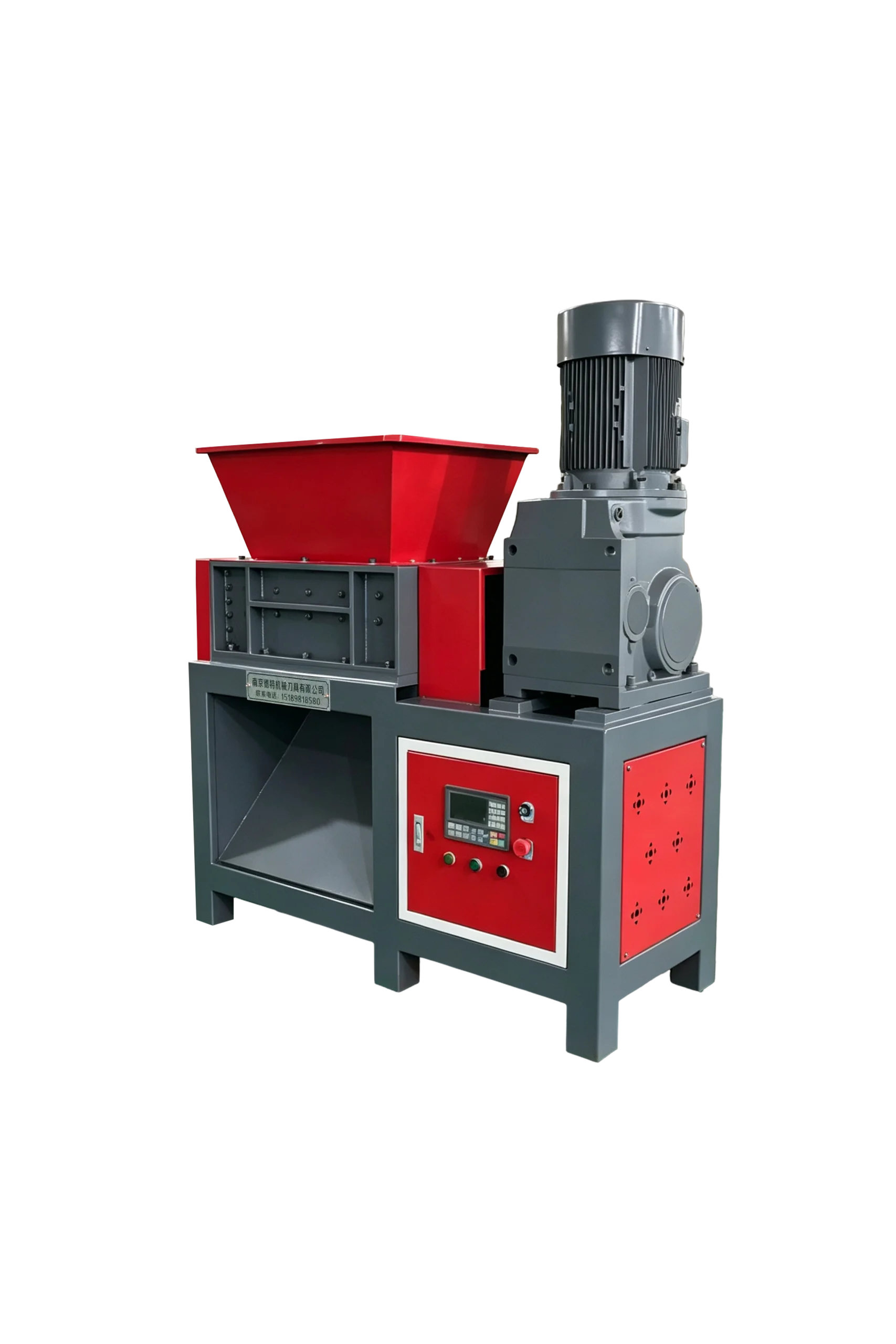
Use the specifications to identify configurations for review. Chamber dimensions describe part of the machine geometry; motor power describes part of the drive. Neither is a material-specific capacity guarantee.
| Published configuration | Motor listing | Cutting chamber | Meaning for your shortlist |
|---|---|---|---|
| Mini | 1.5 kW | 120 × 200 mm | Review small-batch feed dimensions and preparation |
| 400 | 5.5 kW; dual-motor option listed | 400 × 350 mm | Review the proposed loading, cutter and drive arrangement |
| 500 with K97 | 7.5 kW × 1 | 500 × 400 mm | Compare this drive version against your defined duty |
| 500 with ZQ400 | 11 kW × 1 | 500 × 400 mm | Assess the alternative drive against the same material brief |
These values come from NJDETE’s published configurations. Use the Mini-to-500 model comparison for the full range. The two 500 listings share a chamber size, so the model number alone cannot resolve the choice.
What NJDETE Evidence Should You Check?
Check supplier identity and product specifications alongside application evidence. Each answers a different purchasing question.
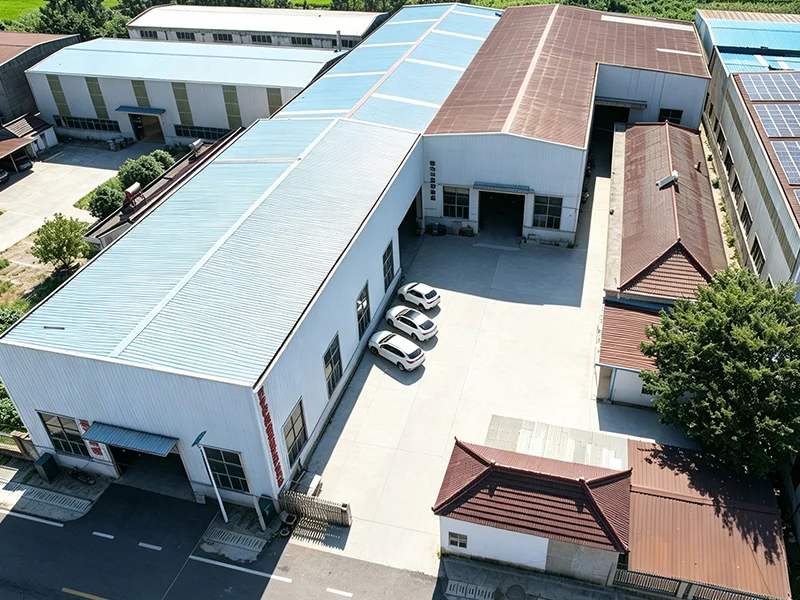
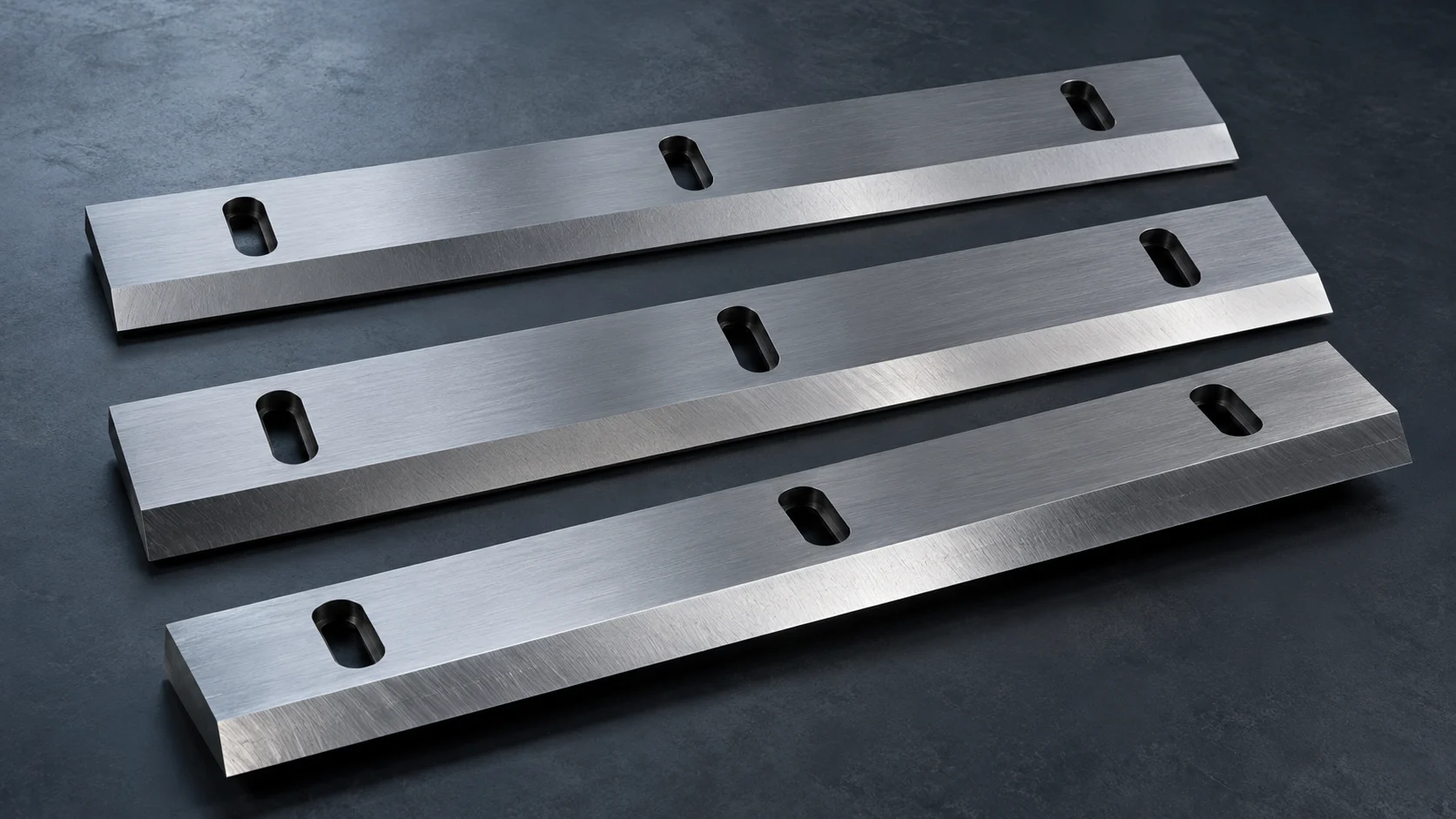
NJDETE’s factory page provides manufacturing context. Its replacement double-shaft blade specification lists 9CrSi and H13 options and custom thicknesses of 5–40 mm for that product family. For your assembly, bore, tooth form, spacers and treatment still need to match the approved specification.
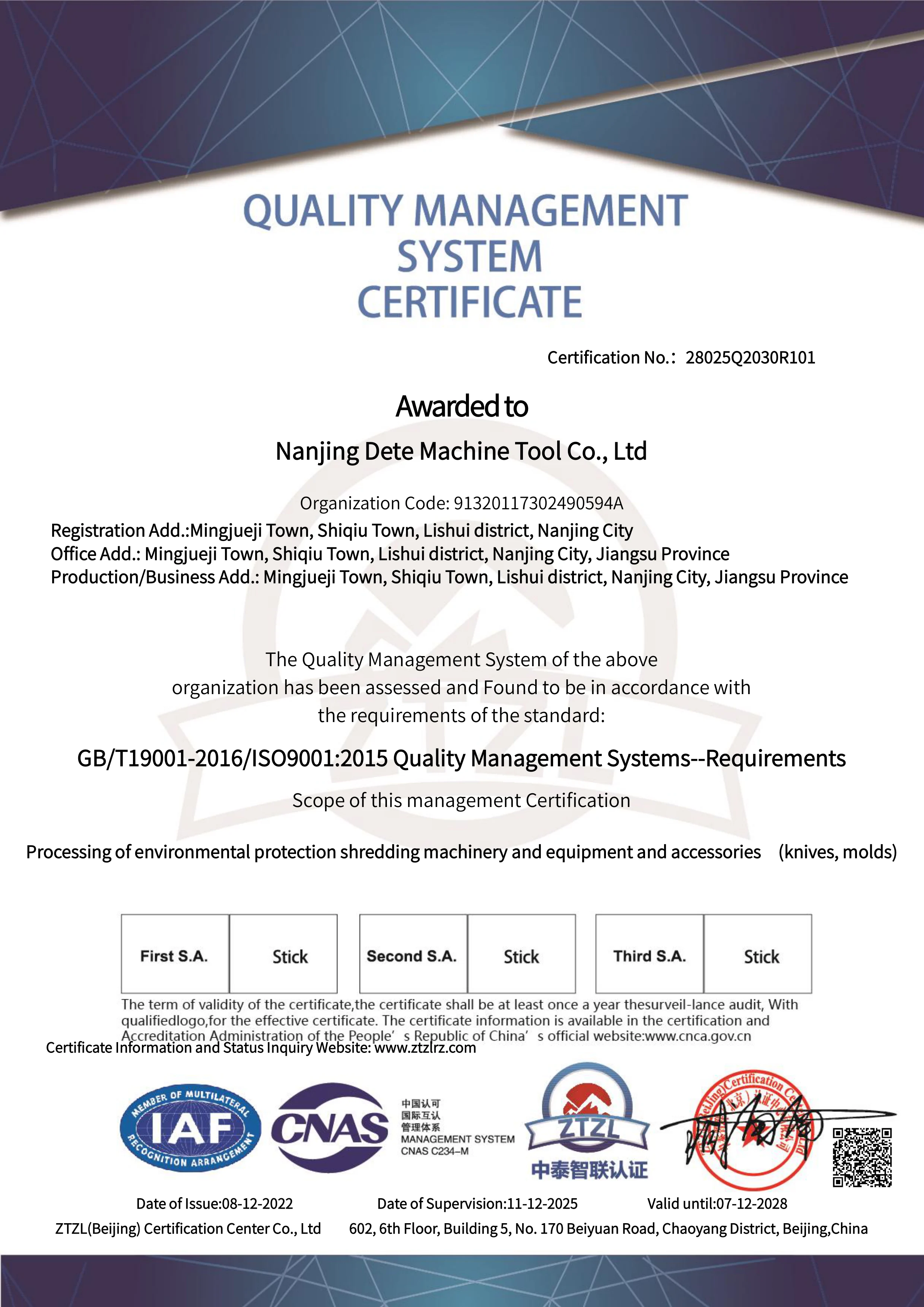
The certificate identifies processing of environmental protection shredding machinery, equipment and accessories, including knives and molds. You can inspect the document on the Certificates & Quality Assurance page. It supports review of the supplier’s quality-management scope; the permitted material and expected output belong in your particular machine proposal.
Frequently Asked Questions
Can I send photographs instead of a physical material sample?
Photographs can establish dimensions, form and obvious attachments when they include scale and several views. Add representative weights and descriptions of difficult normal items. Ask what can be concluded remotely and what requires a material evaluation. A photograph cannot show every hidden inclusion or establish sustained feeding.
What if I do not know the plastic or rubber compound?
Send the information you do have: production source, part drawings, packaging labels, supplier data sheets and clear photographs. Mark unknown composition and fillers explicitly. Appearance alone is not a reliable material specification. Keep unidentified waste separate until its feed and handling requirements are resolved.
Can a shredder accept bottle labels, tape and packaging attachments?
Identify the attachments in the review rather than treating them as part of an unspecified “plastic” load. Cutting suitability and downstream separation are separate questions. Labels or adhesive may change what the receiving process accepts even when the assembly can reduce the item. Include representative attached material in the agreed assessment.
Can wet and dry waste use the same capacity figure?
Compare results under defined moisture and residue conditions. A wet stream can have different mass, feeding and receiving requirements from the corresponding dry stream. Record the condition and the accepted-output basis so a higher measured mass is not mistaken for better recovery of the useful material.
Can I specify my waste in cubic metres instead of kilograms?
You can supply both, but state how the volume was measured and whether material is loose, nested or compacted. Representative mass and volume help characterize handling needs. Avoid using a generic density for all plastics or rubber: the delivered form can occupy very different space for the same mass.
Can I switch materials without cleaning the machine?
Agree the changeover and cleaning requirements with the equipment and downstream process teams. Cross-contamination may matter even when both feeds are mechanically suitable. Record retained material, permitted cleaning methods and how the next batch is released for use. The receiving specification determines how clean the changeover must be.
Does a replacement-blade quotation confirm a new material application?
It confirms a proposed part supply scope, not the whole machine’s application. A new material may also change feeding, drive loading, discharge and separation requirements. Describe the intended change when requesting parts so an assembly proposal is not mistaken for approval of the complete process.
Send a Material Brief That Can Be Assessed
You can start an enquiry before selecting a model. Prepare:
- Photographs of the delivered waste, including difficult normal items.
- Composition, known fillers, reinforcement and residues.
- Maximum dimensions, section thickness and representative weights.
- Current preparation and loading method.
- Required accepted output per day and the receiving process.
- Space, electrical supply and any existing equipment to be retained.
Use the double-shaft shredder machine overview to understand NJDETE’s product route, then send your material details to NJDETE for a configuration discussion. The useful outcome is a defined feed, machine scope and accepted result.