

Pallet Shredder Selection: Wood Pallets, Nails and Output Requirements
Release time: 2026-10-16
Choose a wood pallet shredder around the complete pallet-handling task: what enters, how it is prepared, which contaminants are permitted and what the receiving process can use. A demonstration on loose boards does not establish that the same configuration can accept whole pallets with embedded fasteners.
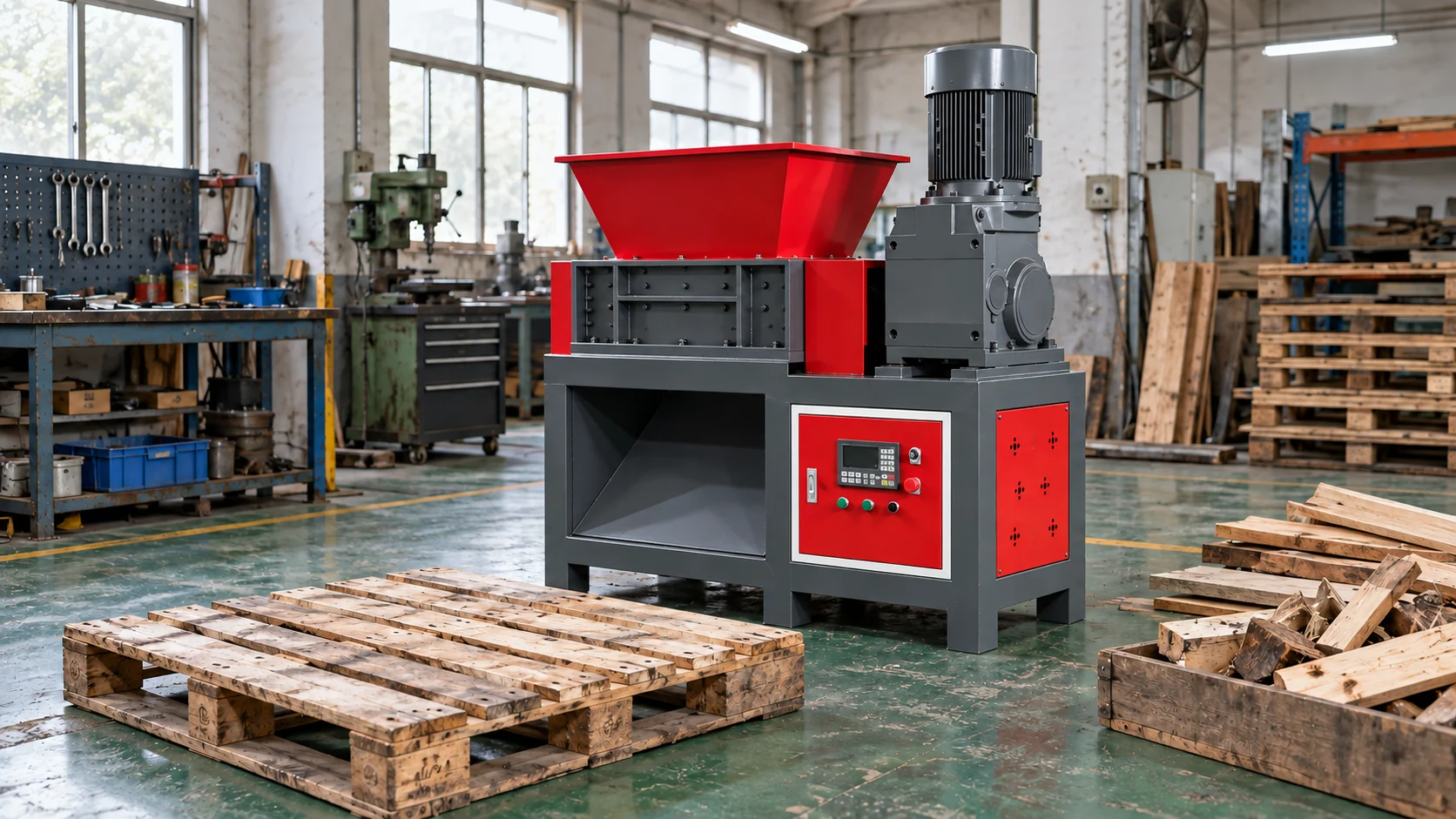
If employees already spend time dismantling pallets, pulling apart damaged sections and moving wood between stations, include those activities in the comparison. A machine with a strong cutting demonstration may still leave the most expensive preparation work unchanged.
This guide explains how to describe the duty, compare preparation routes and request evidence before choosing equipment. NJDETE’s published compact and industrial double-shaft configurations are starting points for an application review; whole-pallet and nail-bearing duties require specific confirmation.
Illustrations are AI-generated concept visuals; they do not document an NJDETE installation, material trial or supplied pallet-processing line.
Identify What Arrives With the Wood
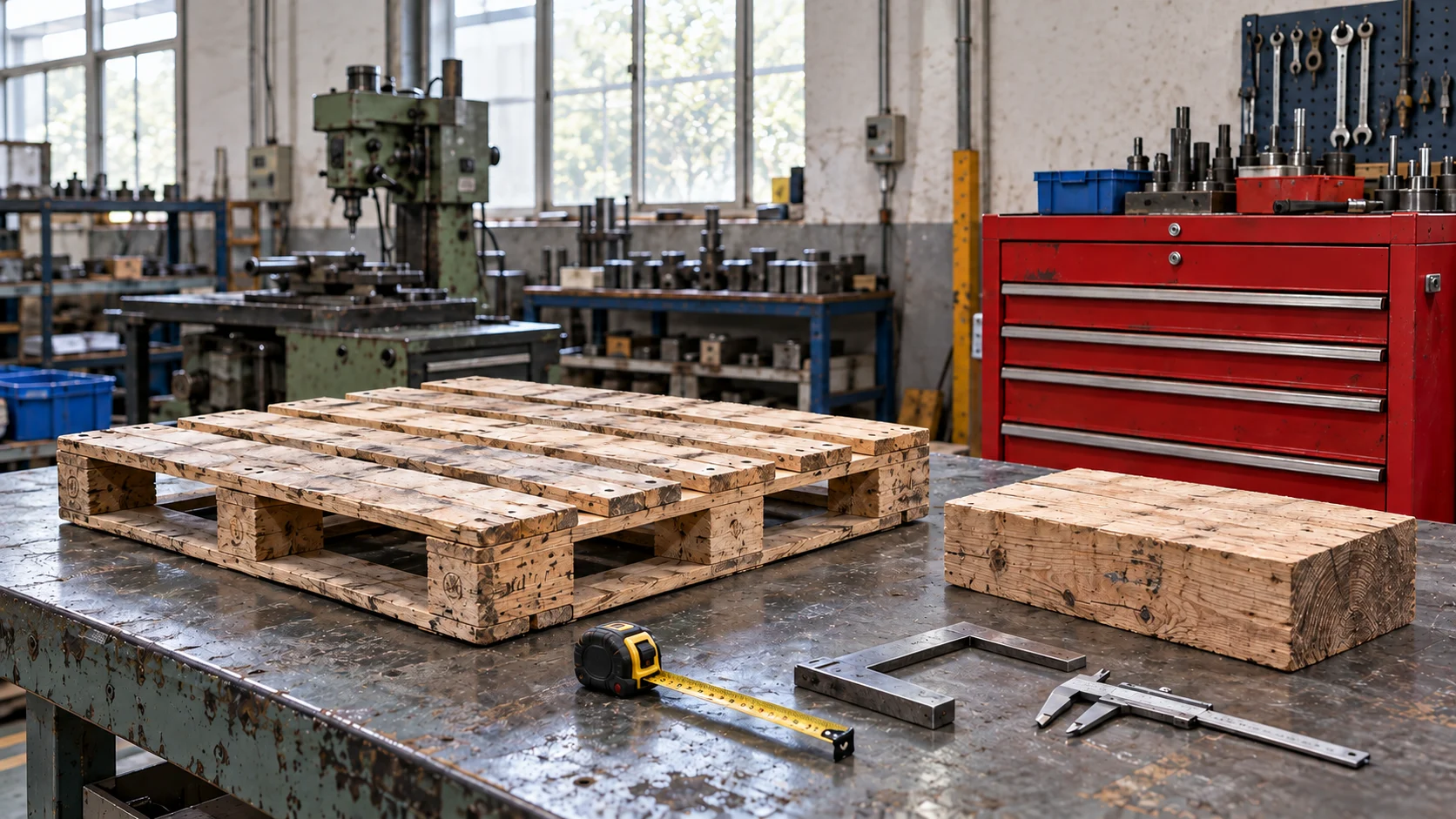
“Waste pallets” can mean intact transport pallets, broken deck boards, thick support blocks or a mixed load of packaging wood. These forms create different feeding and cutting tasks. Describe the stream you normally receive, including the difficult routine pieces.
Record Whole Items and the Hardest Sections
Measure the largest normal pallet’s length, width and height. Record board thickness, block dimensions and unusual reinforced sections separately. A pallet’s outside dimensions describe the handling envelope; its thickest section helps describe the cutting task. Neither measurement replaces the other.
Also record how pallets arrive: loose, nested, stacked or already dismantled. Include damaged pallets that no longer sit flat. A feeding arrangement evaluated on neat, uniform items may not answer questions about twisted boards or protruding blocks.
| Incoming material | Main selection question | Information to retain |
|---|---|---|
| Whole wooden pallets | Can normal items enter without dismantling? | Outside dimensions, condition and loading arrangement |
| Broken boards and stringers | Can long sections feed consistently? | Maximum length, section size and presentation |
| Dense blocks | Can the proposed configuration process the hardest normal section? | Dimensions, representative samples and observed result |
| Fastener-bearing wood | Which fasteners are accepted by the machine and receiving process? | Type, location and expected frequency |
| Mixed packaging loads | What must be removed before processing? | Accepted-feed list and preparation responsibilities |
Keep Unknown Wood Separate
Do not assume that packaging wood, painted timber, treated wood and demolition material share one receiving specification. Identify known treatments, coatings and contamination where possible. Ask the destination operator what information it requires before accepting the material.
Wood that can be physically shredded may still be unsuitable for the intended recovery route. Keeping uncertain material identifiable helps avoid producing a mixed output that no longer meets the receiver’s conditions.
Compare Whole-Pallet Handling With Preparation
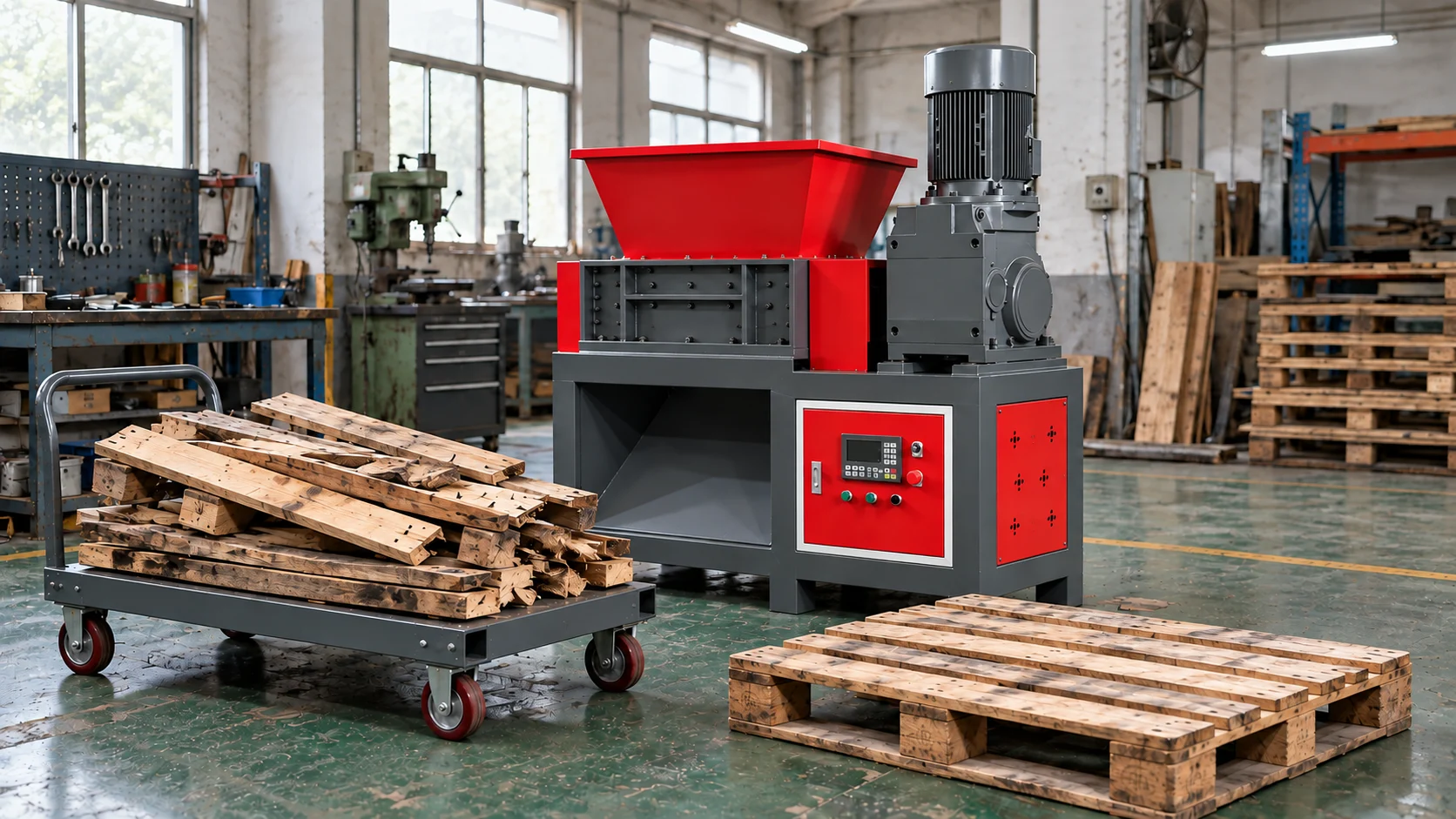
A larger-looking hopper does not by itself prove that a whole pallet can pass through the complete machine. The loading method, access opening, cutting arrangement and discharge path must work together. Ask the supplier to distinguish the hopper opening from the accepted feed envelope.
Compare three practical routes: processing whole pallets, dismantling them into sections, and processing boards that are already separated upstream. The lowest purchase price may belong to a route with substantial labor or additional equipment outside the quotation.
| Route to evaluate | Potential project advantage | Cost or limitation to confirm |
|---|---|---|
| Whole-pallet processing | May avoid a dedicated dismantling task | Actual accepted dimensions, loading equipment and complete system scope |
| Dismantling before shredding | Changes the feed into smaller sections | Preparation labor, equipment, fastener exposure and material transfers |
| Processing existing board offcuts | May fit an established production stream | Long-piece handling, blocks, contamination and available processing time |
Compare the Same Starting and Finishing Points
Begin each proposal with the same incoming pallet condition. End with material accepted by the same next operation. If one proposal begins with intact pallets while another begins with clean short boards, their quoted processing rates describe different tasks.
Record who performs dismantling, where prepared wood waits and how the cutting equipment is loaded. If preparation happens in parallel, identify the additional person or machine. If one operator performs every task sequentially, include that sequence in the available working window.
Verify Capacity Against Actual Feed
The NJDETE double-shaft shredder overview lists published configurations and cutting chambers. These dimensions help shortlist equipment, but they do not establish acceptance of an intact pallet or a particular mass throughput.
If your incoming pieces cannot be presented safely within the confirmed feed scope, request a different preparation or system proposal. Changing a motor rating alone does not resolve a feed-geometry problem.
Confirm the Accepted Fasteners and Contaminants
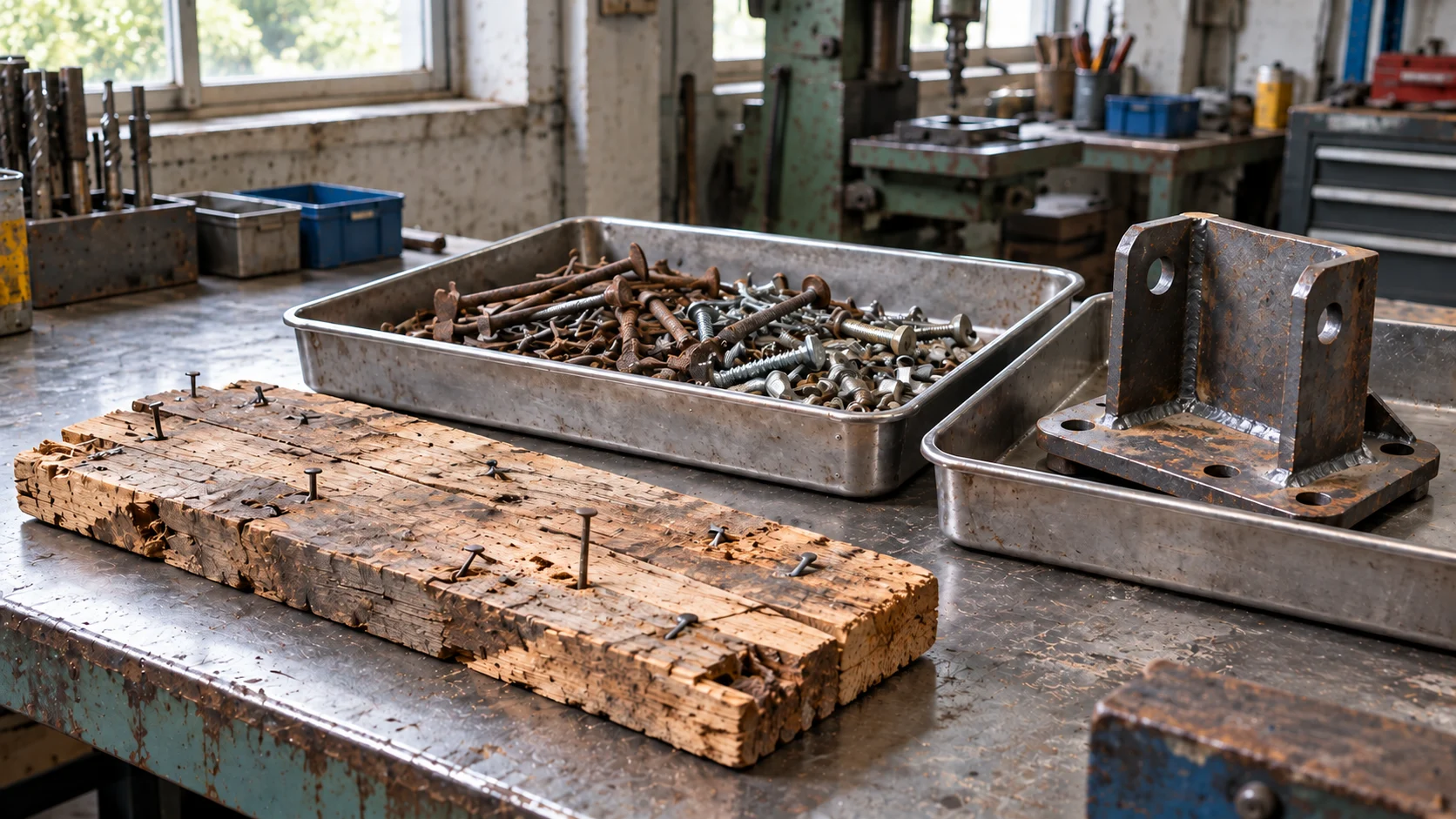
Ask for an accepted-contamination statement rather than a general promise that the machine “handles metal.” Ordinary embedded nails, screws, large brackets, loose tools and metal bands are different objects. Their presence and permitted limits need to be identified in the application review.
Define which contaminants are expected in routine deliveries, which require removal and which cause a load to be rejected. Discuss how those distinctions will be maintained during normal work. A supplier’s acceptance of one fastener type should not become unrestricted permission for arbitrary scrap.
Downstream separation is a separate task. Agree which fraction must be removed, how the proposed separation stage will be assessed and what residual contamination the receiver permits. The presence of a magnet is not an acceptance record for the complete output.
Purpose-designed pallet systems can include more than one reduction stage and metal recovery. For example, the manufacturer’s description of the WEIMA Woodwolf illustrates a pallet pre-crushing route. Its capabilities belong to that particular equipment; they do not establish the capability of an NJDETE configuration.
Use the Wood-Board Demonstration as a Reference
The following NJDETE channel clip is presented on screen as a wood-board shredding demonstration. It is useful as an example of a short operating presentation. It does not document whole-pallet feeding, a specified nail load, measured throughput or an accepted output distribution.
Watch the original NJDETE wood-board clip on YouTube.
For a pallet purchase, request a separate record showing the agreed incoming items, any preparation and the resulting material. Associate that record with the proposed machine configuration. A clip from a different feed stream can explain the cutting principle but cannot close the application review.
Define Usable Output Before Selecting the Cutting Route
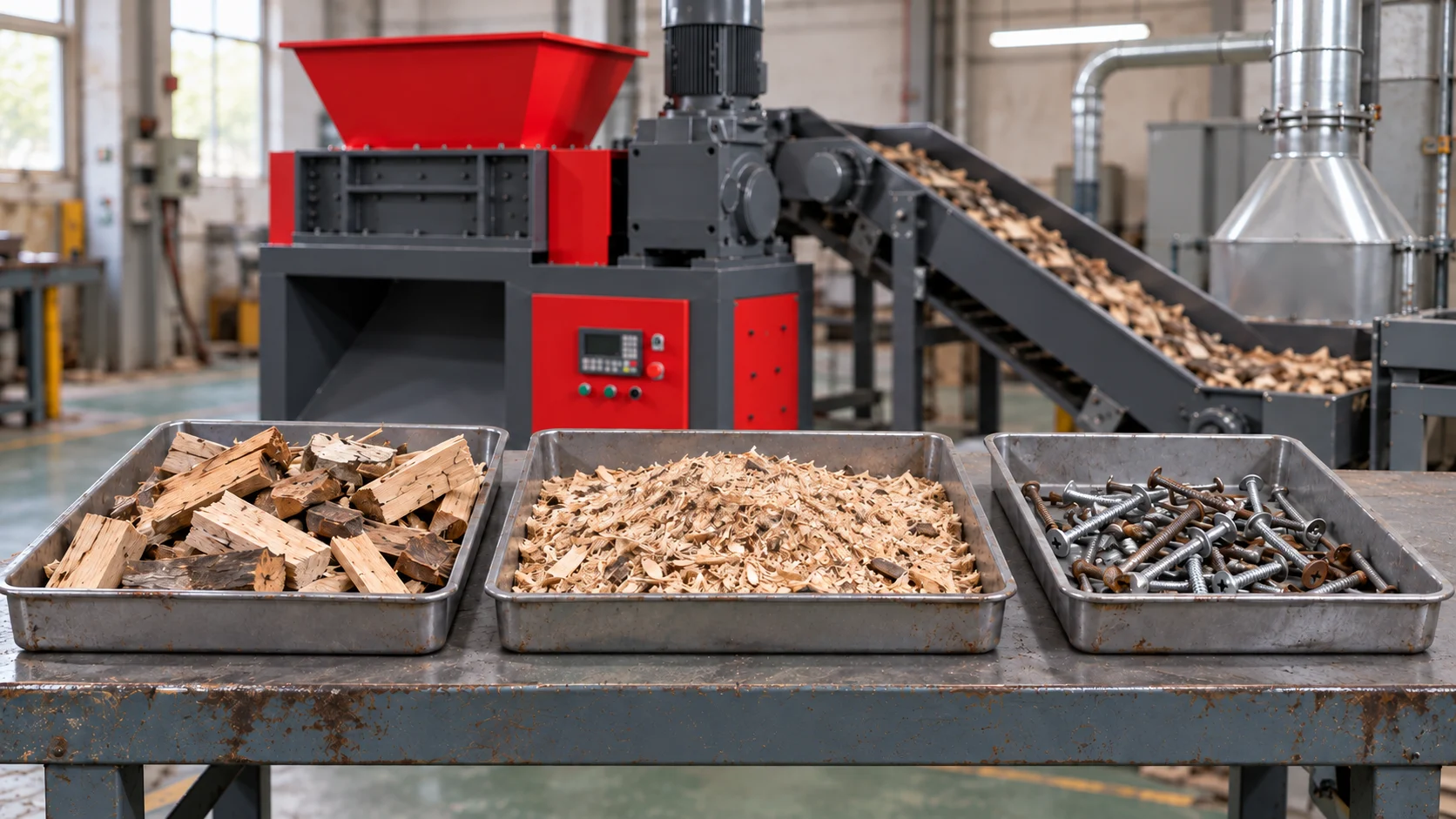
Transport volume reduction, further size reduction, material recovery and use as fuel require different output reviews. Describe the immediate receiving task instead of asking only for “small chips.”
Ask the receiving organization for acceptable particle dimensions, oversize, metal contamination, material treatment and other relevant conditions. Do not infer fuel suitability from a photograph of wood fragments. The receiving equipment and applicable local requirements must be considered separately.
Assess Representative Material
Keep output from a representative run rather than selecting the most uniform handful. Include long splinters, dense pieces, fines and any visible contaminants in the assessment. Agree how the sample will be taken and which result counts as acceptable before comparing suppliers.
If another shredding or screening stage is proposed, identify its place in the quotation. Record what it receives and what it must deliver. A primary reduction result should remain distinguishable from a finished material specification.
The industrial shredder materials guide provides a broader application framework. For pallets, add the incoming construction, fasteners and required preparation so that the review remains specific to your operation.
Include Dust, Handling and Maintenance in the Project
Shredding wood changes how material is handled and where particles accumulate. Ask competent site specialists to assess extraction, housekeeping and relevant fire and combustible-dust controls. OSHA’s combustible-dust overview identifies wood dust among materials requiring attention under suitable conditions; it does not provide a universal extraction design for your installation.
Allow space for loading, discharge collection, maintenance and removal of full containers. Verify the collection arrangement at the expected production rhythm. A machine can remain available while a full bin or obstructed discharge stops the working process.
Keep servicing under the equipment instructions and the site’s hazardous-energy control procedure. Clearing a blockage or inspecting cutters requires authorized personnel and verified energy isolation. A short operating video is not a maintenance procedure.
Compare Accepted Output Over the Complete Working Window
Use a consistent measurement boundary. Record incoming condition, preparation, processing time, interruptions and the accepted output mass. Keep material that needs another pass separate so it is not counted twice.
As a hypothetical planning example, a site requiring 600 kg of accepted wood output over three available hours needs an average of 200 kg/h across the activities included in that window. These numbers illustrate a calculation; they are not NJDETE machine ratings.
The industrial shredder capacity guide explains the general method. Add pallet-specific preparation and collection tasks when applying it to your project.
| Trial record | What the buyer should be able to establish |
|---|---|
| Incoming batch | Normal pallet construction, hardest sections and expected contamination |
| Preparation | Dismantling, sorting or removal performed before feeding |
| Configuration | Machine, cutters, feeding method and auxiliaries used |
| Time boundary | Included activities, interruptions and collection changes |
| Mass record | Input, accepted output, retained material and returns |
| Output sample | Size variation, long pieces, fines and contaminants |
| Remaining work | Additional separation or processing needed before acceptance |
Frequently Asked Questions
Can a Small Shredder Accept Whole Wooden Pallets?
Only where the particular configuration and feeding system have been confirmed for those items. “Small,” motor power and model numbers do not establish whole-pallet acceptance. Provide actual dimensions and representative construction details.
Must All Nails Be Removed Before Shredding?
Agree permitted fasteners with the machine supplier and receiving organization. Some purpose-designed systems accommodate defined embedded fasteners. That does not establish unrestricted acceptance by another machine or remove downstream separation requirements.
Does a Wood-Board Demonstration Prove Pallet Capability?
It shows a different feed condition. Whole pallets add construction, loading and fastener questions that need their own assessment. Ask for evidence associated with the quoted configuration and your accepted-feed specification.
Is Shredded Pallet Wood Automatically Suitable as Fuel?
No. Treatment, contamination, particle form and the receiving system’s requirements still matter. Identify the intended destination before agreeing the output specification and any necessary separation or further processing.
Should I Compare Quotes Using Pallets per Hour?
You can record item counts, but also retain pallet construction and mass. Different pallets contain different quantities and sections of wood. Compare accepted output over equivalent working periods, including preparation where required.
What If I Only Have Broken Pallets Rather Than Whole Ones?
Describe that actual stream. Record the largest remaining sections, loose boards, blocks and fasteners. A proposal for prepared broken wood may differ from a whole-pallet system, so keep the incoming condition explicit.
Review Your Pallet Handling Task
Send NJDETE your pallet-processing requirements with incoming photographs, largest normal dimensions, timber sections, expected fasteners, daily mass and available working hours. Include the intended output destination and preparation tasks you are willing to retain.
Ask for a written application scope, a representative material evaluation and a clear statement of included equipment. Those records let you compare whole-pallet handling with preparation-based routes before committing to a configuration.