

Industrial Cardboard Shredder: How to Choose for Waste Reduction
Release time: 2026-10-16
Choose an industrial cardboard shredder by the cardboard you receive, the output your next process accepts and the workload your team must complete. Confirm those three points before comparing motor power or purchase price. For a site that needs compact bales for collection, evaluate baling; for protective packaging, evaluate a purpose-designed cardboard converter and test its output.
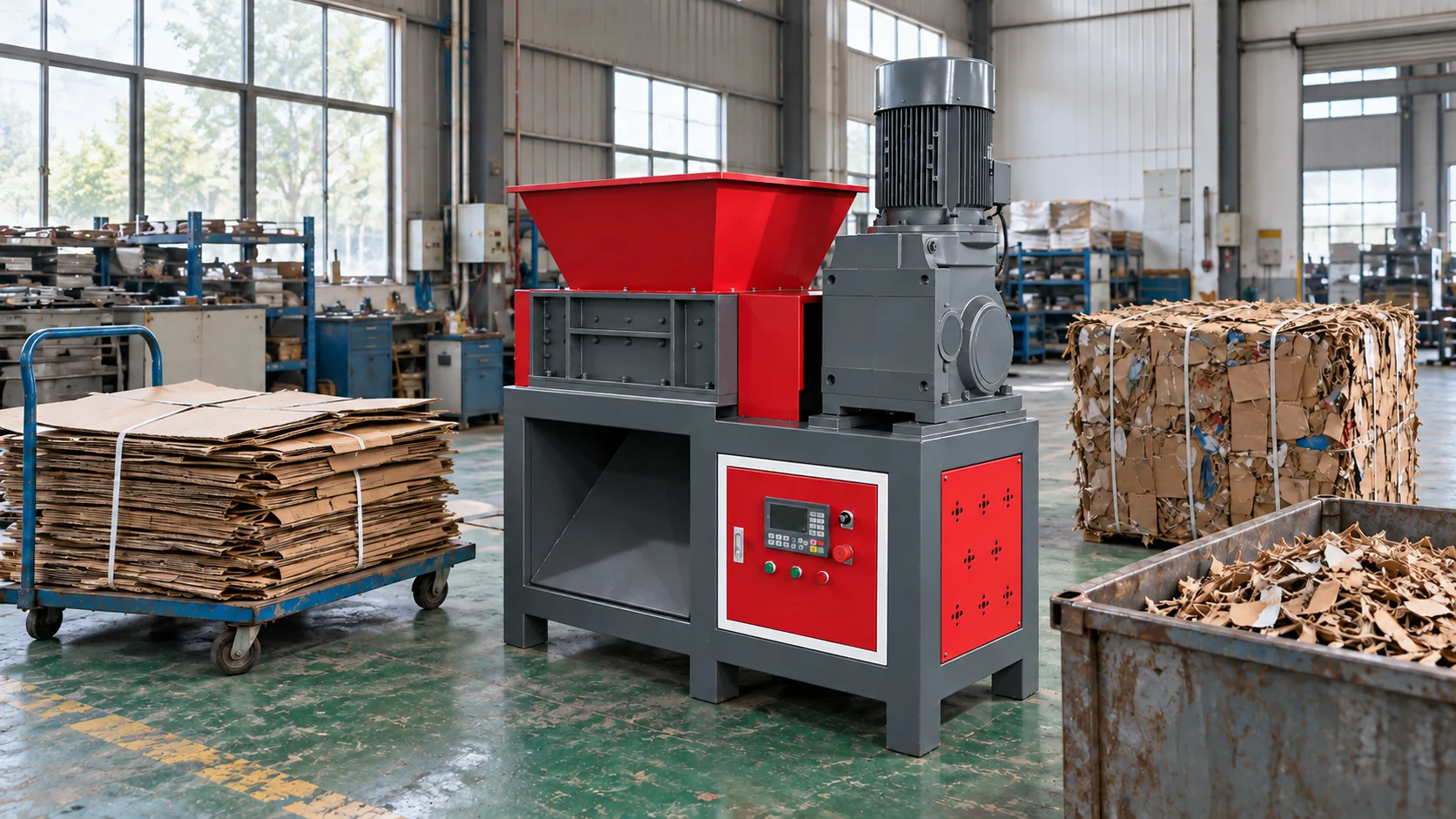
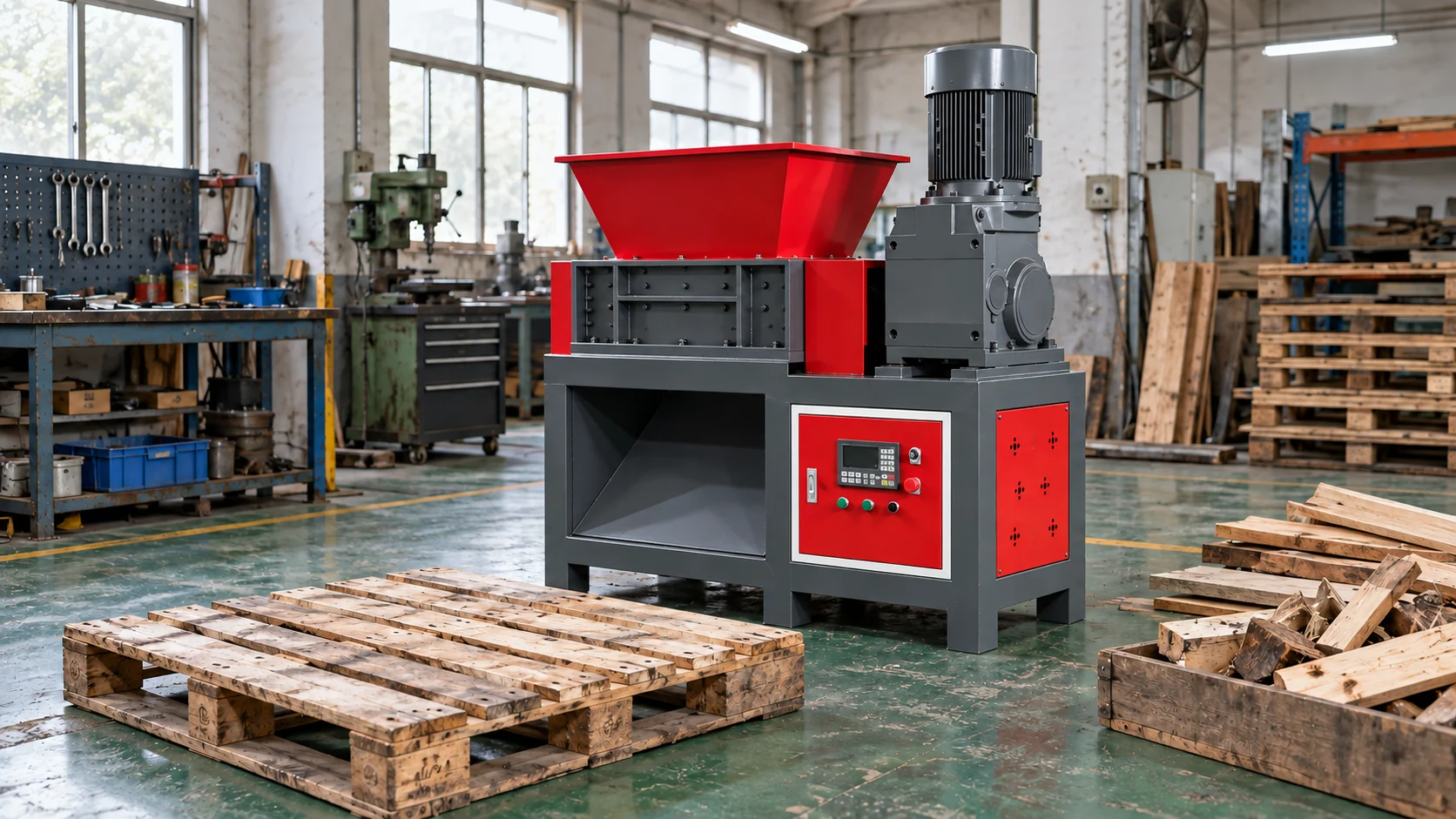
Illustrations are AI-generated concept visuals; they do not document an NJDETE installation, delivered equipment or material test.
Factories and warehouses often begin with the same complaint: empty cartons occupy working space. The useful solution depends on what happens next. Smaller pieces, compact bales and reusable cushioning are different outputs, with different handling and acceptance requirements.
This guide explains how to specify a cardboard shredding machine for industrial waste handling. NJDETE’s relevant scope is shredding equipment and cutting components. The comparison with balers and packaging converters helps define the task; it does not establish that NJDETE supplies those other machine categories.
Start With the Destination of the Cardboard
Ask the receiving recycler or internal process what form it accepts before preparing a machine specification. Obtain requirements for cardboard type, contamination, output form and delivery method. A successful cutting demonstration is useful only when the resulting material can enter that route.
For example, if your recycler collects tied bales, producing loose fragments may add a storage or transfer task. If an internal process requires smaller pieces, a bale alone does not provide that preparation. If the packing team needs flexible protective mats, irregular shredded pieces are a different product.
| Required outcome | Equipment route to evaluate | Confirmation before purchase |
|---|---|---|
| Smaller pieces for a defined next process | Cardboard shredding machine | Accepted dimensions, oversize and discharge handling |
| Compact units for collection or transport | Cardboard baler | Receiver’s bale and contamination requirements |
| Cushioning or void fill for outgoing shipments | Purpose-designed cardboard converter | Required output form and package performance |
| Less cardboard occupying the working area | Compare collection, baling and shredding routes | Total stored volume, labor and collection frequency |
Keep the starting and finishing conditions consistent when comparing proposals. One supplier may quote processing flattened clean sheets while another assumes mixed empty cartons. Those are different preparation tasks even if both quotations use the term cardboard shredder.
Identify the Cardboard and Its Contaminants
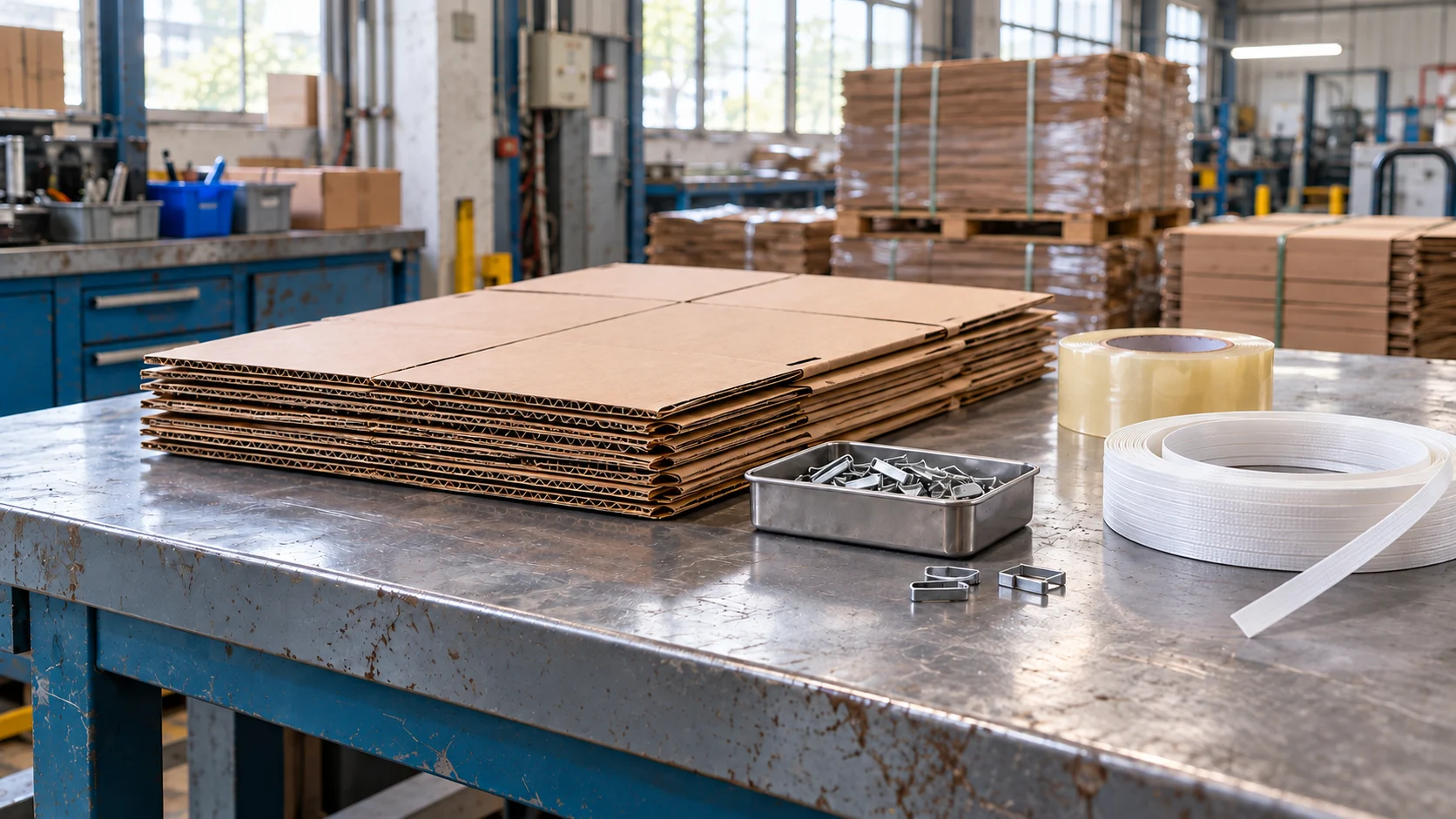
Record the largest normal carton or sheet, board construction, folded thickness and how material arrives. Separate production offcuts from returned shipping boxes if their condition differs. Include damaged or irregular items that occur during routine work rather than selecting only neat samples.
Discuss tape, labels, staples, strapping and protective inserts individually. Acceptance of one small embedded fastener does not establish acceptance of loose metal or an unrestricted mixed load. Wet, heavily soiled, coated or laminated cardboard also needs a specific review with the supplier and receiving organization.
| Feed detail | Why it affects selection | Evidence to provide |
|---|---|---|
| Outside dimensions and folded thickness | Defines the loading and presentation task | Measurements and photographs of routine items |
| Flattened sheets or intact cartons | Changes preparation and feeding labor | Actual incoming condition |
| Tape, staples and labels | May affect cutting and downstream acceptance | Type, location and expected frequency |
| Strapping, film or other inserts | Creates a separate contaminant or mixed-feed question | Sorting rules and representative samples |
| Moisture, coatings and contamination | May change the permitted recovery route | Known condition and receiver’s requirements |
The industrial shredder materials guide provides a wider application framework. Your quotation should still identify the particular cardboard stream and exclusions that apply at your site.
Specify Usable Output Before Choosing the Cutting System
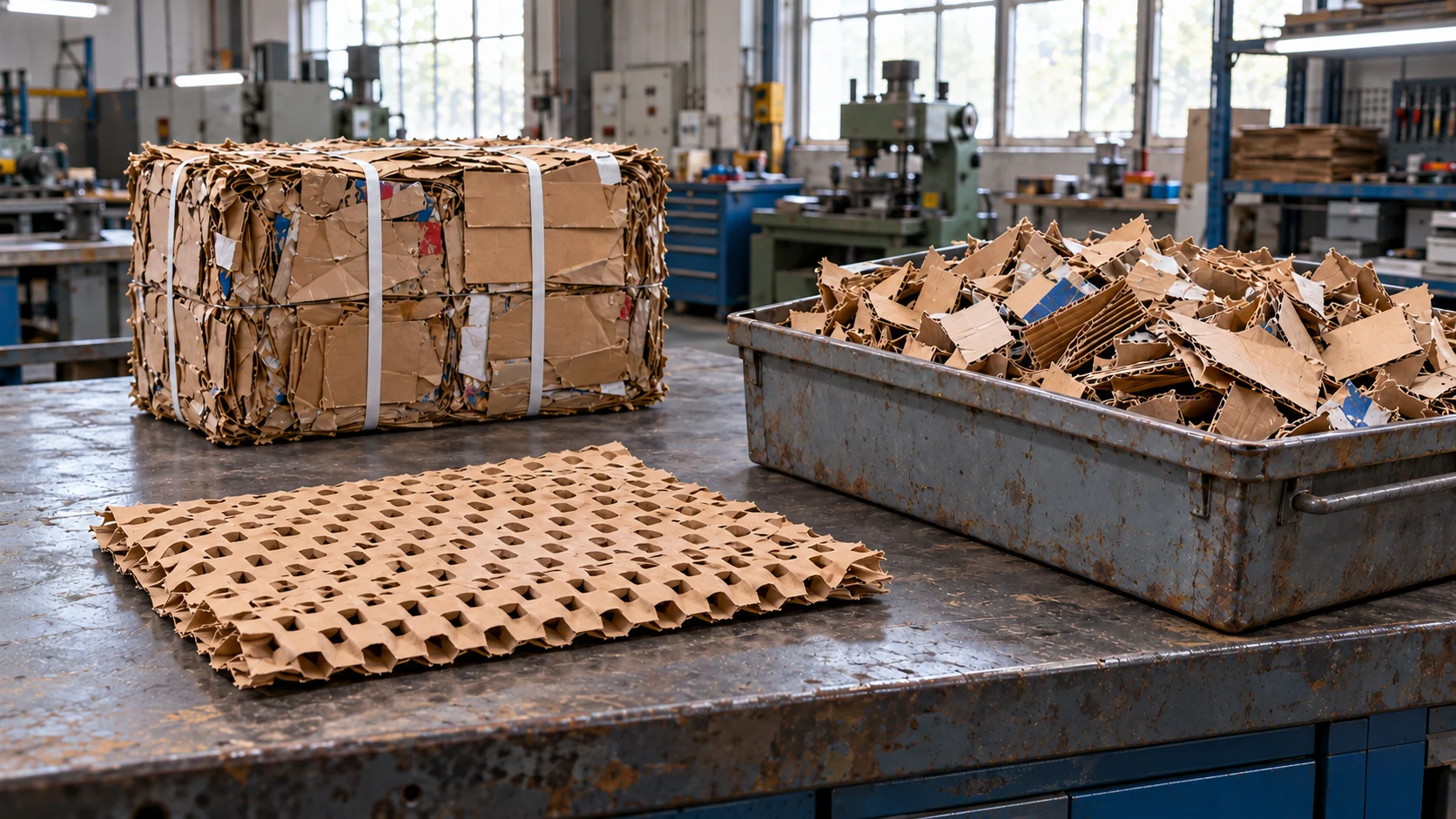
A photo of shredded cardboard does not define an output specification. Describe what the next operation accepts: smaller pieces, strips, a maximum unacceptable dimension or a sample approved by the receiver. Include fines and oversized pieces in that review.
Avoid using only words such as fine or uniform. Explain which material would be rejected and why. A connected strip can cause a handling problem even when much of the sample looks small. Agree how the trial output will be collected and assessed so that the quotation and acceptance review use the same standard.
If another shredding, screening or transfer stage is required, identify it separately. Record whether the quoted machine provides an intermediate material or a finished output accepted by the next process. Retain representative output instead of choosing the most attractive handful from a run.
Cardboard Shredder vs Baler
A shredder reduces item size; a baler consolidates material into bales. Neither output automatically replaces the other. The manufacturer’s description of the HSM V-Press 610 is an example of the baling equipment category, not an NJDETE product specification.
Compare the complete route, including feed preparation, containers, transfer and collection. Buying a shredder to save floor space is difficult to justify if loose shredded material then waits in several containers for a collector who requires bales.
Cardboard Shredder for Packaging
Searches for a cardboard shredder for packaging can refer to machines that cut and perforate sheets into flexible cushioning. For example, the KOBRA FlexPack produces packaging material through a defined cutting and perforating process. That is a separate application from general cardboard waste reduction.
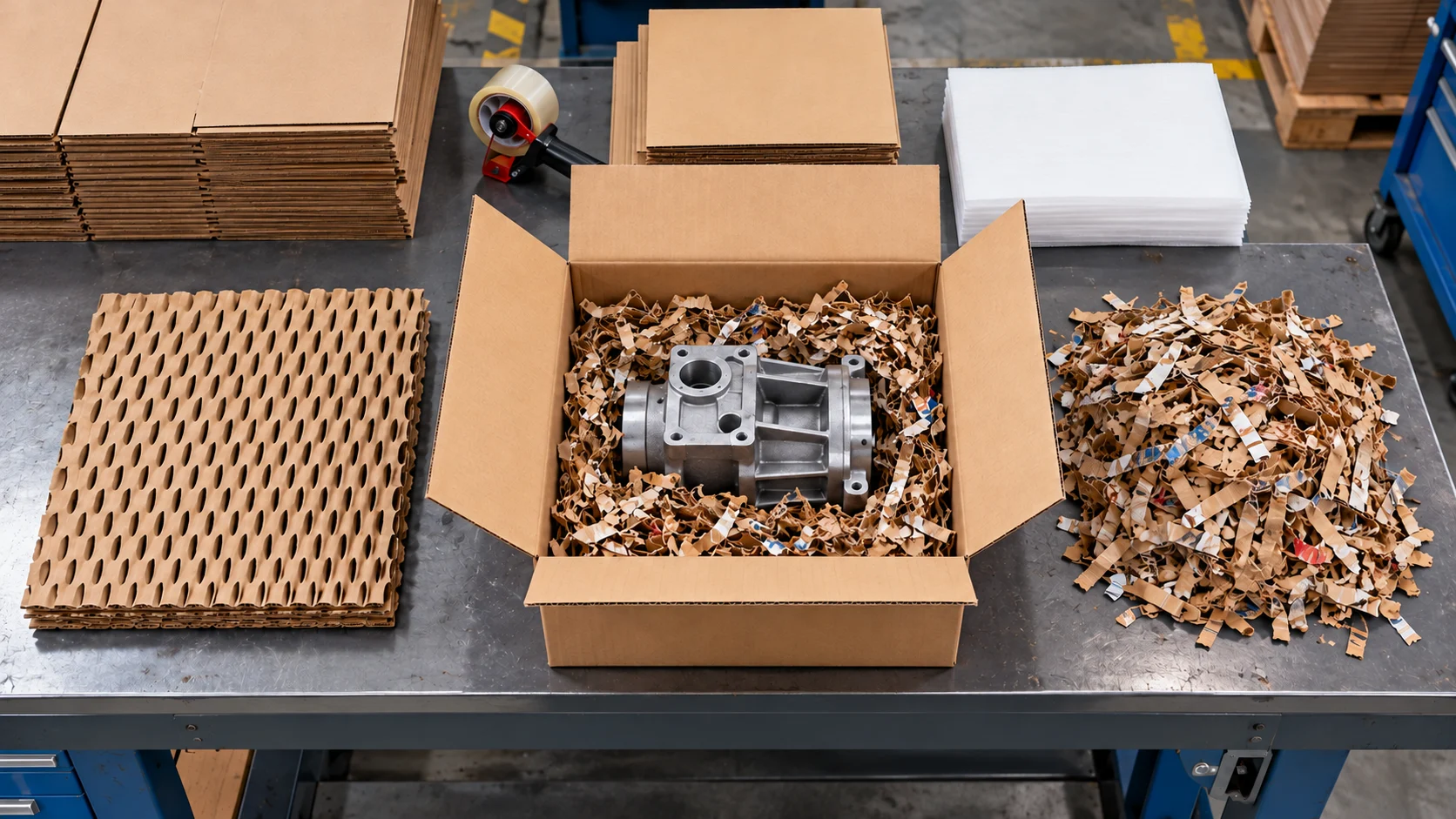
If packaging reuse is your objective, provide the products being shipped, their protection requirements and the proposed packing method. Test representative packages before making a savings or protection claim. Do not assume that the output of an ordinary double-shaft shredder is equivalent to a cushioning mat or approved packaging filler.
Calculate Capacity From the Complete Workload
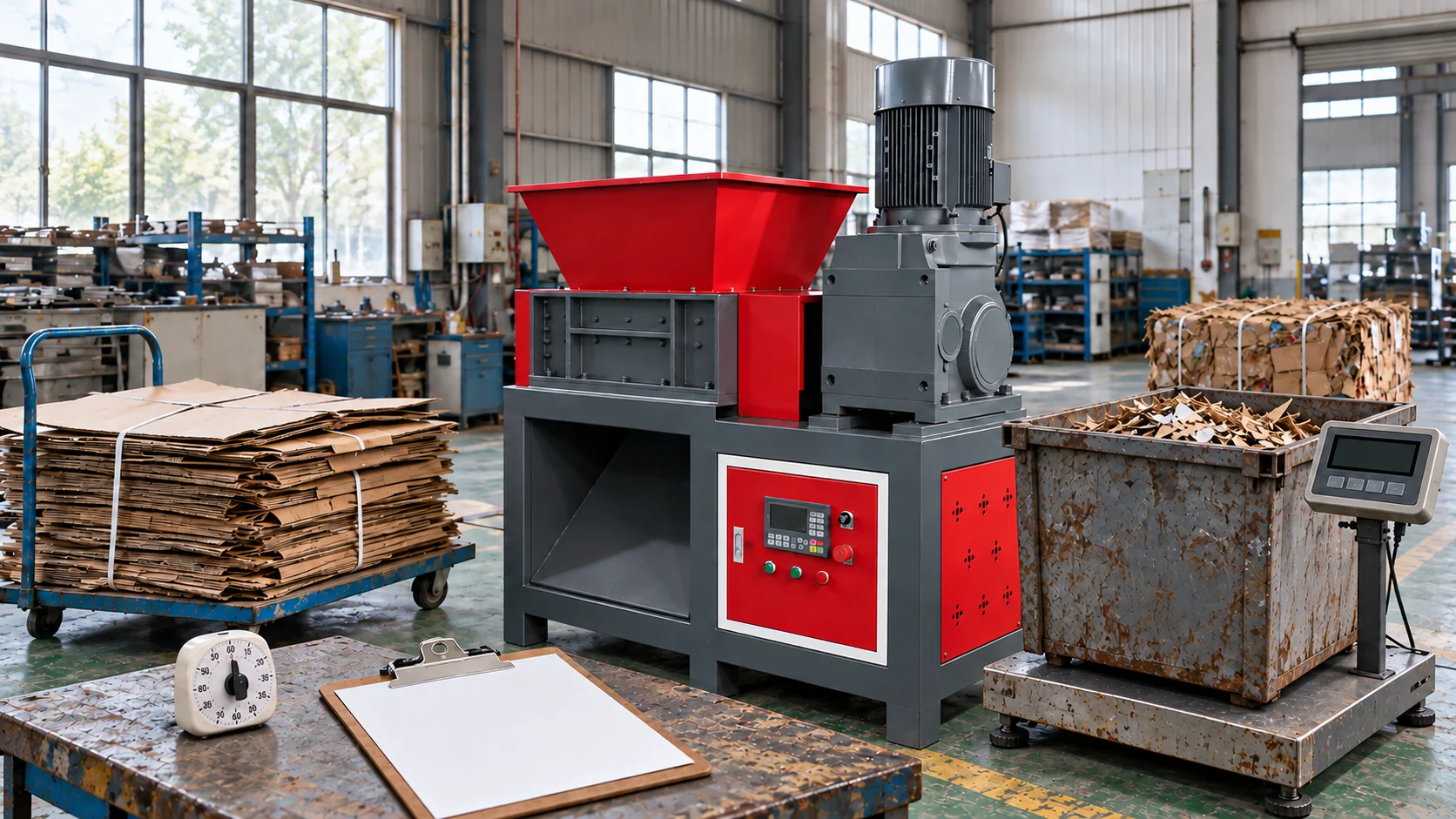
Record the mass generated per shift, busy-period accumulation and the hours actually available for processing. Include flattening or opening cartons, sorting, loading, container changes and cleanup in the measurement boundary where your team performs those tasks.
As a hypothetical planning example, 450 kg of accepted output required within three available hours implies an average of 150 kg/h across the activities included in that window. These figures illustrate the calculation; they are not ratings for NJDETE equipment.
If one person performs preparation and feeding sequentially, keep both tasks in the working period. If another station prepares material in parallel, record its labor and equipment as part of the proposal. A fast cutting interval does not establish the complete shift result.
The industrial shredder capacity guide explains the general approach. For cardboard, also observe how quickly cartons can be presented consistently and how the output is removed. Those activities can limit the useful result even while the cutter is available.
Ask for a representative trial record showing input condition, machine configuration, elapsed time, interruptions and accepted output. Do not compare a short demonstration using selected clean sheets with a production requirement based on mixed warehouse cartons.
Check Feeding, Space and Discharge Together
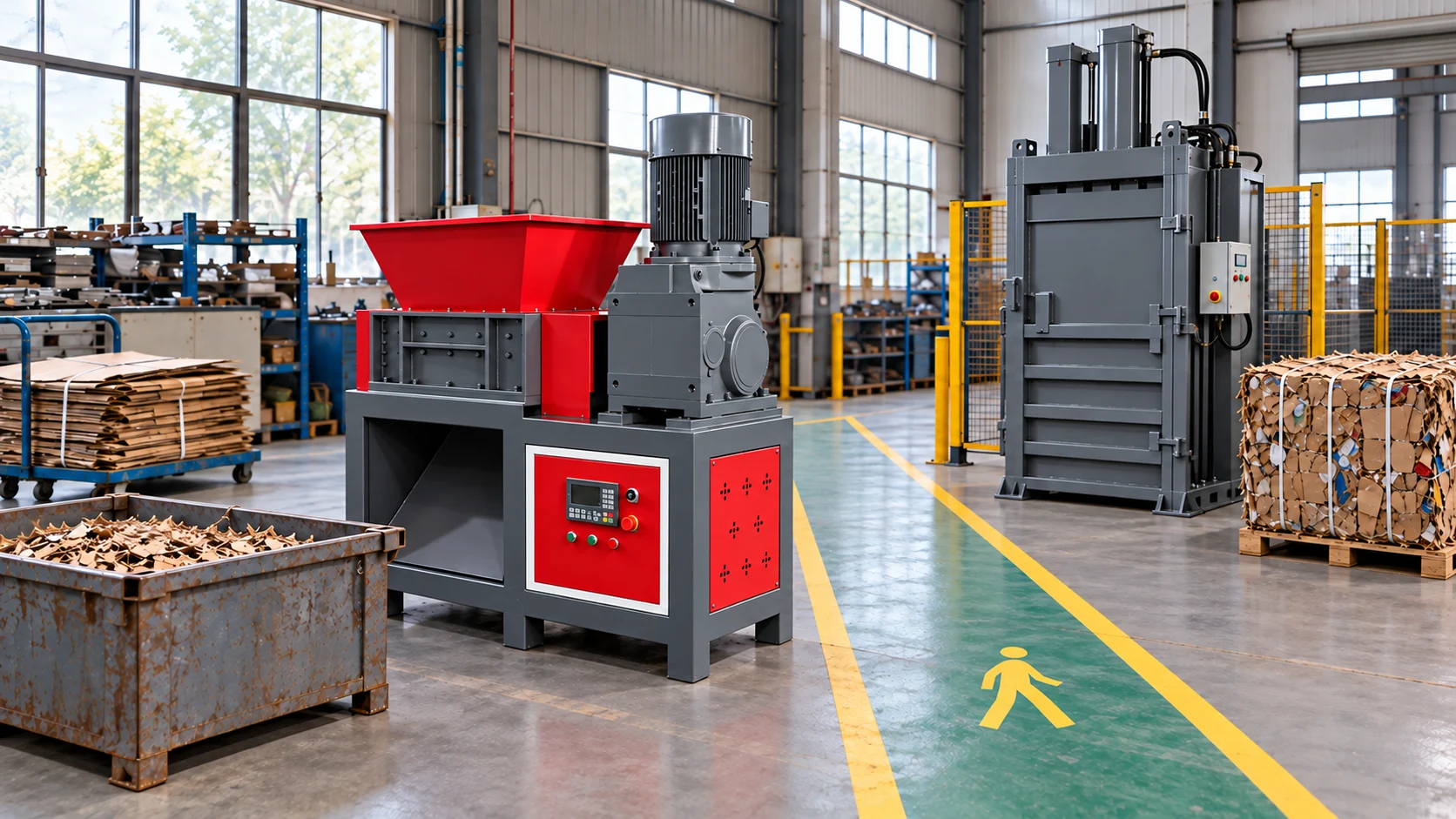
The machine’s floor dimensions are only part of the installation. Allow for incoming cartons, approved loading equipment, operator access, discharge collection, removal of full containers and maintenance access. Keep those areas visible in the proposed layout.
Compare the accepted feed envelope with actual items. Hopper dimensions alone do not prove that an intact carton will enter and process without preparation. Confirm whether flattening, cutting down or sorting is required and who performs it during normal work.
Review utilities and the permitted operating pattern for the proposed configuration. Ask site specialists to assess relevant extraction, noise and housekeeping requirements. General descriptions such as industrial or commercial do not define a standardized throughput or operating duty.
Authorized personnel should follow the equipment instructions and the site’s hazardous-energy control procedure when clearing blockages or servicing cutters. The OSHA hazardous-energy overview explains the servicing hazard; it is not a machine-specific operating procedure.
Watch the NJDETE Cardboard Shredding Demonstration
The following video comes from the Nanjing Dete Shredder channel and shows a short cardboard shredding demonstration. Use it to understand the visible presentation and cutting action. It does not establish measured throughput, continuous-duty performance, recycler acceptance or packaging protection.
Watch the original NJDETE video on YouTube.
For a purchase, request evidence associated with your agreed feed, the quoted configuration and the required output. Keep the trial record with the quotation so that later changes in cutters, feeding or auxiliaries remain visible.
Compare the Complete Cost and Quotation Scope
Compare equipment prices only after aligning the supply boundaries. Identify whether the offer includes feeding equipment, stand, controls, discharge collection, transfer equipment and commissioning. Record any preparation, extraction or collection work supplied by others.
Use your own workload and local cost information. A general claim of large volume reduction or packaging savings should not replace measurements from the route you intend to use.
| Quotation item | Buyer confirmation |
|---|---|
| Feed scope | Cardboard types, preparation and excluded contaminants |
| Output requirement | Receiving specification and representative sample method |
| Capacity basis | Included activities, operating window and trial conditions |
| Installation | Utilities, working space and collection arrangement |
| Included equipment | Feeding, discharge, controls and auxiliary supply boundaries |
| Maintenance and spares | Applicable instructions, replacement-part identity and support |
| Acceptance | Evidence, responsibilities and resolution of unmet requirements |
The NJDETE double-shaft shredder overview provides a starting point for discussing available configurations. Published dimensions or motor options still need to be checked against your cardboard-handling task.
Frequently Asked Questions
What Is an Industrial Cardboard Shredder Used For?
It reduces cardboard into smaller material for an agreed handling or downstream processing task. The required output should determine the configuration. Compact bales and protective cushioning are separate outcomes that need their own equipment review.
Should I Choose a Cardboard Shredder or a Baler?
Start with the receiver. If collection requires bales, evaluate baling. If a process requires smaller pieces, evaluate shredding. Compare preparation, storage, transport and labor across the complete route rather than only the machine price.
Can Shredded Cardboard Be Used for Packaging?
Only where the resulting material suits the packing method and the package has been evaluated. Purpose-designed converters can produce cushioning forms. A waste-shredding demonstration does not prove that its output provides equivalent protection.
Can Staples and Tape Remain in the Feed?
Agree each contaminant with the equipment supplier and receiving organization. Provide actual examples and frequency. Do not extend approval for a defined staple or label to arbitrary metal, film or mixed waste.
Does Cardboard Need to Be Flattened First?
That depends on the accepted feed envelope and loading arrangement. Confirm the actual carton condition during the application review. If preparation is necessary, include its labor and time in the capacity and cost comparison.
How Much Capacity Does a Warehouse Need?
Measure generated mass and the available processing window, then include the tasks performed within that window. Ask for a trial using representative material and a clear accepted-output requirement rather than relying on a brief cutting clip.
Is a Commercial Cardboard Shredder Always Smaller Than an Industrial One?
Those labels do not provide a universal capacity classification. Compare actual feed acceptance, operating requirements, output, utilities and trial results. Ask the supplier to define the proposed machine’s scope in writing.
Request a Cardboard-Shredding Application Review
Send NJDETE your cardboard-processing requirements with incoming photographs, largest normal dimensions, folded condition, expected contaminants, daily mass and available processing hours. Identify the receiving route and include its output requirements.
Ask for the proposed configuration, supply boundaries and representative trial evidence. Those details allow purchasing, production and the receiving organization to assess the same task before equipment is ordered.