

Industrial Shredder Troubleshooting: Jams and Reversing
Release time: 2026-10-23
Separate a protective reversal from a recurring problem
Record the displayed event or alarm message using the controls’ normal permitted method. “Reversing,” “overload,” “drive fault” and an interlock-related stop can describe different events. Preserve the message and timing before the history is lost.
| Operating pattern | What it tells the review team | What it does not establish |
|---|---|---|
| Brief reversal followed by normal processing | Compare the sequence with the installed control description | That a part has failed |
| Repeated reversals with little output | Identify the load and material movement before each event | That harder or sharper blades will solve it |
| Sudden trip with abnormal contact or knocking | Stop under the machine’s criteria and obtain qualified assessment | That repeated restarts are an appropriate test |
| A new symptom after maintenance | Compare the completed work with approved parts and settings | That normal wear caused the change |
| A fault during authorized testing with little feed | Broaden qualified diagnosis beyond the incoming batch | A specific electrical or mechanical cause |
Before anyone enters or accesses the cutting area, use the site’s authorized hazardous-energy control procedure. Account for stored energy, retained material and movement as a blockage releases. A stopped shaft, emergency stop or open interlock does not by itself establish isolation. Keep hands and improvised tools out of the hopper during operation. Retain guards and protective functions. Do not raise a trip threshold to keep an unresolved fault running.
Start with the change before the fault
Ask when the line last processed comparable material normally. Then identify what changed between that run and the first abnormal event.
| Change or timing | First information to collect |
|---|---|
| Different waste batch | Polymer, wall sections, fillers, inserts, contamination and item form |
| A large load is tipped in | Loading method, batch size and how items meet the cutters |
| Material remains above the shafts | Bridging, nesting, strip length and engagement observations |
| Cutting continues while output falls | Discharge, receiving bin and downstream interruptions |
| Gradual deterioration on comparable feed | Wear, wrapping, buildup and recorded machine condition |
| Trouble begins after a cutter change | Drawing revision, component variants, orientation and retained parts |
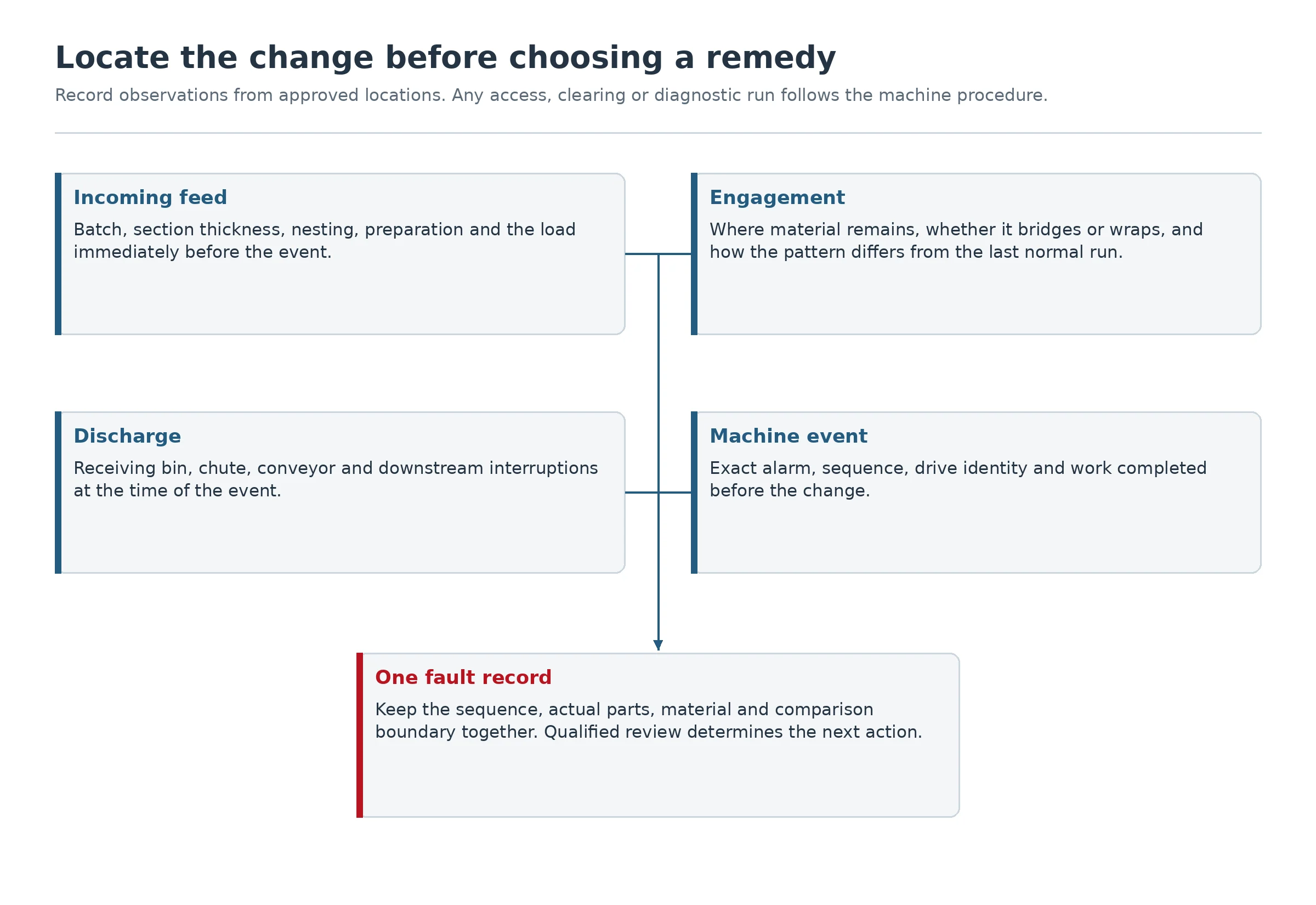
Build the sequence from the normal observation locations provided by the installation. A useful description can be short: the load entered, one corner engaged, the drive reversed, and material remained in the same position. That is more informative than “the machine is weak.” Keep the distinction between observation and explanation. “A container rim reached the cutters before the reversal” is an observation. Calling it the confirmed cause requires the appropriate inspection and comparison.
Check feed presentation and material grip
Compare the sections the cutters actually encounter
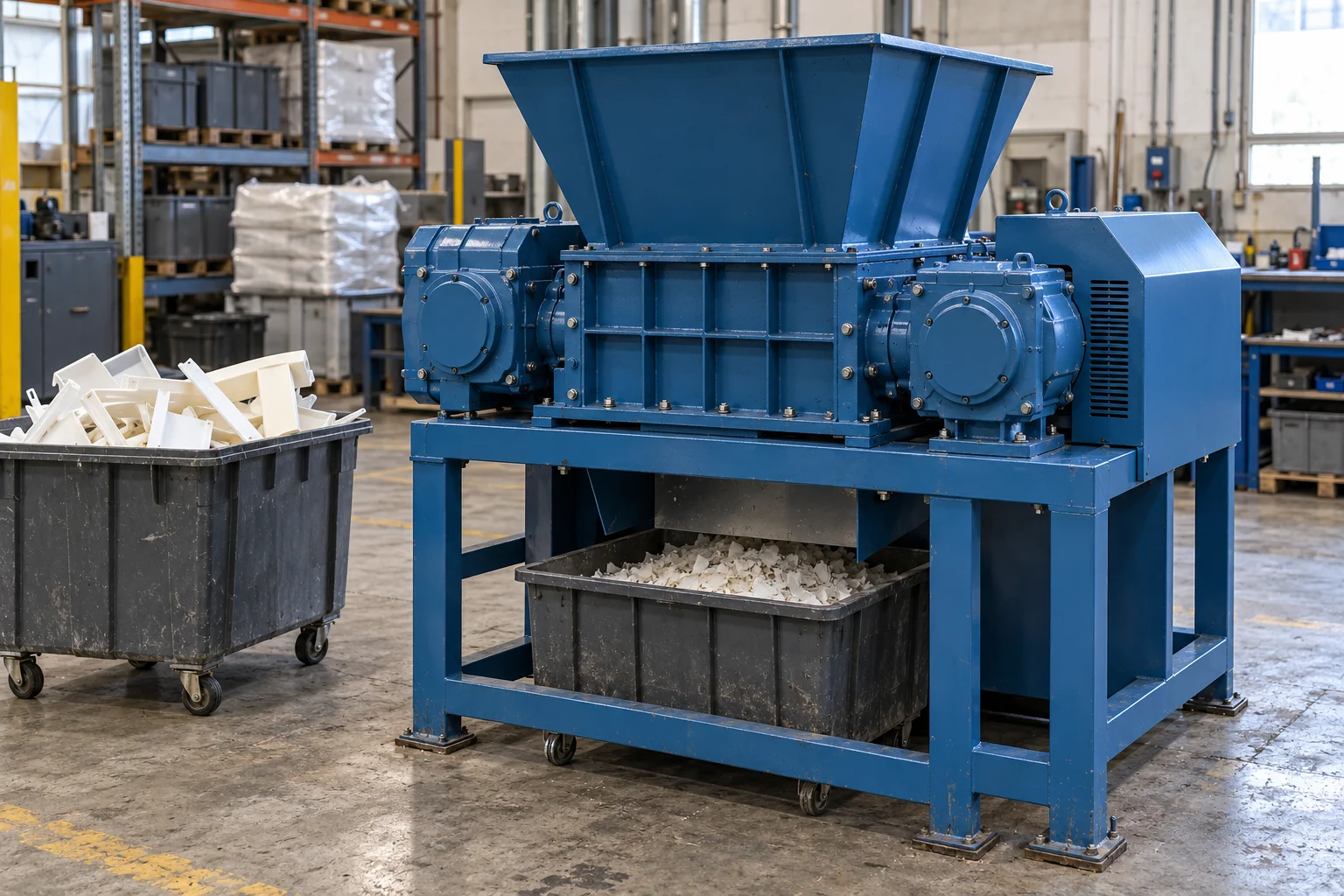
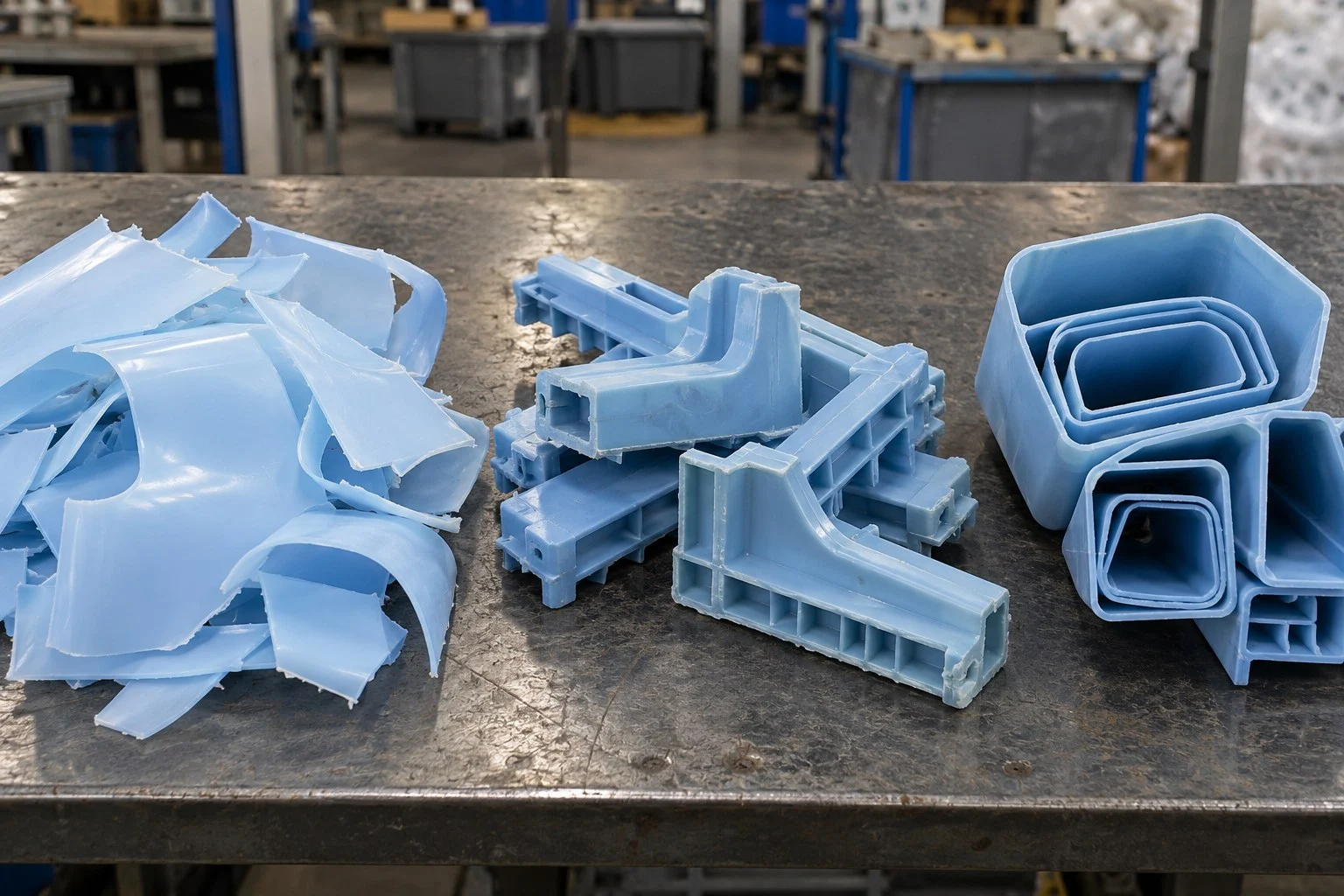
Two loads described as HDPE scrap may present very different cutting tasks. Thin container walls, reinforced necks, solid ribs and nested pieces do not create the same local engagement. Retain the material description and photographs of representative sections. Give the largest normal item dimensions and the thickest features, together with inserts, fillers or contamination. A hopper opening or chamber width does not establish a permitted feed size. Keep any change in batching or preparation within the machine’s approved duty. Where a technician authorizes a comparison, change one identified factor and record the result. Do not introduce an unsuitable item merely to reproduce a fault.
Distinguish bridging, wrapping and poor engagement
Material bridging above the cutters is a different observation from an item reaching the cutters without being drawn in. Long flexible scrap can also wrap or remain retained in an arrangement that handles rigid scrap differently. Describe where the material sits and whether the same pattern repeats. Avoid changing cutter thickness or tooth count from a photograph alone. A proposed geometry change needs review against the shaft, mating cutters, spacers and required output. The plastic shredder selection guide provides the wider material review. For loose film, bags or flexible strips, use the film shredder guide to describe presentation and wrapping conditions.
Follow the material through the discharge
Watch the receiving process from its safe observation points. Note whether the collection bin, chute, conveyor or next machine was accepting material when the interruption began. Record downstream stops and any visible accumulation below the cutting zone. Inspection or cleaning that requires access belongs to the isolated maintenance procedure. Keep those actions separate from external observation during normal operation. An obstructed receiving path can leave the shredder active without useful material leaving the line. In that situation, replacing the cutter set does not resolve the downstream restriction. Include both machines’ interruptions in the event record when they share the process. When comparing output, use the same time window. Counting only energized motor time can hide loading, discharge and handling interruptions. The industrial shredder capacity guide explains how to define accepted output and elapsed time.
NJDETE video context
The Nanjing Dete Shredder channel publishes the cardboard-shredding video below. Use it as equipment context when describing your own feed and discharge arrangement. It does not document fault recovery or establish the cause of an interruption.
Watch the NJDETE cardboard-shredding video.
Review cutter wear and recent replacement work
Gradual wear needs a comparable baseline
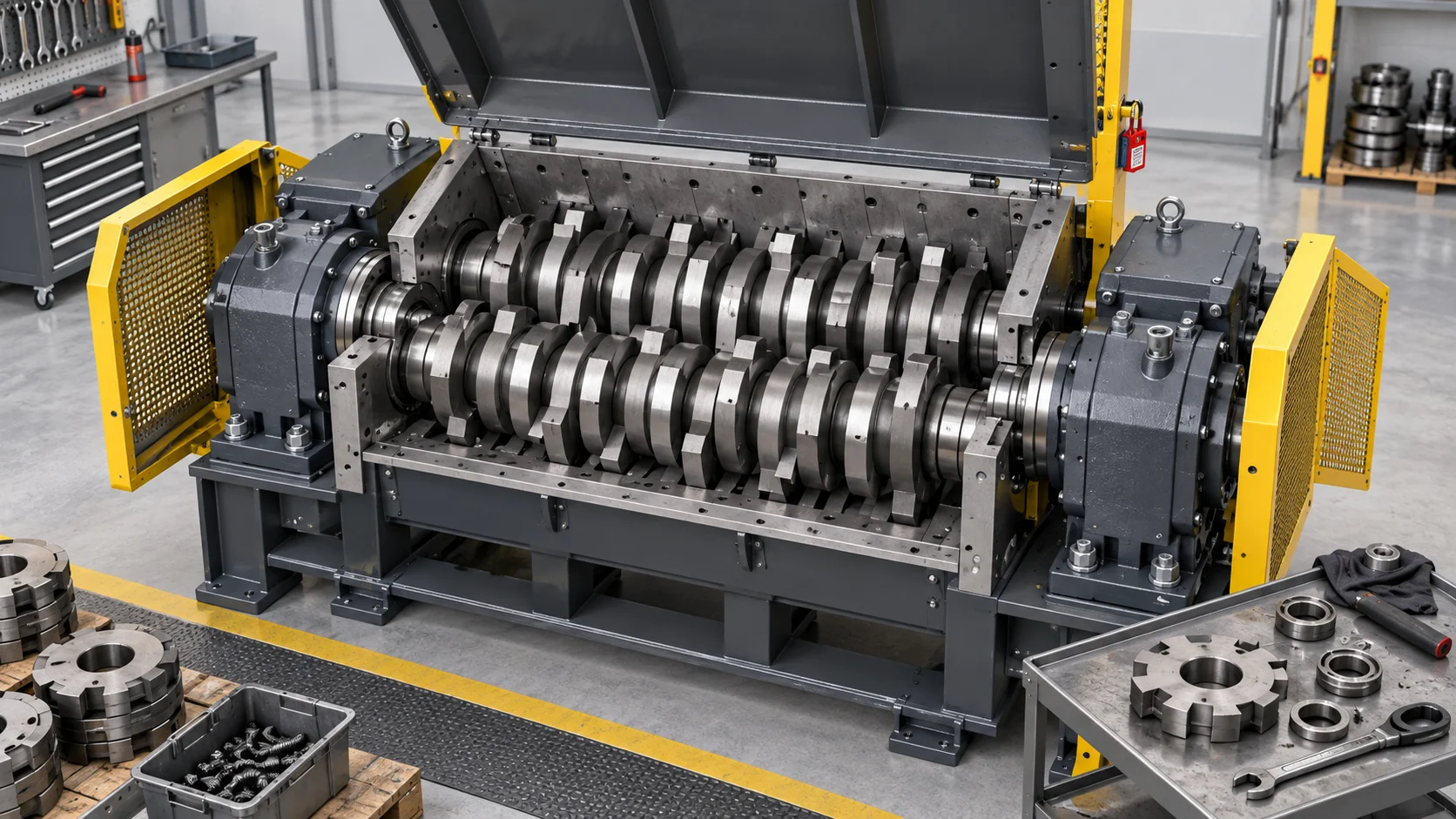
If engagement has worsened gradually on comparable material, inspect the cutting arrangement under the approved procedure. Keep wear locations related to shaft and cutter positions. Local damage gives different information from similar wear across the whole set. Retain dated photographs, operating records and previous grinding history. The blade wear guide develops the regrinding-versus-replacement decision. Frequent reversing is one reason to investigate; it is not a complete wear diagnosis.
A problem immediately after replacement needs a parts comparison
Match the installed arrangement against the approved drawing and work record. Record what was changed and what remained in service.
| Replacement check | Information to compare |
|---|---|
| Part identity | Drawing number, revision, cutter variant and ordered quantity |
| Shaft interface | Specified bore, fit and part orientation |
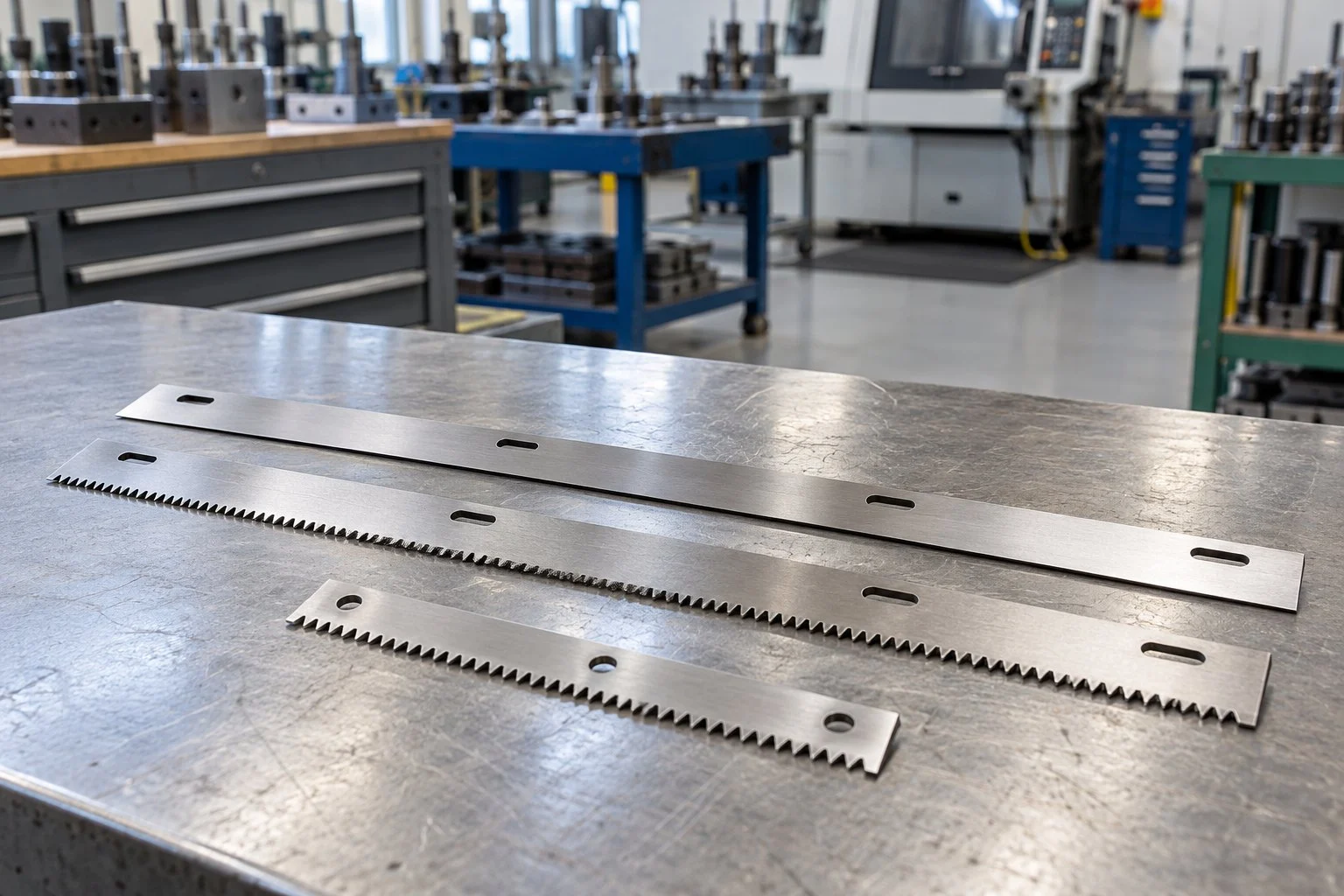
| Cutting geometry | Thickness, tooth profile and working arrangement |
| Cutter stack | Cutter and spacer order, positional variants and approved assembly requirements |
| Retained components | Mating cutters, spacers, stripping parts and related inspection findings |
| Completed work | Measurements, authorized settings and release record |
A sharp edge and matching outside diameter leave several compatibility questions unanswered. Use the shredder blade design guide for the geometry discussion and the blade replacement guide for planning the changeout.
Identify the exact machine and drive
Give the complete machine identity before requesting diagnosis or parts. NJDETE’s published 500 model pages illustrate why the model number alone is insufficient.
| Published NJDETE configuration | Motor listing | Reducer listing | Cutting chamber listing |
|---|---|---|---|
| 500 with K97 reducer | 7.5 kW | K97 | 500 × 400 mm |
| 500 with ZQ400 reducer | 11 kW × 1 | ZQ400 | 500 × 400 mm |
These are published configuration references. Identify the actual supplied machine, options and drive from its records. The shared chamber size does not define equal throughput, overload settings or diagnostic limits. Electrical, drive and protective-setting diagnosis belongs with the qualified technician responsible for the installation. Retain fault codes and authorized readings. Do not transfer a current limit, reverse duration or reset sequence from another machine.
Industrial shredder troubleshooting record
Keep the sequence and the result together
| Record field | What to retain |
|---|---|
| Machine | Model, serial or order reference, drive variant and installed options |
| Feed | Material, form, normal item dimensions, thick sections and preparation |
| Event | Exact message, timing and the sequence immediately beforehand |
| Material movement | Position at engagement and whether discharge remained free |
| Comparison | Last normal run on comparable feed and what changed |
| Evidence | Permitted video, dated photographs, samples and authorized readings |
| Work completed | Parts or settings changed, responsible person and observed result |
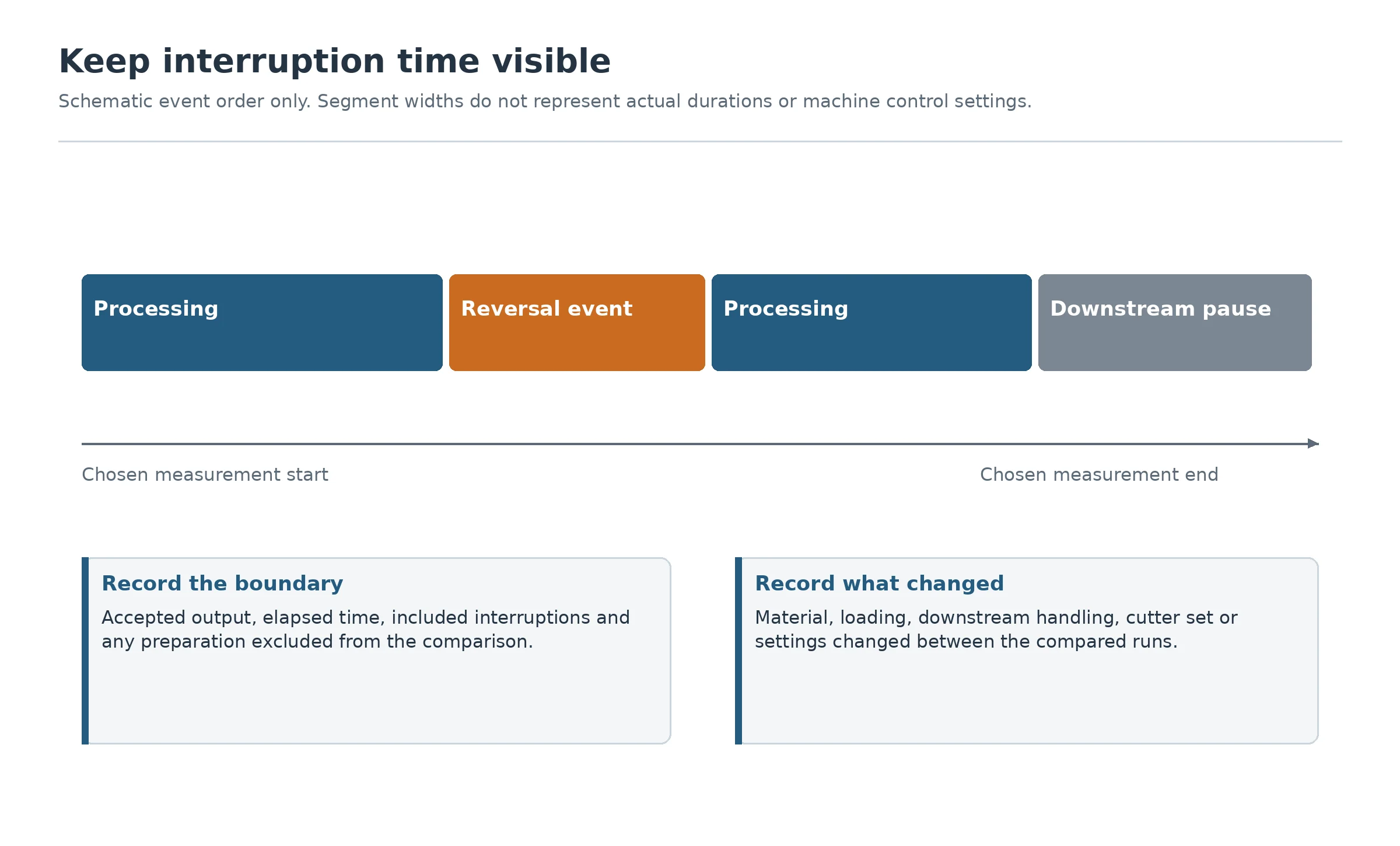
Use a common definition of accepted output in the comparison. In a hypothetical example, 100 kg of accepted output in 30 minutes is 200 kg/h. The same accepted mass over 45 minutes is about 133 kg/h. Those figures show the size of a change; they do not identify its cause and are not NJDETE performance data. Retain the elapsed time and interruption record behind the calculation. If material, preparation or downstream handling changed, keep that difference visible beside the result.
Keep any comparison within the authorized procedure
The technician should establish whether a diagnostic run is appropriate, what may change and when it must stop. Keep the evidence from the original fault before altering several variables together. Follow the machine’s stop criteria. Abnormal contact or knocking, visible damage, recurring trips, a suspected foreign object or an unresolved protective-function fault require assessment. Return to production only through the installation’s specified release process.
Decide what to repair or order
Order against the finding and the approved part definition. A fault description can lead to a process review, a mechanical repair or a replacement enquiry; the purchasing scope should follow that decision.
| Finding established through review | Purchasing or planning action |
|---|---|
| Feeding arrangement does not match the permitted task | Review the feed and application proposal before changing cutters |
| Discharge or downstream restriction | Address the receiving arrangement and affected components |
| Worn or damaged cutters | Define the required positions, mating-part condition and replacement scope |
| Assembly or part mismatch | Resolve drawing revisions, variants and approved arrangement |
| Drive, electrical or control fault | Follow the qualified diagnosis and identified parts requirement |
When cutters are required, send the approved drawing or organize measurements with the replacement blade measurement guide. Identify individual parts, an approved partial replacement or a complete set. The spare-parts checklist helps keep quantities and retained components clear.
Frequently Asked Questions
Is automatic reverse a shredder fault?
It can be a protective response on a machine designed for it. Compare the event with the installed sequence. Repeated reversals with little accepted output, a trip or an abnormal new symptom need further assessment.
Why does a shredder reverse on plastic it handled before?
Check whether the batch, thick sections, nesting, loading and discharge are comparable. If they are, review cutter condition, recent work and the machine’s event history. Retain evidence before changing parts.
Should I buy sharper blades when material will not pull in?
First distinguish worn edges from bridging, wrapping, unsuitable engagement and a blocked receiving path. The approved cutter geometry and the way material reaches it help determine whether replacement addresses the finding.
Can I increase the overload threshold to prevent reversals?
Keep the protective function intact. A qualified technician must identify the cause and review settings against the actual machine and drive requirements. A higher threshold is not a remedy for an unresolved load or fault.
What should I check if jamming starts after blade replacement?
Compare the installed part revision, orientation, thickness, tooth profile and cutter-and-spacer arrangement with the approved specification. Include retained mating components and the completed inspection record.
What information should I send with a service enquiry?
Send the machine identity, material description, exact event message, sequence before the interruption and details of recent changes. Include permitted photographs or video and part references where inspection has identified a replacement need.
Send NJDETE the fault sequence
Contact NJDETE with the event record and the actual machine configuration. If parts are required, include the approved identity and quantity rather than ordering from a general symptom. For planned checks, lubrication and routine service records after the issue is resolved, use the industrial shredder maintenance guide.