

طرازات آلات التقطيع ذات المحورين من NJDETE: من طراز «ميني» إلى طراز «500»
Release time: 2026-09-22
NJDETE’s Mini-to-500 double-shaft shredder range is not a simple capacity ladder. The models differ in cutting-chamber dimensions, shaft geometry, cutter diameter and count, motor arrangement, and reducer type. A higher model number can provide a larger chamber, but it does not by itself predict throughput or suitability for a specific material. Buyers should compare the actual feedstock, maximum dimensions, contaminants, required output, duty cycle, and electrical supply before selecting a configuration.
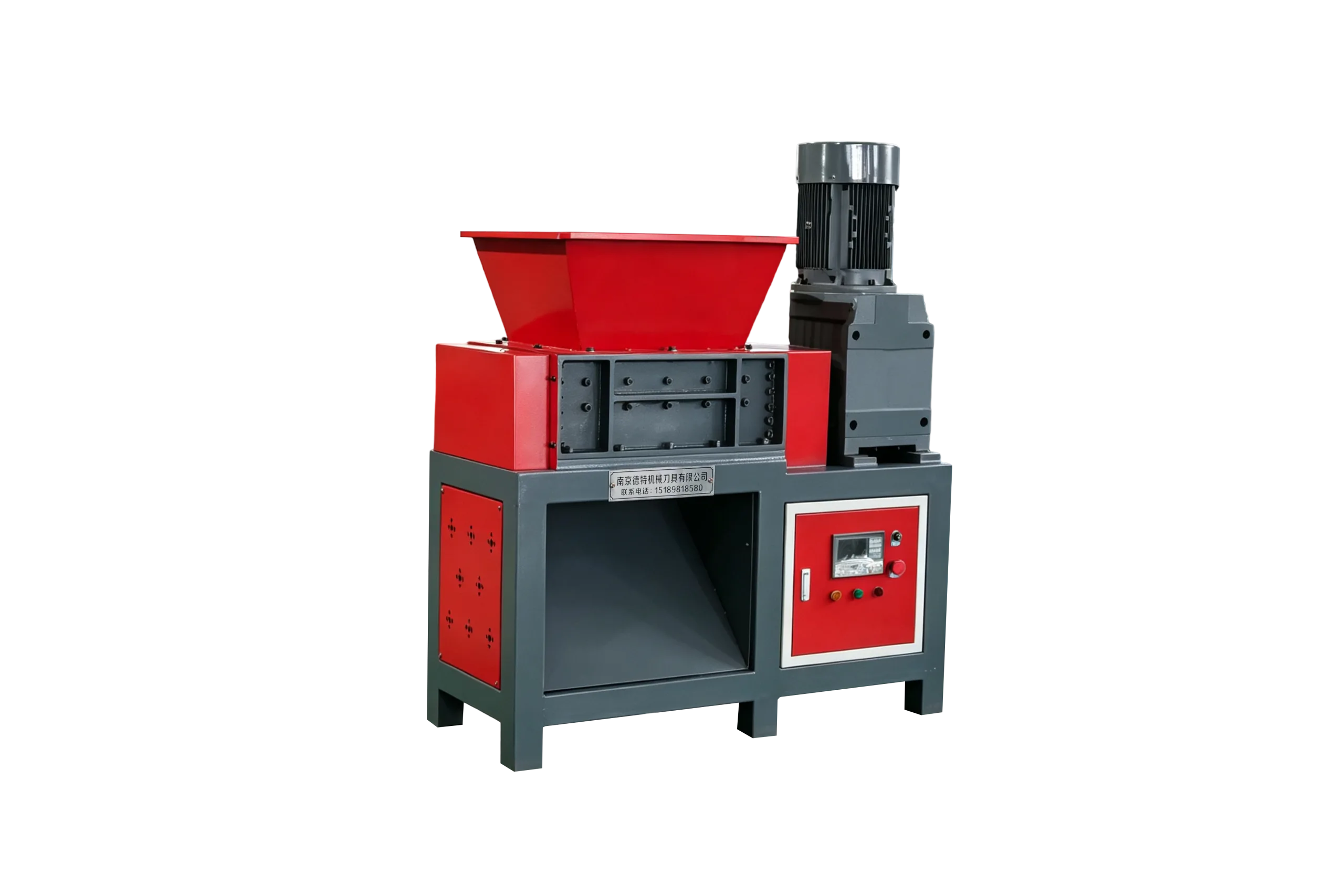
Quick Comparison: Mini to 500 Double-Shaft Shredder Models
| الطراز | المحرك | مخفض | Shafts | Cutters | Cutting Chamber | Initial Evaluation |
|---|---|---|---|---|---|---|
| Compact Mini | 1.5 كيلوواط × 1 | K57 | قطر 45 × 560 مم × 2 | Ø100 × 10 mm × 12 | 120 × 200 ملم | Samples, pilot trials and low-volume in-house waste |
| 150 Model | 3 kW × 1; 5.5 kW option | K77 | Ø85 × 560 mm × 2 | Ø180 × 10 mm × 15 | 150 × 350 ملم | Laboratory tests and light-duty small batches |
| 250 Model | 2.2 كيلوواط × 1 | K67 | Ø65 × 660 mm × 2 | Ø120 × 10 mm × 24 | 250 × 250 ملم | Small-batch recycling and pretreatment |
| 300 Model | 3 kW × 1; 5.5 kW option | K77 | قطر 85 × 650 مم × 2 | Ø180 × 10 mm × 15 | 300 × 350 mm | Small-to-medium recycling duties |
| 400 Model | 5.5 kW × 1; dual-motor option | K87 | قطر 85 × 650 مم × 2 | Ø180 × 10 mm × 40 | 400 × 350 ملم | Medium-volume waste pretreatment |
| 500 K97 | 7.5 kW × 1; dual-motor option | K97 | Ø85 × 780 mm × 2 | Ø200 × 10 mm × 48 | 500 × 400 ملم | Medium-to-heavier recycling duty |
| 500 ZQ400 | 11 kW × 1; dual-motor option | ZQ400 | Ø85 × 780 mm × 2 | Ø200 × 10 mm × 48 | 500 × 400 ملم | Higher-torque 500 configuration |
The table is a configuration comparison, not a guaranteed-capacity chart. Actual throughput changes with polymer or material type, shape, bulk density, moisture, contamination, feeding continuity, cutter arrangement, and the required downstream result.
Why the Model Number Does Not Equal Throughput
The listed 250 model uses a 2.2 kW motor, while the 150 model uses a 3 kW motor and offers a 5.5 kW option. The 250 model also has a different chamber shape, shaft diameter, cutter diameter, and cutter count. This is why choosing “the next larger number” can be misleading.
A hollow HDPE drum, bundled film, an injection-molding sprue, a rubber offcut, and an electronic assembly can occupy a similar external volume while creating very different cutting loads. Feed behavior—such as wrapping, bridging, bouncing, nesting, or carrying metal contamination—can matter as much as nominal chamber size.
Compact Mini: Controlled Samples and Pilot Work
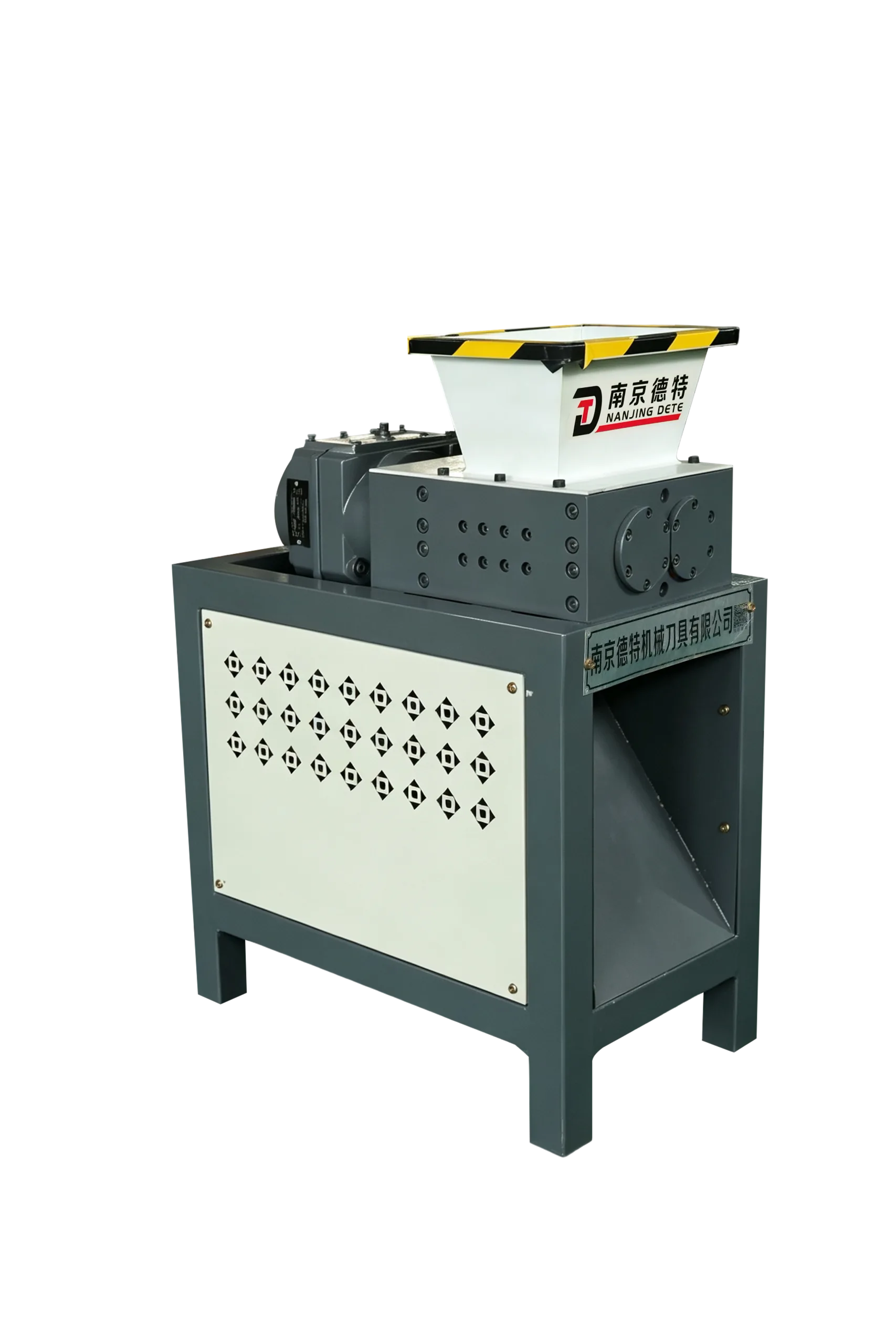
The Compact Mini combines a 1.5 kW motor, K57 reducer, Ø45 × 560 mm twin shafts, and 12 cutters measuring Ø100 × 10 mm. Its compact 120 × 200 mm chamber makes it the logical first configuration to evaluate for sample preparation, pilot trials, occasional workshop waste, and controlled low-volume tasks.
It should not be selected from photographs alone. The largest feed dimension must fit the hopper and chamber safely, and flexible or hazardous materials still require an application review.
150 vs 250: Two Different Compact Configurations
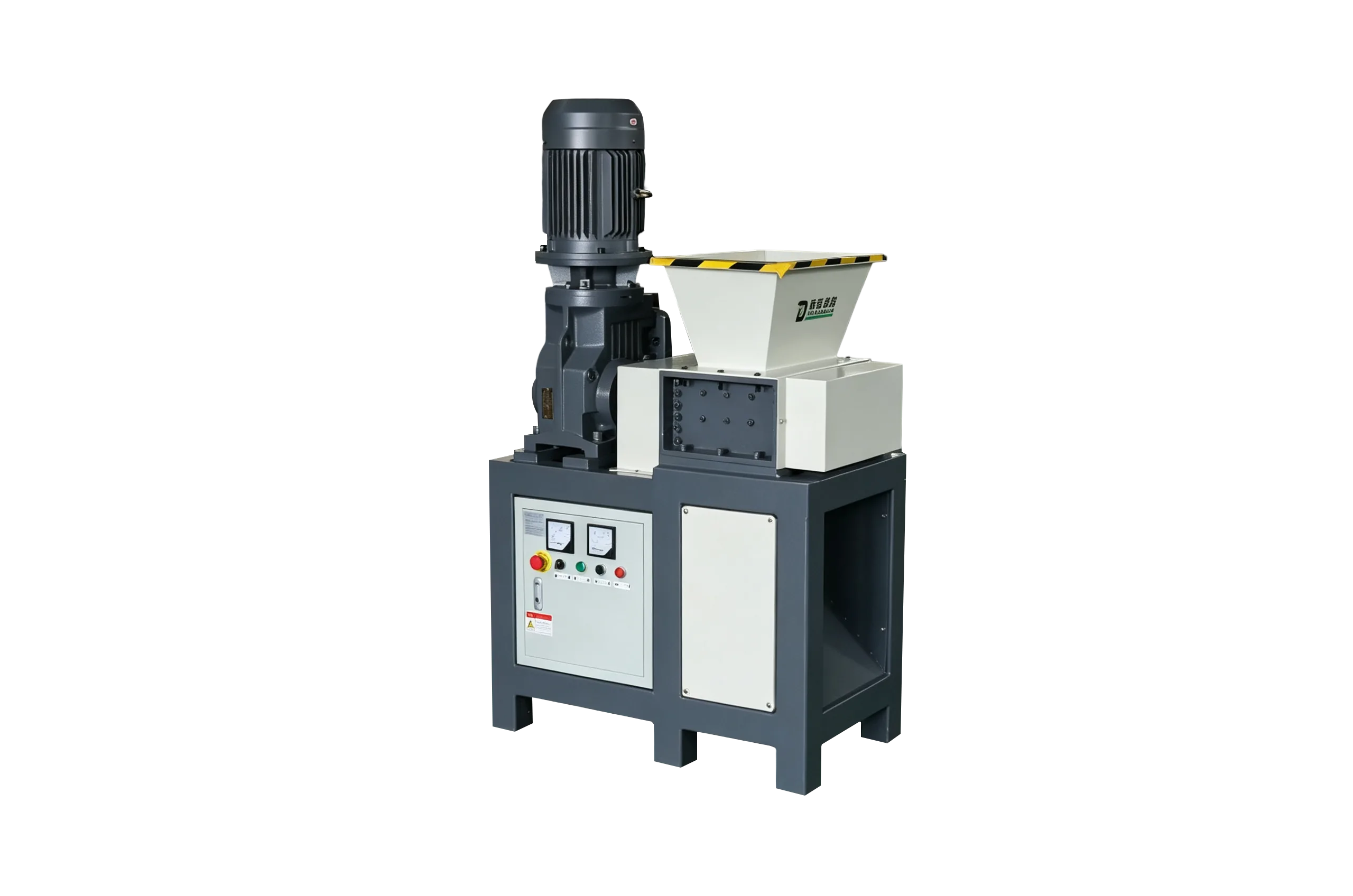
The 150 model uses Ø85 mm shafts and Ø180 mm cutters, with a 3 kW motor and optional 5.5 kW configuration. Its 150 × 350 mm chamber is narrow in one direction and longer in the other. It can be evaluated for laboratory tests, sample preparation, and manageable small batches.
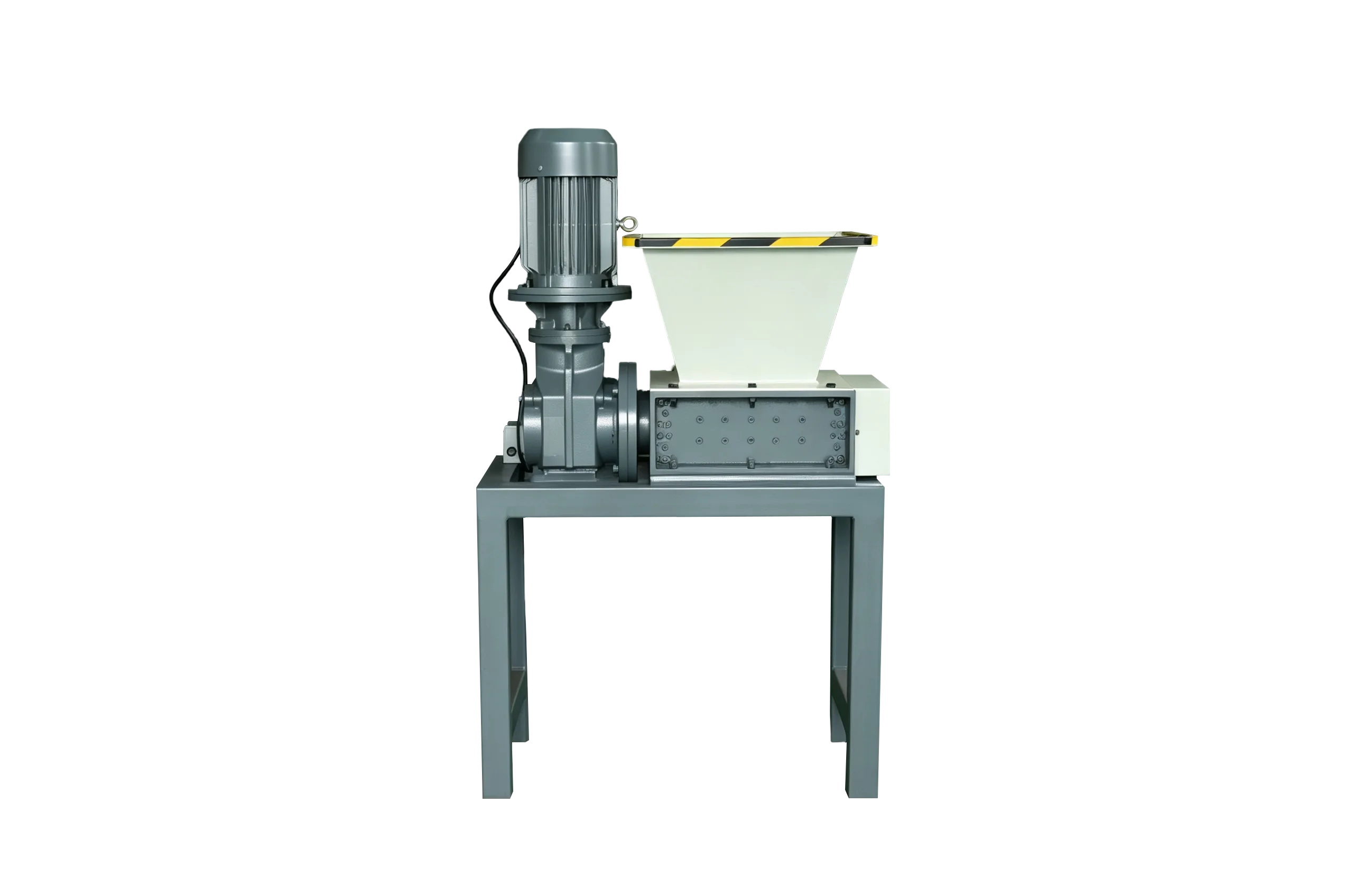
The 250 model uses a 2.2 kW motor, K67 reducer, Ø65 × 660 mm shafts, and 24 smaller-diameter cutters. It should therefore be evaluated as a different cutting arrangement, not simply as an upgrade from the 150. Compare the representative feed size, desired bite, cutter engagement, and batch requirement.
300 vs 400: Larger Chambers and Different Cutter Counts
الـ 300 model increases the chamber to 300 × 350 mm and is listed with a 3 kW motor plus a 5.5 kW option. It uses Ø85 × 650 mm twin shafts and 15 Ø180 × 10 mm cutters.
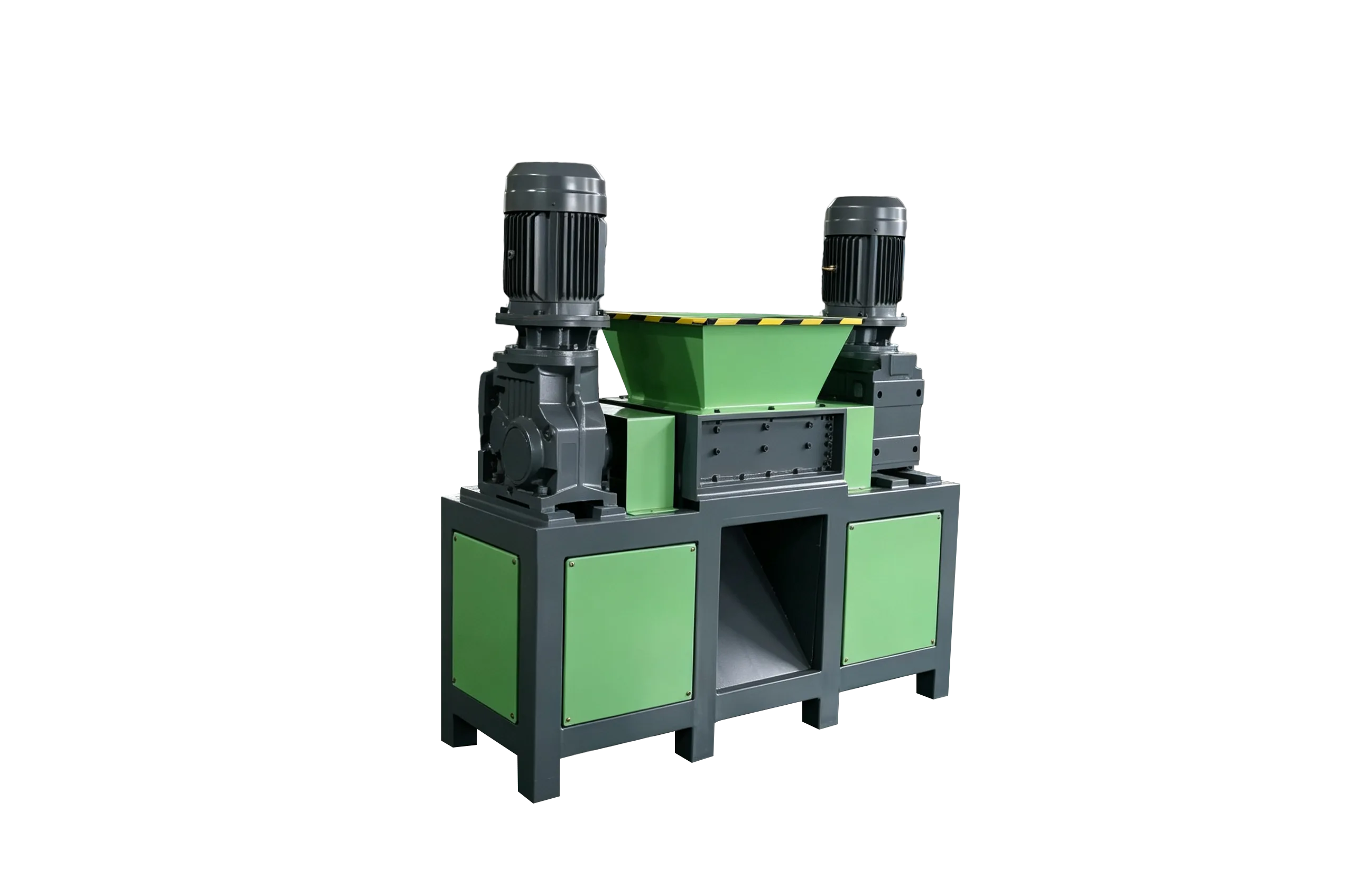
The 400 model provides a 400 × 350 mm chamber, K87 reducer, 40 cutters, and an optional dual-motor arrangement. It can be considered when the feed dimensions, batch volume, or working duty require a larger cutting zone than the compact models. Whether it is appropriate for plastics, rubber, wood, cartons, selected e-waste, or industrial scrap still depends on contamination and material testing.
500 K97 vs 500 ZQ400
Both 500 configurations use a 500 × 400 mm chamber, Ø85 × 780 mm twin shafts, and 48 cutters measuring Ø200 × 10 mm. The documented difference is primarily in the drive:
- 500 K97: 7.5 kW motor with K97 reducer; dual-motor option listed.
- 500 ZQ400: 11 kW motor with ZQ400 reducer; dual-motor option listed.
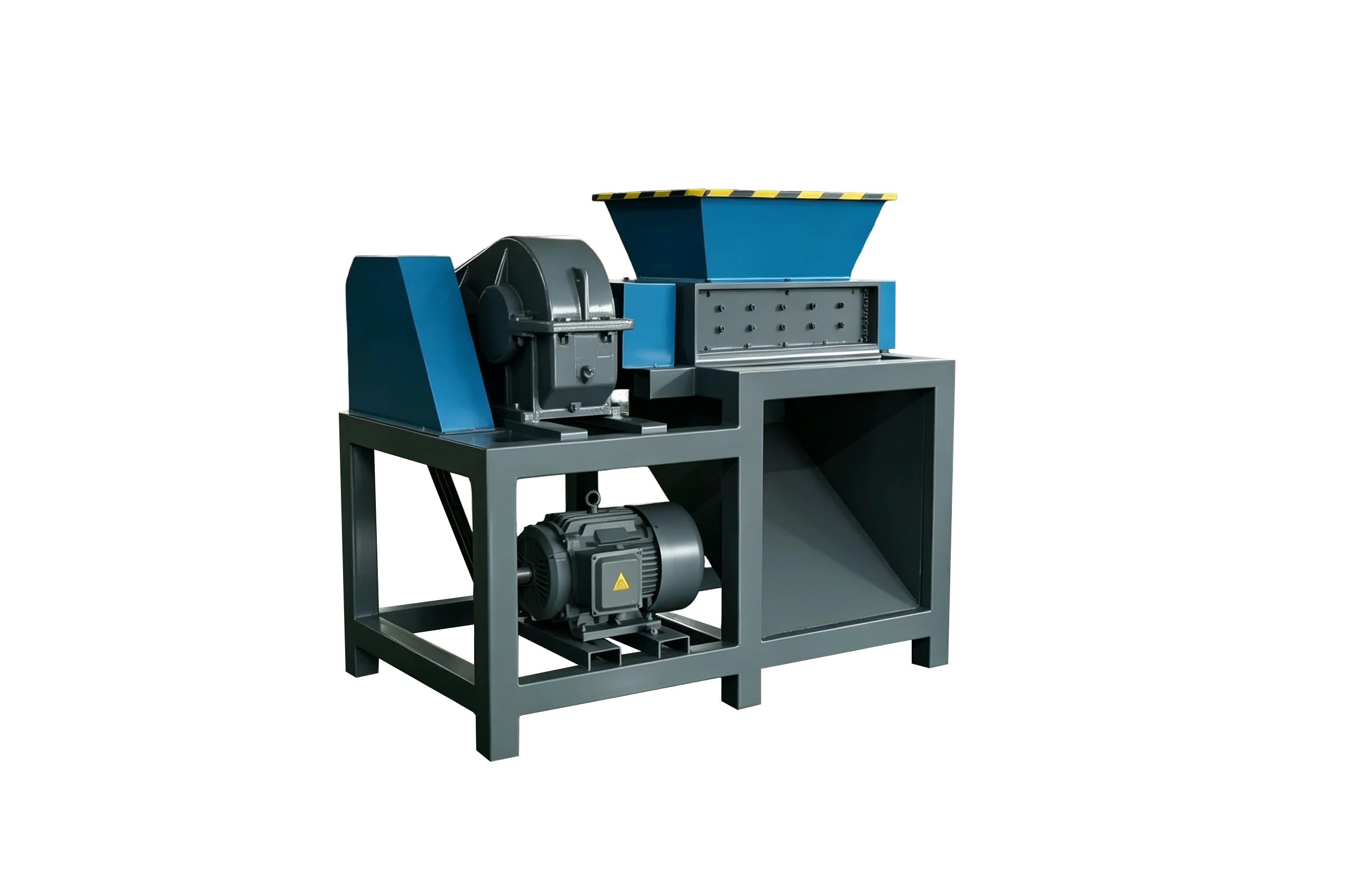
Do not choose between them only by motor power. Provide representative samples, expected operating hours, feeding method, contaminants, and the available voltage. The overall dimensions of the ZQ400 version should be confirmed in the final approved drawing.
Five Inputs Required Before Model Selection
- Material identity: specify the polymer, rubber type, wood product, electronic assembly, or industrial scrap—not only “plastic” or “waste.”
- Maximum feed dimensions: include length, width, thickness, and whether parts are loose, nested, bundled, or attached.
- Contaminants and hazards: identify metal inserts, sand, liquids, batteries, pressurized components, or unknown mixtures.
- Target result: explain whether the shredder is for primary volume reduction or must feed a secondary granulator, sorter, or separator.
- Operating requirement: provide expected hours per shift, feeding method, target throughput, and electrical supply.
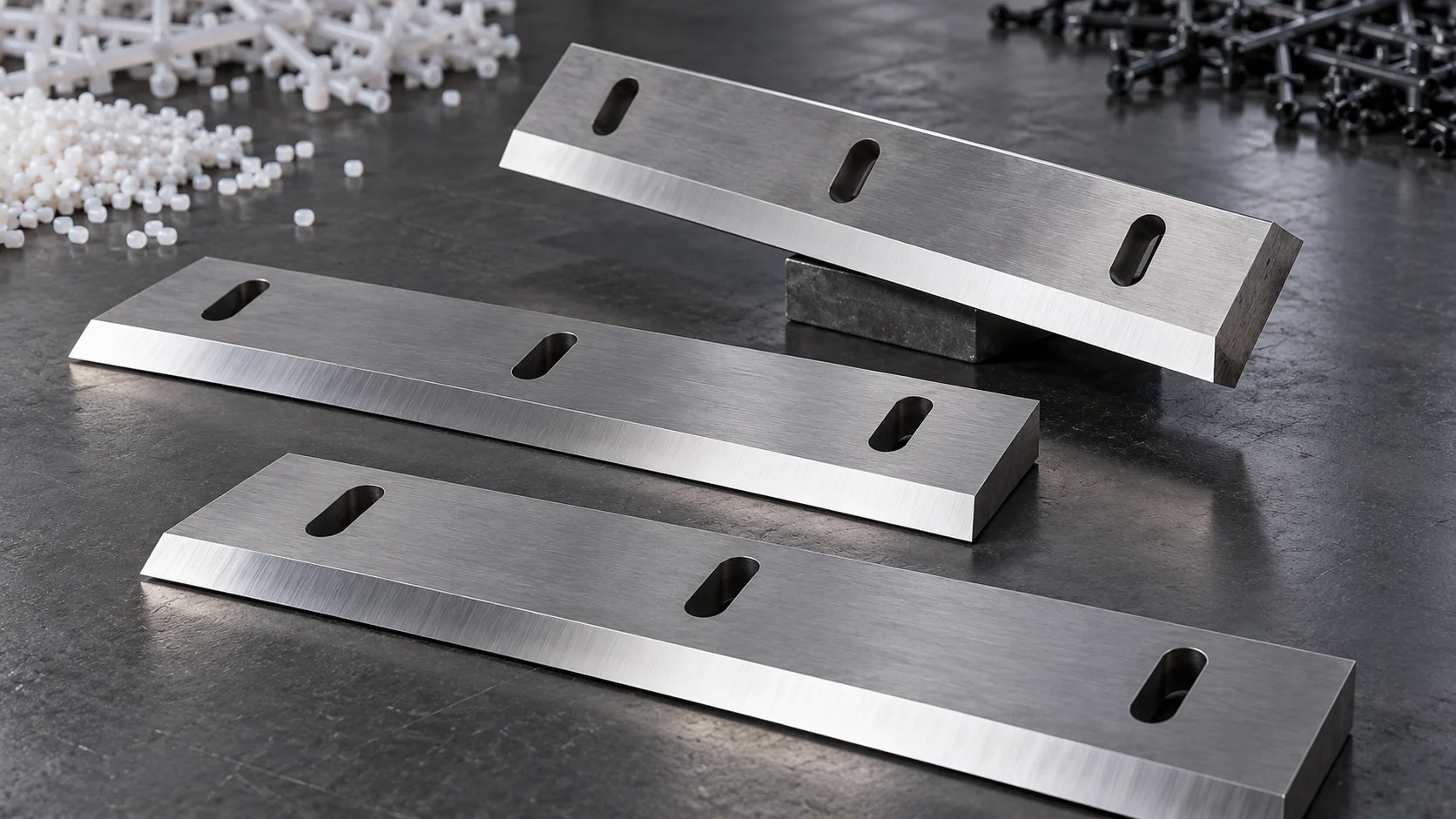
If smaller and more uniform plastic regrind is required, a downstream granulator may be needed. NJDETE also supplies plastic crusher and granulator blades for the secondary cutting stage.
Application Boundaries
The listed machines can be evaluated for suitable plastics, rubber scrap, wood, cartons, selected electronic waste, and compatible industrial scrap. They should not automatically be specified for thick solid metal blocks, explosive or pressurized items, or battery waste without a dedicated process and safety assessment.
Cutter thickness and voltage can be customized, but customization must follow the material and required result. A thinner cutter does not automatically guarantee the desired particle size, and higher installed power does not automatically guarantee higher throughput.
الأسئلة الشائعة
Which NJDETE model is suitable for a laboratory?
The Compact Mini and 150 model are the first configurations to evaluate for samples, pilot trials, and light small-batch work. Final selection depends on the sample dimensions, material behavior, hazards, and required result.
Is the 250 model more powerful than the 150 model?
Not in the listed motor ratings. The 250 uses a 2.2 kW motor, while the 150 uses 3 kW with a 5.5 kW option. Their chamber, shafts, cutter diameter, and cutter count are also different, so they should be compared by application rather than number alone.
How do I choose between the 500 K97 and 500 ZQ400?
Both have the same listed chamber, shaft, and cutter dimensions. Compare torque demand, feedstock, duty cycle, electrical supply, and material-test results. The K97 version uses 7.5 kW; the ZQ400 version uses 11 kW.
Can the table be used as a guaranteed throughput chart?
No. Throughput must be evaluated under documented test conditions because material composition, bulk density, dimensions, contamination, cutter geometry, and feeding continuity all affect the result.
What should I send for a recommendation?
Send material photos or samples, composition, maximum dimensions, contamination, target output, required throughput, operating hours, feeding method, and voltage. These inputs are more useful than selecting a model number first.
Request a Model Review
Compare the complete NJDETE shredder range or contact NJDETE with representative material data. The recommendation should be confirmed against the actual feedstock and required process rather than a generic model-size assumption.