

Shredder Blade Material: Choosing Around Wear, Impact and the Existing Machine
Release time: 2026-10-20
A blade that gradually loses its edge and a blade that breaks at one tooth have not necessarily reached the same limit. Before choosing a different steel, establish what changed and where the damage began. The material decision is more useful when it follows that investigation.
For a replacement buyer, the brief should contain the feed, known inclusions, operating temperature where relevant, cutter geometry and observed failure. Keep the drawing and heat-treatment requirements beside those details. A steel name alone is an incomplete blade specification.
What the Failure Surface Can Tell You to Investigate
| Observation | Questions to investigate before changing material |
|---|---|
| Gradual rounding across working edges | What is the feed composition, use history and contamination level? |
| Localized broken tooth or corner | Was there an impact event, interference or concentrated loading? |
| Uneven damage in one position | Are mounting, assembly and feed distribution contributing? |
| Corrosion or persistent buildup | What enters with the material and how is the machine cleaned? |
These observations guide the investigation; they do not establish a diagnosis from a photograph. Keep damaged parts where practical and record their positions. A full-set photograph may reveal a pattern that a close-up of the worst tooth misses.
Where D2 and H13 Fit in the Discussion
BÖHLER identifies K110 with the D2 designation and lists wear resistance among its properties. Its W302 ISODISC page identifies an H13-family hot-work grade and discusses hot toughness and resistance to heat checking. Those producer descriptions explain why the grades enter different tooling discussions. They do not establish a head-to-head life result in a shredder.
For a wear-dominated duty, ask how a proposed D2-family grade, treatment and edge geometry address the observed loss of cutting performance. For a damage problem, ask what role material toughness could play after interference, contamination and assembly have been investigated. Selecting H13 by name does not make a cutter immune to foreign objects.
Avoid reducing the choice to “D2 lasts longer” or “H13 never chips.” Performance belongs to a finished cutter working under defined conditions. Its geometry, treatment, fitting and feed can change the outcome.
SKD11 and D2: Do Not Approve by an Equivalence Label Alone
A quotation may describe SKD11 and D2 as equivalent or comparable. For purchasing, ask for the actual grade designation and specification being offered. Do not convert a general cross-reference into blanket approval of any material sold under either label.
If the order permits an alternative, document who approves it and which properties or records must be reviewed. Keep the producer information separate from the finished-part inspection. A steel data sheet describes the material product covered by that sheet; it is not a test certificate for your delivered cutter.
Why Hardness Is Not the Whole Specification
A hardness number can be useful when it has an agreed method, location and acceptance requirement. Without those details, it becomes a weak basis for comparing two offers. It also leaves dimensions, surface condition and the complete heat-treatment history unresolved.
Ask which records will identify the finished parts or batch and how nonconforming results will be handled. Agree requirements before manufacture rather than requesting paperwork only after a problem develops. There is no universal hardness value in this article because the correct requirement belongs to the approved cutter design and application.
Keep Geometry in the Material Review
A material substitution should not hide an unapproved edge change. Record tooth shape, thickness, bore and other critical features on the controlled drawing. If the proposal changes both grade and geometry, identify both changes explicitly.
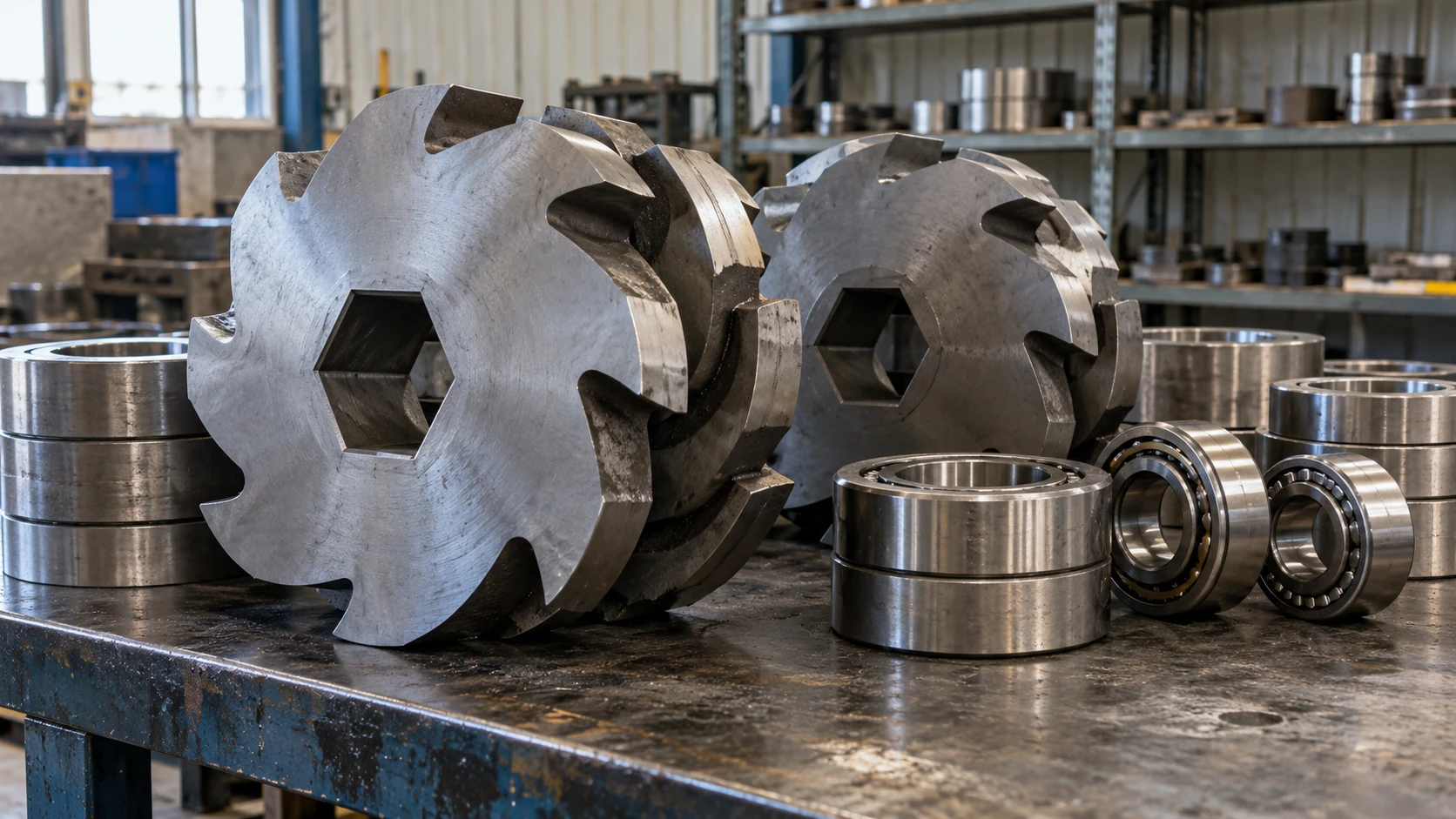
For paired cutter stacks, check the mating parts and assembly. A bore or spacer mismatch cannot be corrected by selecting a different steel. The https://njdete.com/shredder-blade-design/ و https://njdete.com/how-to-measure-shredder-blades/ help organize that information.
Compare a Replacement Under Defined Conditions
An initial order can provide useful operating evidence if the comparison is recorded. Identify the material stream, preparation, configuration and reason for removing the previous set. Record useful output and interruptions over the agreed period. Keep known changes in feed or operating practice visible.
A longer calendar interval between purchases is not automatically longer cutting life if the machine processed less material. Conversely, a short interval may contain a much greater workload. Report the measurement boundary before interpreting a result. Do not extrapolate one favorable batch to every customer application.
What to Send NJDETE
Send the approved drawing or sample information, current grade if documented, feed details and photographs of the complete damage pattern. Include quantities and any required inspection records. Review the https://njdete.com/double-shaft-shredder-blades/ for the fitting checklist and the https://njdete.com/shredder-blade-wear-resharpen-or-replace/ for the maintenance decision.
الأسئلة الشائعة
Should I change steel after a single broken tooth?
Investigate the event and its location first. The evidence may justify a material review, but one damaged tooth does not prove the current grade is the only cause.
Can a supplier guarantee life from the material name?
A useful commitment needs defined feed, configuration, operating conditions and a measurement method. Ask what the claimed result actually covers and which evidence supports it.
Is the highest-priced grade the safest choice?
Price does not establish suitability. Compare the proposed finished cutter and the problem it addresses. A carefully specified conventional grade can be a better purchasing choice than an expensive substitution with unclear geometry or treatment.
Technical Sources
These sources support grade background. They are not NJDETE test results or evidence that NJDETE supplies those producers’ branded steels.
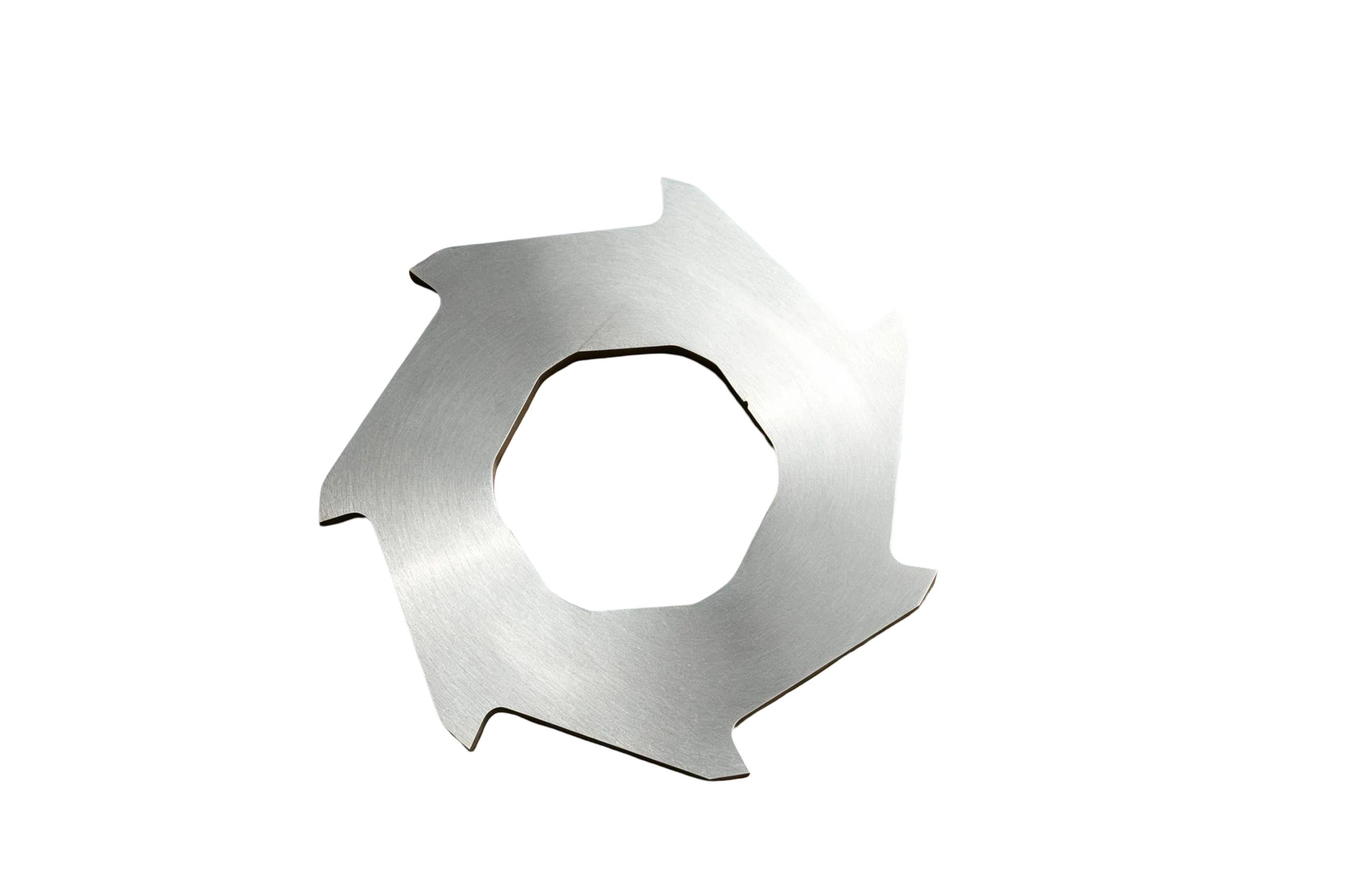
Published NJDETE website image; used for visual context, not as a performance-test record.
Published NJDETE website image; used for visual context, not as a performance-test record.
Further Viewing
Watch the NJDETE video channel. Ask for material and configuration details when using a demonstration to assess a purchase.