

Custom Granulator Knives: What to Send for an Accurate Quote
Release time: 2026-10-08
A quotation for replacement knives is only useful if it covers the parts your machine actually needs. Two offers can list the same blade length and steel grade yet cover different mounting details, quantities or inspection requirements.
For custom granulator knives, send the machine identification, separate rotor and bed knife requirements, a dimensioned drawing or a clearly identified used sample, the plastic being processed, and the quantity of each part. Before ordering, agree on the drawing revision and what the quotation includes.
You do not need to know every detail before starting an inquiry. You do need to show which details are confirmed and which still need checking. That distinction helps keep an initial estimate from becoming an order based on assumptions.
Start With the Information You Already Have
Choose the route that matches your records. A current drawing is the strongest starting point, but an old knife, machine manual or previous purchase order may help identify what is missing.
| What you have | What to send | What still needs resolving |
|---|---|---|
| Current knife drawing | Drawing number, revision, units, part description and quantity | Whether it matches the machine’s current knife arrangement |
| OEM part number and machine model | Part number, machine nameplate details, manual reference and photos | Whether the machine or knife holder has been modified |
| Used knife only | Full-face and side photos, preliminary measurements and known regrinding history | Original dimensions, mounting details and the approved replacement geometry |
| Previous order | Original specification, drawing revision and part quantities | Changes since that order, including material or machine modifications |
| Cutting problem but no specification | Existing part information, feedstock details and photos of the problem | Whether a replacement specification or a process correction is needed |
When the reported issue is cutting quality rather than part identification, the plastic granulator cutting problems checklist helps organize the operating review before a specification change.
If you are unsure which part is rotating and which is stationary, first use the rotor knives vs bed knives guide. List the two types separately in the inquiry. “One knife set” is unclear unless the number of each part is defined.
Which Dimensions Belong in a Granulator Knife Drawing?
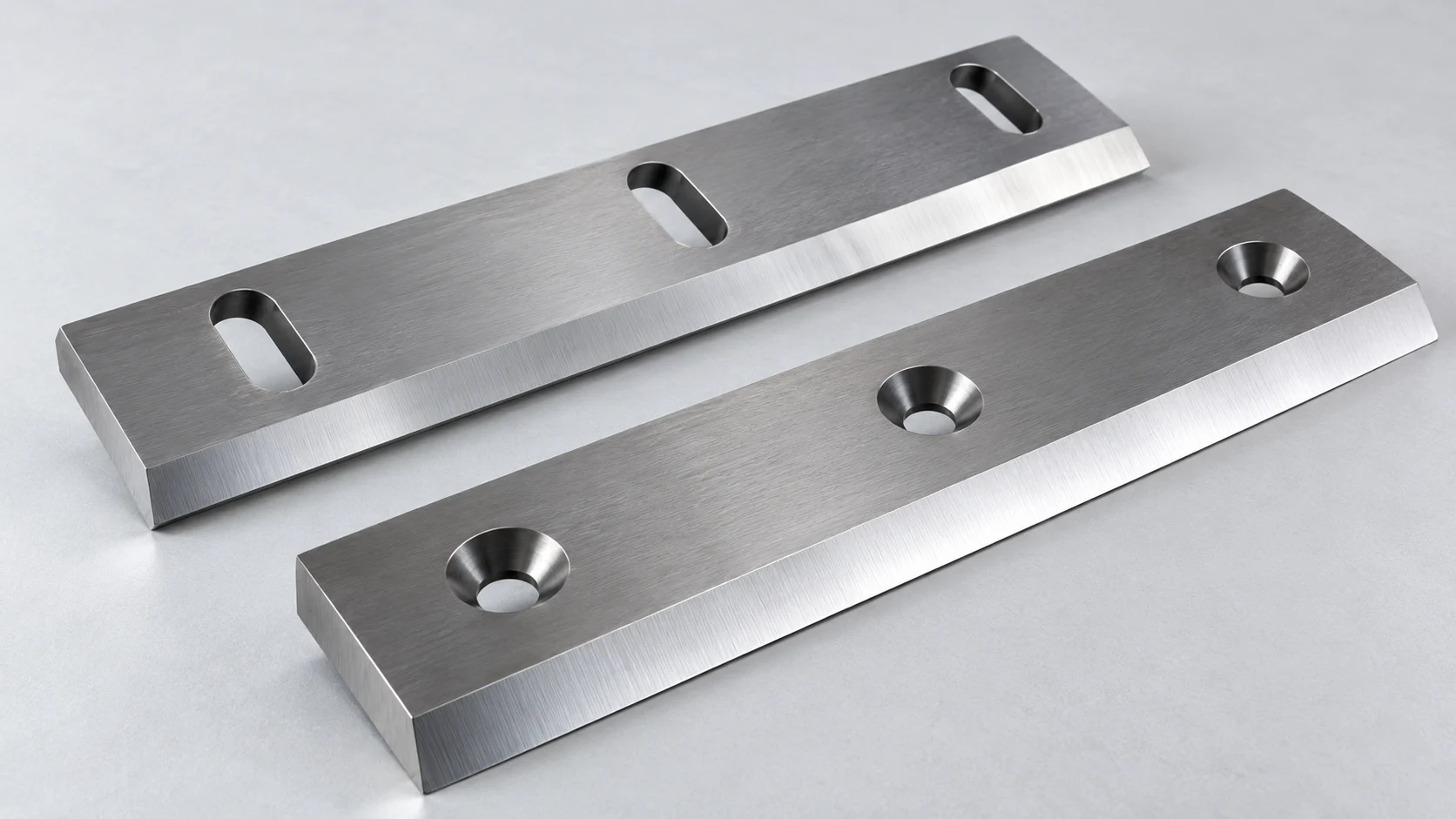
Length, width and thickness are the starting dimensions. The drawing also needs to describe how the knife seats, how it is fastened and where the cutting edge lies relative to its mounting features.
A rectangular outline with three overall dimensions leaves too much open to interpretation.
| Drawing detail | Why it matters to your order | What to specify |
|---|---|---|
| Overall dimensions | Establishes the part envelope and available stock | Length, width and thickness, with units |
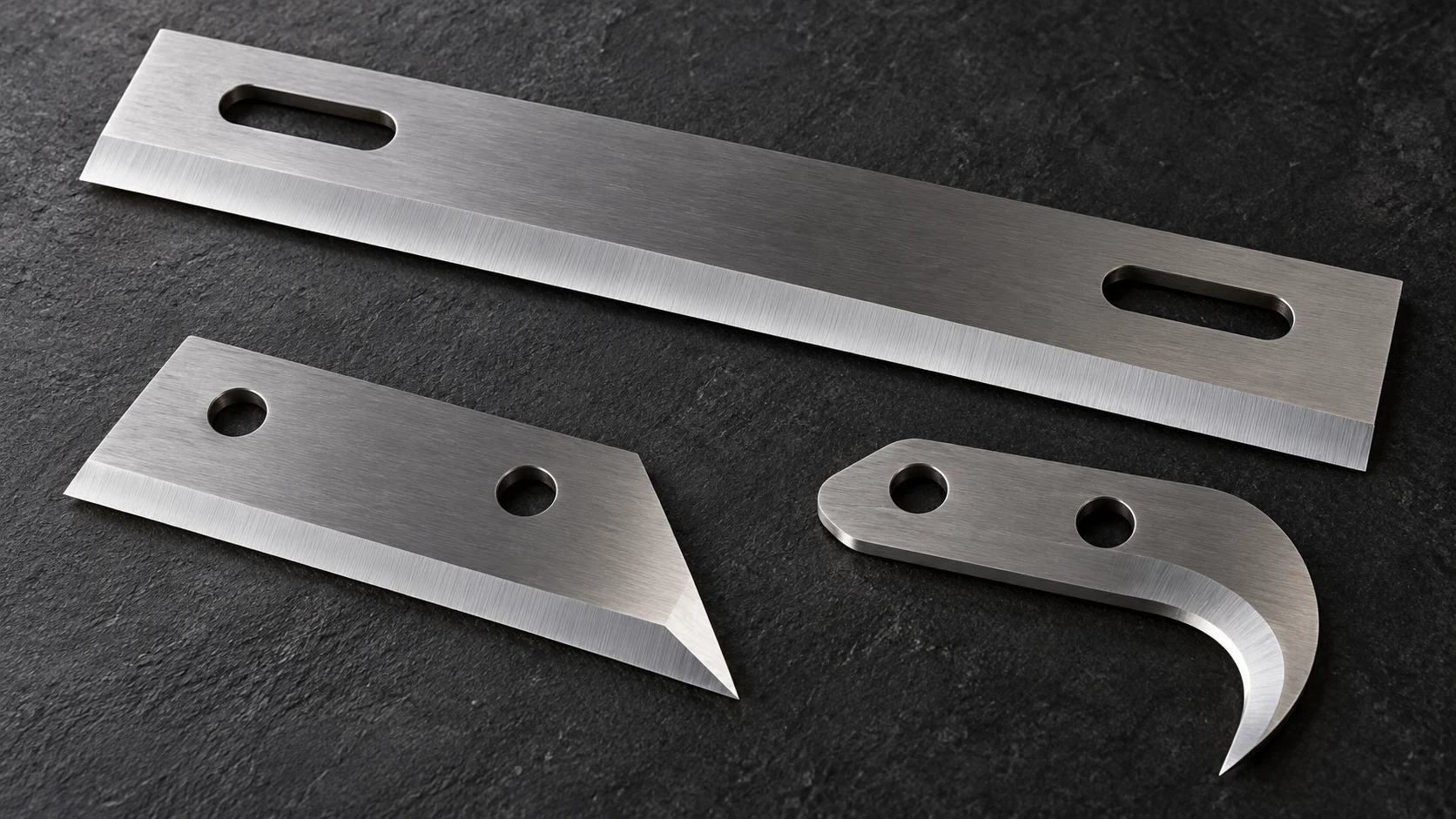
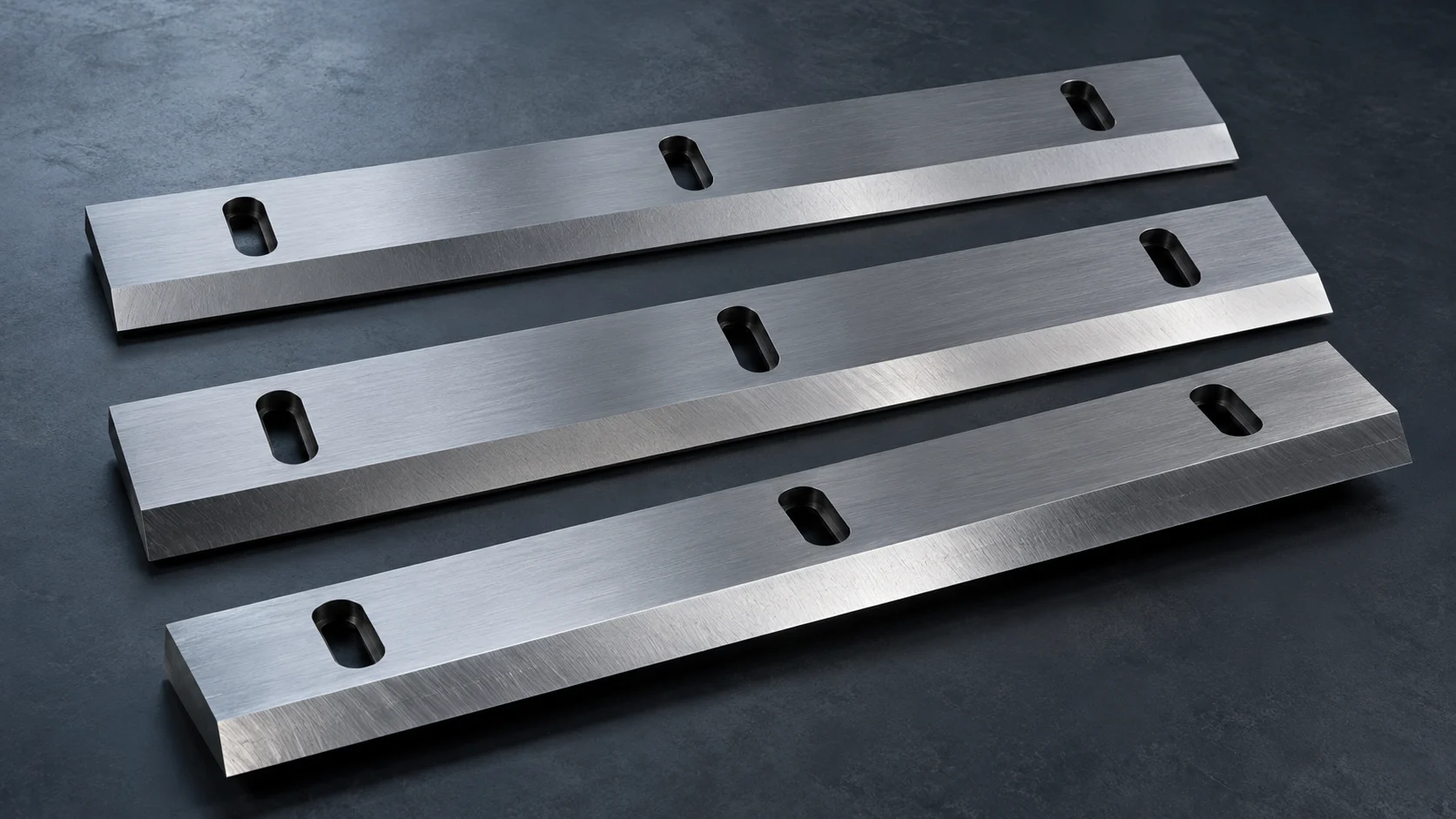
| Mounting holes or slots | Determines how the knife fits the holder | Count, diameters or slot dimensions, and positions from identified reference edges |
| Counterbores or countersinks | Determines the fastener-head seating geometry | Type, dimensions and which face carries the feature |
| Cutting edge | Distinguishes otherwise similar parts | Bevel geometry, orientation and number of cutting edges |
| Seating face and critical tolerances | Defines the surfaces and dimensions that control fit | Reference surfaces and tolerances taken from the approved design |
| Material and condition | Establishes the agreed manufacturing specification | Grade and any specified hardness, heat-treatment or inspection requirements |
| Part identity | Prevents revisions or different knife types being mixed | Part number, drawing revision and rotor/bed designation |
A mounting slot provides a defined adjustment range; it does not make a knife universally compatible. The slot dimensions, location, fasteners, seating surface and cutting-edge position still need to match the intended assembly.
Do not estimate a critical tolerance from a photograph or assign the same tolerance to every dimension. If the original drawing is incomplete, identify the missing feature for technical review before production approval.
Only Have an Old Knife? Separate Measured Size From Original Size
A used knife can be useful evidence, but wear and regrinding may have changed it. Record what you can measure without presenting those values as confirmed new-part dimensions.
For example, if the knife has been reground several times, its current edge position may no longer represent the original geometry. Copying it without reviewing the assembly could reproduce a worn-down part rather than the intended replacement.
Prepare three things:
- Identification: which machine and position the knife came from, and whether it is a rotor or bed knife.
- Condition: known regrinding, damage, altered holes or other modifications.
- Views: the complete mounting face, opposite face, side profile and close-ups of holes, slots and the cutting edge.
Photos with a ruler can provide scale for initial discussion. They are not a substitute for a dimensioned drawing where precision fit matters. Arrange removal and measurement through qualified personnel using the machine’s isolation procedure.
Before sending a physical sample, agree with the supplier on receipt, handling and return arrangements. Keep a record of the part identification and the photographs you supplied.
Specify the Plastic Before Asking for a Different Steel
If the old knives wore out quickly, describe what happened before requesting a harder grade. Progressive edge wear, localized chipping and damage following contamination are different observations; they should not all lead to the same material request.
Include the polymer, whether it contains fillers, the typical wall thickness or feed form, and any known contamination. State whether you are processing clean production scrap or material collected after use.
NJDETE’s plastic crusher blade product page lists SKD11, Cr12MoV and 9CrSi as material options, together with precision grinding, heat treatment and customizable length, width and thickness. These are starting points for a specification discussion—not a ranking in which one grade is automatically best for every plastic.
For a like-for-like replacement, identify the existing approved specification. If you want a material change, explain the problem and agree on how the replacement will be evaluated. Avoid changing material, cutting geometry and operating conditions together if you need to understand which change affected the result.
Useful observations include:
- whether damage appears across all knives or at one location;
- the material processed when the problem occurred;
- photographs of the affected edge and cut material;
- the production period or quantity behind a reported service-life figure;
- whether feeding conditions or the machine setup changed.
You do not need an invented lifetime target to request a useful quotation. A clear description of the existing problem is a better starting point.
Compare Quotations on the Same Scope
Compare price after checking that suppliers are quoting the same parts. Otherwise, the lower figure may simply exclude something the other quotation includes.
| Quote item | Question to resolve before comparing prices |
|---|---|
| Part specification | Are both offers tied to the same drawing and revision? |
| Quantity | Is the price per knife, per matched group or per complete set? How many rotor and bed knives are included? |
| Material | Is the grade stated explicitly? Are substitutions subject to your approval? |
| Manufacturing and inspection | Which specified dimensions and properties will be checked, and what records are included? |
| Hardware | Are fasteners or other associated parts included, or are knives supplied alone? |
| Packaging and delivery | What protection, freight scope and destination are covered? |
| Lead time | Does the stated period start from the order, payment, drawing approval or another agreed event? |
| Nonconforming parts | What evidence and process apply if supplied parts differ from the agreed specification? |
When discussing cost, keep blade purchase cost separate from measured operating cost. Claims about cost per tonne need comparable production records, not just a price list.
For an initial order, your practical goal is simpler: obtain the correct specification, know what is included and agree on how conformity will be checked.
Resolve These Points Before Approving Production
An early inquiry may contain photos, sketches and estimates. Production approval should refer to one agreed specification.
Use this short approval check:
- Identify the final drawing. Record its number, revision and units. Withdraw superseded versions from the order package.
- Separate the parts. Show rotor knives, bed knives and any different variants as individual line items with quantities.
- Close open dimensions. Resolve mounting features, edge orientation and any critical fit requirements.
- Agree on material and inspection. Include only requirements that have actually been reviewed and accepted.
- Confirm delivery scope. Record packaging, included items, delivery terms and the lead-time starting point.
This does not require a lengthy purchasing document. A clear approved drawing and a consistent order confirmation are more useful than a long email chain containing conflicting dimensions.
Copy This Custom Granulator Knife RFQ Checklist
Paste the following into your inquiry. Mark unknown items as “to be confirmed” rather than guessing.
Machine manufacturer and model:
Machine modifications, if any:
Knife type and part number:
Drawing number, revision and units:
Overall length × width × thickness:
Hole/slot details and cutting-edge geometry:
Quantity of each rotor and bed knife:
Existing material specification, if known:
Plastic type, fillers and feed form:
Replacement reason or observed problem:
Available drawings, photos or samples:
Required delivery destination and timing:
Start with the information you have. If you only have a used part, say so at the beginning of the message. That lets the next discussion focus on the missing specification rather than treating preliminary dimensions as approved.
Frequently Asked Questions
Can I request a price before the drawing is complete?
Yes, you can request an initial estimate using the available part information and quantity. Ask the supplier to identify its assumptions and outstanding details. Treat that estimate separately from a production-ready quotation tied to an approved specification.
Should the drawing use millimetres or inches?
Either can communicate a specification if the units are explicit and used consistently. If a drawing is converted, check the dimensions and tolerances against the original. Keep the source drawing available so rounded conversions do not silently become new manufacturing requirements.
Should I order spare knives with the first batch?
Base the decision on the number of machines, current spare stock, replacement lead time and your maintenance schedule. For a new specification, resolve fit and inspection requirements before committing to a large repeat quantity. A spare-stock decision should follow your operating needs, not a universal percentage.
Do I need to provide confidential assembly drawings?
Begin with the knife drawing and the information needed to establish its interface with the machine. If more assembly detail is required, agree on the relevant scope and confidentiality arrangements before sharing it. Send only information you are authorized to disclose.
Request a Quote for Your Replacement Knives
Have the drawing ready? Include its revision and the quantity of each knife. Working from a used sample? Include photographs, machine identification and any known regrinding history.
Contact NJDETE with your knife requirements to discuss the specification and quotation. Use the contact form for your requirements; drawings and photographs can be sent through the email or WhatsApp contact shown on that page.