

Shredder Spare Parts: A Buying and Stock Checklist for Double-Shaft Machines
Release time: 2026-10-19
Build a shredder spare-parts plan around the installed machine, approved part drawings and the cost of waiting for a replacement. Start with cutters and spacers, then identify the bearings, seals, drive components and controls that actually belong to your configuration. Confirm compatibility and supplier scope before choosing stock quantities.
Buying a box of parts labelled “for a double-shaft shredder” leaves too many questions open. Which shaft position does a cutter fit? Does a spacer match the approved stack? Is a bearing designation complete? Can the supplier identify the revision you need?
This guide gives maintenance and purchasing teams a shared checklist for answering those questions. It concerns industrial double-shaft machines; office paper-shredder parts and garden-shredder consumables need different documentation.
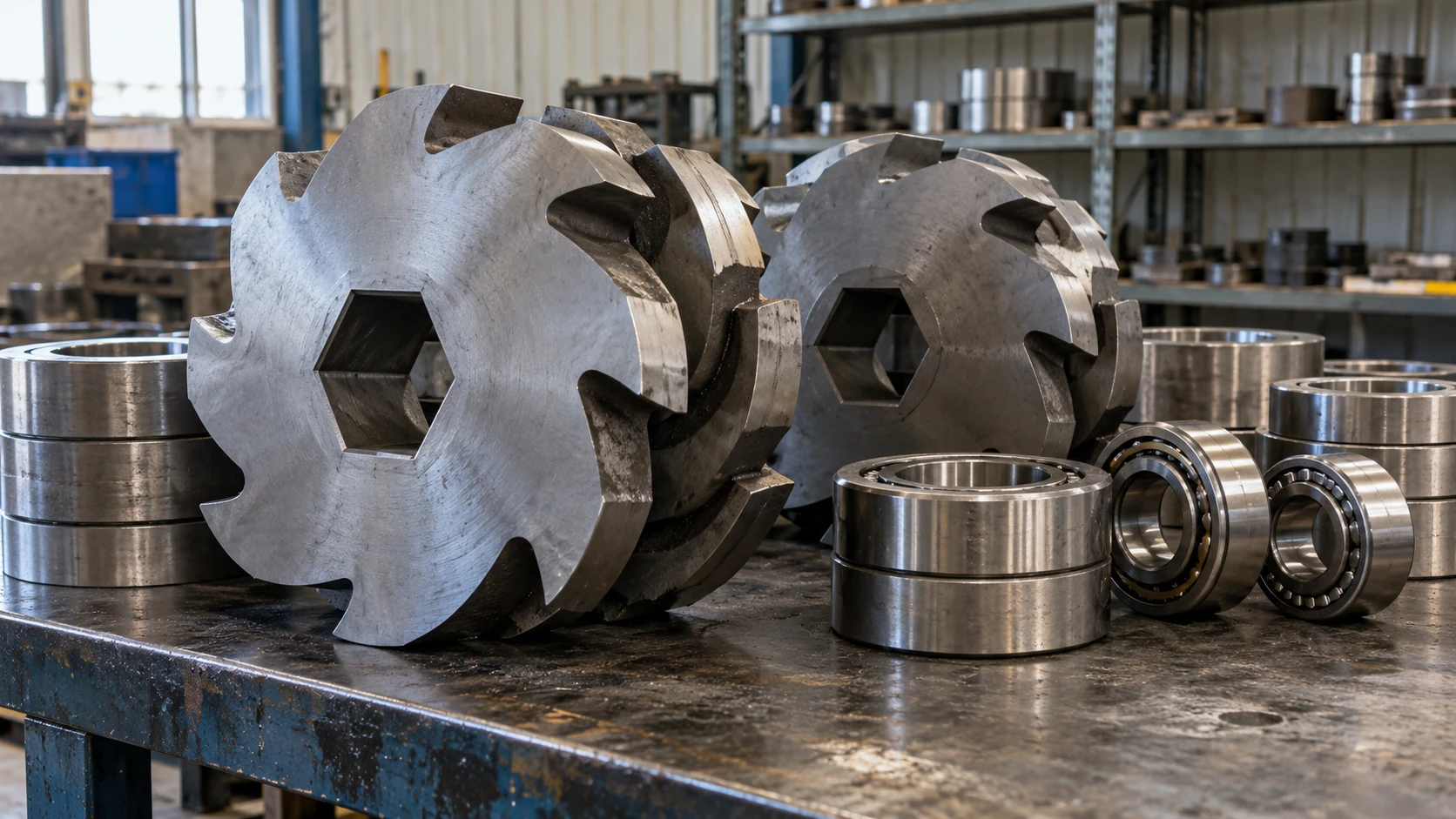
Illustrative spare-parts arrangement. The parts and quantities required for your machine must come from its approved documentation.
Which Shredder Spare Parts Should You Identify First?
Separate wear parts from components that may require specialist diagnosis. A purchasing checklist can include both, but their inspection, replacement and stocking decisions differ.
| Part group | Identification to retain | Question before ordering |
|---|---|---|
| Cutter discs | Drawing revision, outside diameter, thickness, bore, tooth profile and positional variant | Does this cutter match the existing shaft and its mating parts? |
| Spacer rings | Drawing, thickness, bore, quantity and stack position | Is the proposed ring correct for the approved stack arrangement? |
| Strippers or cleaning elements, where fitted | Part reference, mounting arrangement and position | What is fitted on this machine, and what condition requires replacement? |
| Bearings and seals | Complete component markings, arrangement and machine parts-list reference | Are suffixes, fits and sealing requirements fully identified? |
| Drive components | Installed motor/reducer identity, interface and parts documentation | Is the proposed component approved for this particular drive? |
| Fasteners and retaining components | Specified type, grade, dimensions and replacement requirement | Does the maintenance instruction require new hardware? |
| Sensors, switches and controls | Complete part number and approved configuration | Who will verify compatibility, installation and protective functions? |
This is an audit list, not a statement that every component is fitted or available from NJDETE. Confirm the actual supply scope in the quotation. Do not substitute controls, safety-related devices or drive components solely because a catalogue description looks similar.
For the cutting parts, begin with the Страница с ножами для двухвального измельчителя NJDETE. Use the installed equipment records to identify the rest of the machine.
Match Replacement Parts to the Installed Machine
Record the manufacturer, model, serial number and relevant modification history. Add photographs of component identification plates and the assembly, obtained through the site’s authorized inspection procedure.
A model name helps locate information, but an approved revision or previous modification can change what fits. Record what is installed rather than assuming that every machine carrying the same model designation uses identical parts.
Create one part record for each distinct item:
- Machine and assembly identity.
- Part number and approved drawing revision.
- Quantity fitted, with shaft or position where relevant.
- Material, treatment and inspection requirements where specified.
- Approved source and confirmed replenishment conditions.
- Current usable stock, parts under inspection and open orders.
Keep a drawing with the record. A worn sample can help a supplier review a part, but its current dimensions may differ from the required new-part geometry. The shredder blade measurement guide explains the baseline information to collect.
Order Cutter Discs and Spacers as a Compatible Arrangement
Matching the outside diameter is only one compatibility check. A replacement cutter also interacts with its shaft interface, neighbouring cutters, spacers, retaining parts and the arrangement on the opposite shaft.
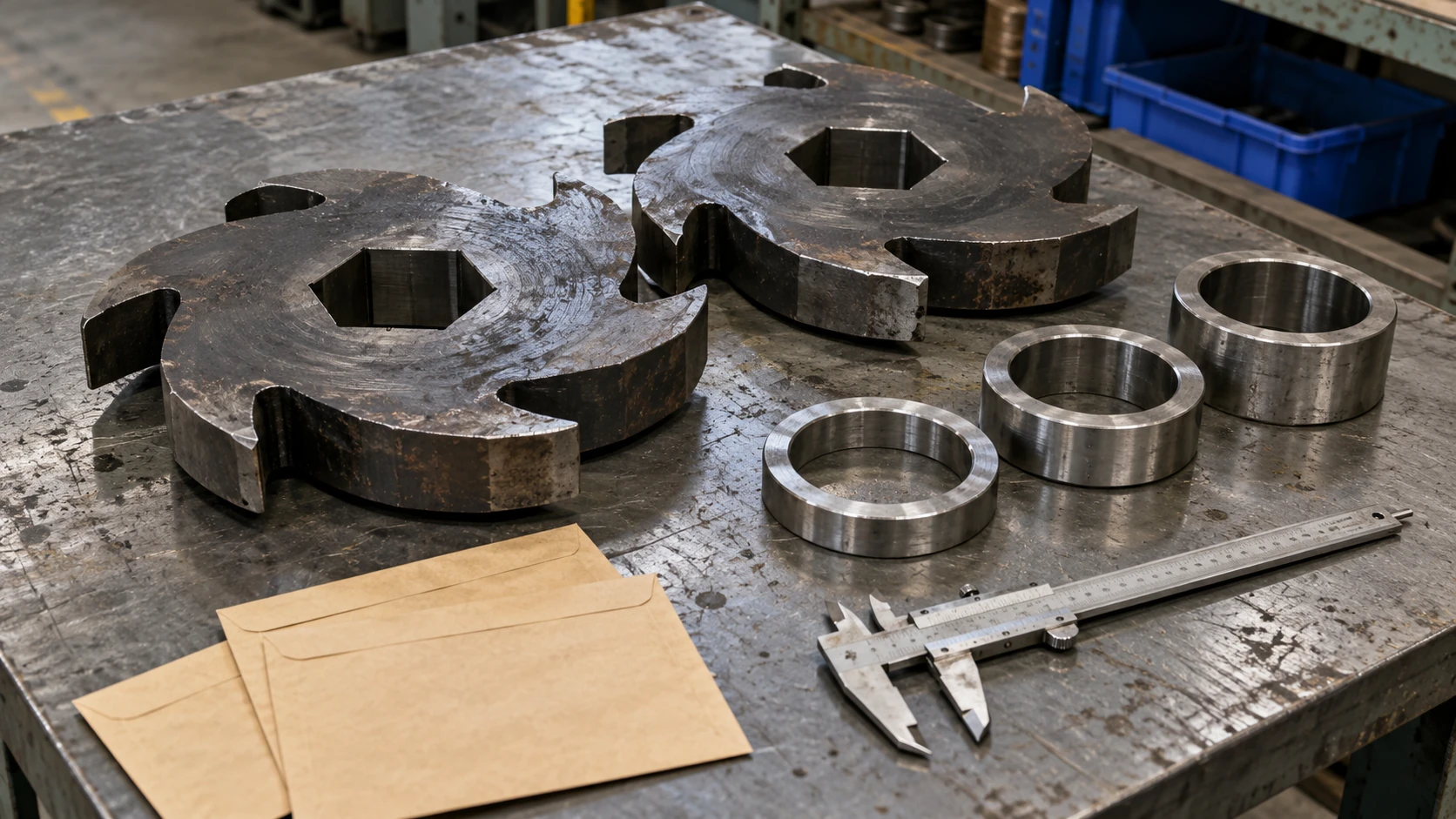
Illustrative receiving-inspection scene. A photograph or a caliper beside a part does not establish an accepted measurement.
Ask whether the order covers individual cutter positions, an approved partial replacement, a full cutter set, or a cutter-and-spacer package. Obtain a quantity schedule that identifies each variant. “One set” should have an agreed meaning before prices are compared.
| Purchase description | What must be explicit |
|---|---|
| One replacement cutter | Exact position or variant, interfaces and approval to work with retained parts |
| Several cutters | Itemized variants, quantities and the condition of the retained arrangement |
| Full cutter set | Both-shaft quantities, orientations and any end-position differences |
| Cutter and spacer set | Above information plus spacer variants, quantities and approved stack schedule |
| Revised cutter design | Change approval and review of interacting parts and operating duty |
Используйте blade design guide when discussing tooth profile and thickness. A different tooth count or thickness should be treated as a design change requiring review, rather than a like-for-like stock replacement.
How Much Spare-Parts Stock Should You Keep?
Prioritize the interruption a missing part would cause and the time required to obtain an approved replacement. Consider whether the plant has an alternative machine, a confirmed repair route or a planned shutdown in which to do the work.
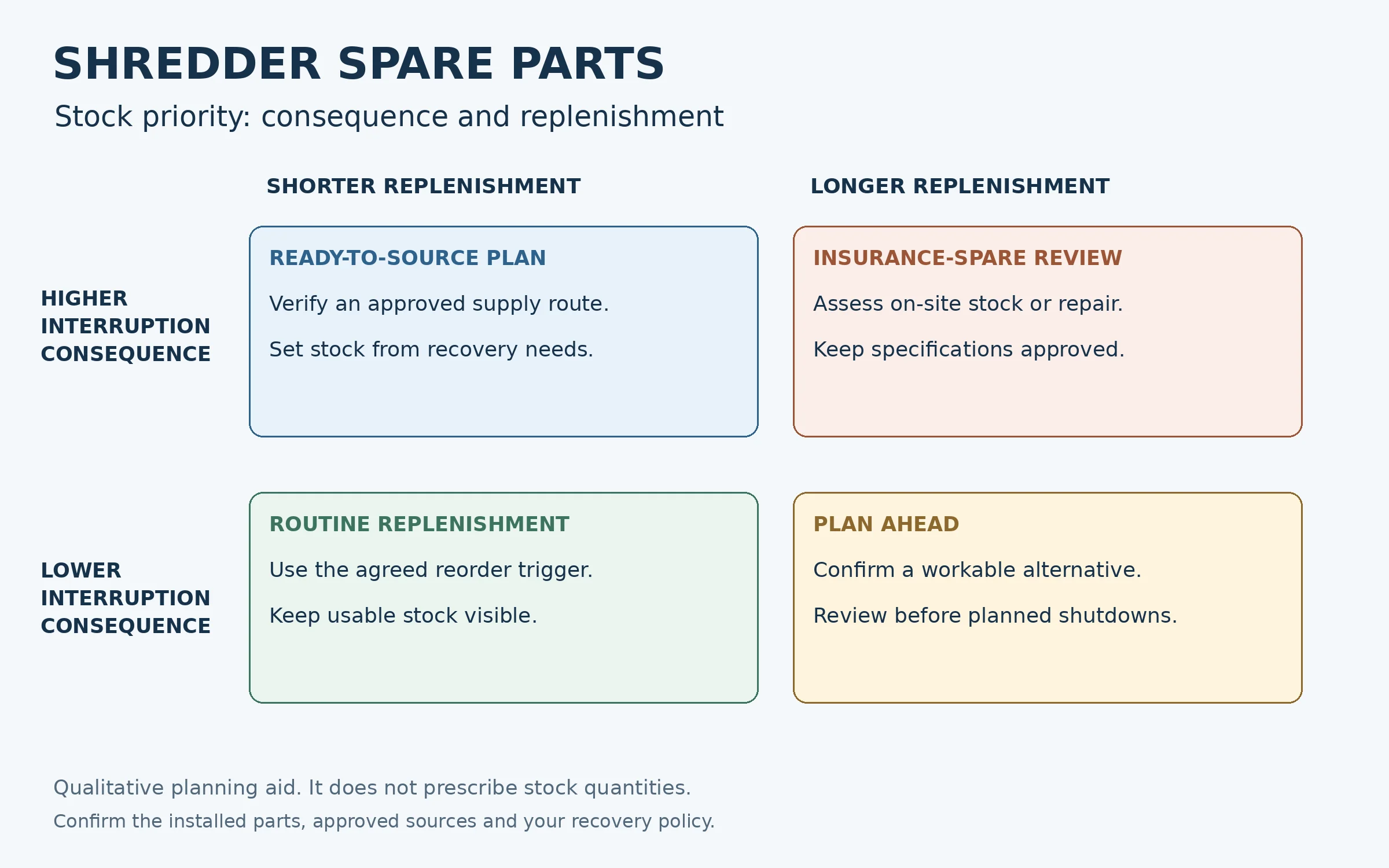
A qualitative planning aid. It assigns discussion priorities, not universal stock quantities.
For a predictable consumable, a starting calculation is:
Reorder point = expected consumption during effective replenishment time + agreed buffer.
Effective replenishment time includes the stages that actually apply: specification approval, production or sourcing, transport, receiving inspection and release. Avoid counting overlapping stages twice. Rare-failure parts need a separate consequence-and-recovery assessment; a zero historical usage rate does not settle whether to keep an insurance spare.
Here is a hypothetical example, not a NJDETE delivery promise or measured wear rate:
| Assumed input | Example |
|---|---|
| Average approved consumable-set demand | 1 set per 4 weeks |
| Effective replenishment time | 6 weeks |
| Expected demand during that time | 1.5 sets |
| Agreed buffer | 1 set |
| Example rounded reorder threshold | 3 sets |
If usable stock is one set and two sets are already on order, the inventory position is three sets before any committed allocations. Check when those orders will arrive; an inventory total can conceal a shortage before the delivery date. Intermittent demand, long shutdown windows and minimum order quantities may require a different policy.
Use a Spare-Parts List That Purchasing Can Act On
The following template separates the specification from the inventory decision. A blank requirement is an action to resolve, not permission to order a convenient alternative.
| Field | What your team enters |
|---|---|
| Machine / assembly | Installed identity and applicable revision |
| Part / drawing | Complete reference and approved revision |
| Fitted quantity | Count and positional variants |
| Stock unit | Individual part, matched group or explicitly defined set |
| Usable stock | Accepted items available for use |
| Allocations / open orders | Committed stock and confirmed incoming supply |
| Replenishment basis | Confirmed sourcing, approval and receiving stages |
| Priority / reorder rule | Agreed consequence, trigger and buffer rationale |
| Storage / inspection | Applicable preservation and periodic-check requirements |
| Owner / review date | Responsible person and next review |
Keep new, used, awaiting inspection and rejected parts distinguishable. Retain part identity through storage and protect cutting edges and other vulnerable surfaces according to the applicable requirements. Review the record after an approved modification or material change.
Check Replacement Shredder Parts Before Releasing Them to Stock
Agree the receiving criteria before purchase. Check delivery contents against the itemized order, then use the required drawings and inspection methods to verify specified features. A material statement, a hardness result and a dimensional report answer different questions; request the evidence relevant to the approved order.
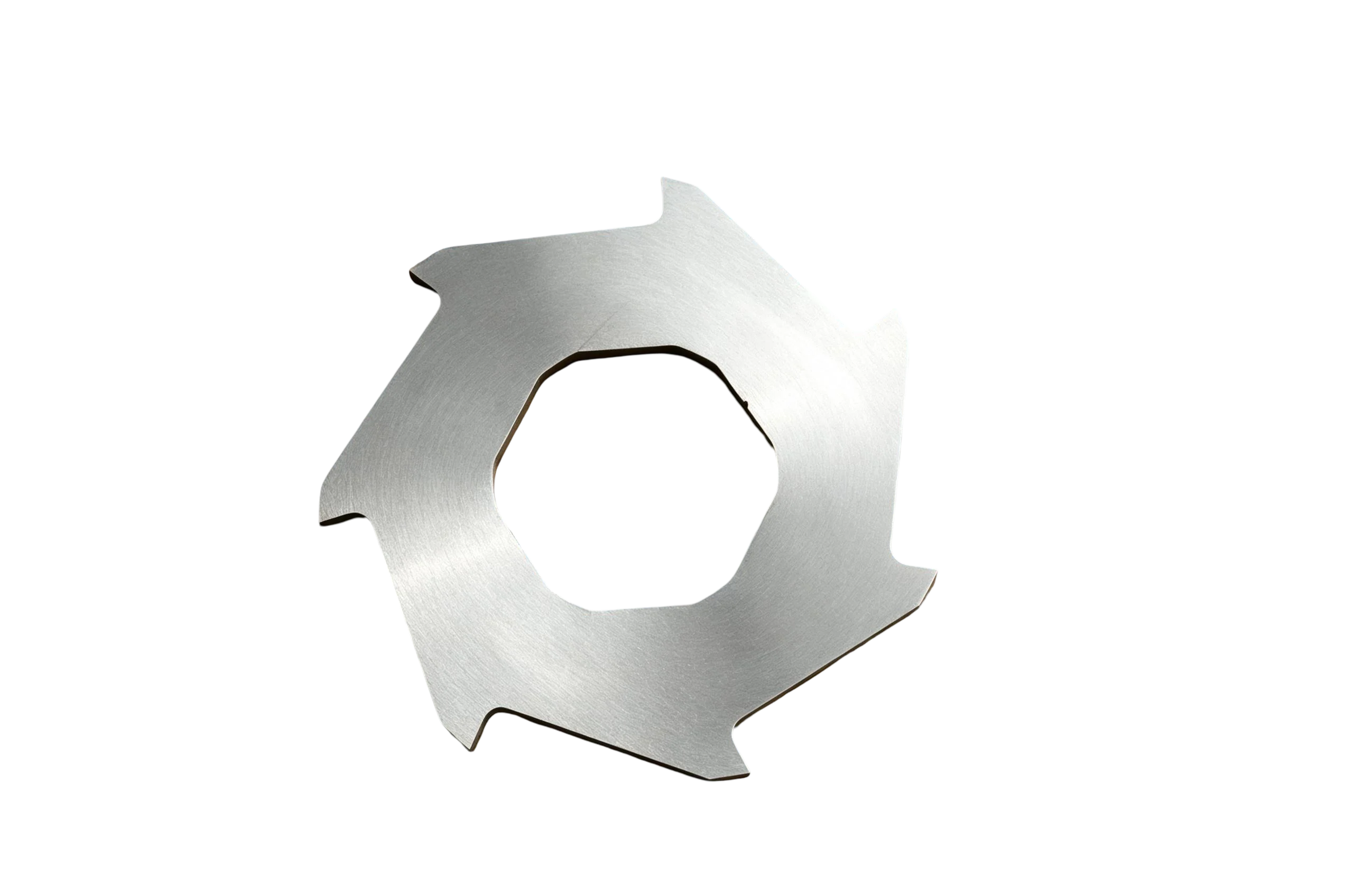
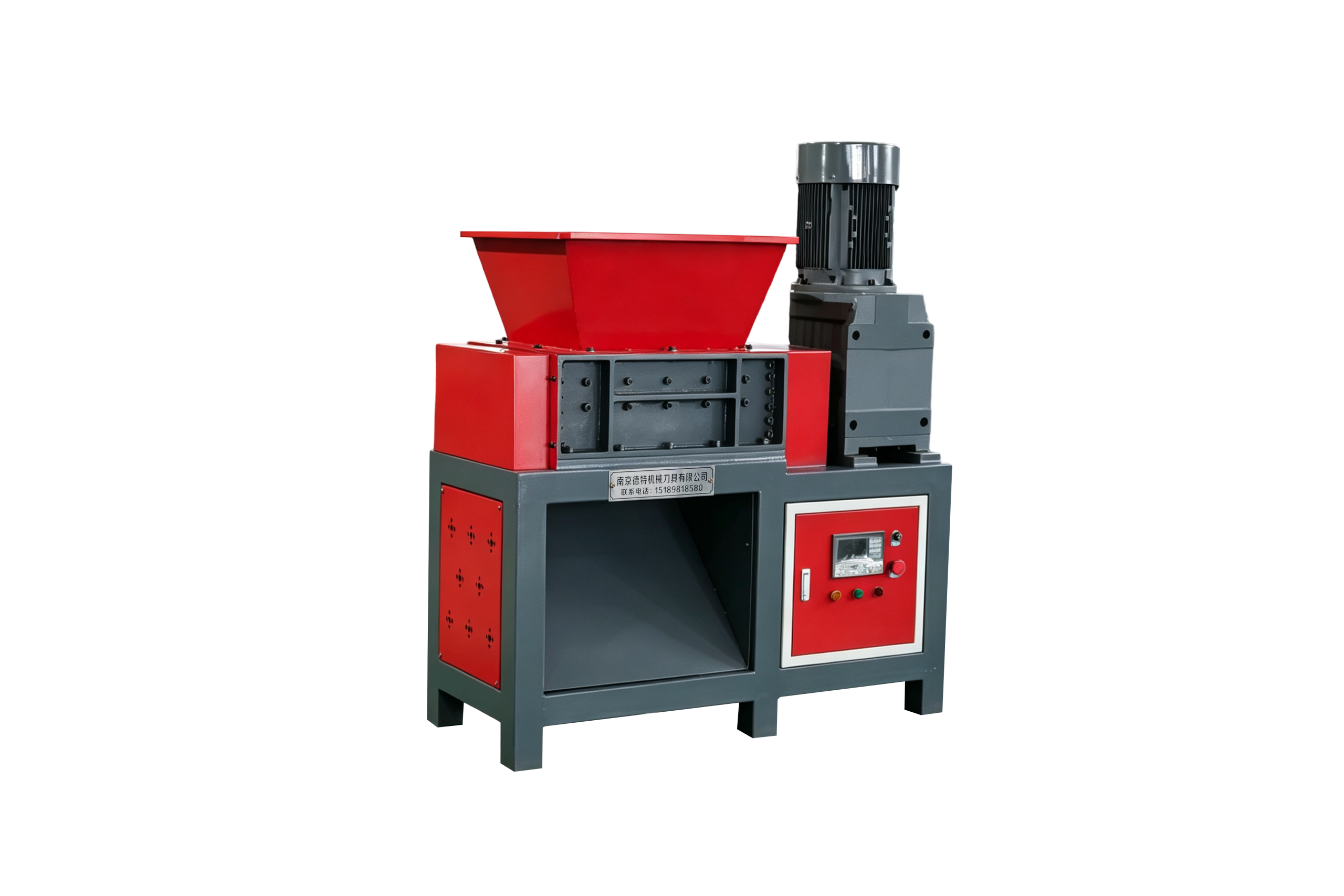
Published NJDETE product photograph. Confirm the ordered variant and inspection scope against the approved drawing.
For cutters and spacers, receiving checks should address identity, counts, mating features and any agreed positional variants. Put discrepancies on hold for resolution. Do not modify a new part to force a fit without an approved engineering decision.
Releasing a part to stock is separate from authorizing its installation. Servicing and blade access require trained personnel and the site’s hazardous-energy control procedure. OSHA’s hazardous-energy guidance explains why stopping a machine alone does not control all servicing hazards; apply the requirements governing your site and equipment.
What Should You Send With a Spare-Parts Enquiry?
Send the installed machine identity, itemized part schedule, approved drawings or safely obtained sample information, required quantities and delivery destination. For cutting parts, include the waste stream and the reason for replacement.
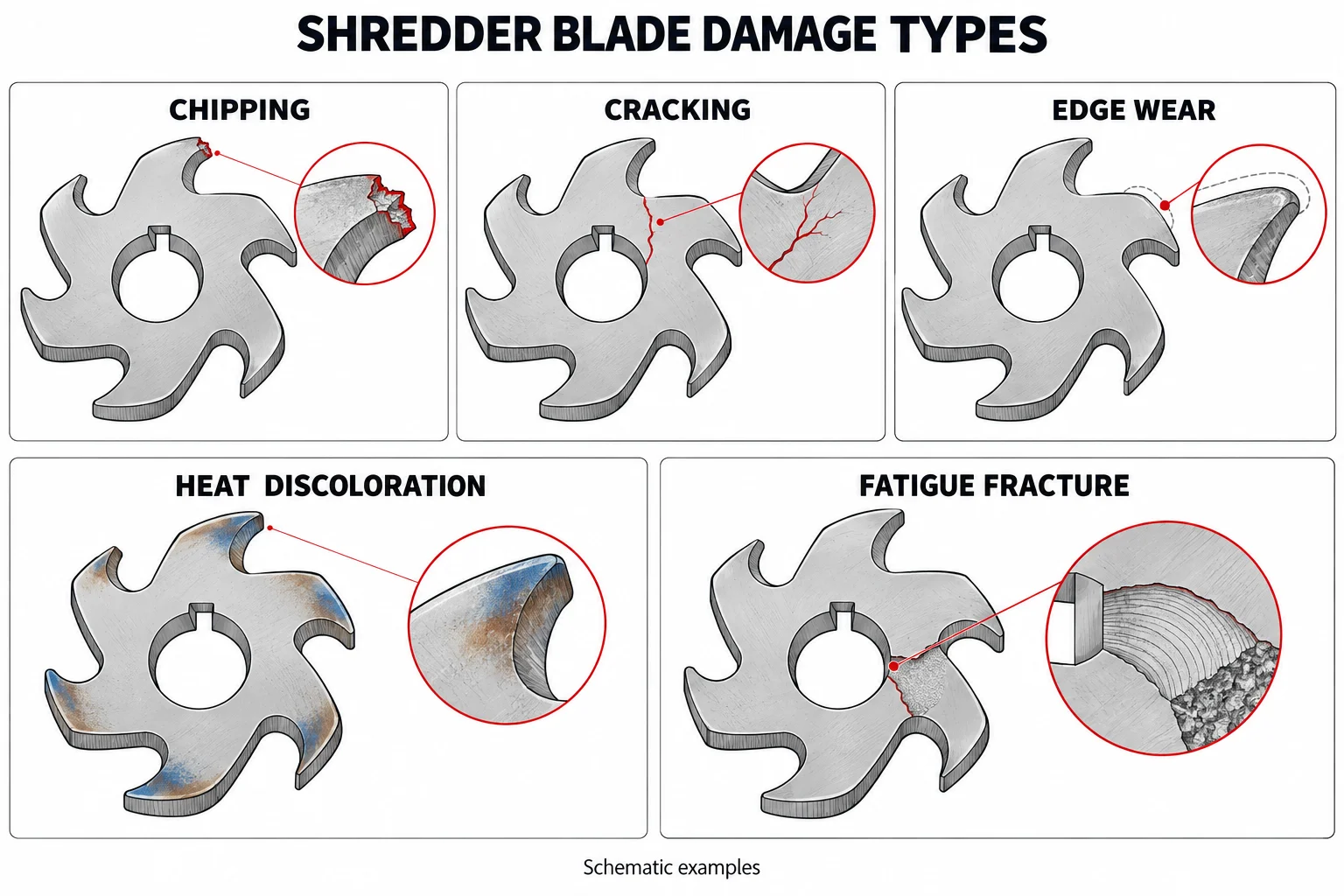
If a part has failed unexpectedly, add its location, relevant operating history and photographs. The blade chipping and cracking guide can help organize the observations. Ordering another identical part without understanding the event may leave the original problem unresolved.
Compare quotations using the same scope: individual versus set quantities, included spacers, retained hardware, inspection records, packing and delivery terms. The blade quote comparison guide develops that purchasing comparison.
NJDETE Equipment Context
The following video is from the Nanjing Dete Shredder channel. Use it as general equipment context when describing your enquiry; part compatibility still requires machine identification and approved specifications.
Watch the original NJDETE video on YouTube.
Часто задаваемые вопросы
Can I order shredder spare parts using only the machine model?
Use the model to start the enquiry, then confirm serial number, installed arrangement and applicable part or drawing revision. A modification or a different supplied configuration can change the required part.
Should I keep a complete spare cutter set?
Assess the interruption caused by a cutter problem, the condition of the installed assembly and the time needed for approved replacement supply. A full set, a selected group and no on-site stock represent different recovery plans. Agree the plan before deciding the quantity.
Are spacer rings universal between double-shaft shredders?
Do not assume so. Identify the bore, thickness, quantity and stack position from the approved arrangement. A ring that slides onto the shaft is not automatically suitable for the assembly.
Can aftermarket shredder replacement parts be compatible?
Compatibility needs evidence against the approved interfaces, material requirements and operating duty. Review the specification and responsible approval, whether the proposed part is original equipment or an alternative. A brand reference alone does not complete that review.
Can worn cutters stay in the spare-parts store?
Keep them identified separately from accepted ready-to-use stock. Record their condition and whether inspection, regrinding assessment or disposal is required. A part awaiting a decision should not inflate the usable stock count.
Does NJDETE supply every item in this checklist?
The checklist covers planning across an industrial machine. NJDETE’s published blade page is the starting point for a cutter enquiry; confirm other requested components and the exact supply scope before ordering. This article makes no universal availability or delivery commitment.
Prepare Your Replacement-Parts Request
Send NJDETE the machine identity, cutter drawings or sample details, quantities and current operating problem. Review the double-shaft blade specification, then contact NJDETE for a confirmed replacement-parts scope.