

ما الفرق بين آلة تقطيع الخشب وآلة تقطيع الخشب إلى شرائح؟
Release time: 2026-10-17
A furniture factory, a pallet recycler and a forestry contractor may all need to reduce wood, yet the material arriving at each machine is different. Choosing equipment from the words “wood shredder” or “wood chipper” alone can leave the next process with unsuitable feed.
إجابة سريعة: A wood chipper commonly uses knives on a disc or drum to produce chips from suitable logs, branches or other approved wood. An industrial wood shredder covers a wider family of machines used to reduce wood waste. Choose between them by checking the actual cutting system, incoming material and required output. The product name alone does not establish capability.
This guide compares the equipment from an industrial purchasing perspective: production offcuts, scrap packaging, pallet waste and wood recovery.
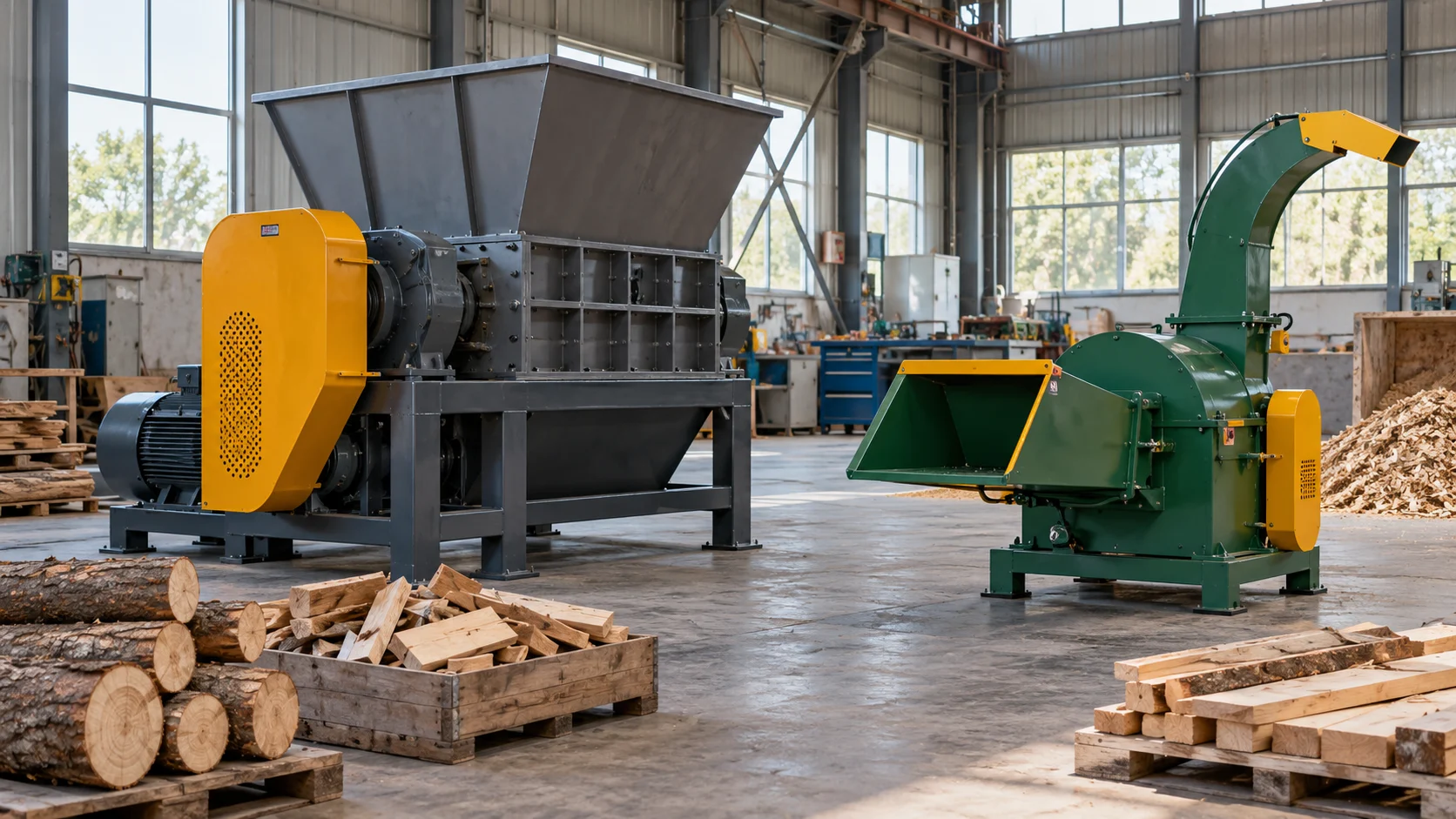
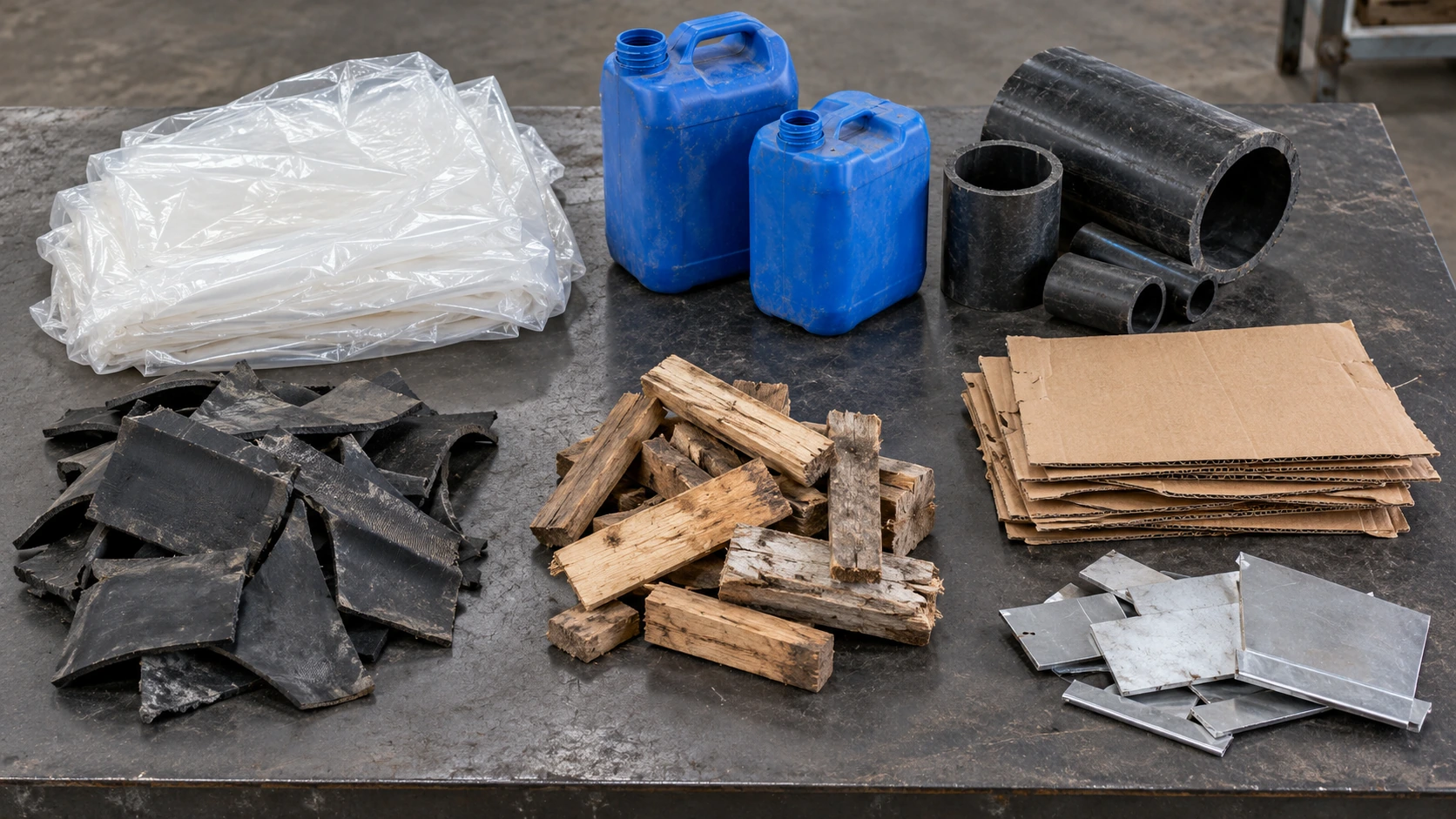
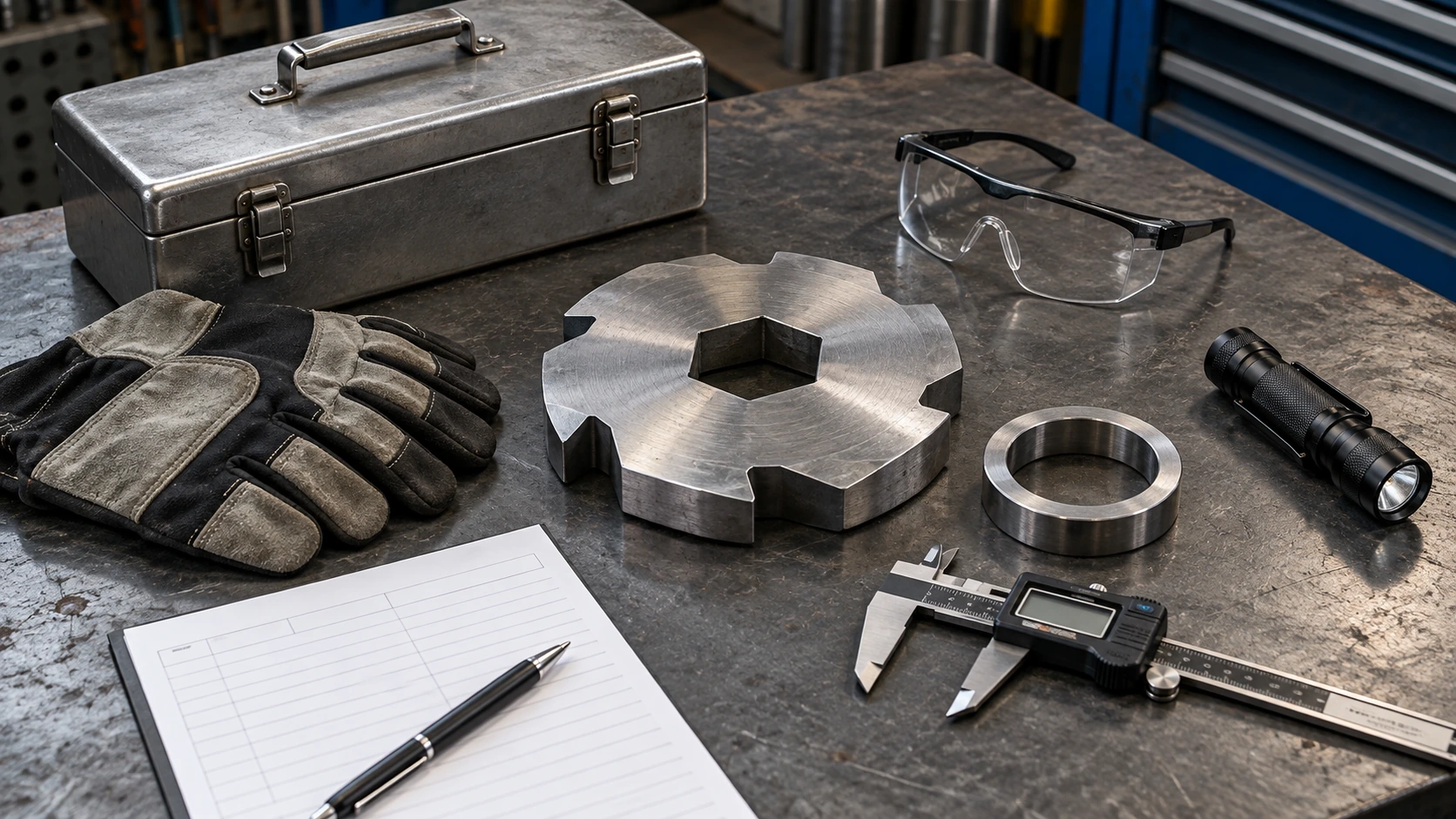
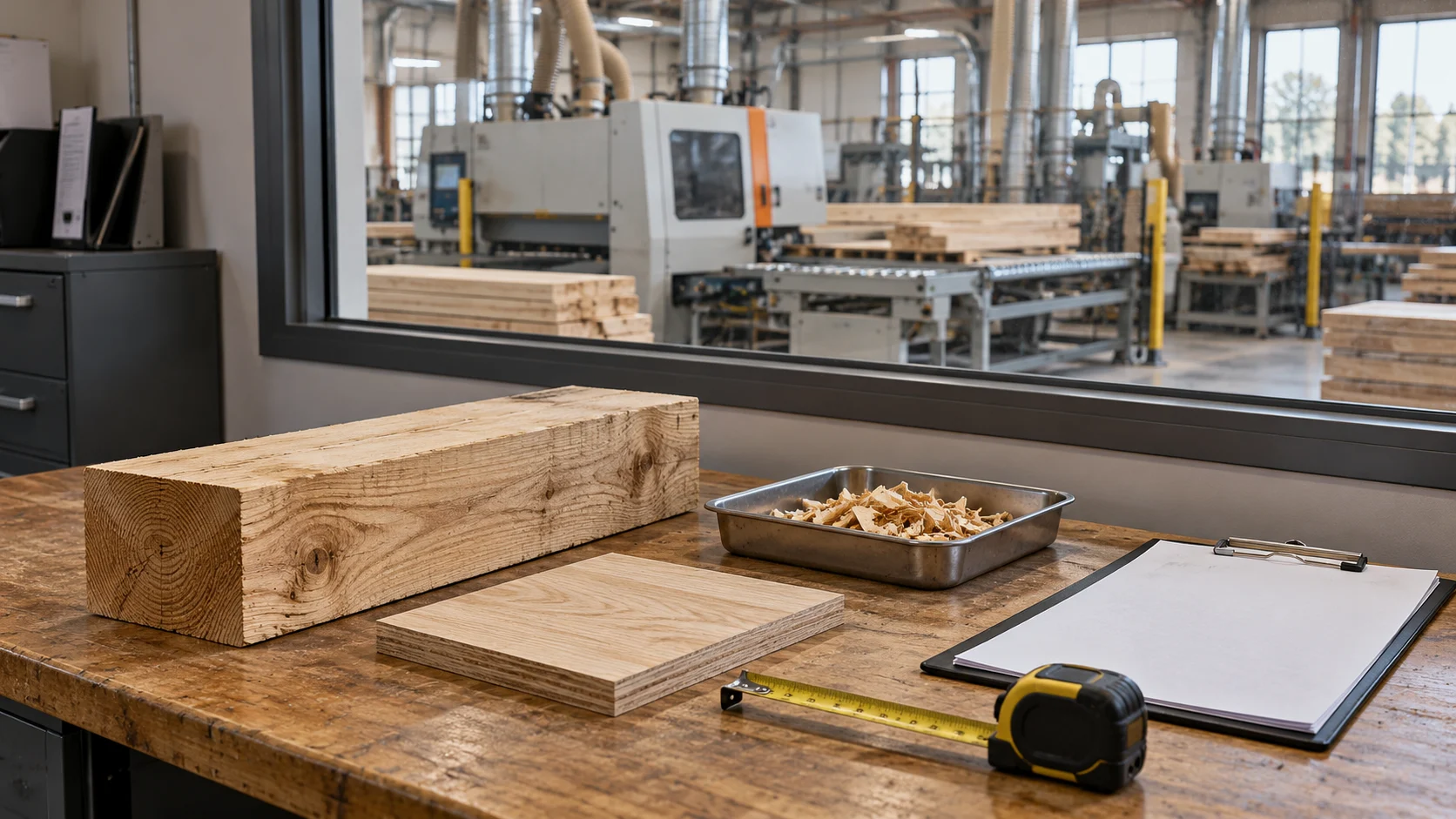
The added illustrations are AI-generated concept visuals. They are not records of a verified NJDETE factory, material trial or inspection, and their geometry does not replace an approved drawing.
Wood Shredder vs Wood Chipper: A Practical Comparison
The table describes common industrial arrangements. A particular machine may differ, so use it to prepare questions for the supplier.
| Buying question | Industrial wood shredder | Wood chipper |
|---|---|---|
| What is the main job? | Reduce approved wood waste for handling, separation or further processing | Produce chips from approved wood feedstock |
| How does it reduce the material? | Depending on design, cutters shear or tear; some pre-shredders crush with an auger | Knives cut material against a counter element in a disc or drum arrangement |
| What feed shape should you discuss? | Offcuts, irregular waste, packaging or assembled items within the approved limits | Logs, branches or specified timber sections compatible with the infeed |
| Which feed details matter? | Largest item, thickest section, loose or bundled form and contamination | Maximum section, length, shape, wood condition and feeding arrangement |
| How is output controlled? | Cutter arrangement, screens where fitted, recirculation and possible secondary processing | Knife and rotor configuration, feed control and any subsequent screening |
| Can it accept metal contamination? | Only the contamination types and amounts approved for that configuration | Obtain explicit approval; ordinary wood-chipping capability does not establish metal tolerance |
| What should a trial measure? | Accepted output, size distribution, stops, preparation and separation needs | Chip specification, accepted output, feeding consistency and knife condition |
| What should the quote include? | Feeding, shredding, wear parts, discharge and any separation stages | Infeed, chipper, knife package, discharge and any chip-classification stages |
Manufacturer documentation illustrates the range behind these names. UNTHA’s wood-waste range includes different shaft arrangements, while Vermeer’s whole-tree chippers use selected knife and drum configurations to meet chip requirements. A useful comparison therefore starts with a defined machine configuration.
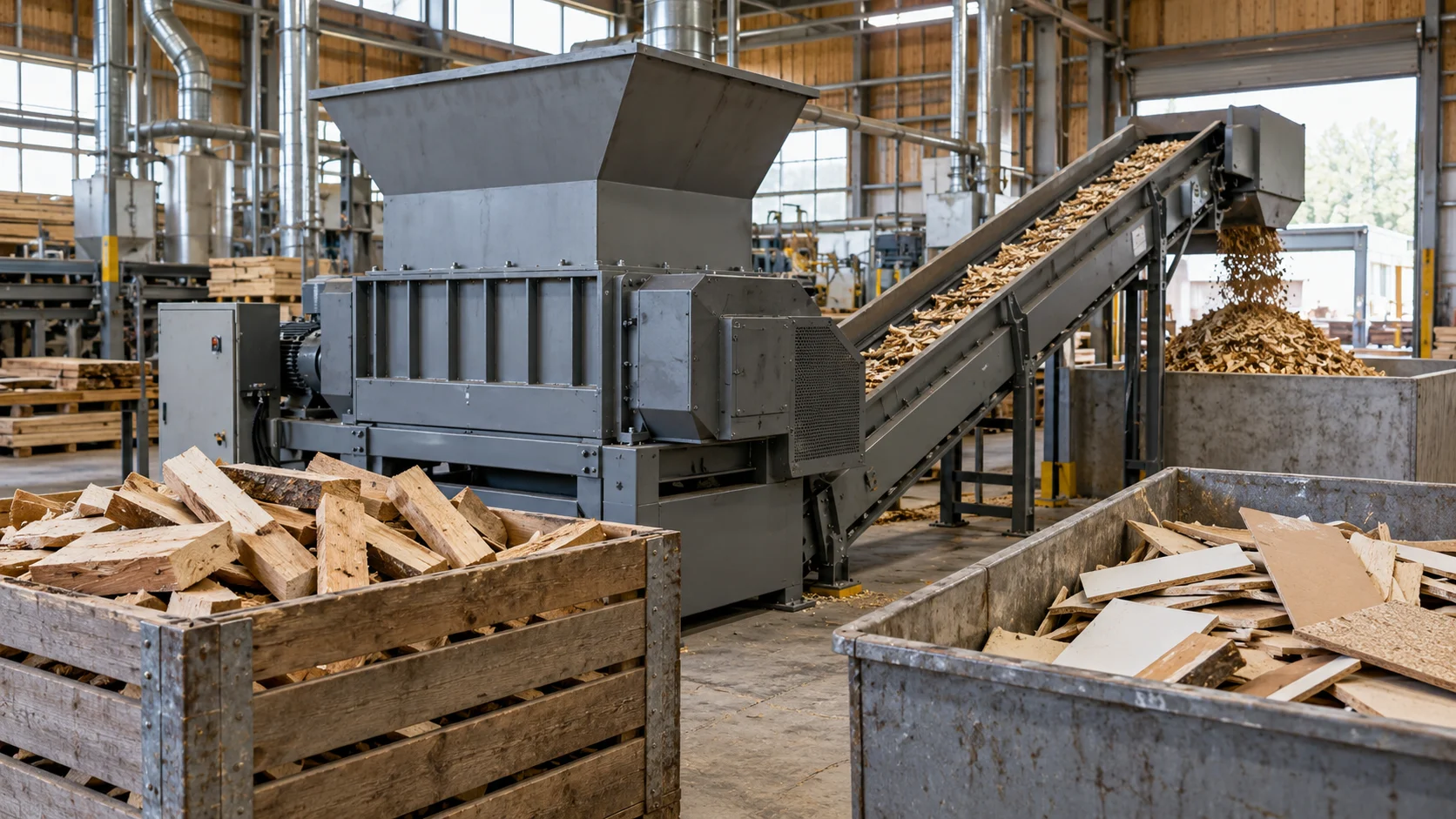
What Does an Industrial Wood Shredder Do?
A wood shredder reduces the dimensions of an approved waste stream so it can be handled or processed further. The intended result might be easier conveying, lower storage volume, preparation for separation or feed for another reduction stage.
There is considerable variation inside this category. A cutter-based single-shaft machine, a multi-shaft cutting system and an auger pre-shredder do different work.
For example, the WEIMA Woodwolf is described as a coarse pre-shredder that crushes and tears bulky wood items before further processing. That arrangement should not be treated as a direct substitute for a machine specified to deliver a finished chip fraction.
For a cutter-based project, assess the complete arrangement: cutters, counter elements, shafts, feeding and discharge. Reviewing the available double-shaft shredder configurations can help you identify the questions to ask about a proposed machine.
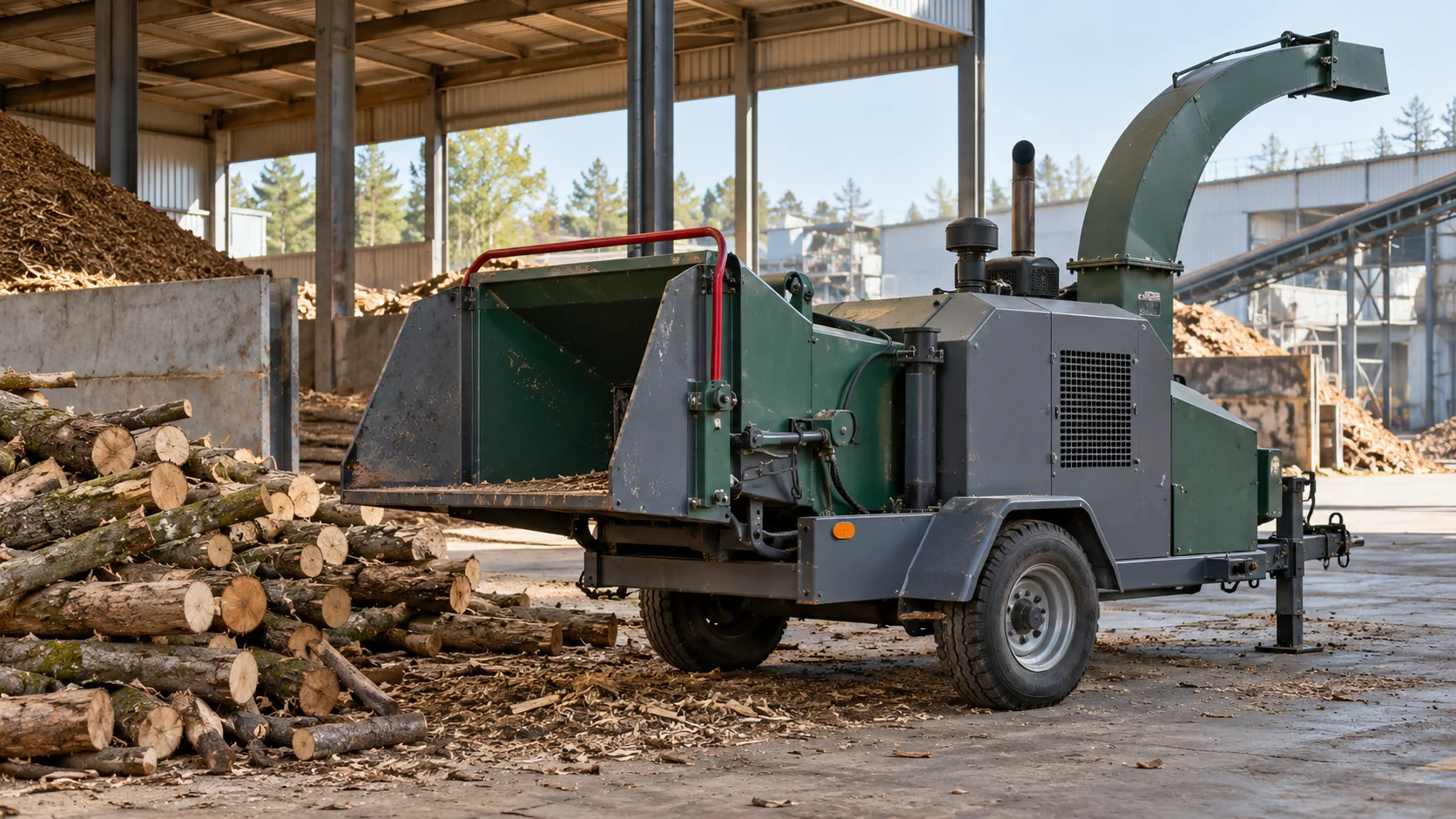
What Does a Wood Chipper Do?
A wood chipper uses a defined cutting arrangement to turn accepted wood into chips. Disc and drum designs are both used, and the suitable configuration depends on the feed and the required product.
The chip specification matters as much as the machine’s ability to accept the material. Ask which knife and rotor arrangement is offered, how the material is fed, and how the proposed configuration will be checked against your output requirement.
Vermeer’s wood chipper buying guide considers disc and drum designs alongside routine material and feeding requirements. These are useful questions for industrial buyers too, although the duty and site arrangement must match the actual project.
A chipper’s maximum feed dimension also needs context. A nominal opening does not, by itself, tell you whether an awkwardly shaped item can be fed consistently.
NJDETE Wood-Board Shredding Demonstration
The following clip from the Nanjing Dete Shredder channel shows a short wood-board shredding demonstration. It is an operating reference for the visible feed condition. It is not a head-to-head chipper comparison and does not establish whole-pallet acceptance, permitted metal contamination or measured capacity.
Watch the original NJDETE video on YouTube.
For a purchase decision, request a trial using the agreed incoming wood and proposed machine configuration, with a representative output sample and an elapsed-time record.
Which Machine Fits Your Incoming Wood?
Clean logs and branches
A chipper is a sensible starting point when the feed matches its approved dimensions and the process needs a defined chip product.
Record maximum section, length, wood condition and the normal mixture of items. Then ask the supplier to demonstrate feeding and chip quality with representative material.
Production offcuts and panel waste
The important variables include shape, section thickness, coatings and how the waste is collected. A long narrow offcut presents a different feeding problem from a bin of short pieces.
Specify whether the next process needs coarse reduction or a controlled fraction. Check available floor space, collection equipment and discharge arrangements before selecting the cutting unit.
Pallets, crates and assembled packaging
An assembled item brings both feeding and contamination questions. Record its dimensions, stiffest sections, fasteners, fittings and any attached packaging.
Ask whether the proposed machine can accept the whole item or requires preparation. A trial using loose pallet boards does not demonstrate whole-pallet capability.
Mixed recovered wood
Separate the useful categories before requesting a quote. Clean solid wood, coated panels, dirty packaging and wood with attached materials may need different preparation or receiving arrangements.
Describe what is present and what the downstream customer will accept. Broad “waste wood” capability is insufficient for approving a mixed stream.
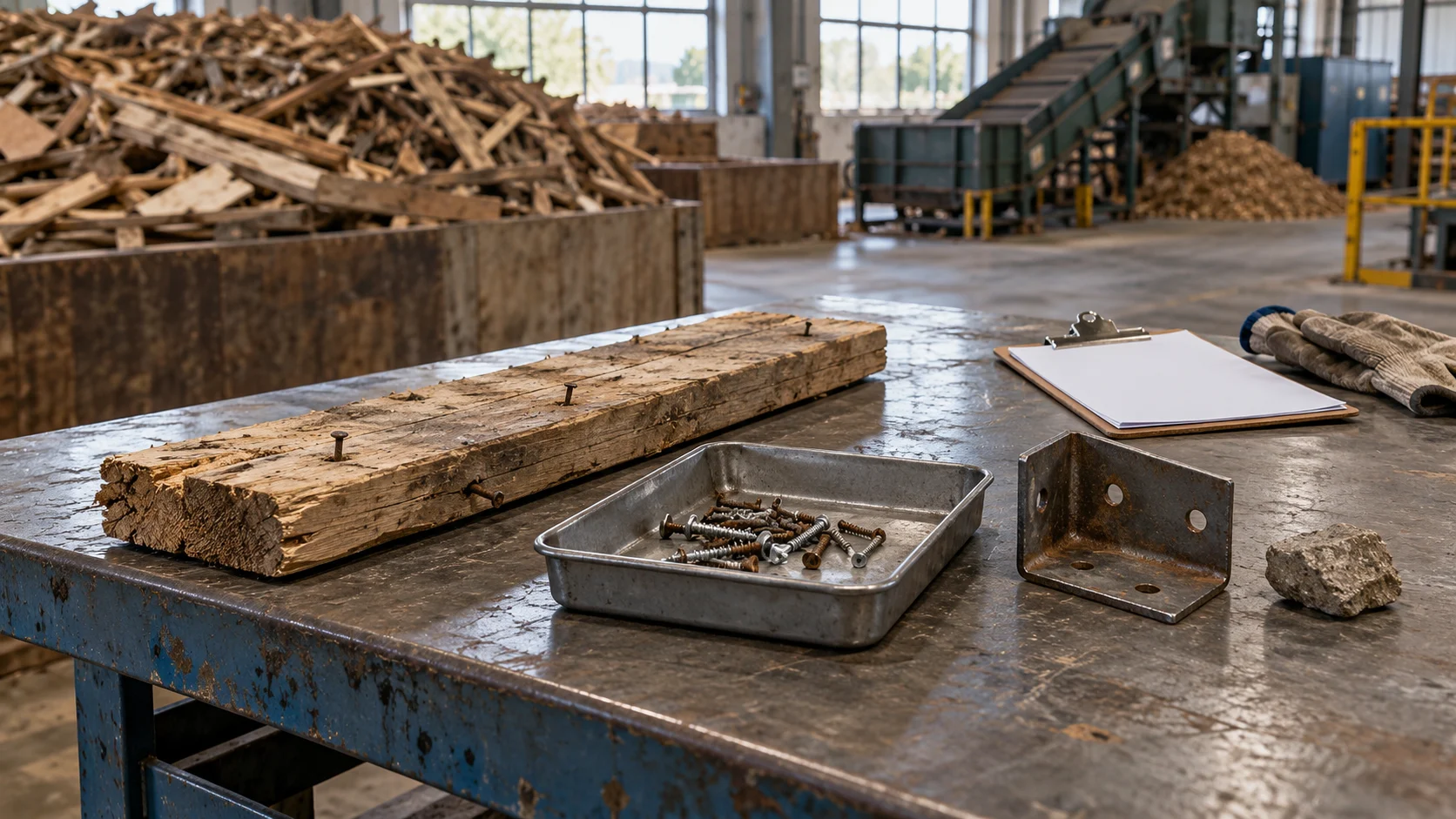
Can Wood Containing Nails Be Processed?
Some industrial wood-processing systems are offered for contaminated material, but the accepted contamination is specific to the machine and process.
Ask the supplier to identify:
- Which fasteners or metal fittings are permitted.
- Which foreign objects must be removed before feeding.
- How the machine responds to an unacceptable object.
- Where liberated metal will be separated.
- How residual contamination will be checked.
WEIMA’s wood-processing documentation describes wood-shredding applications and associated metal-separation arrangements. For your project, request the actual proposed equipment and acceptance criteria.
Treat an old nail, a large bracket and a stone as separate inputs in the application review. Approval for one does not establish approval for the others.
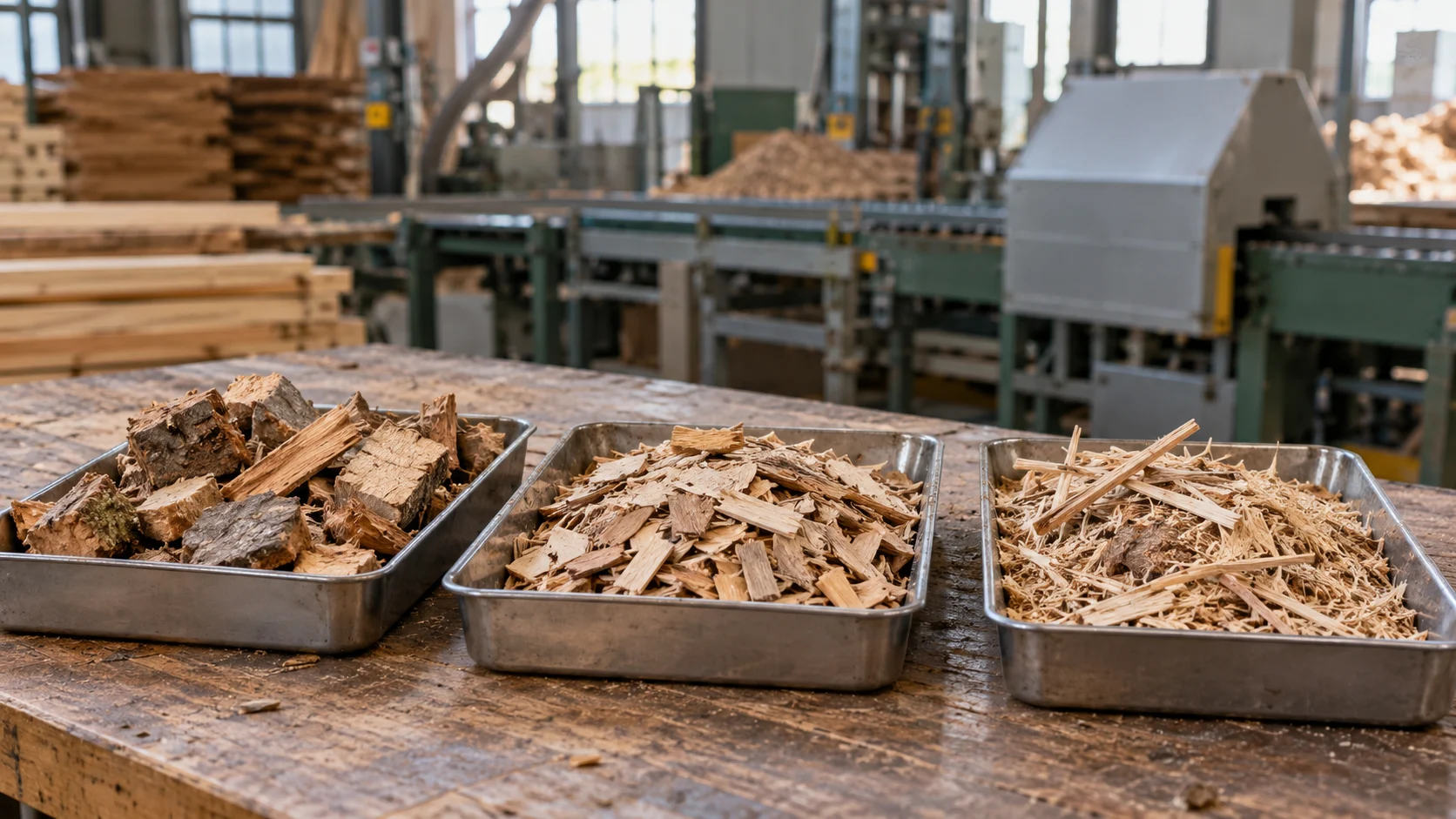
How Do You Specify the Required Output?
“Small wood pieces” leaves too much room for interpretation. Write down what the next operation must receive.
| Output requirement | What to define before ordering |
|---|---|
| Easier transport or storage | Acceptable bulk form and whether long pieces create handling problems |
| Conveyor or screw feeding | Size distribution, long slivers and allowable foreign material |
| Further size reduction | Largest accepted piece at the next machine and consistency of feeding |
| A specified chip product | Agreed size fractions, oversize and fines limits |
| Sale to a downstream user | That customer’s written material and quality requirements |
A coarse shredder may need a second stage when the final specification is tighter than its demonstrated output. A chipper may also need screening or another process step to meet the receiving specification.
Ask for a sample from the full proposed process. A photograph of a handful of selected pieces cannot establish a size distribution.
How Should You Compare Capacity and Operating Cost?
Compare the quantity of acceptable output produced during the agreed trial period. Include normal feeding interruptions and any preparation included in the proposed operating method.
Record:
- Material description and starting quantity.
- Preparation needed before feeding.
- Actual trial duration and feeding method.
- Accepted output and rejected fractions.
- Stops, reversals or manual interventions.
- Measured electricity use where relevant.
- Cutter or knife condition after the trial.
الـ دليل سعة آلات التقطيع الصناعية provides a framework for relating required output to the processing time available.
For cost comparisons, use the same process boundary. If one proposal includes pre-cutting, separation and secondary reduction while another covers only the main machine, bring the missing stages into the comparison.
Avoid ranking proposals by motor power alone. The operational question is what each complete arrangement delivers from your material.
What Should You Send for an Application Review?
Prepare a short evidence pack:
- Photos of the normal feed and the largest expected items.
- Dimensions, thickest sections and approximate item weights.
- Wood type and known coatings or attached materials.
- Normal contamination and exceptional foreign objects.
- Required accepted output per shift.
- The downstream size and quality specification.
- Feeding, discharge, space and electrical requirements.
If the application involves replacement cutters, include the current cutter arrangement and approved drawings. NJDETE’s شفرات آلة التقطيع ذات المحورين page identifies the interfaces and configuration details needed for a replacement review.
Agree the Trial Acceptance Record Before the Demonstration
Use one trial brief for each shortlisted equipment route. Establish the acceptance method before the run so the result can be compared with the quotation.
| Trial item | Agreed record |
|---|---|
| المواد الواردة | Routine construction, dimensions, condition and permitted contaminants |
| Preparation and feeding | Tasks performed, loading method and included labor |
| Proposed configuration | Machine identity, cutting arrangement and auxiliary stages |
| الناتج المقبول | Receiver’s requirement, sampling method and rejected fractions |
| Time and interruptions | Measurement boundary, stops, reversals and collection changes |
| الأعمال المتبقية | Separation, screening or additional reduction before acceptance |
Keep the output sample and trial record associated with the exact configuration proposed. If one route includes preparation or a secondary stage, retain that difference in the complete cost comparison.
الأسئلة الشائعة
Is a wood shredder the same as a wood chipper?
The terms overlap in some product descriptions. Check the cutting mechanism, approved feedstock and demonstrated output to understand what a particular machine does.
Which machine is better for wood recycling?
The appropriate machine depends on incoming wood and the next process. Compare complete arrangements against the same feed and output requirements.
Can a wood chipper process pallets?
Obtain written confirmation for the exact pallet construction, dimensions and contamination. An ordinary log or branch specification does not establish pallet-processing capability.
Does a wood shredder always produce larger pieces?
No. Shredder designs differ, and some use screens or additional stages. Compare measured size distributions from the proposed configurations.
Do I need both shredding and chipping equipment?
Some projects need multiple reduction stages; others do not. Define the required final material first, then ask suppliers to explain which stages are necessary.
Can a loose-board video confirm that whole pallets will work?
A loose-board demonstration documents a different incoming condition. Whole pallets add size, construction, loading and fastener questions. Request confirmation and a representative trial for the actual items rather than extending the video beyond what it shows.
Discuss Your Wood-Processing Requirements with NJDETE
For a project involving low-speed shredding or replacement shredder cutters, send NJDETE your feedstock details, largest dimensions, contamination information and required output.
Review the industrial equipment and blade range or request an application review. Ask for confirmation of the proposed configuration and a material-trial plan before approving the equipment.