

Industrial Knives: 7 Essential Types & Selection Guide
Release time: 2026-10-21
For a replacement order, confirm the complete working arrangement: the knife, its holder, the mating cutting component and any spacers. A blade that looks similar can still have the wrong bevel, mounting pattern or working height.
This guide compares seven useful knife categories, explains the dimensions that establish fit, and provides a practical checklist for requesting a quotation from NJDETE.
Industrial knives at a glance
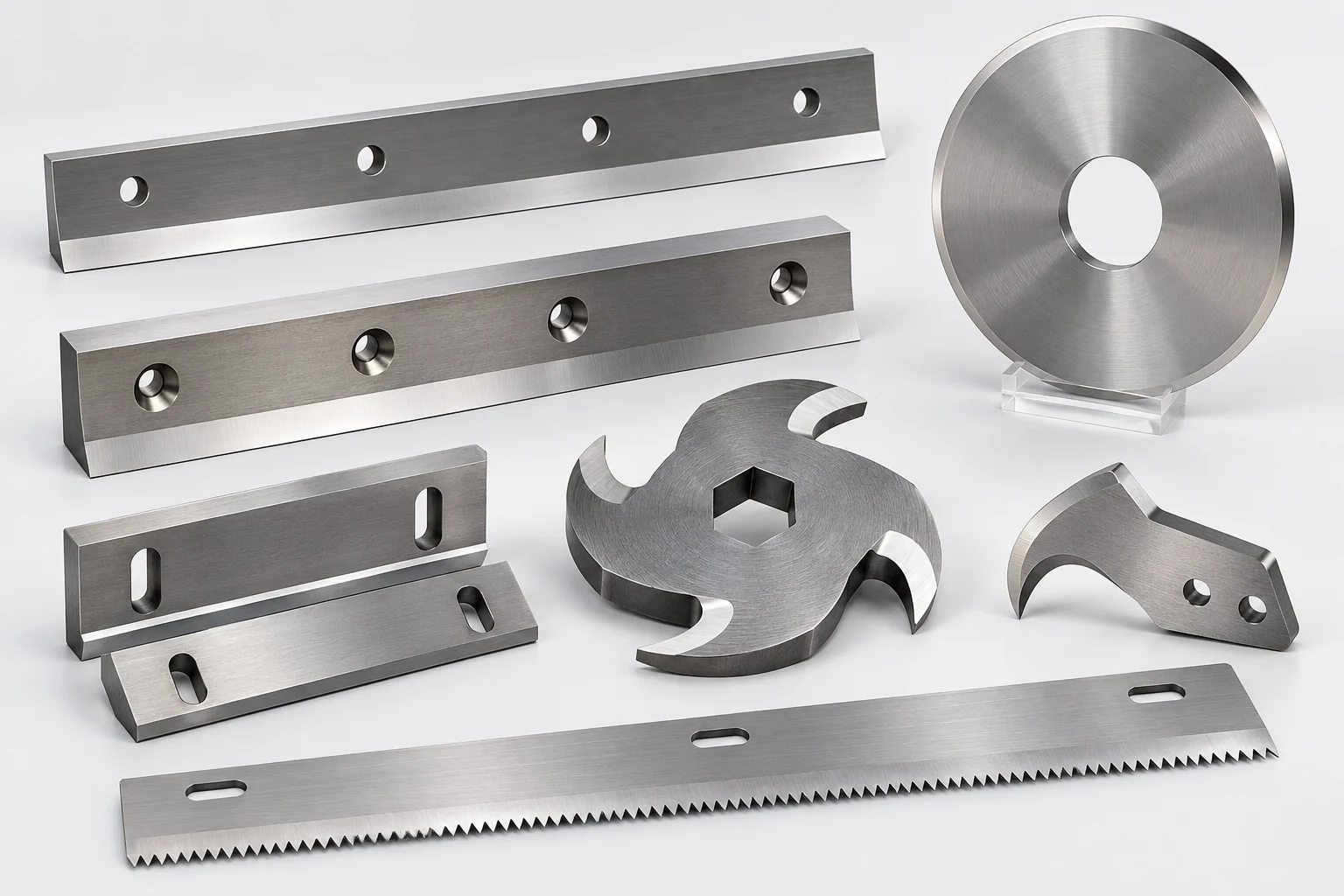
Choose the cutting task before choosing the blade outline. Industrial knives used for a clean film slit perform a different job from cutters used to reduce bulky waste.
| Knife type | Main cutting task | Typical work material | First compatibility check |
|---|---|---|---|
| Straight knife | Cutoff, trimming or a straight cutting stroke | Paper, film, rubber and suitable plastic products | Edge position relative to mounting holes |
| Circular slitter knife | Continuous slitting or edge trimming | Paper, film, foil and other supported webs | Slitting method, bore and mating component |
| Metal shear blade | Shear sheet or strip | Steel, stainless steel and nonferrous metals | Machine capacity, material thickness and matched blade arrangement |
| Granulator knife | Cut suitable plastic scrap into regrind | Runners, moldings and production scrap | Rotor and stationary knife specifications |
| Shredder blade | Primary size reduction of bulky feed | Suitable plastic, rubber and mixed recycling feed | Shaft interface, cutter stack and tooth configuration |
| Serrated or perforating knife | Cut off packaging or form a controlled tear line | Films, laminates, nonwovens and packaging webs | Tooth or perforation pattern and installed cutting action |
| Custom profile knife | Follow a shaped cutting path | Application-specific stock or formed parts | Cutting contour relative to locating features |
These categories can overlap. A granulator knife may have a straight outline, while a packaging knife may be serrated. Classify the part by its function in the machine, then record its geometry.
7 essential types of industrial knives
1. Straight industrial knives
Straight industrial knives have a linear cutting edge. Depending on the equipment, they may move through a cutting stroke, rotate on a rotor or remain stationary opposite another knife.
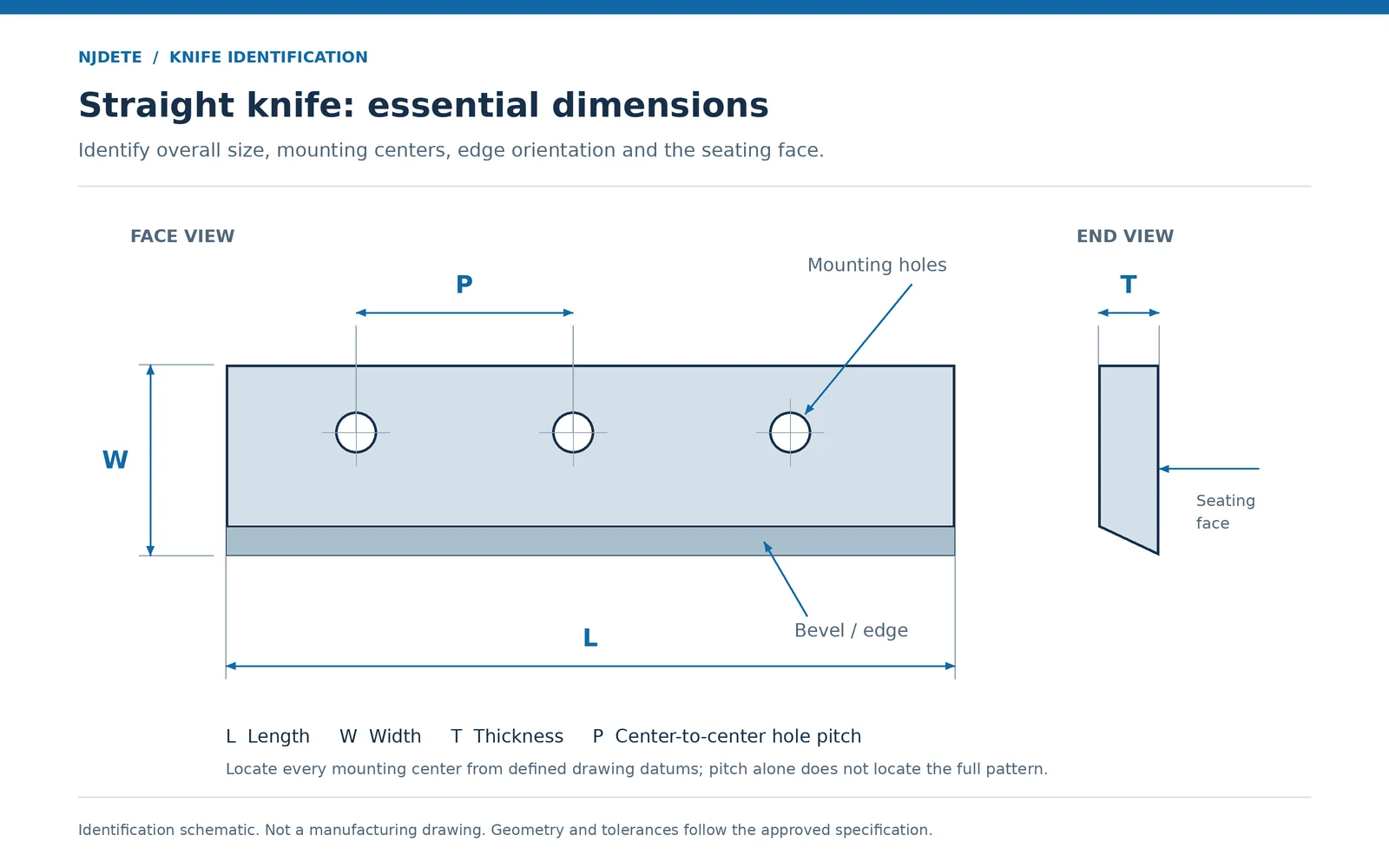
The important dimension is often the relationship between the cutting edge and the mounting face. Overall length alone cannot establish whether the replacement reaches the correct working position. Record hole centers, slots, countersinks, bevel direction and remaining adjustment.
For a heated cutting process, also identify the heating arrangement and material response. NJDETE’s hot cutter blade is a separate enquiry route for that requirement.
2. Circular slitter knives
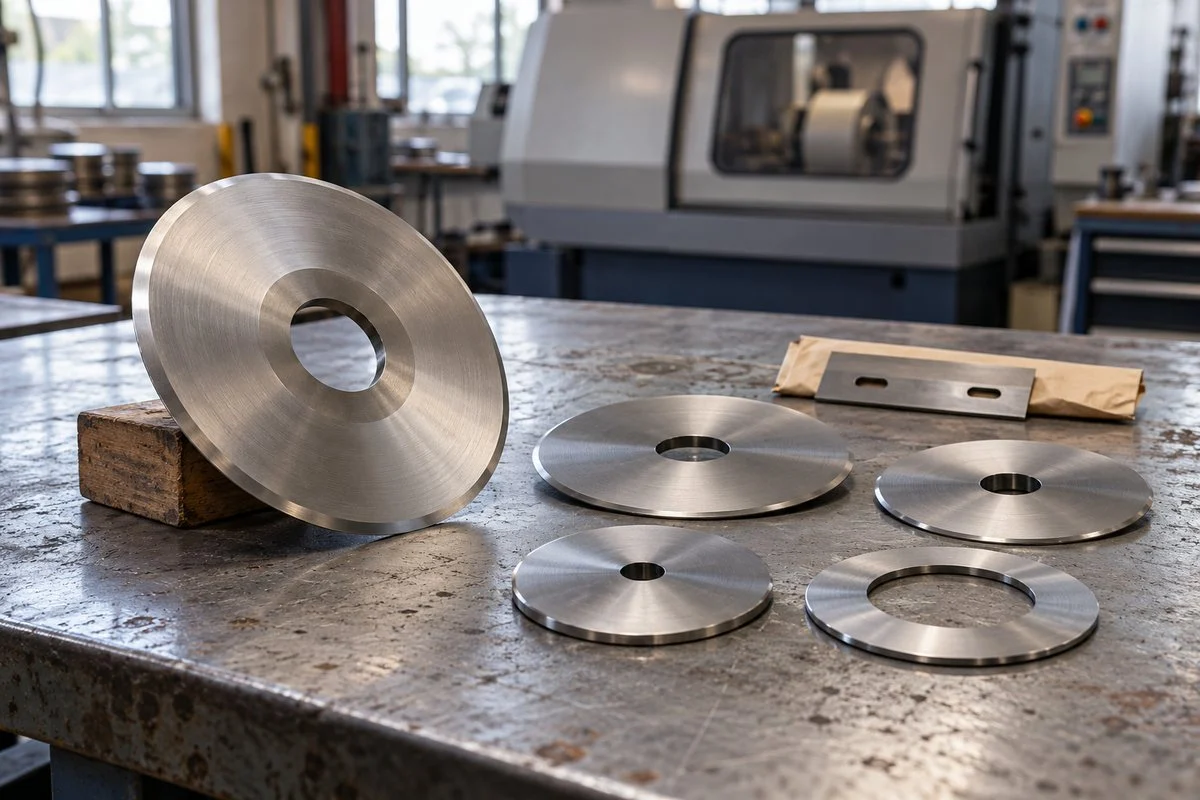
Circular industrial knives are used in rotary slitting and trimming arrangements. A smooth disc outline does not identify the cutting method: a shear slitter, a score-cutting system and another rotary cutting arrangement can require different edge profiles and support components.
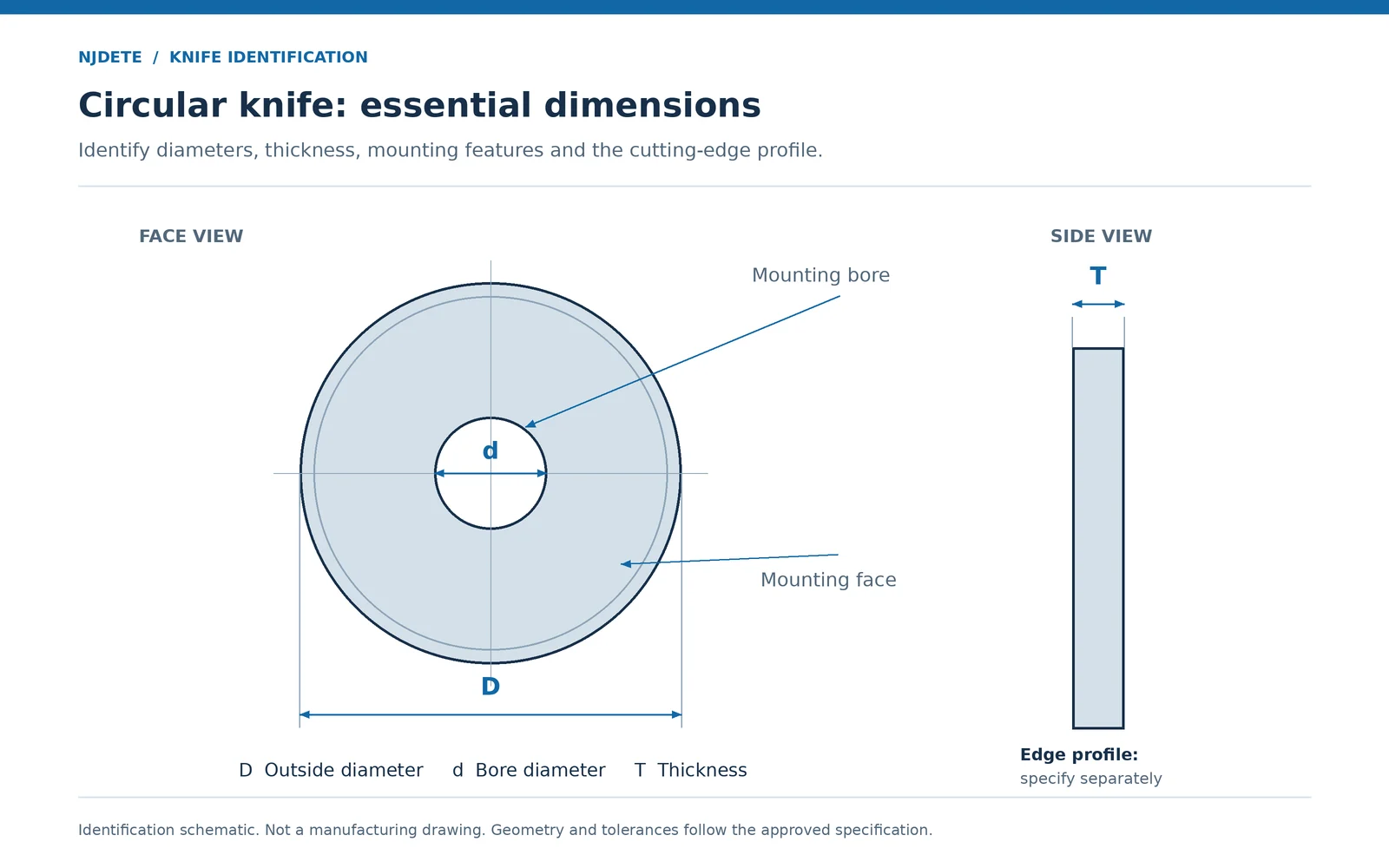
Confirm outside diameter, bore, thickness, mounting face and cutting-edge profile. Include details of the lower knife, anvil or other mating component where the system uses one. If the cut deteriorates, inspect the installed arrangement before assuming that a different disc material will solve the problem.
3. Metal shear blades
Metal shear blades work in matched cutting arrangements for sheet or strip. Their selection depends on the metal specification, thickness range, machine design and required edge condition.
Tell the supplier whether the machine cuts mild steel, stainless steel, aluminum or another defined material. Describe burrs, distortion or edge damage with photographs and operating details. Those symptoms can involve clearance, alignment or worn mating blades as well as the knife itself.
Use the machine’s specified setup procedure. A clearance copied from a different shear is not an appropriate replacement specification.
4. Plastic granulator knives
Granulator knives cut suitable plastic feed through the interaction of rotating knives and stationary bed knives. A complete order may contain several distinct parts with different quantities and mounting details.
De NJDETE plastic crusher blades and granulator knives support drawing-based replacement enquiries. Identify each rotor and bed position, hole or slot layout, bevel and set quantity.
Describe the feed accurately: clean runners, thick moldings and filled plastics create different cutting conditions. Output also depends on feeding, screens and machine settings. The knife specification should be reviewed with those conditions in view.
5. Shredder blades
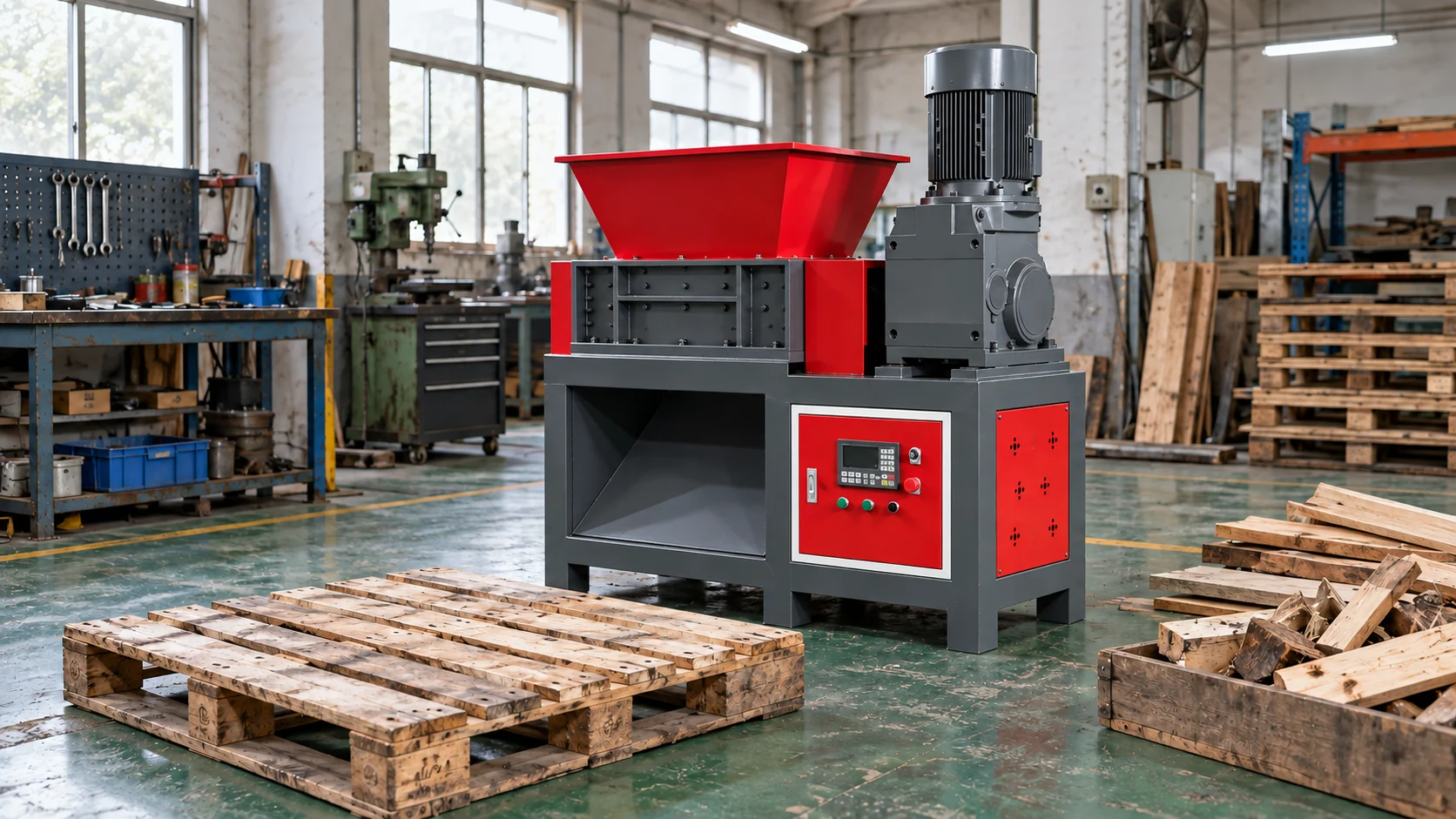
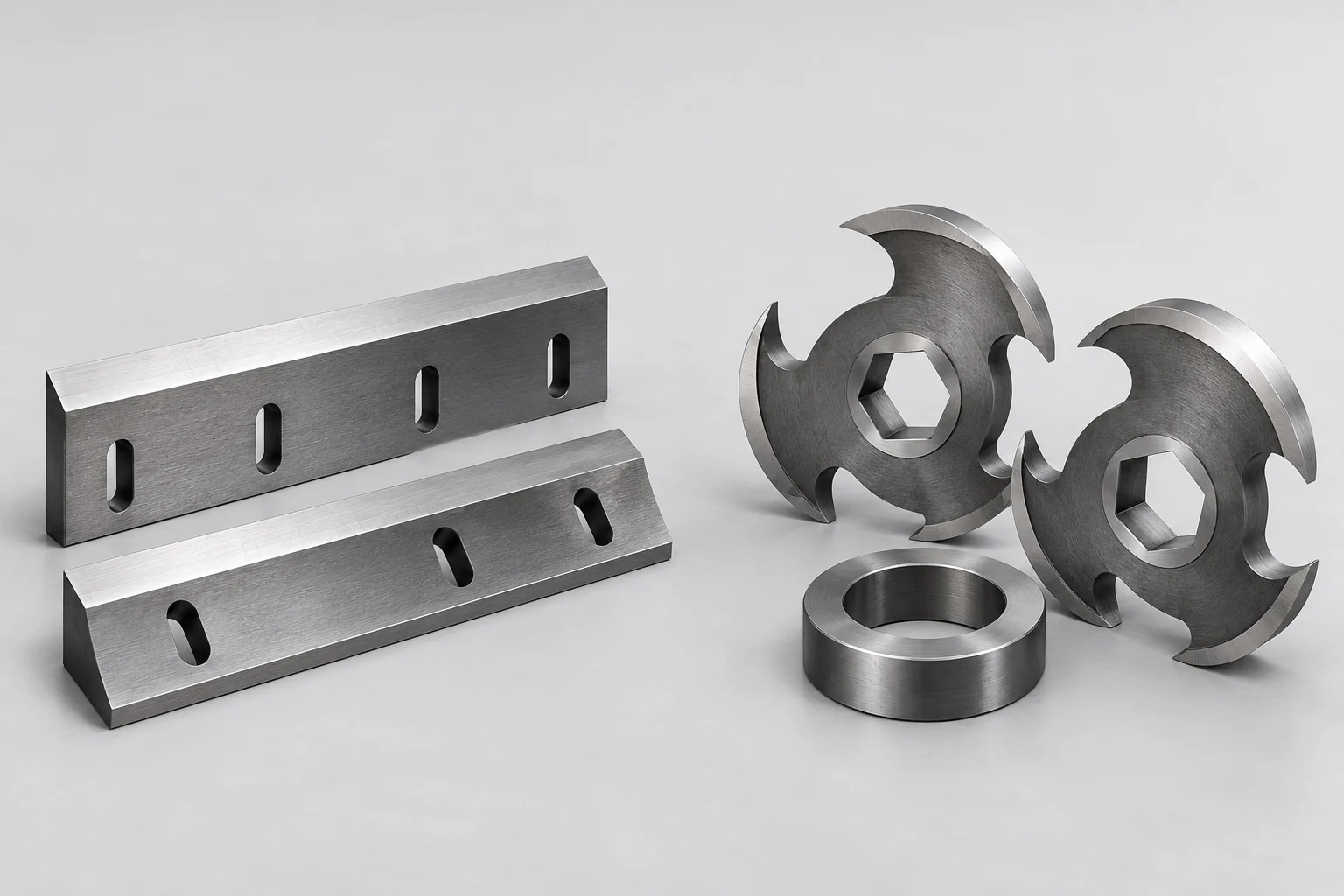
Shredder blades grip, shear or tear suitable feed into smaller pieces. Disc cutters in a double-shaft machine differ from the cutting blocks used in other shredder arrangements.
For NJDETE double-shaft shredder blades, confirm the bore or shaft profile, outside diameter, thickness, tooth shape, spacer dimensions and stacking order. Cutter thickness options include 5–40 mm; the selected value must match the approved machine arrangement.
A tooth count or disc diameter alone does not establish compatibility. Confirm the quantity and orientation on each shaft, particularly when left and right assemblies contain different parts.
6. Serrated packaging and perforating knives
Serrated packaging knives use teeth to engage the material during cutoff or another defined cutting action. Perforating knives create a pattern of cuts and uncut bridges so the material separates in a controlled way.
Specify the actual task. A clean separation and an easy-tear line are different outcomes. Record the tooth or perforation pattern, material layers, mounting, blade movement and mating support. If a web tears unpredictably, investigate the complete pattern and material behavior rather than ordering from the outside dimensions alone.
7. Custom and special-shaped knives
Custom profile knives may use hooked, curved, angled or stepped cutting edges. Their working shape must be defined relative to the surfaces that locate the part in its holder.
For these industrial knives, tracing a worn outline can reproduce a missing tip or an altered cutting path. Establish which features remain original and which have changed through use or sharpening.
El custom straight and special-shaped blade guide explains how to prepare a drawing or sample enquiry for NJDETE. Include both faces, the side profile and the installed orientation.
How to select industrial knives for your machine
Start with the required cutting result
Describe the output that the process must accept. For a converting line, that might include slit width, edge condition and freedom from tearing. For recycling, it might include an agreed regrind condition under a defined feed and screen configuration.
Separate essential acceptance checks from preferences. A requirement such as “fits the existing holder without modification” should be resolved before comparing steel upgrades. Define what the trial must demonstrate so purchasing, maintenance and production assess the same result.
Identify the complete installed assembly
Use the machine nameplate, part number, current drawing and assembly position. A model name is useful, but machines can have modified holders or revised knife sets.
Record the mating components as well. A circular knife may depend on another disc or anvil; a granulator knife works with a rotor-and-bed arrangement; a shredder cutter belongs in a defined stack. Keep separate order lines for different positions or handed versions.
Describe the feed and the reason for replacement
For industrial knives, the word “plastic” leaves too much unresolved. State the polymer where known, part form, maximum section thickness, fillers, contamination and relevant temperature or moisture.
Then describe what happened: gradual dulling, local chipping, poor cuts from the first run, or repeated damage in one position. Include photographs and production records where available. A visible defect is a starting observation, not a complete explanation of its cause.
Agree on the specification before comparing offers
Make sure each quotation covers the same drawing revision, quantities, material requirement, inspection scope and delivery terms. Ask suppliers to identify any proposed substitution.
A replacement to an approved drawing and a redesigned knife are different purchases. If the bevel, steel or profile will change, document the intended improvement and trial conditions. Avoid changing several variables at once when the purpose is to learn which change improves the result.
Dimensions to confirm before ordering
An industrial knife drawing should identify measurement references, units and revision. Photographs help explain the part; the approved drawing establishes the geometry to manufacture.
Straight knife measurement checklist
| Feature | Qué hay que especificar | Why it matters |
|---|---|---|
| Length, width and thickness: L × W × T | Finished dimensions with units | Establishes the part envelope |
| Orificios o ranuras de montaje | Size, count and center positions from defined references | Establishes fastening and adjustment |
| Vanguardia | Bevel face, profile and edge location | Establishes cutting direction and working reach |
| Seating face | Surface used to locate the blade in its holder | Establishes installed position |
| Regrinding allowance | Permitted remaining dimensions and adjustment | Establishes whether sharpening remains possible |
Circular knife measurement checklist
For circular industrial knives, record outside diameter D, bore diameter d and thickness T. Also define the mounting face, bore features and cutting-edge cross-section. Include any keyway, recess or fixing pattern used by the actual design.
If a used sample is the only reference, label measurements as current sample dimensions. Ask which original dimensions need reconstruction. Do not silently convert a worn width or damaged tip into a new-part requirement.
Materials for industrial knives
Materials for industrial knives include tool steels, high-speed steels and carbide-based designs. The selection balances edge wear, impact, cutting geometry and the operating environment.
| Grupo de materiales | Selection discussion | Check before approval |
|---|---|---|
| Alloy and cold-work tool steels | Balance wear resistance and edge toughness for the cutting task | Exact grade, heat treatment and finished hardness requirement |
| High-speed steels | Review where the process needs the properties of the selected HSS grade | Edge design, operating conditions and regrinding plan |
| Solid or tipped carbide designs | Consider wear resistance under suitable, controlled cutting conditions | Edge support, impact exposure, assembly and service method |
| Corrosion-resistant steels | Review when moisture, cleaning or contact conditions matter | Required corrosion performance and process-specific documentation |
D2 is a cold-work tool steel used in industrial cutting applications. It is one option to evaluate, not a universal upgrade. A knife that fails through impact or poor seating needs a review of that condition before a material change.
NJDETE’s granulator knife options include SKD11, Cr12MoV and 9CrSi; its double-shaft shredder blade options include 9CrSi and H13. Choose the grade and heat-treatment requirement for the proposed part and operating conditions. Similar supplier listings do not make different grade designations interchangeable in an order.
For industrial knives, a grade name does not describe the finished component by itself. Geometry, heat treatment, grinding and assembly all affect the result. Specify required documentation with the quotation instead of relying on a claim of “high hardness.”
Knife wear, sharpening and replacement
Industrial knives should be reviewed when output falls outside the agreed acceptance criteria or inspection identifies damage. There is no useful universal replacement interval for every material and machine.
| Observation | Review first | Purchasing implication |
|---|---|---|
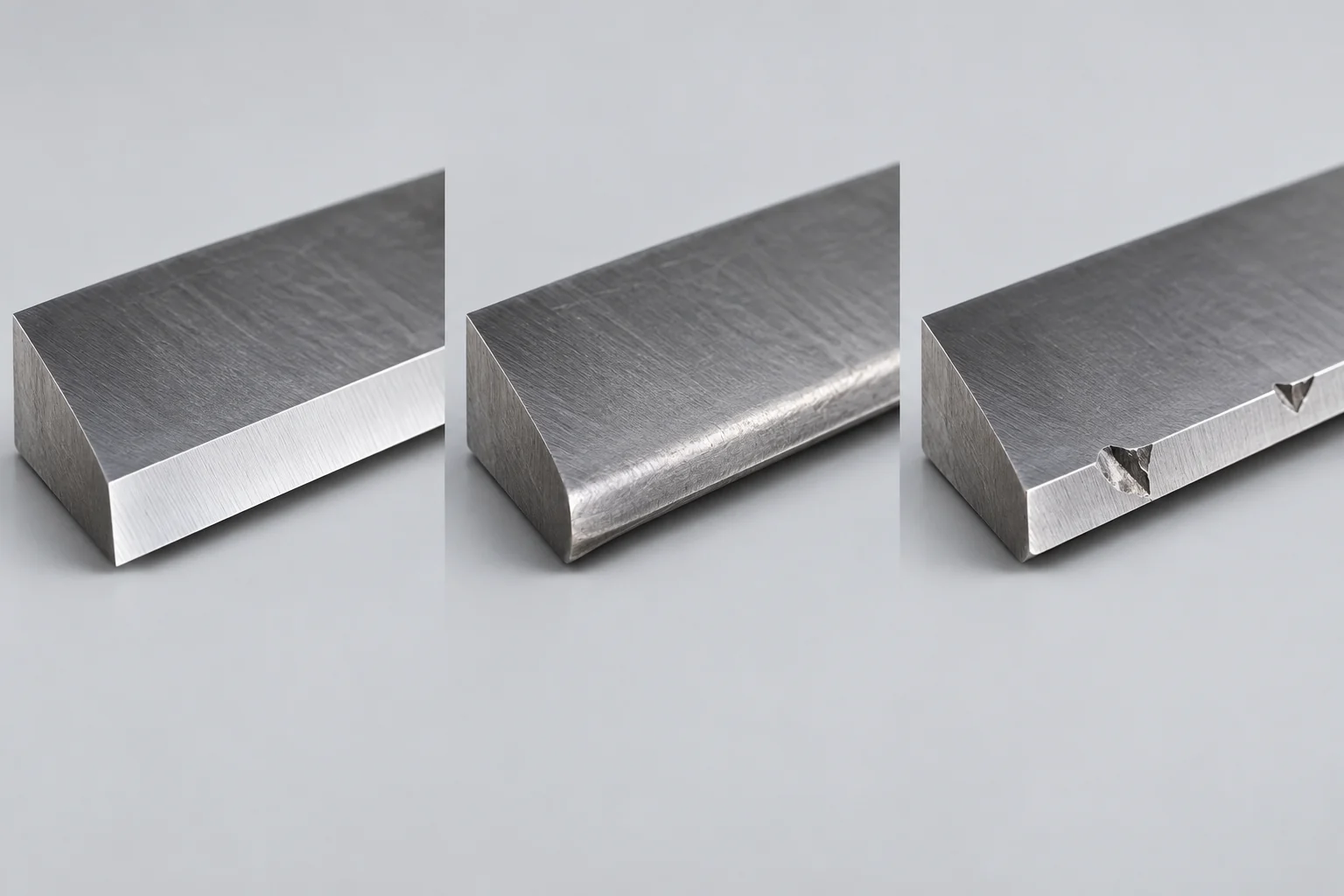
| Gradual loss of sharpness | Wear pattern, accepted output and available regrinding allowance | Compare approved sharpening with replacement |
| Local chips or broken corners | Impact events, contamination, seating and setup | Resolve the cause before specifying an upgrade |
| Uneven wear along the edge | Alignment, support and feed distribution | Check whether the installation contributes |
| Poor cuts immediately after fitting | Part identity, orientation, mating component and settings | Confirm the replacement and assembly match the order |
Sharpening removes material. Confirm that the finished knife or matched set can still reach the machine’s required operating position. An edge can be sharp while the part has become too small to adjust correctly.
Keep the blade identity, work performed and remaining dimensions with its record. Follow the machine’s isolation and servicing instructions for removal, inspection and installation. Use qualified maintenance personnel for those tasks.
How to compare industrial knife costs
The purchase price is only one part of the cost of industrial knives. A useful comparison uses the same accepted production quantity and includes the relevant service costs.
Knife cost per accepted unit = total relevant knife costs ÷ accepted output.
Relevant costs can include purchase, approved regrinding, freight, fitting, measured changeover losses and rejects attributable to the comparison. Define the boundary so the same cost is not counted twice. Use tonnes, pieces or slit length according to the process.
Record feed, setup, acceptance checks and the reason each knife was removed. If one trial uses cleaner feed or a different screen, its service life cannot be treated as a direct material comparison without accounting for that change.
When comparing quotations, separate loose knives from complete sets. A lower “per set” price may omit stationary knives, spacers or other parts included in another offer. Check the quantity breakdown before calculating savings.
Industrial knife RFQ checklist
A complete request for quotation helps a supplier review fit and supply scope before pricing. For industrial knives, include:
- Machine identification: manufacturer, model and installed knife position.
- Part definition: part number, approved drawing revision, units or labelled sample details.
- Geometry: overall dimensions, mounting features, seating face and cutting profile.
- Set composition: quantities of each distinct knife, spacer or mating component required.
- Operating conditions: processed material, thickness or feed form, fillers and contamination.
- Current problem: wear, breakage, cut-quality issue or planned spare-stock purchase.
- Acceptance and supply terms: inspection records, packing, delivery destination and required timing.
For an exact replacement, identify the approved current material. For a proposed change, describe the target result and ask for a separate specification review. Mark unknown fields clearly so an estimate does not become an unintended manufacturing requirement.
Preguntas frecuentes
Are industrial knives and machine knives the same?
The terms overlap. Both commonly describe blades installed in production equipment. For purchasing, specify the cutting operation, machine and part identity; the category name alone does not establish fit or performance.
Which industrial knives are used for plastic recycling?
Granulator rotor and bed knives are used to cut suitable plastic feed into regrind. Shredder cutters handle primary size reduction in the appropriate machine arrangement. Identify the process stage and machine before choosing a replacement family.
Is D2 the best material for industrial knives?
D2 can suit certain cutting applications, but the best choice depends on wear, impact, geometry and heat treatment. Investigate the failure or operating requirement before changing the material specification.
Can I order industrial knives from a photograph?
A photograph can start identification. Production normally needs an approved drawing or a documented sample-measurement process that resolves mounting, locating surfaces, cutting geometry and quantities.
Can industrial knives be resharpened?
Some designs allow regrinding within specified limits. Confirm remaining dimensions, mounting, adjustment and matched-set requirements. Follow the knife and machine service requirements rather than assuming every sharp edge is ready for installation.
What determines industrial knife price?
Dimensions, material, heat treatment, geometry, quantity and inspection scope affect the quotation. Compare the same drawing and supply scope, then evaluate cost against accepted production under comparable conditions.
Can NJDETE review a custom replacement enquiry?
Yes. Send the machine details, current drawing or labelled sample information, processed material and quantities. NJDETE can review replacement granulator knives, double-shaft shredder blades and custom blade requirements before a specification and quotation are agreed.
Discuss your replacement with NJDETE
Looking for industrial knives for an existing machine? Start with the drawing and cutting task so the quotation addresses the part you actually need.
Browse NJDETE industrial blade and equipment products o contact NJDETE about your replacement knife. Include the machine model, knife position, dimensions, quantities and material being cut. If a drawing is unavailable, send both-face and side photographs with preliminary measurements and any known sharpening history.