

توسع شركة NJDETE نطاق موارد اختيار آلات التقطيع ثنائية المحور من خلال سير عمل للاختبار يركز على المواد أولاً
Release time: 2026-09-21
NANJING, China — September 21, 2026 — NJDETE has expanded its online technical resources for double-shaft shredder selection, adding a material-first review workflow, a seven-model comparison and a clearer checklist for sample testing and quotation preparation. The update is intended to help recycling companies, manufacturers and project engineers compare machines using real application inputs instead of relying on motor power or model number alone.
The need for disciplined waste-processing decisions is growing. The United Nations Environment Programme estimates that global municipal solid-waste generation could rise from 2.1 billion tonnes in 2023 to 3.8 billion tonnes by 2050. UNEP also estimates that the direct cost of waste management was USD 252 billion in 2020 and that the wider annual cost could reach USD 640.3 billion by 2050 without urgent action. These figures do not determine the size of any individual shredder, but they underline the importance of building recycling systems around verifiable material data, maintainability and safe operation rather than broad marketing claims. See the UNEP Global Waste Management Outlook 2024.
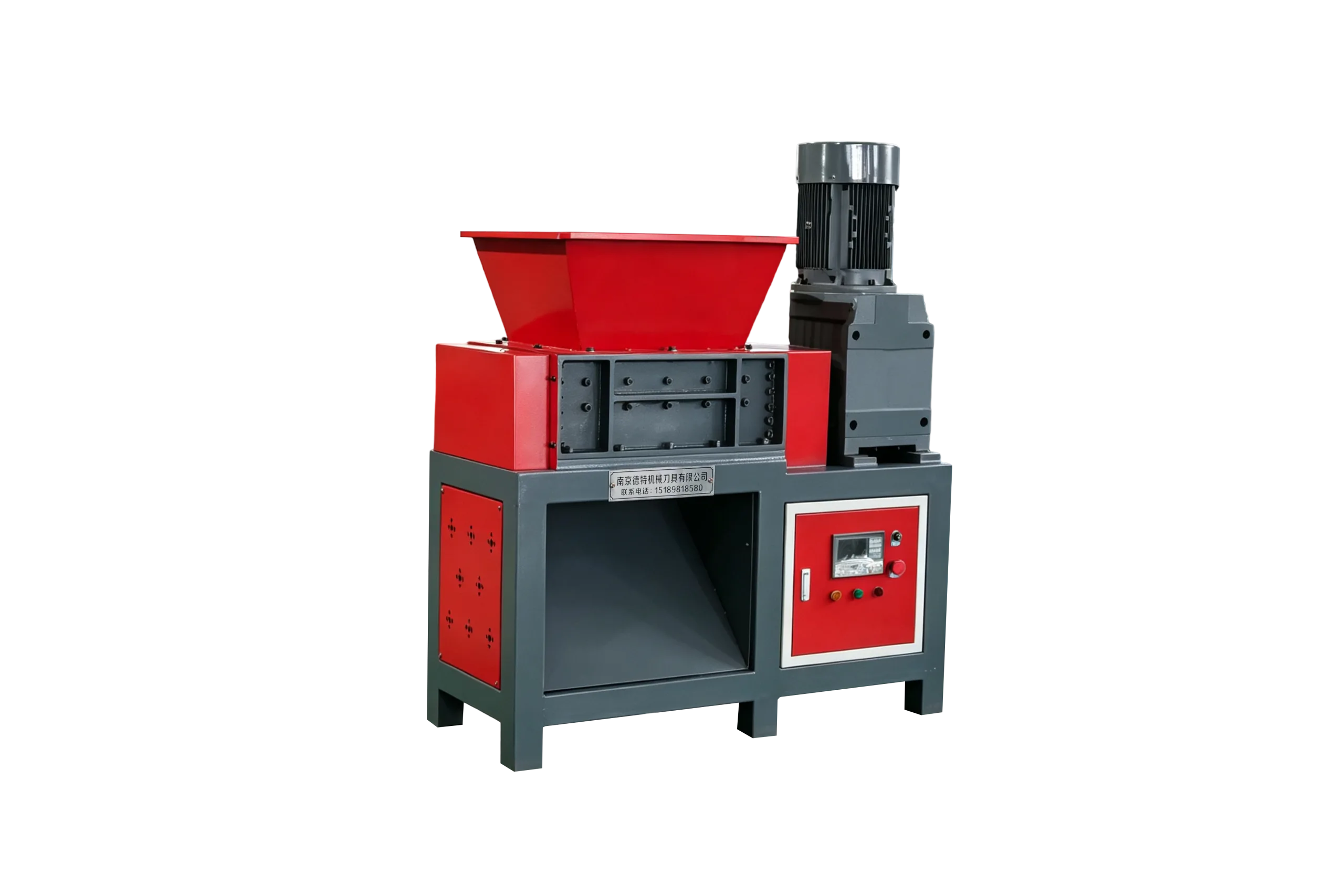
NJDETE 500 model with a 500 × 400 mm cutting chamber. Final configuration should be confirmed against representative feedstock and duty requirements.
Why NJDETE Added a Material-First Selection Workflow
A description such as “plastic waste,” “rubber,” or “industrial scrap” is not enough to select a reliable machine. Two materials carrying the same general name may differ in wall thickness, toughness, bulk density, moisture, contamination and feeding behavior. Flexible film may wrap around shafts, rigid molded parts may create impact loads, and mixed scrap may contain foreign metal that changes both risk and cutter wear.
NJDETE’s updated workflow therefore begins with the material and the required process result. Buyers are asked to define:
- the material type and composition;
- maximum length, width, thickness and unit weight;
- bulk density and whether the feed is loose, nested, baled or bundled;
- contaminants, embedded metal, moisture and hazardous components;
- target result, such as volume reduction, liberation, sorting preparation or secondary granulation;
- expected operating hours, feed method and starts per hour;
- local voltage, frequency, phase and downstream integration needs.
This application data helps the engineering team identify which questions must be answered before a model is proposed. It also creates a written basis for comparing a trial result with the buyer’s actual production objective.
Seven Double-Shaft Shredder Configurations in One Comparison
The updated resource compares NJDETE’s Compact Mini, 150, 250, 300, 400 and two 500 configurations. The figures below reproduce the currently supplied product data. They are screening information—not guaranteed throughput values—and should be reconfirmed in the final technical agreement.
| الطراز | Listed motor | مخفض | Listed cutter arrangement | حجرة القطع | Selection role |
|---|---|---|---|---|---|
| Compact Mini | 1.5 كيلوواط × 1 | K57 | Ø100 × 10 mm × 12 | 120 × 200 ملم | Laboratory, pilot and controlled small-batch work |
| 150 model | 3 kW × 1; 5.5 kW option | K77 | Ø180 × 10 mm × 15 | 150 × 350 ملم | Sampling and small-batch processing |
| 250 model | 2.2 كيلوواط × 1 | K67 | Ø120 × 10 mm × 24 | 250 × 250 ملم | Compact recycling and pretreatment |
| 300 model | 3 kW × 1; 5.5 kW option | K77 | Ø180 × 10 mm × 15 | 300 × 350 mm | Small-to-medium recycling work |
| 400 model | 5.5 kW × 1; dual-motor option | K87 | Ø180 × 10 mm × 40 | 400 × 350 ملم | Medium recycling and pretreatment duties |
| 500 K97 | 7.5 kW × 1; dual-motor option | K97 | Ø200 × 10 mm × 48 | 500 × 400 ملم | Larger feed and heavier duty |
| 500 ZQ400 | 11 kW × 1; dual-motor option | ZQ400 | Ø200 × 10 mm × 48 | 500 × 400 ملم | Higher-drive 500 configuration |
The comparison deliberately avoids assigning a universal kilograms-per-hour figure to each model. Throughput changes with feed geometry, material strength, cutter tooth form, thickness, feeding consistency, reversals and the required discharge condition. A model number is not a capacity guarantee, and a larger motor does not automatically make a configuration suitable for every material.
For the complete working principle, component explanation and application limits, use the Double-Shaft Shredder Machines for Waste Recycling guide as the central product resource.
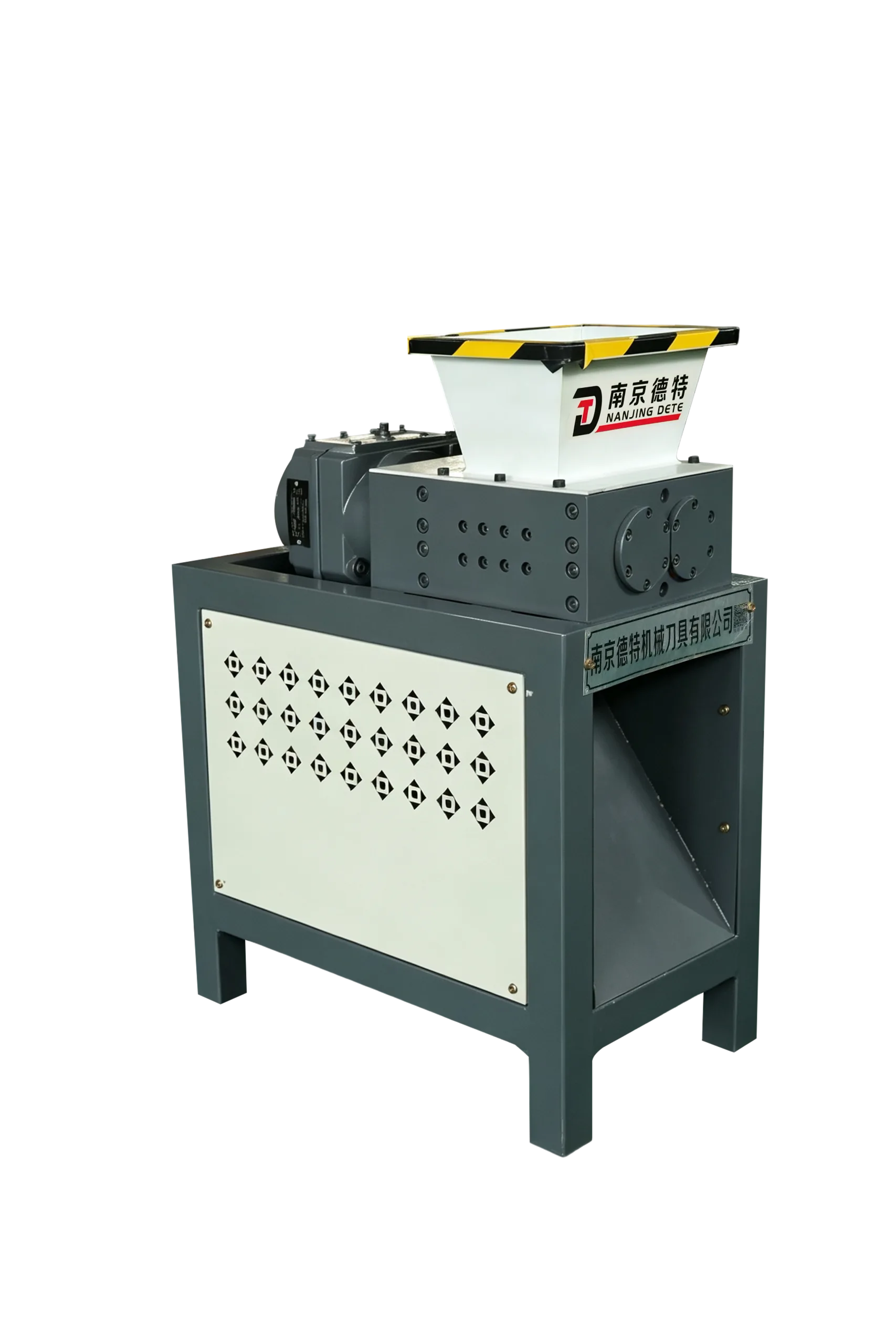
Compact Mini dual-shaft shredder for laboratory, pilot and small-batch evaluation.
What a Useful Shredder Material Test Should Record
A material test is most useful when it is repeatable and documented. Sending an unlabelled bag of mixed material and receiving only a short running video does not provide enough evidence for an investment decision. NJDETE recommends agreeing on a simple test record before the sample is processed.
1. Identify the sample
Record the material name, source, approximate composition, moisture, contamination and any embedded metal. Photograph the sample next to a scale reference and note the maximum dimensions rather than only the average size.
2. State the test objective
The objective may be volume reduction, opening containers, releasing components, preparing material for sorting or feeding a secondary granulator. Each objective can lead to a different cutter arrangement and acceptance criterion.
3. Fix the test conditions
Record the machine model, motor and reducer configuration, cutter diameter, cutter thickness, tooth form, number of cutters and feeding method. If the configuration changes, the new result should not be compared as if it came from the same test.
4. Observe machine behavior
Document run time, number of reversals, visible wrapping or bridging, abnormal vibration, temperature and any manual intervention. Motor-current data can be useful when it is measured consistently, but it should be interpreted by a qualified engineer.
5. Evaluate the discharged material
Photograph the output with a scale reference. If particle size matters, use an agreed sampling and measurement method rather than selecting only the best-looking pieces. Note whether a second pass, screen or downstream granulator is needed.
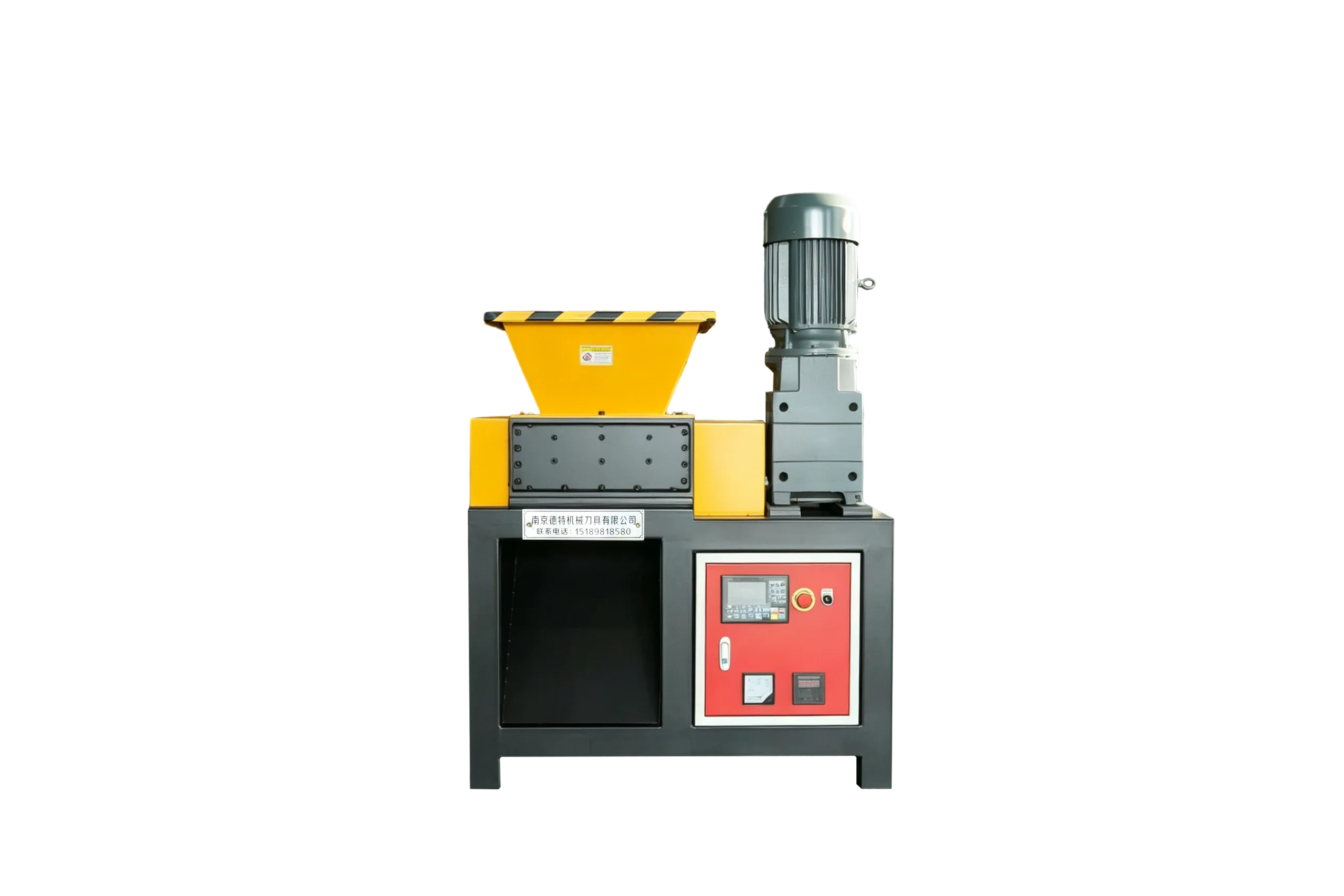
The 300 model uses a 300 × 350 mm chamber. Chamber size is only one part of selection; feed behavior and test results remain essential.
Safety Boundaries Are Part of Selection
Selection is incomplete if it addresses output but ignores hazards. ISO 12100:2010 provides a recognized framework for machinery risk assessment and risk reduction across the machine life cycle. It does not replace local law, a machine-specific manual or a qualified safety review, and mentioning it here is not a claim that a particular NJDETE configuration is certified to the standard. Buyers can review the official ISO 12100 overview.
The application review should identify foreseeable hazards such as entanglement, ejection, stored energy, dust, noise, hot material, flammable contaminants and access during jam clearing or maintenance. Guards, interlocks, emergency stops, overload response and lockout provisions should be specified for the final machine and installation.
Lithium-ion batteries require a specialist process. Cell chemistry, state of charge, damaged-cell condition, temperature, atmosphere, fire suppression, gas handling and downstream treatment must be addressed through a documented hazard assessment. Battery material should not be introduced into a standard shredder configuration without written application approval.
Likewise, a general reference to metal-containing waste does not mean that thick solid metal blocks are suitable. Material composition, wall thickness, size and embedded objects must be disclosed before testing or quotation.
Wear Parts and Maintainability Enter the Review Earlier
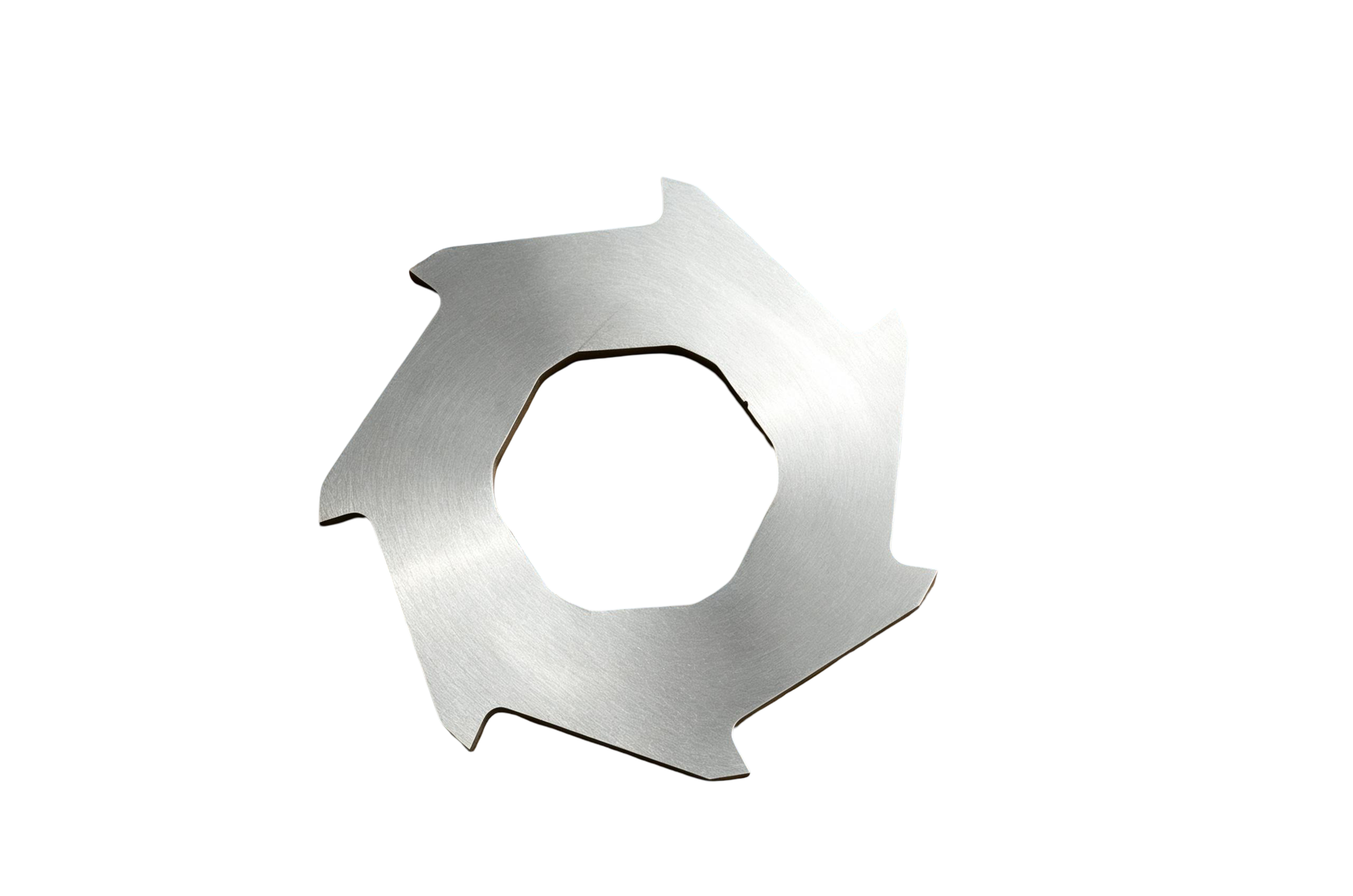
The updated process also asks buyers to consider wear parts before the machine is ordered. Cutter diameter, thickness, bore, shaft interface, tooth form and spacer arrangement form a matched system. Recording the approved cutter drawing and material specification makes later replacement more reliable and reduces the risk of ordering an incompatible part.
NJDETE has also prepared a companion company update, NJDETE Publishes a Practical Shredder Blade Replacement Guide, covering the measurements, operating history and sample information needed for a replacement-cutter inquiry. If that article has not yet been published, add this link immediately after its URL is live.
Current NJDETE blade information lists 9CrSi and H13 as standard material options, with other materials and dimensions available by request. Material selection should balance abrasion resistance, toughness, impact loading and the actual feedstock rather than focusing on hardness alone. See the صفحة شفرات آلة التقطيع ذات المحورين for the current product scope.
A Clearer RFQ Package for Faster Engineering Review
To request an application review, buyers should provide one consolidated package containing:
- material name, composition and representative photos;
- maximum feed dimensions, unit weight and bulk density;
- contaminants, embedded metal, moisture and known hazards;
- required output condition and downstream process;
- target operating schedule and feeding method;
- site voltage, frequency and phase;
- layout, dust-control and discharge requirements;
- representative sample availability;
- any required documentation, inspection or acceptance procedure.
Providing this information does not predetermine the model. It allows NJDETE and the buyer to identify missing data, define a meaningful test and write assumptions into the quotation.
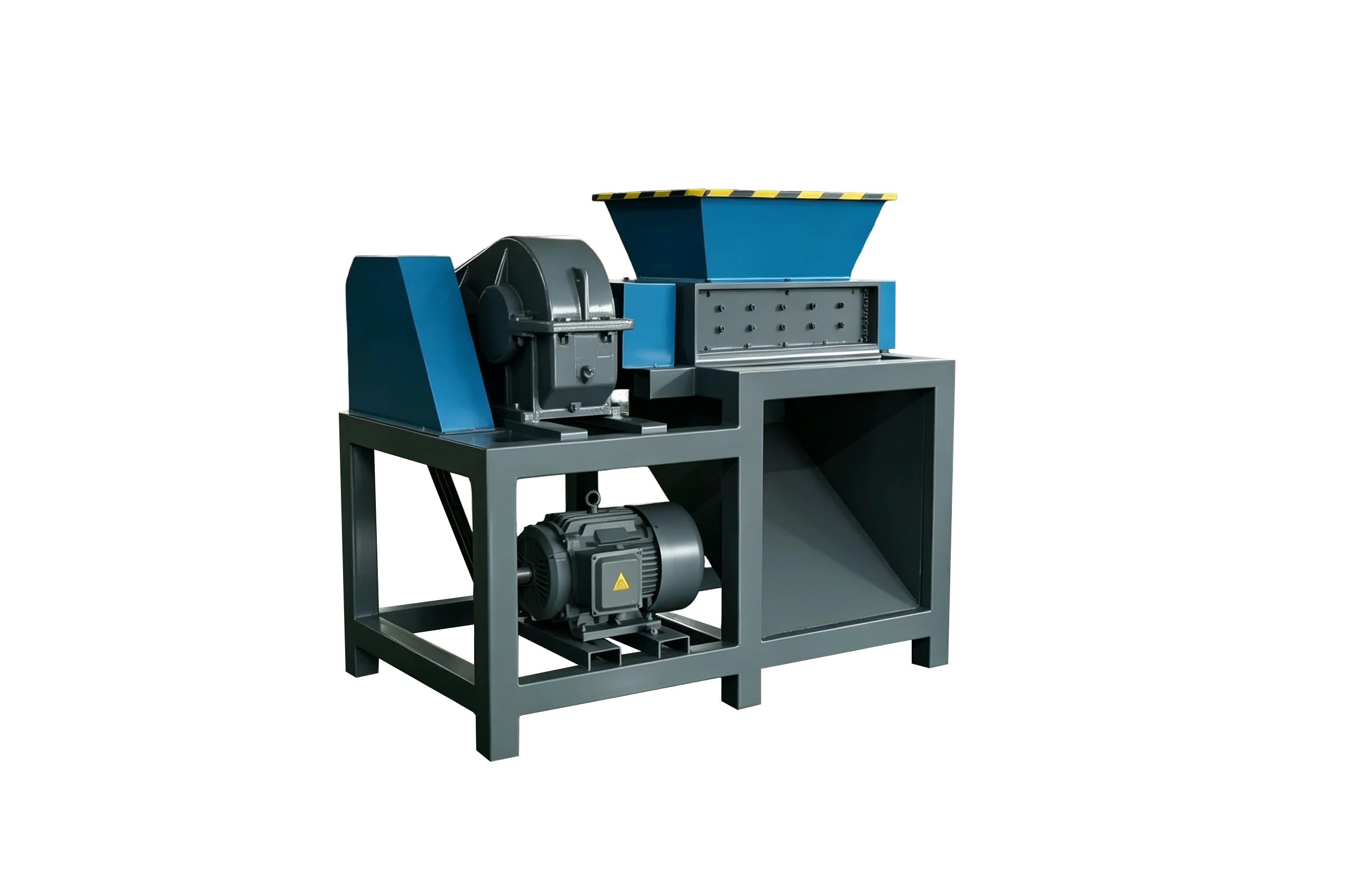
The 500 ZQ400 configuration uses an 11 kW motor and a 500 × 400 mm chamber. It should be compared with the 500 K97 using the same material and duty criteria.
Turning a Product Inquiry into a Verifiable Decision
NJDETE’s material-first update is designed to make the selection discussion more transparent. The company will continue to use its مركز المنتجات و shredder category to connect model pages, technical guidance and wear-part resources.
For a project review, send the material description, maximum dimensions, required result, duty cycle and electrical supply through the صفحة الاتصال بموقع NJDETE. The engineering discussion should confirm which facts are known, which assumptions remain open and whether a representative material trial is required before the machine configuration is finalized.