

Precio de una trituradora de doble eje: ¿qué factores influyen en el presupuesto y en los costes de explotación?
Fecha de lanzamiento: 12 de octubre de 2026
A double-shaft shredder price is only useful when you know what the offer includes and what the machine is expected to process. One quotation may cover a standalone cutting unit; another may include feeding equipment, controls, discharge handling and spare cutters. Comparing the totals without those details can lead you to choose the wrong configuration.
Start with the material and required result, then compare equipment scope and operating cost. A lower purchase price is valuable only if the proposed machine can complete your task without unplanned preparation, additional processing or excessive interruptions.
Twin-shaft, dual-shaft and double-shaft are common names for two-shaft equipment. For budgeting, the important differences are in the actual configuration—not the wording on the quotation.
How Much Does a Double-Shaft Shredder Cost?
There is no reliable single price for every double-shaft shredder. The feedstock, cutting arrangement, drive, operating requirement and delivery scope all need to be defined before an amount becomes meaningful.
NJDETE’s published machine information does not provide a fixed price list. An application-based quotation is therefore more useful than an unsupported price range. Ask for the base configuration, separately priced options and exclusions, together with the currency, delivery terms and quotation validity.
If you are starting with a budget limit, tell the supplier. It helps distinguish an essential requirement from an optional feature. Do not reduce the specification simply to reach a price before checking whether the resulting machine can still perform the job.
What Affects Industrial Shredder Price?
The material changes the task the machine has to perform. A chamber that accepts an item geometrically does not prove that the cutters and drive can reduce it under your operating conditions.
| Price factor | What to define | Why it matters to your comparison |
|---|---|---|
| Feedstock and contamination | Composition, thickness, unit weight and foreign material | Establishes the cutting and handling requirement |
| Feed dimensions and form | Whole items, pre-cut parts, loose waste or bundles | Determines the proposed feeding arrangement and preparation work |
| Cutting system | Cutter geometry, shaft interfaces and counter-components | Defines what is actually supplied in the cutting assembly |
| Drive configuration | Motor arrangement, reducer and electrical requirements | Separates different machine configurations with similar names |
| Operating requirement | Target output, normal shift hours and feeding conditions | Provides a basis for evaluating application suitability |
| Requisitos de salida | Required material form and the next process | May change the discharge or further-processing scope |
| Auxiliary equipment | Conveyors, separation, extraction and controls where required | Establishes whether you are comparing a machine or a system |
| Delivery and support | Packaging, freight, installation and agreed support | Determines the cost of bringing the equipment into operation |
Do not assume every feature in this table is standard, optional or supplied by NJDETE. Confirm responsibility for each item in the actual proposal.
Compare the Configuration Before the Model Number
A model name is not a price or capacity grade. Compare the documented configuration before deciding that a higher number is the better purchase.
Selected entries from NJDETE’s published model comparison illustrate the point:
| Configuración | Listed motor | Listed reducer | Cámara de corte |
|---|---|---|---|
| Mini compacto | 1,5 kW × 1 | K57 | 120 × 200 mm |
| 150 | 3 kW × 1; opción de 5,5 kW | K77 | 150 × 350 mm |
| 250 | 2,2 kW × 1 | K67 | 250 × 250 mm |
| 500 K97 | 7,5 kW × 1; opción de doble motor | K97 | 500 × 400 mm |
| 500 ZQ400 | 11 kW × 1; opción de doble motor | ZQ400 | 500 × 400 mm |
The 150 and 250 entries are different configurations, not a simple power ladder. The two 500 versions share the listed chamber dimensions but have different drives. An option listed on the website must still be specified and priced in the quotation.
This table does not establish throughput, torque, current stock or a price order. Use the full model comparison for the broader range and the approved quotation for the supplied configuration.
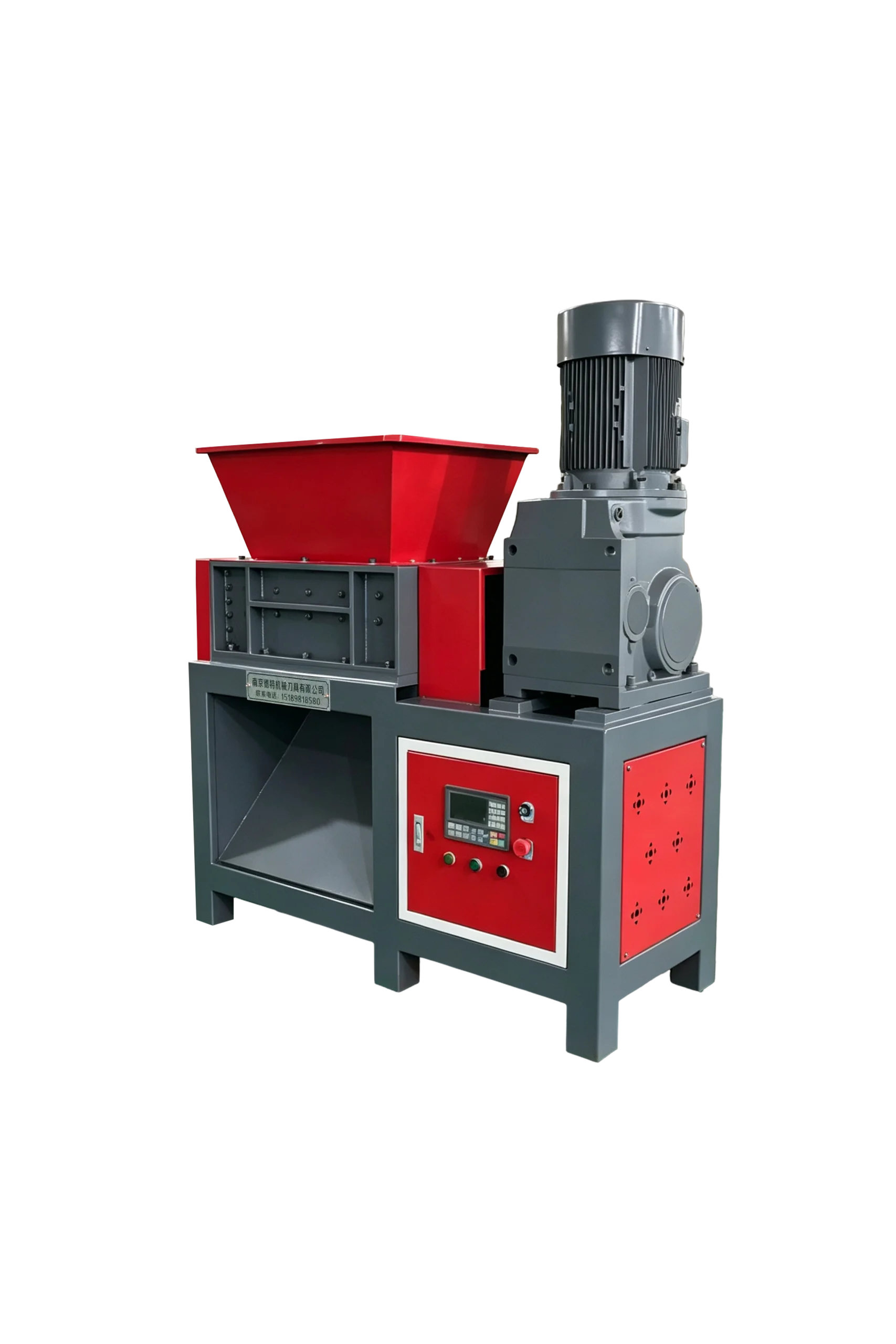
Confirm the drive, cutter arrangement and supply scope for the quoted configuration.
What Should a Shredder Quotation Include?
Make the supplier’s responsibilities visible. An item that is absent from the quotation should be clarified before you treat it as included.
Use three statuses: included, separately priced, or excluded. Add a specification wherever the item affects performance or installation.
| Partida del presupuesto | What to confirm |
|---|---|
| Shredder configuration | Model, drive, chamber and approved cutting arrangement |
| Control and electrical scope | Supply voltage/frequency, control panel and integration responsibilities |
| Feeding and discharge | Hopper, conveyor, bin or other agreed handling equipment |
| Application-related provisions | Sorting, extraction or other process requirements and who supplies them |
| Spare parts | Cutter quantities, associated parts and whether an initial spare set is included |
| Documentation | Agreed drawings, manuals and any required compliance documents |
| Aceptación | Material, feeding conditions, output requirements and verification method |
| Delivery | Packing, shipment scope, named delivery location and agreed trade terms |
| Installation and support | Assembly, commissioning, training, travel and site responsibilities |
| Commercial conditions | Currency, payment, lead time, validity and warranty terms |
Keep an offer for a standalone shredder separate from an offer for an integrated line. If another machine is needed downstream, establish its supply and performance responsibility rather than assuming it belongs to the shredder price.
Why Two Similar Machines Can Have Different Prices
An apparent price difference may be a scope difference. Resolve that first, then investigate any remaining difference in manufacturing, configuration or service.
For example, one offer might include a conveyor and spare cutter set while another excludes both. The lower total is not an equivalent comparison until those items are aligned.
The same applies to the performance requirement. A proposal assessed on clean, pre-cut plastic does not establish performance on whole containers with attachments. Ask both suppliers to address the same feedstock and output requirement.
| Difference between offers | Purchasing action |
|---|---|
| Different included equipment | Build a like-for-like scope comparison |
| Different feed preparation assumptions | Include the preparation labor and equipment |
| Different output requirements | Align the receiving process and acceptance criteria |
| Different drive or cutter specifications | Compare the actual configuration and application evidence |
| Different delivery or installation responsibilities | Compare total installed cost, not only the machine total |
| Same apparent scope, unclear quality claims | Request specific manufacturing and inspection information |
If you are still deciding the equipment route, use the single-shaft vs double-shaft plastic shredder comparison before requesting model-specific prices.
Add Shipping, Installation and Site Preparation to Your Budget
A machine quotation may not equal the cost of a working installation. Budget for the obligations assigned to you as well as the supplier.
Depending on the contract and site, these can include transport, import charges, unloading, lifting, foundations, electrical work, guards or interfaces, commissioning and downstream connections. Confirm the applicable items rather than adding a universal installation percentage.
Ask for agreed overall dimensions and shipping information before planning access and unloading. A quoted chamber dimension is not an installation drawing.
For international purchases, state the destination and requested trade terms. Compare offers on the same basis, and have the relevant parties confirm customs, tax and compliance requirements for the installation location.
Estimate Operating Cost per Tonne of Accepted Output
Operating cost should use material your process can accept—not simply everything fed into the hopper. Keep the period and cost categories consistent.
Operating cost per tonne = included operating costs for the period ÷ accepted output tonnes for that period.
Include the categories relevant to your operation: electricity, labor, consumable wear parts, regrinding or other maintenance, and associated running costs. If you add depreciation or financing, label the result as a broader ownership-cost calculation rather than mixing it into a maintenance-only figure.
An illustrative comparison shows why this matters:
| Assumed cost over one period | Example A | Example B |
|---|---|---|
| Electricity | $60 | $70 |
| Labor | $120 | $120 |
| Wear-part and maintenance allocation | $40 | $50 |
| Included operating cost | $220 | $240 |
| Resultado aceptado | 2.0 tonnes | 3.0 tonnes |
| Operating cost per tonne | $110 | $80 |
Example B has a higher period cost but a lower cost per tonne because the assumed accepted output is greater. These are invented calculation inputs for explanation, not prices, tests or results for any supplier. Replace them with your own records before making an investment decision.
Avoid counting the same loss twice. If stoppages reduce the accepted-output denominator, add only separately identified costs that are not already included elsewhere.
Motor Rating Does Not Give You the Electricity Bill
Installed motor power is a configuration value. Actual electricity use depends on loading, operating time, other equipment and the complete electrical system.
For budgeting:
Electricity cost = measured energy use in kWh × applicable electricity rate.
If the metering covers only the shredder, do not compare it with a figure covering a shredder, conveyor and downstream machine. Record the measurement boundary alongside the result.
A larger motor rating does not automatically mean higher electricity cost per tonne, just as a smaller motor does not prove lower operating cost. Use measured consumption and accepted output over the same period for a meaningful comparison.
Ask About Shredder Blade Replacement Cost Before Ordering
A spare-part quotation should identify the parts and quantities you will actually need. A “blade set” without a defined configuration can make maintenance budgets difficult to compare.
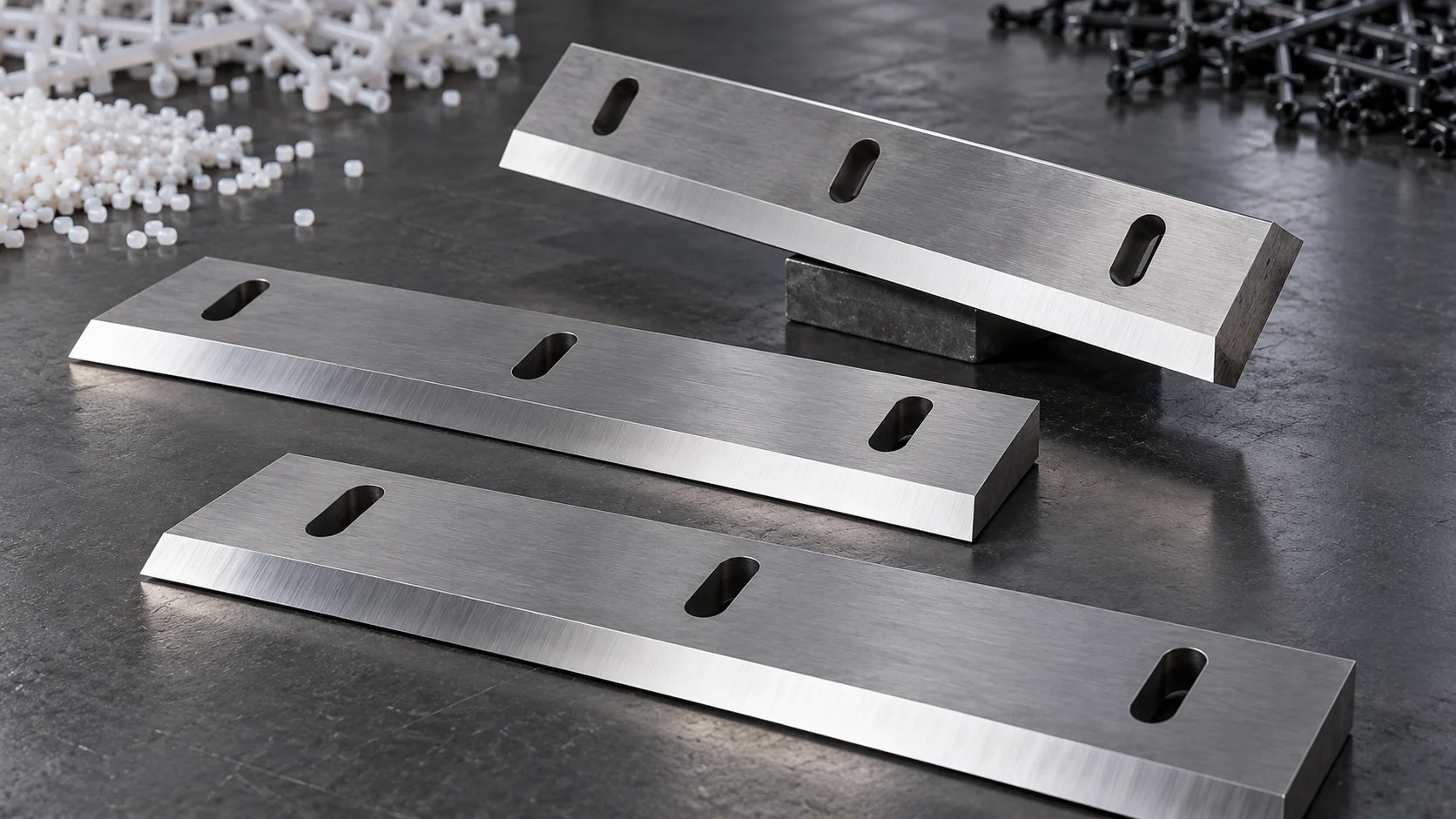
For double-shaft machines, clarify cutters, spacers and associated counter-components where applicable. Ask which wear parts are included, how replacement parts are identified, and which inspection or repair limits govern reuse.
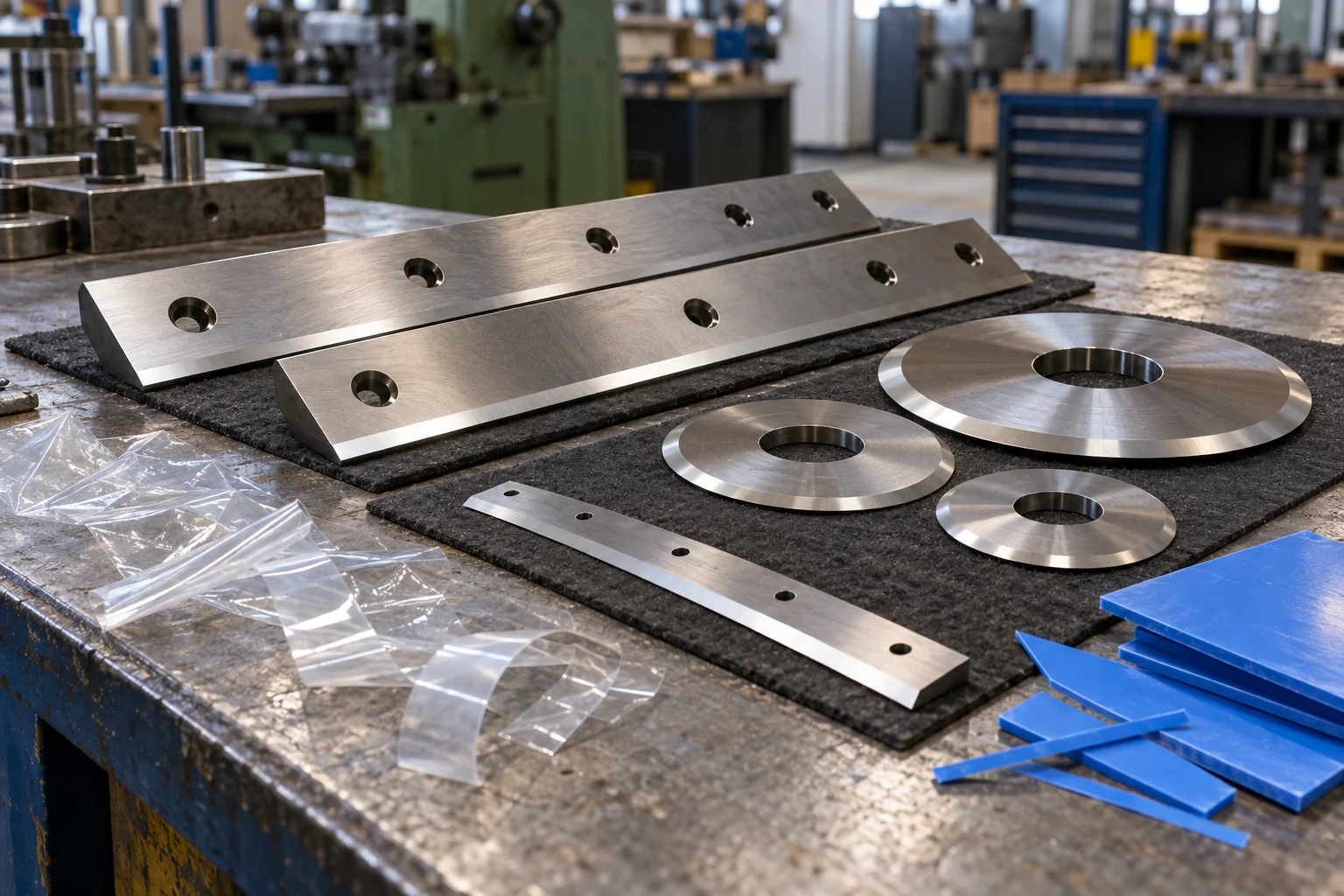
Use NJDETE’s double-shaft shredder blades page for the replacement-cutter supply route. Record materials and dimensions against the approved specification rather than assuming every cutter in the range is interchangeable.
If your line uses a separate plastic granulator, budget its rotor and bed knives separately. Plastic crusher blades are cutting parts for that stage; their listing does not mean a complete granulator is included.
Send These Details for an Accurate Price Review
You can start an inquiry before every detail is resolved. Clearly separate confirmed requirements from estimates and open questions.
Send:
- Material composition, normal form and representative photographs.
- Maximum dimensions, section thickness and typical unit weight.
- Contamination, attachments and any relevant residues.
- Target accepted output and required discharge condition.
- Operating hours, feeding method and available electrical supply.
- Existing downstream equipment and its receiving limits.
- Destination, requested supply scope and delivery requirements.
For application questions, see Cómo elegir una trituradora de doble eje. For the equipment range, visit double-shaft shredder machines.
Send NJDETE your material and quotation requirements to discuss a configuration-based offer. Ask for the scope, options and exclusions to be stated alongside the price.
Preguntas frecuentes
Can you quote a small double-shaft shredder from the model name alone?
The model can start the discussion, but the requested configuration and material still need confirmation. Specify whether you need the standard listed arrangement or an option, then clarify electrical, delivery and accessory scope.
Should I request a price for a fixed kg/h capacity?
Provide the target, but also define the material, feed form and output requirement. The proposal needs a documented basis for evaluating that capacity. A number without conditions does not provide a dependable acceptance requirement.
Are conveyors and spare cutters normally included?
Do not assume so. Ask for each item to be marked included, separately priced or excluded. The actual offer controls the supply scope.
Can I reuse an old quotation for a repeat order?
Check its validity, configuration revision, quantities, currency, delivery terms and current requirements. A previous quotation is a useful reference, not confirmation that every condition remains unchanged.