

Руководство по техническому обслуживанию промышленных измельчителей: проверки, износ и устранение неисправностей
Дата выпуска: 13 октября 2026 г.
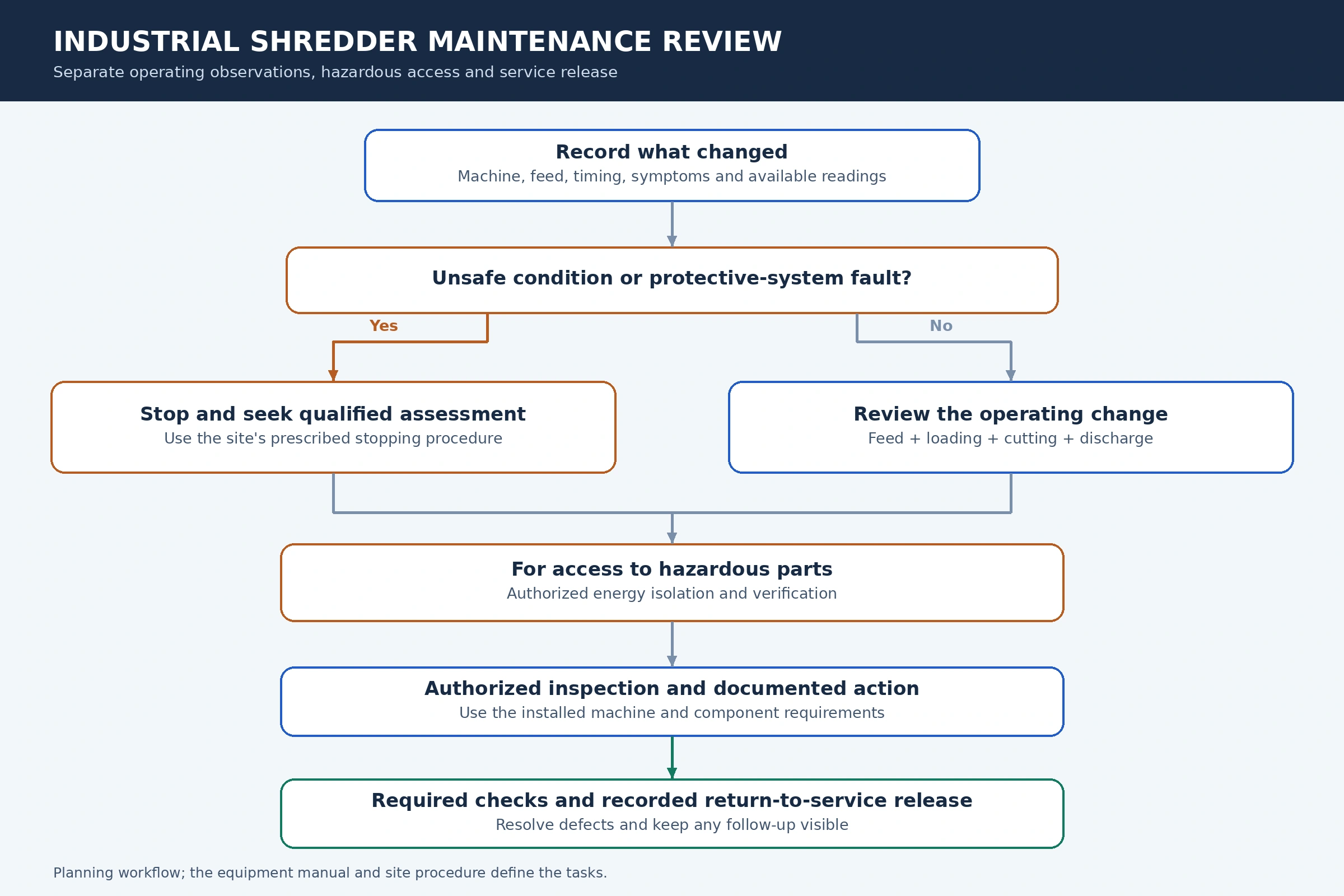
Industrial shredder maintenance should combine routine observation, planned inspection and a record of what changed. Check the complete process—feeding, cutting, drive and discharge—before deciding that worn blades are the cause of lower output.
Your maintenance plan should help you make a decision: continue within the approved operating conditions, arrange an inspection, or stop for qualified assessment. A checklist without the machine identity, observations and follow-up action is difficult to use when the same problem returns.
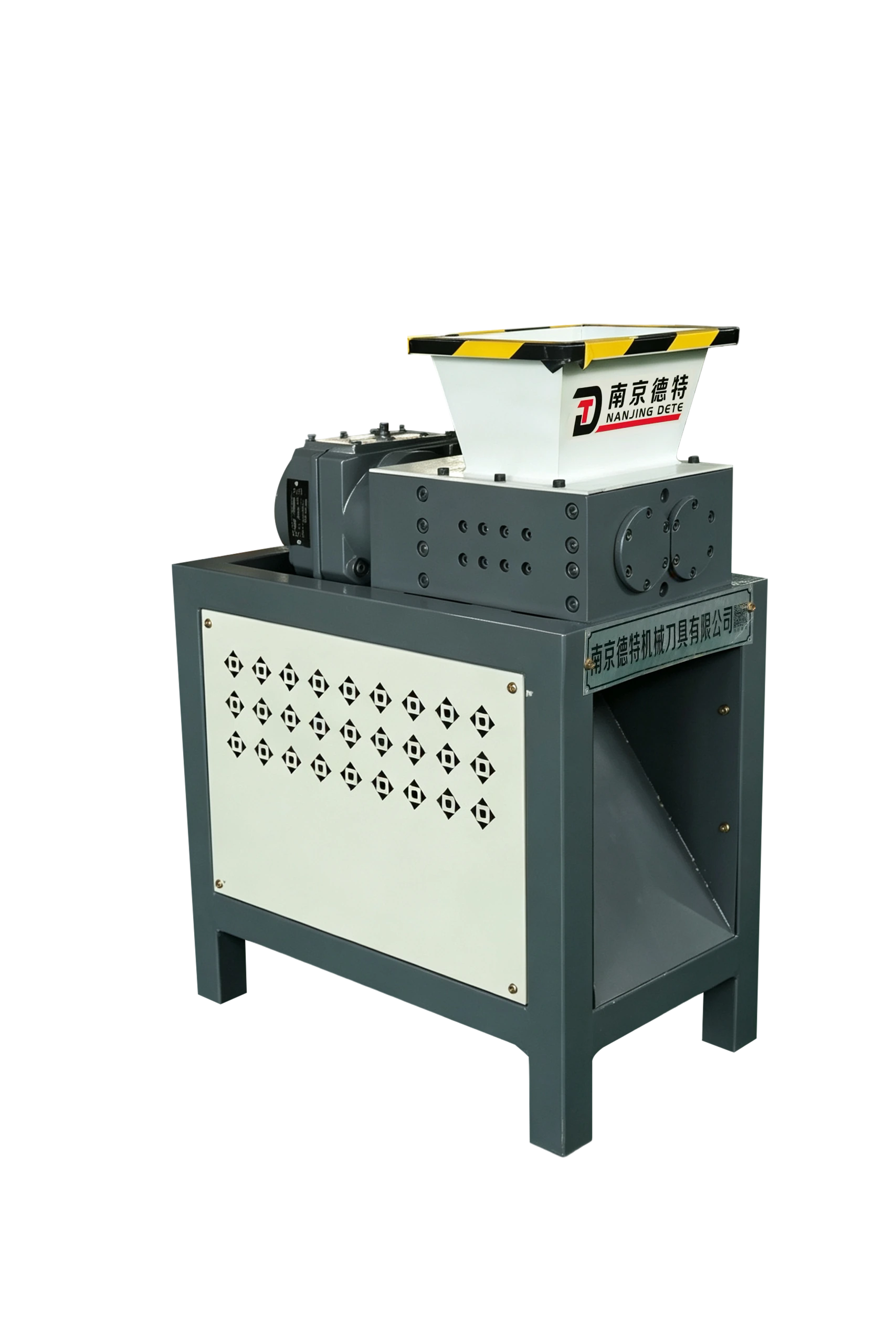
This guide focuses on double-shaft shredder maintenance planning and connects to NJDETE’s blade and machine resources. Use the supplied equipment and reducer manuals for service intervals, lubricants, adjustment limits and repair procedures.
What Should an Industrial Shredder Maintenance Checklist Cover?
Separate external observations from tasks that require access to the machine. An operator’s walk-around and a technician’s isolated inspection are different activities.
| Check stage | What to include | What to record |
|---|---|---|
| Before the shift | Accessible surroundings, required guard and control checks, visible leaks and approved feed | Outstanding defects and whether the prescribed checks are complete |
| During authorized operation | Feeding behavior, reversal pattern, discharge, displayed load and visible operating changes | Material, loading method, symptoms and relevant readings |
| At a planned shutdown | Cutting components, accessible interfaces, buildup and other manual-specified inspection points | Condition, location, measurements and follow-up action |
| At prescribed service intervals | Reducer, bearings, lubrication, drive components and applicable safety-system work | Hours, tasks, specified consumables and responsible person |
| After a significant change | New feed, contamination event, repair, relocation or extended storage | What changed and the required review before release |
Treat this as a planning structure. Copy the actual service requirements from the manuals for your installed configuration.
CAMEC’s industrial shredder maintenance overview also distinguishes routine machine checks from cutter-service work. Its access arrangements and service claims belong to its machines; your plan should name the components and access method actually supplied.
What Should You Check Before Starting?
Start with defects that could affect the shift, including the material waiting to be fed. A different waste batch can explain a changed operating pattern before any mechanical repair is needed.
| Pre-start item | Useful check | If something is different |
|---|---|---|
| Work area and discharge route | Access and collection areas are clear under the site procedure | Resolve the obstruction before the operating release |
| Guards and access covers | Required checks are completed; no unresolved defect is recorded | Keep defective equipment out of service |
| Controls and protective functions | Prescribed checks are complete and faults are addressed | Use the authorized fault process; do not bypass protection |
| Visible lubricant or fluid leaks | Look from accessible, permitted positions | Record the location and arrange assessment |
| Feed waiting for processing | Compare composition, form and attachments with the approved feed | Review the changed load before using it |
| Open maintenance work | Check whether previous actions remain outstanding | Complete the documented release process |
Oil-level checks can depend on the reducer’s state and the specified reading method. Use that method rather than opening a plug or applying a level rule from another gearbox.
Internal access, cleaning and servicing require effective energy control. OSHA’s hazardous-energy overview explains that unexpected startup and stored energy can cause serious injury during maintenance. Authorized personnel should use the site’s approved isolation and verification procedure before accessing hazardous parts.
What Should You Watch During Operation?
Compare the current run with a known, documented operating condition. A number without the feed and loading context may be misleading.
Feeding and reversal
Record the waste form, batch size and whether material reaches the cutters steadily. If reversals become more frequent after a new delivery, check what changed in that delivery before assuming the motor needs replacing.
For flexible plastic, long strips, dense bundles and loose sheets create different feeding questions. The Руководство по измельчителям пластиковой пленки helps distinguish process interruption from a replacement-part task.
Shredder bearings, vibration and drive behavior
Record displayed readings and observations using the permitted monitoring method. Compare like operating states: starting, steady feeding and a loaded interruption are not equivalent.
A new noise, vibration, smell or unusual temperature trend needs assessment against the equipment limits. Use the prescribed stopping procedure for an unsafe condition. A generic online temperature limit is not a substitute for the bearing, lubricant and machine specifications.
Discharge and accepted output
Check whether the receiving equipment can remove the material at the rate it arrives. Accumulation under a machine can interrupt processing without proving a cutter defect.
Describe what counts as useful output. Oversize material requiring another pass and retained waste should be distinguished from accepted output when assessing a performance change.
What Belongs in a Planned Shutdown Inspection?
Use the drawing, parts list and manual to identify the components being checked. Record where a defect occurs, not only that “the blades are worn.”
For a double-shaft cutter assembly, the useful observations can include:
- Edge wear or visible damage, identified by shaft and position.
- Uneven condition across the stack.
- Spacer and cleaning-component condition where fitted.
- Material buildup and its location.
- Approved inspection results for shaft interfaces, retention and associated components.
- Bearing, seal and drive observations specified in the service procedure.
Perform checks and measurements using the permitted methods. Position identification helps distinguish general wear from a localized assembly or feeding issue.
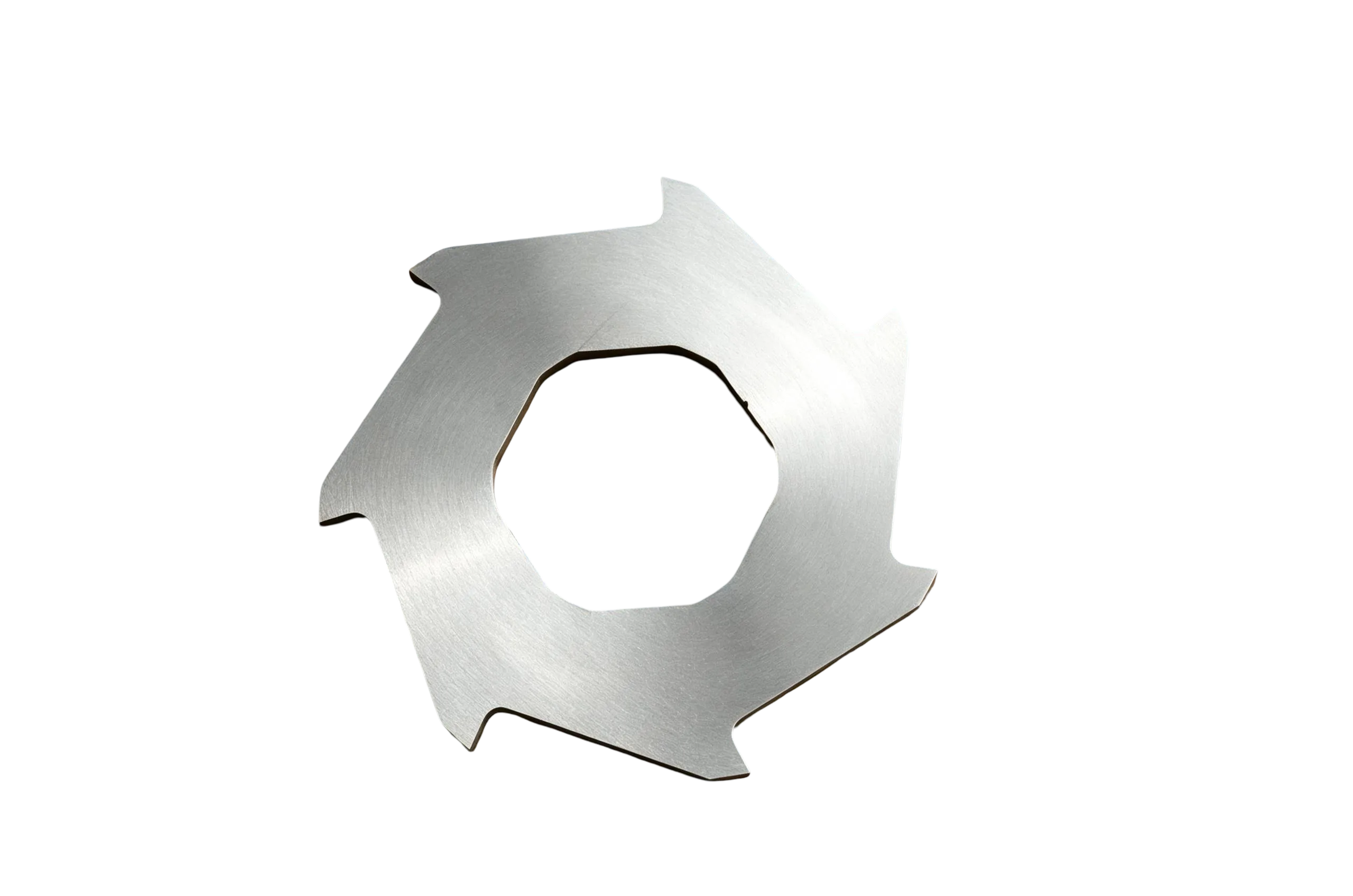
NJDETE’s shredder blade wear guide develops the regrinding-versus-replacement decision. Use the руководство по замене лезвий for planning the replacement task, rather than turning a general maintenance article into a universal disassembly instruction.
How Often Should a Shredder Be Serviced?
Build the schedule from the installed equipment manuals, operating hours and the conditions you record. Keep shift observations separate from hour-based or condition-triggered servicing.
Dusty feed, hard inclusions, a different loading pattern or more operating hours may justify reviewing the plan. The review should produce a revised requirement approved for the equipment, not an arbitrary new grease quantity or grinding interval.
A maintenance schedule needs at least these fields:
| Component or task | Manual / requirement reference | Interval or trigger | Last completed | Next due | Open action |
|---|---|---|---|---|---|
| Required operator checks | Enter the actual procedure | Enter the approved frequency | Fill in | Fill in | Fill in |
| Cutting assembly inspection | Enter machine and drawing references | Enter the approved interval or condition | Fill in | Fill in | Fill in |
| Bearing service | Enter bearing and lubrication requirements | Enter the actual requirement | Fill in | Fill in | Fill in |
| Reducer service | Enter reducer identification and manual | Enter time/hour requirement | Fill in | Fill in | Fill in |
| Applicable control/safety checks | Enter the authorized procedure | Enter the required schedule | Fill in | Fill in | Fill in |
You can copy this table into a service record. Empty fields identify information to obtain; they are not completed inspection results.
Shredder gearbox maintenance: identify the supplied reducer
NJDETE publishes a K87 reducer for the 400 configuration, a K97 for one 500 configuration and a ZQ400 for the other 500 configuration. The two 500 versions share a 500 × 400 mm chamber but use different drive listings.
That is a reason to identify the installed reducer from its nameplate and obtain the corresponding service instructions. It does not establish that both machines use the same oil, quantity or interval. The Mini-to-500 model guide helps distinguish published configurations.
For a shredder lubrication plan, identify each specified service point, lubricant, quantity and interval. Keep the lubricant specification with the component record and log additions or changes. This makes the consumables used during a service traceable at the next inspection.
Industrial Shredder Troubleshooting: What Should You Check First?
Start with the timing of the change, then organize the observations. The table suggests an investigation order; it does not identify a failure from one symptom.
| Симптом | First question | Useful evidence for the technician |
|---|---|---|
| More frequent reversals | Did material form, contamination or loading change? | Feed description, batch pattern and reversal history |
| Lower accepted output | Is the delay in preparation, engagement, cutting or discharge? | Accepted mass and elapsed time, with interruptions identified |
| Uneven cutter wear | Is the change concentrated at a shaft or position? | Position-labelled photographs and approved inspection results |
| New vibration or noise | Was the change sudden, and did it follow an event or repair? | Event history and observations obtained safely |
| Changed bearing or reducer temperature trend | Are monitoring method, operating state and load comparable? | Readings, measurement location and service history |
| Material accumulating at discharge | Can the downstream system remove the output? | Discharge pattern and receiving-equipment condition |
| New leakage | Where does it originate and when did it begin? | Location, fluid identification where known and recent service work |
Stop and use qualified assessment for unsafe conditions. Do not repeatedly run a damaged machine to collect more evidence.
For a plastic granulator operating downstream, use the separate plastic granulator cutting-problems guide. Rotor and bed knife adjustment questions should not be transferred to a double-shaft cutter stack.
How Can Records Show Whether Performance Has Changed?
Use accepted output over a consistent elapsed period. Keep feed form, loading method and preparation comparable before drawing a conclusion.
Here is a hypothetical calculation, not a NJDETE test record:
| Recorded batch | Правильный результат | Elapsed processing period | Average accepted throughput |
|---|---|---|---|
| Earlier comparison | 100 kg | 30 minutes | 200 кг/ч |
| Later comparison | 100 kg | 45 minutes | Approximately 133 kg/h |
For the assumed batches, time increased by 50%, while average throughput fell by about one-third. Those are different measures of the same change.
The record still needs an explanation. Were there more reversals, a different feed, a discharge delay or extra processing? A measured fall in output establishes a change to investigate; it does not prove that blade replacement will restore the earlier figure.
A useful maintenance event record
| Field | What to enter |
|---|---|
| Machine and drive identity | Model, serial number and installed reducer |
| Date and operating hours | Reading and time of observation |
| Feed | Material, form, dimensions and unusual inclusions |
| Симптом | What changed, when and where |
| Operating evidence | Relevant readings, accepted mass and elapsed period |
| Inspection evidence | Labelled photographs and authorized measurements |
| Action | What was done, by whom and against which instruction |
| Return-to-service result | Required checks, observed result and responsible release |
| Follow-up | Outstanding issue and next review |
A filled record is more useful to a service technician than “the shredder is slow.” It also helps the next shift understand whether the condition has been resolved.
What Information Do You Need Before Ordering Spare Parts?
Order against part identity and interfaces. The machine name is a useful starting point, but the installed arrangement and any approved revisions matter.
For cutters and spacers, retain the drawing revision, dimensions, tooth orientation, quantities and stack sequence. For bearings, seals and drive parts, record the relevant component identification and the supplied parts documentation.
NJDETE’s blade measurement guide explains the replacement-cutter information to collect. Its Страница, посвящённая ножам двухвального измельчителя describes a drawing-or-sample workflow with specification approval before production.
That approval is especially useful with a worn sample. Current worn dimensions and the intended geometry of a new cutter should be distinguished before ordering.
What Manufacturing and Quality Evidence Should You Review?
Connect supplier evidence to the part you are buying. Factory context, a quality-management certificate and a finished-part inspection answer different questions.
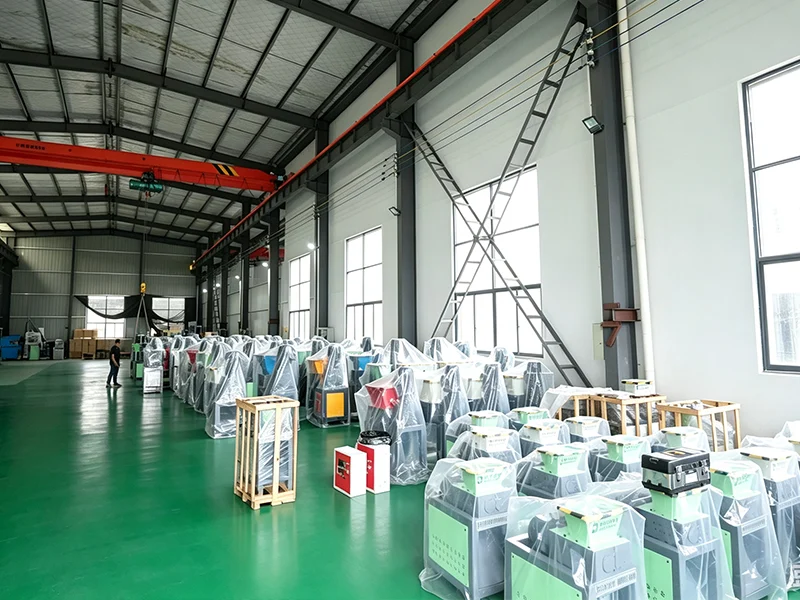
Этот NJDETE factory page provides company manufacturing context. For a replacement order, agree the drawing, material, treatment and inspected features in the supply specification.
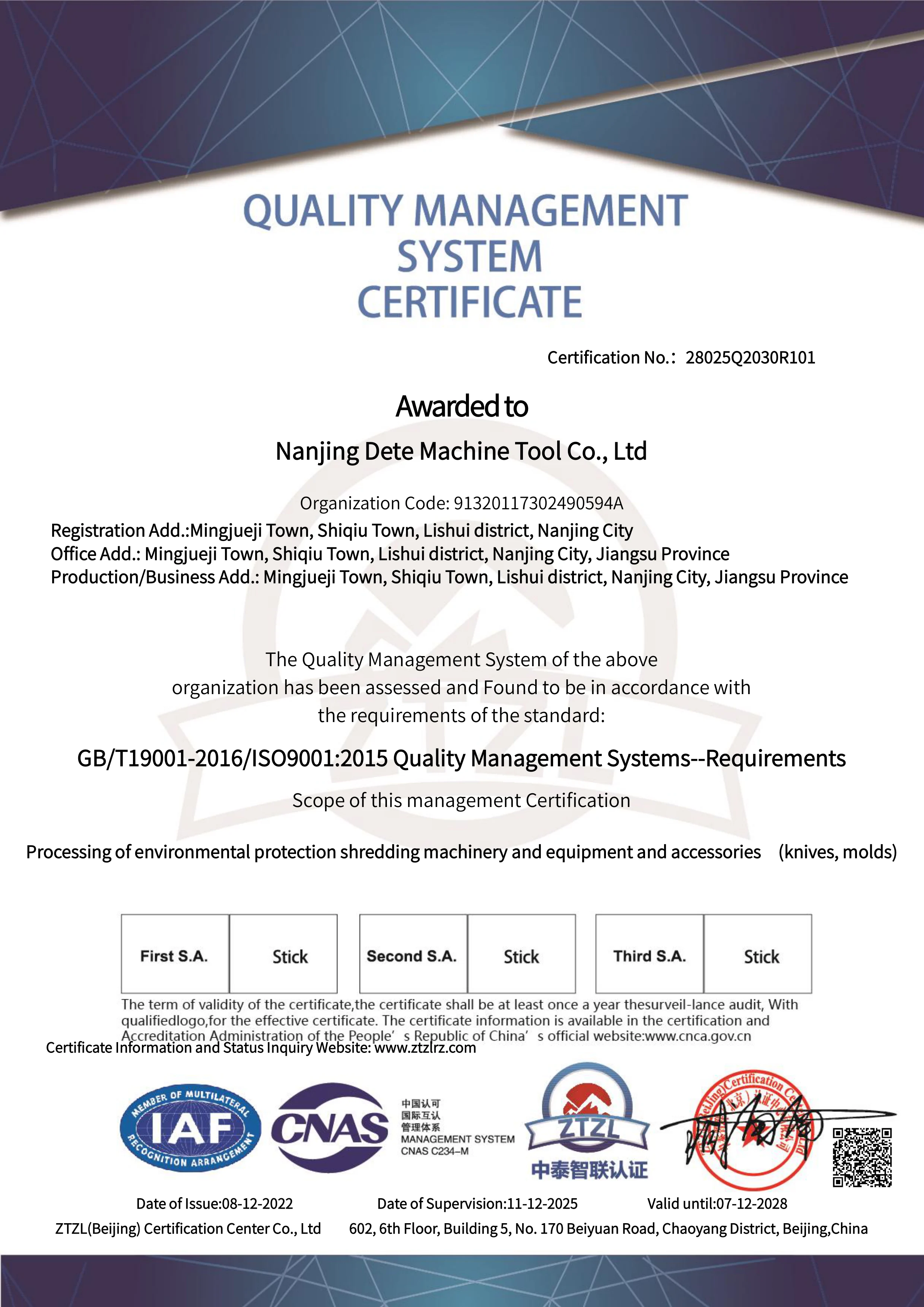
Certificate 28025Q2030R101 identifies processing of environmental protection shredding machinery, equipment and accessories, including knives and molds. Review it through Сертификаты и обеспечение качества, alongside the inspection documentation agreed for your particular order.
Ask which part features and records will be supplied. A dimensional result, material record or hardness result should identify the part or batch and the agreed requirement. This is what makes the evidence usable when an order is repeated.
Часто задаваемые вопросы
Is an emergency stop enough before cleaning or servicing?
An emergency stop does not, by itself, establish hazardous-energy isolation. Follow the site’s authorized energy-control procedure, including required verification and control of stored energy. Treat cleaning inside a cutting chamber or removing a guard as an access task that needs the appropriate procedure and personnel.
What should happen before restarting after long storage?
Use the manufacturer’s storage and recommissioning requirements. Review outstanding defects, the storage conditions and the prescribed checks for lubricants, interfaces, protective functions and retained material. Document the release rather than treating the elapsed calendar time as proof that the machine is ready.
Can one damaged shredder cutter be replaced?
That depends on the complete cutter and spacer assembly and its remaining condition. Identify the damaged position and compare the proposed replacement with the mating parts. Get the arrangement confirmed before installation. A single new cutter and a full set are different supply and compatibility decisions.
How much spare-parts stock should I keep?
Base the decision on critical parts, replacement lead time, service history and the cost of waiting. Keep current drawings and part references with the stock list. Ask about the actual supply conditions for your parts; do not use a generic quantity or delivery promise for every machine.
Do I need to review maintenance after changing waste material?
Yes. Record the changed material, reinforcement, fillers, attachments and loading pattern. Confirm the permitted feed and whether the inspection or service plan needs revision. Keep the first observations distinguishable from the previous feed so wear and operating changes can be assessed against the correct conditions.
Which photographs are most useful for a service enquiry?
Include the machine and component nameplates, overall arrangement and clearly labelled views of the affected position, obtained safely. Add the symptom, operating hours, feed and recent maintenance actions. A close-up without location or scale may conceal which interface or component needs attention.
What maintenance history should I request when buying a used shredder?
Ask for installed component identities, operating hours, service records, documented repairs, approved modifications and outstanding faults. Check whether replacement parts match the current drawings. Records support the assessment, but the present condition still needs inspection by a competent person before the machine is accepted for your application.
Prepare a Service or Replacement Enquiry
Gather the machine identity, material being processed, symptom history, operating hours and safely obtained photographs. Add the relevant drawing or sample details when cutting parts are involved.
Use NJDETE’s after-sales and technical-support information to identify the support route, then contact NJDETE with your machine and part information.
For a useful reply, make the request specific: a changed operating condition, an inspection question or a replacement-part specification. That gives the next discussion a clear task and a record your team can keep.