

كيفية اختيار آلة تقطيع البلاستيك بما يتناسب مع متطلبات النفايات والإنتاج الخاصة بك
Release time: 2026-09-24
The right plastic waste shredder should meet your accepted-output target, handle your normal material with an agreed amount of preparation, and produce feed your next process can use. Start with those requirements, then compare shaft arrangements, feeding systems and machine configurations.
If your waste keeps accumulating, the fastest cutting demonstration may look convincing. But a machine that needs extensive pre-cutting, frequent feeding interventions or another processing pass may still leave you behind schedule.
Our recommendation: choose the process first, then compare the machine. Start with the route that matches your receiving process:
| Your main purchasing need | Recommended starting point |
|---|---|
| Primary reduction with variable piece size acceptable | Evaluate a primary double-shaft arrangement with an output form your next process can accept. |
| A more controlled discharge fraction | Compare screened size-reduction options, including single-shaft configurations, against your downstream size limits. |
| Consistent processing of loose film | Prioritize a feed and cutter arrangement assessed with your delivered film form. |
| Pipe offcuts or thick molding rejects | Establish permitted item dimensions, section thickness and preparation before choosing a drive. |
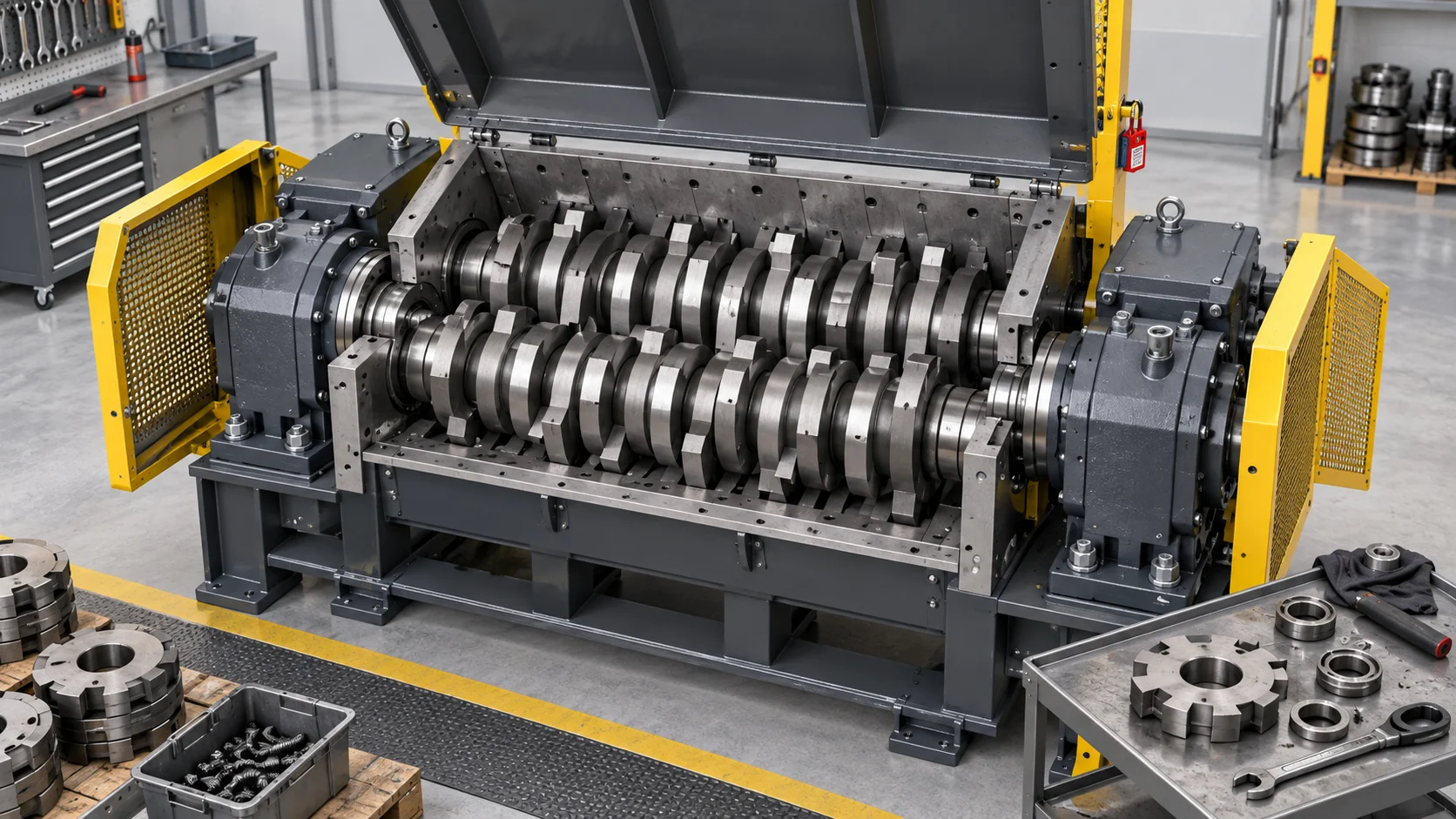
For the double-shaft route, start with the NJDETE machine overview, then compare the feed and discharge requirements below.
1. What Plastic Shredder Capacity Do You Actually Need?
Set a target in accepted kilograms per working day, then use one agreed measurement method to assess it. Write down your daily requirement and the hours available after preparation, changeovers and other activities that stop processing.
Calculate your target
Required average accepted throughput = daily accepted-output target ÷ available processing hours.
In a hypothetical example, you need 1,200 kg/day, with six processing hours available in an eight-hour shift:
1,200 ÷ 6 = 200 kg/h of accepted output.
Allow separately for sorting losses and rejects when planning input supply. Also check downstream capacity: a faster shredder cannot remove a bottleneck in the receiving process.
Use one capacity and acceptance brief
Give each shortlisted supplier the same brief and retain these fields in the result:
| Agree before evaluation | Record for the purchasing decision |
|---|---|
| Representative feed, including difficult normal items | Material, dimensions, thickness, preparation and input mass |
| Quoted configuration and loading method | Drive, cutters, feeding arrangement, screen if fitted and labor required |
| What counts as accepted output | Accepted mass, oversize, retained material and material requiring another pass |
| Start and finish of measurement | Elapsed time and included interruptions; preparation and cleaning time if excluded |
| الأدلة الداعمة | Dated input/output photographs, original measurements and responsible person |
Measured accepted throughput = accepted output mass ÷ elapsed hours. Compare it with your target using the agreed time boundary. Do not deduct the same interruption twice when converting a batch result into a shift estimate. If energy cost matters, record measured kWh over that same boundary and divide by accepted tonnes.
This brief is the common basis for capacity comparison and acceptance; the following sections help you specify the material and configuration it should contain.
2. Single-Shaft vs Double-Shaft Plastic Shredder: Which Fits Your Process?
If discharge size is your main constraint, evaluate the sizing arrangement first. In a screened single-shaft configuration, the rotor and counter-knives reduce material while the screen controls when it can leave the cutting area. Ask for an output sample that meets your receiving equipment’s limits; the screen opening alone does not describe every particle dimension.
If you need an initial reduction step and can accept irregular pieces, shortlist a primary double-shaft configuration. Opposing cutters engage and reduce the feed, making the complete cutter arrangement and material presentation central to selection. Check whether the next stage can receive that output directly or needs additional sizing.
For your purchase, the useful distinction is how the machine feeds, cuts and discharges your plastic. Use the comparison below to identify the questions that separate suitable configurations.
| Your decision | Screened single-shaft configuration | Primary double-shaft configuration | ما الذي يجب التحقق منه |
|---|---|---|---|
| How material reaches the cutters | A pusher may feed material toward a rotor and counter-knives | Opposing cutter shafts engage material; feed assistance varies | Can the quoted arrangement sustain feeding with your material? |
| How output is controlled | A screen retains material until it can pass the openings | Many primary designs discharge irregular pieces without sizing through a screen | Does the output meet your next process’s limits? |
| Main reason to shortlist | Controlled size reduction using a suitable rotor, feed and screen combination | Initial reduction where variation in piece size is acceptable | Is your priority primary reduction or a more controlled fraction? |
| Film and flexible waste | Rotor geometry and pusher behavior need evaluation | Engagement, wrapping and retained material need evaluation | Test the normal form: loose, bundled or compacted |
| Pipes and thick scrap | Check the feed arrangement, rotor loading and screen requirements | Check engagement, cutter arrangement and permissible section thickness | Are whole items accepted, or must you prepare them? |
| Maintenance scope | Ask about rotor knives, counter-knives, screen access and adjustment | Ask about cutters, spacers, shafts and access for servicing | Which parts, tasks and downtime belong in your operating budget? |
For the operating principle and product overview, see NJDETE double-shaft shredder machines.
Go Directly to Your Plastic Waste Type
| Your normal waste | Information to prepare | Detailed guide |
|---|---|---|
| Bottles and hollow containers | Maximum dimensions, caps, labels and residues | Plastic bottle shredder selection |
| Film and bags | Loose, folded or compacted form; strip length and contamination | Film and bag shredder selection |
| Pipe offcuts | Length, diameter, wall thickness and fittings | Plastic pipe shredder selection |
| Drums and containers | Dimensions, wall sections, handles and prior contents | Plastic drum shredder selection |
| Molding scrap | Separate thin runners, thick rejects and solid purgings | Injection molding scrap recycling |
| Small workshop batches | Daily quantity, available hours and installation space | Small plastic shredder buying guide |
If you are deciding whether the task needs primary shredding, a granulator or a staged route, use the plastic shredder, crusher and granulator comparison. Confirm the job each proposed stage performs; the equipment name alone does not define the discharge you will obtain.
3. Match the Shredder to the Plastic You Actually Handle
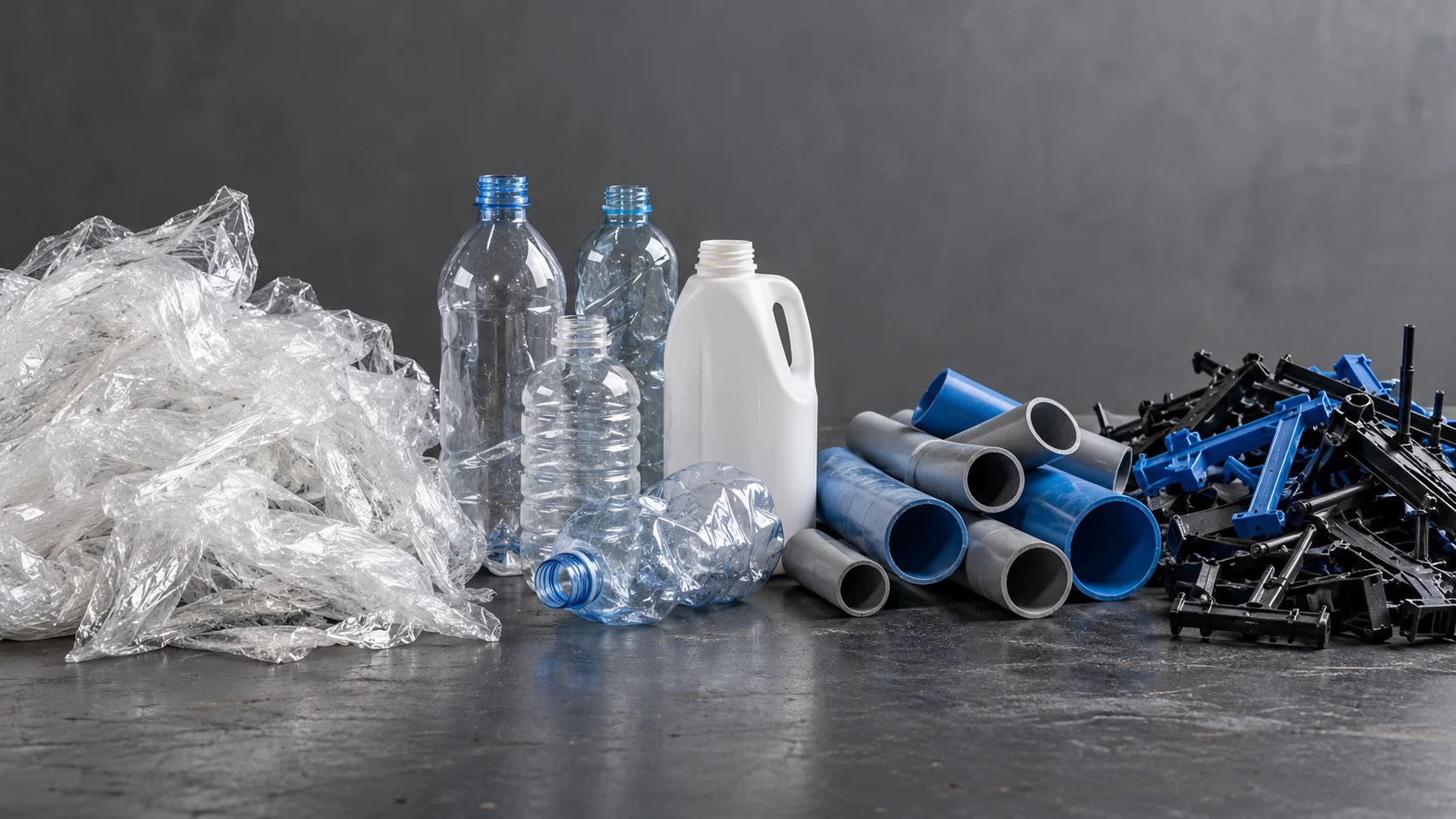
Your polymer name is only the starting point. Film, hollow containers and thick pipe sections can create different feeding and cutting demands even when they belong to the same polymer family. Describe the physical form before comparing configurations.
Plastic film shredder: prioritize sustained feeding
Selection recommendation: make feeding consistency your first acceptance item. Compare loose or compacted feed in the form your operation actually receives, then assess output per elapsed hour.
Specify strip lengths, moisture and attachments, then record interrupted feeding, wrapping and retained material. Name any proposed feed assistance or cutter changes in the quotation.
PET bottle and hollow-container shredder: control preparation labor
Selection recommendation: if you plan to feed whole containers, shortlist configurations assessed on whole containers. Include necks, handles and reinforced bases in the material review.
For your purchasing comparison, record preparation labor and clarify residue-removal requirements. Specify the polymer and any attached components; a generic “bottle shredder” description is not a complete application specification.
Plastic pipe shredder: select around the longest and thickest normal pieces
Selection recommendation: settle the whole-item feeding or pre-cutting requirement before comparing motor ratings. Pipe diameter alone is not enough to choose a machine.
For HDPE pipe, other plastic pipe or extruded profiles, provide the longest normal piece, outside dimensions and maximum wall thickness. Confirm fittings and unusual sections separately.
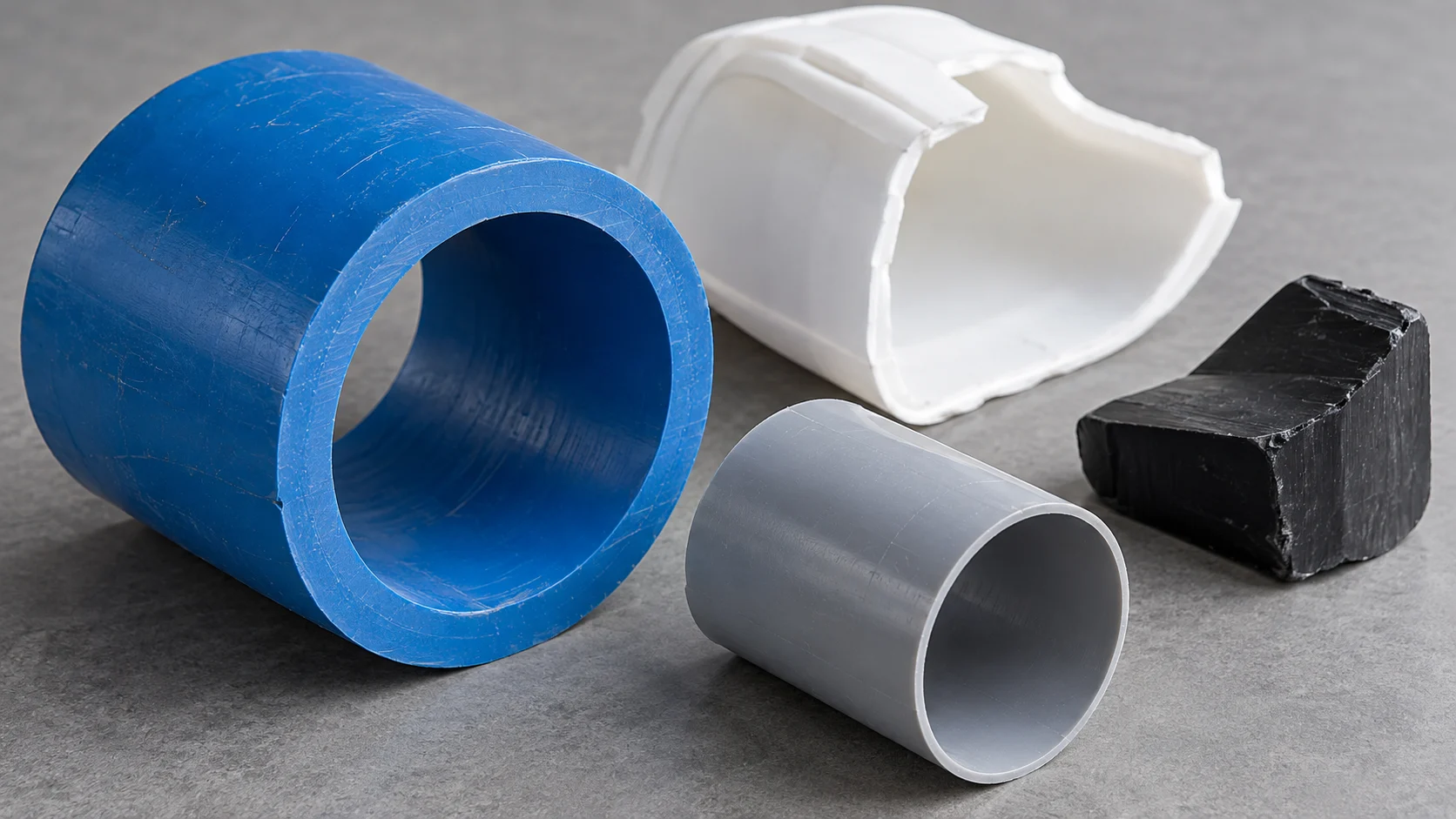
Ask whether your pipe can be fed whole in the proposed hopper and orientation. A chamber dimension is not a guaranteed maximum pipe size. If pre-cutting is required, include its equipment, labor and time before comparing the total investment.
Injection molding scrap shredder: separate runners from dense purgings
Selection recommendation: group your rejects by physical form before requesting a configuration. Assess thin runners, thick rejected parts and solid purgings as separate feed categories.
For each category, provide the thickest junction, normal item weight, fillers and metal inserts. Include difficult routine rejects in the sample rather than selecting only the easiest parts.
4. What Must Happen After Shredding?
Choose your output requirement before accepting a proposed cutter or screen size. “Small pieces” is too vague when another machine must receive the material.
| Your next step | What to put in the acceptance requirement |
|---|---|
| Storage or transport | Output form suitable for the agreed handling method |
| Washing or separation | Feed dimensions, shape and contamination limits specified by the receiving system |
| Granulation | Feed acceptable to the granulator without unplanned preparation |
| Extrusion or pellet production | The complete preparation and processing requirements of that line |
For a defined downstream fraction, specify an output sample and acceptance method. Primary shredding, screened size reduction, granulation and pellet production perform different tasks; choose the stages your receiving process requires.
If granulation is part of your line, define it as a separate equipment and performance requirement. For the replacement knives used in that stage, review NJDETE plastic crusher and granulator blades and include the existing machine drawing in your enquiry.
5. What Machine Specifications Mean for You
A specification is useful when it answers a purchasing question. Use this translation when reviewing an industrial plastic shredder quotation.
| المواصفات | What it means for you | What still needs confirmation |
|---|---|---|
| Motor power, kW | Helps define the proposed drive and electrical requirements | Material-specific output and measured energy consumption |
| Reducer and shaft speed | Identify important parts of the cutting drive | Supplied ratio, operating speed and application suitability |
| حجرة القطع | Describes the cutting area available in the machine | Hopper access, whole-item feed limits and preparation needs |
| Cutter thickness and tooth geometry | Affect the cutting arrangement and resulting material form | Output sample and compatibility of the complete cutter stack |
| Hopper and discharge | Determine how your loading and collection arrangements connect | Working heights, conveyors, access and layout |
| Spare-parts specification | Helps you identify replacements before downtime occurs | Approved drawings, supply scope and maintenance instructions |
For running-cost comparisons, ask for measured kWh per accepted tonne using the method in Section 1. Include the same auxiliaries in each proposal’s measurement boundary.
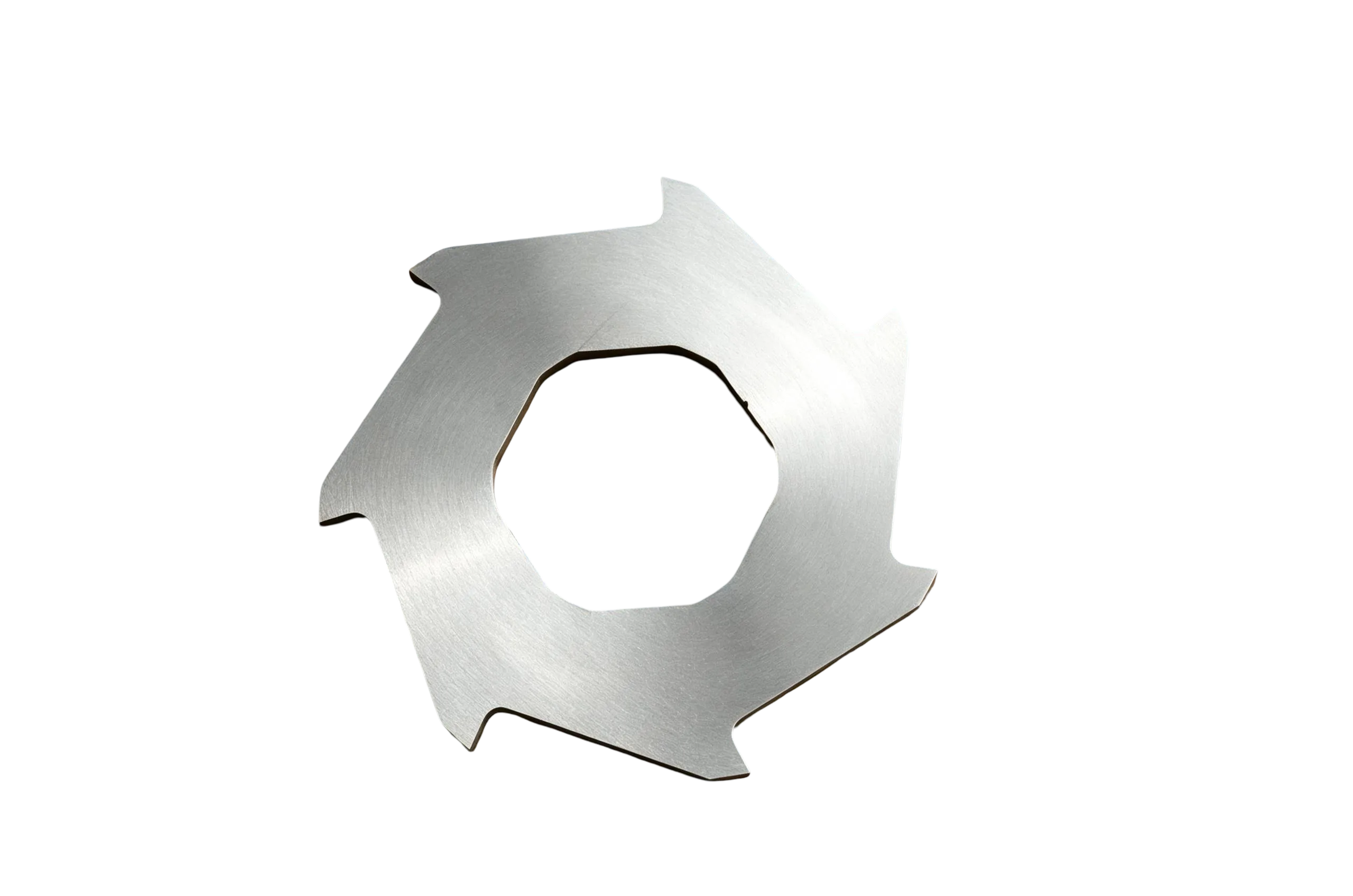
When discussing شفرات آلة التقطيع ذات المحورين, confirm bore, diameter, thickness, teeth and spacers together. Ordering a thinner cutter alone is not a reliable way to achieve your desired output. Keep the approved parts information with your handover documents; the دليل استبدال شفرات آلة التقطيع explains the information needed for later replacement enquiries.
6. NJDETE 500 K97 vs 500 ZQ400: How to Compare the Published Configurations
Once you have defined capacity, material and output, use the NJDETE Mini-to-500 model comparison to identify configurations for technical review. The model number is an identifier, not a kg/h rating.
The published 500 versions provide a useful example of why you should compare the complete specification:
| Published model | المحرك | مخفض | Chamber | Meaning for your decision |
|---|---|---|---|---|
| 500 with K97 reducer | 7.5 كيلوواط × 1 | K97 | 500 × 400 ملم | Evaluate this particular drive and cutter configuration against your target |
| 500 with ZQ400 reducer | 11 كيلوواط × 1 | ZQ400 | 500 × 400 ملم | The different drive requires its own review; it does not prove a particular capacity increase |
Selection conclusion: treat these as two drive configurations to compare against the same material brief. The shared 500 × 400 mm chamber does not resolve the choice; the next questions are operating speed, cutter arrangement, permitted feed and achievable accepted output.
The 11 kW listing is approximately 47% higher in rated motor power than the 7.5 kW listing: (11 − 7.5) ÷ 7.5 × 100. That is a power-rating comparison, not a throughput estimate. Ask which drive meets your duty requirement, then compare electrical needs and measured output on that basis.
Purchasing scenario: a workshop comparing pipe-offcut processing
If your workshop produces pipe offcuts of varying length and wall thickness, send the same largest-normal-item dimensions to support both configuration reviews. First establish whether preparation is needed. Next define output acceptable to your receiving process. Finally compare the proposed drive and cutter combinations against your daily accepted-output target.
Your decision: favor the complete proposal that meets the agreed duty with manageable preparation and discharge handling. A lower purchase price is less useful if the arrangement adds an unplanned pre-cutting step; a higher motor rating is less useful if another stage limits the line.
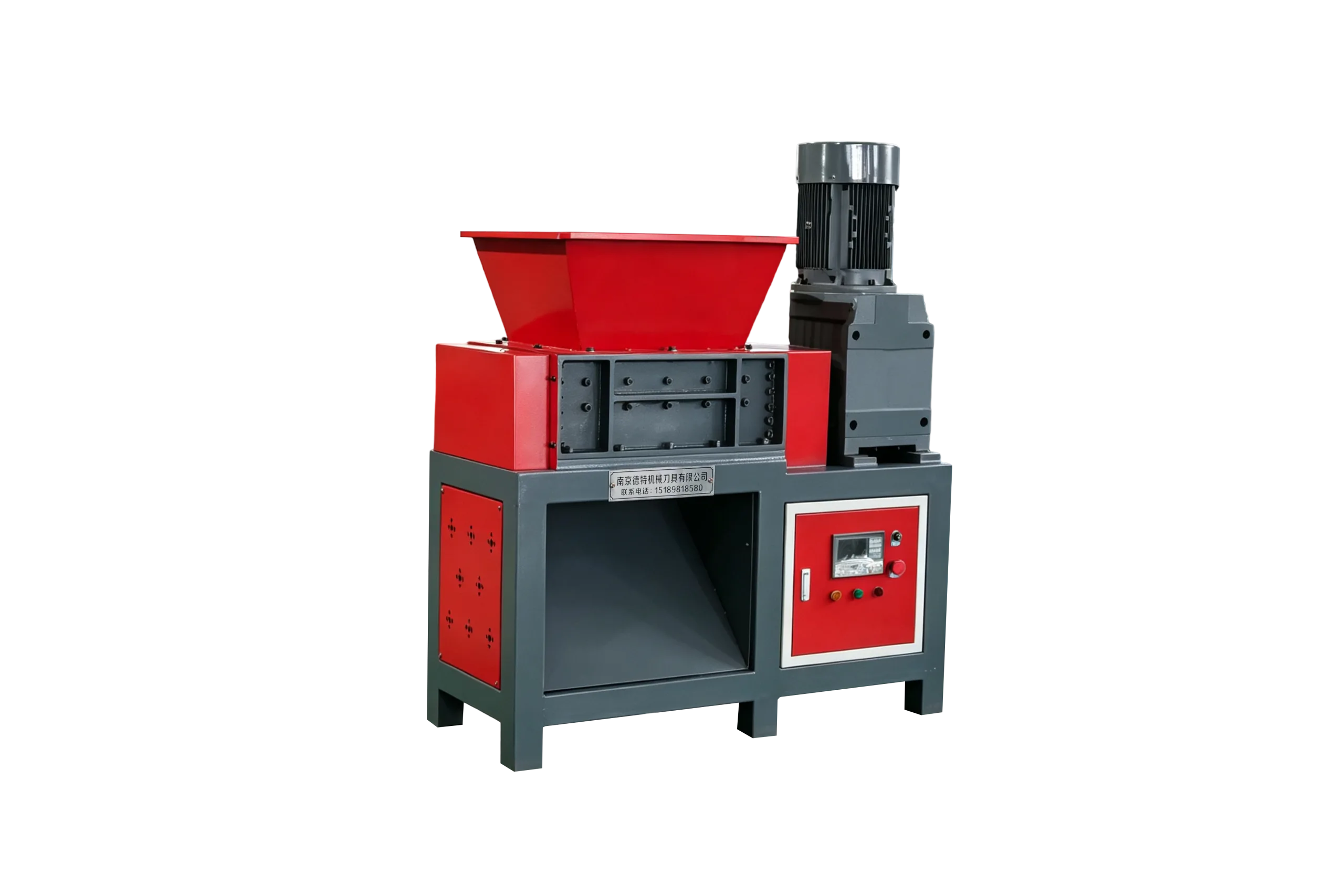
For your shortlist, have the quotation name the exact drive version, cutter assembly, approved feed and included accessories. Use the full NJDETE model comparison if the 500 configurations do not match your installation or processing requirement.
7. Compare the Complete Installed Scope
Use the capacity and acceptance brief in Section 1 alongside a scope comparison. Ask each supplier to identify preparation equipment, conveyors, controls, electrical work, installation responsibilities, spare cutters and excluded downstream stages.
Your preferred proposal should meet the agreed duty with a workable layout and operating plan. Include preparation labor and additional equipment in the comparison, rather than judging the bare-machine price alone.
Disclose residues and unusual inclusions before any material evaluation so the supplier can establish permitted feed and handling requirements.
8. Questions to Resolve Before Ordering
How much plastic should I send for a trial?
Agree the quantity and sample mix with the supplier after describing your waste. There is no universal useful sample weight. The batch needs to support the intended assessment, including sustained feeding and the normal range of items. Confirm sample acceptance and shipping arrangements before sending material, particularly when residues or unusual inclusions are involved.
Should I choose extra capacity for future expansion?
Separate your current requirement from a forecast requirement and give each a timeframe. Compare a configuration for current demand with an option for the credible expansion case. Ask about the consequences for footprint, loading, electrical supply and downstream equipment. Avoid selecting an arbitrary oversizing percentage without checking those constraints.
Which documents should be included at handover?
Ask for the approved machine specification, operating and maintenance instructions, electrical documentation, spare-parts identification and the agreed acceptance record. Confirm the required language and delivery timing in the quotation. These documents help your team operate the supplied configuration and identify replacements accurately.
What if I cannot send a physical sample before ordering?
Provide scaled photographs, dimensions, representative weights, material information and footage of the current process. Ask the supplier to identify which conclusions remain provisional. Agree how suitability will be verified and how a failed acceptance result will be handled before committing. Remote review provides useful information but is not equivalent to processing your sample.
What should happen if the trial misses my target?
First identify the limiting condition: preparation, feeding, cutting, discharge or the required output. Ask for a revised proposal and a repeat assessment under the same measurement rules. If the revision introduces pre-cutting or another processing stage, include its cost and time in your decision. Keep the original acceptance target visible rather than replacing it with an easier demonstration.
Request a Configuration Review for Your Plastic Waste
You do not need to choose a model before making a useful enquiry. Send NJDETE your plastic waste details with:
- Photographs and the material type, where known.
- Maximum dimensions, wall thickness and difficult normal items.
- Required accepted output per day and available processing hours.
- Intended loading method and required downstream result.
- جهد التوصيل، والطور، والتردد، والمساحة المتاحة.
- Sample availability and the acceptance conditions you want assessed.
Ask for a proposed configuration, preparation requirements, included equipment and the remaining questions that need a material trial. That gives you a clearer basis for a purchasing decision than a model name or motor rating alone.